 Whatcom County
Building Decks That Actually Hold Up in Cordata
Cordata sits in the part of Bellingham where marine air off the bay, long stretches of steady rain, and shaded, tree-lined lots all combine to make outdoor structures work harder than they would almost anywhere else in the state. A deck built with the same specs you'd use in a dry climate will show problems within a few seasons here — soft spots at the ledger, corroding hardware, decking that stays slick with moss from October through April. A deck built for Whatcom County conditions is a different animal, and the difference shows up in the framing and fasteners long before it shows up in the finish.
We build custom decks in Cordata and the surrounding Whatcom County area with that reality in mind from the first sketch. This page covers what a correctly built deck involves here, the material trade-offs worth understanding before you commit, and how our process works from first estimate to finished project.
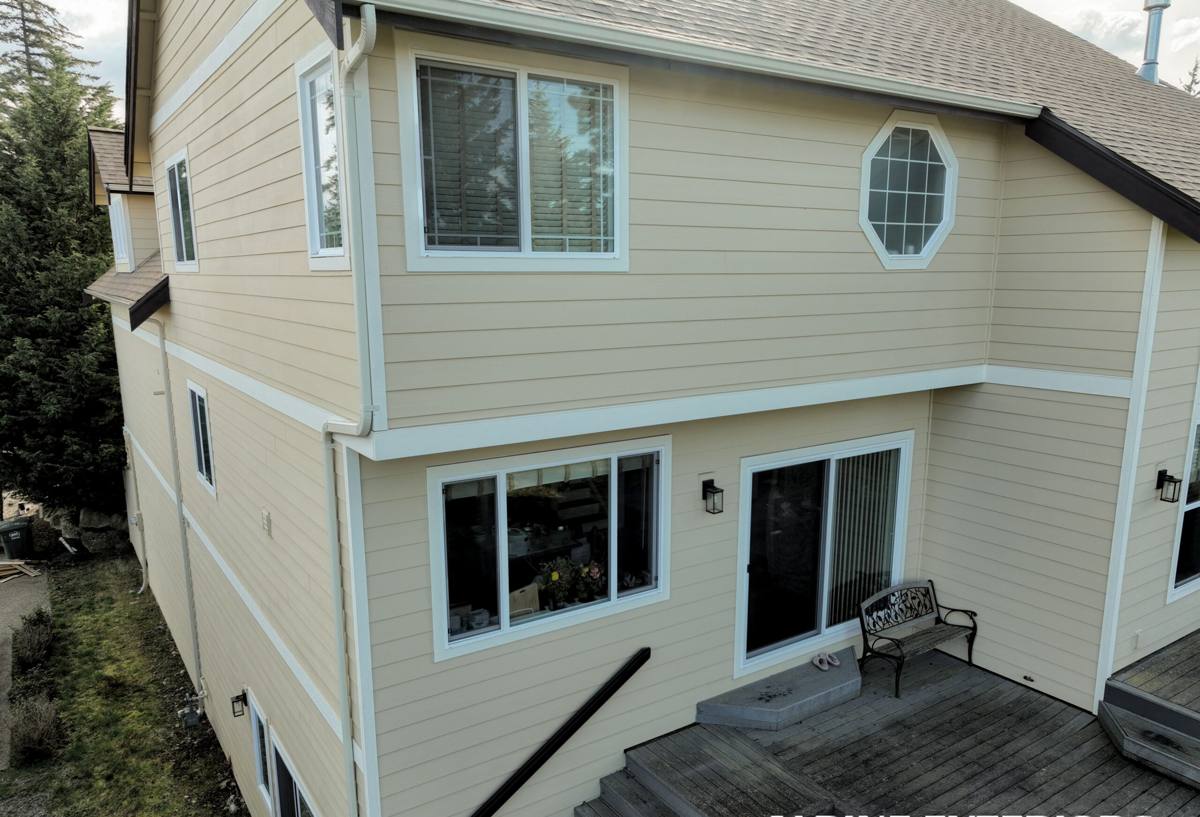
What Cordata's Climate Actually Does to a Deck
It helps to be specific about the stress a deck is under in this part of the county, because it changes real decisions — fastener grade, board spacing, footing depth.
Salt Air and Corrosion
Cordata isn't waterfront, but Bellingham Bay is close enough that airborne salt reaches inland neighborhoods, especially on windy days. Salt-laden moisture accelerates corrosion in any fastener, bracket, or hanger that isn't rated for it. Standard electro-galvanized screws and joist hangers can start rusting within a couple of years in this environment; the failure is often invisible until a board or railing post moves underfoot.
Driving Rain and Standing Moisture
Whatcom County gets a lot of its annual rainfall as sustained, wind-driven weather rather than short downpours. That matters for a deck because wind-driven rain finds its way into joints, fastener holes, and the ledger connection where the deck meets the house — the single most common source of hidden rot in decks built here.
The Long Moss Season
Shaded lots, filtered sun, and months of damp air give moss and algae a long runway on horizontal wood surfaces. Beyond the slip hazard, moss holds moisture against the board surface, which shortens the life of both wood and some composite products if the decking wasn't chosen or installed with drainage in mind.
What a Correctly Built Deck Involves
A deck is really three systems working together: the structure below (footings and framing), the connection to the house (the ledger), and the surface you walk on (decking and railings). Each one has a failure point that shows up more often in this climate than in drier parts of the state.
Footings and Framing
Whatcom County soils vary block to block, but a lot of Cordata-area lots sit on clay-heavy or poorly draining ground that holds water through the wet months. Footings need to be sized and set to local frost depth and bear on solid, undisturbed soil — not fill dirt or topsoil, which can shift as it saturates and dries through the season. We also frame with airflow in mind: joists spaced and detailed so water sheds and air can move underneath, rather than trapping moisture against the wood.
The Ledger Board — Where Most Deck Failures Start
The ledger is the board that bolts the deck to the house framing, and it's the connection point where a poorly built deck and your home's siding and wall assembly meet. If the ledger isn't flashed correctly — with proper counter-flashing tucked behind the house's water-resistive barrier and siding, not just caulked on the surface — water works its way behind the ledger and into the rim joist and wall framing over time. This is a slow, hidden problem that often isn't visible until siding or interior finishes are already damaged. Because we work on siding and building envelopes as our core trade, we treat ledger flashing as a wall-system detail, not just a deck detail — it gets tied into the house's drainage plane correctly, not bolted on and caulked over.
Decking Surface and Drainage
Board spacing, fastener pattern, and surface drainage all affect how well a deck sheds Whatcom County's rain instead of holding it. Hidden fastener systems look clean but can trap moisture if gapping isn't set correctly for the material; face-screwed boards drain more predictably but show the fasteners. We set spacing based on the specific decking product, not a one-size-fits-all gap.
Railings and Guardrails
Any deck more than 30 inches off grade needs a code-compliant guardrail — generally 36 to 42 inches high with baluster spacing that won't pass a 4-inch sphere. Railing posts take real lateral load, especially with wind coming off the bay, so post attachment to the frame matters as much as the railing style itself.
Choosing a Decking Material for This Climate
There's no single "best" decking material — it depends on how much upkeep you want to do and what you're willing to spend up front versus over time. Here's how the common options actually perform in a wet, mossy Whatcom County yard.
| Material | Upfront Cost | Maintenance Here | How It Handles This Climate |
|---|---|---|---|
| Pressure-treated lumber | Lowest | Annual cleaning, re-sealing every 1-2 years | Affordable and repairable, but needs consistent upkeep or it grays, splinters, and holds moss |
| Cedar | Moderate | Regular sealing or staining to hold color and resist decay | Naturally more decay-resistant than treated pine but still needs sealing against constant moisture |
| Composite decking | Higher | Periodic washing to remove moss/algae; no sealing needed | Resists rot and doesn't need staining, but shaded, damp spots still grow moss on the surface film |
| PVC decking | Highest | Occasional washing | Fully synthetic, doesn't absorb moisture, most resistant to moss staining and rot long-term |
We'll walk you through this trade-off honestly during your estimate rather than steering you toward whatever has the best margin — the right call depends on your budget and how much yearly maintenance you actually want to sign up for.
Our Process for a Custom Deck in Cordata
- On-site assessment — we look at your lot's grade, drainage, sun exposure, and how the new deck ties into your existing siding and wall assembly.
- Design and material selection — layout, railing style, and decking material chosen against your budget and maintenance preference, not a default package.
- Permitting — we handle the permit application and inspections required for the project's size and location.
- Framing and ledger installation — footings, joists, and the ledger flashing detail built to shed water, not just meet minimum code.
- Decking, railing, and finish work — surface installed with drainage-appropriate spacing, railings set and tested for load.
- Final walkthrough — we go over maintenance expectations for your specific material before we consider the job done.
Permits and Local Requirements
Most decks attached to a house and elevated above a certain height require a building permit in Whatcom County, and setback rules can apply depending on your lot's proximity to property lines. Permit requirements and inspection steps vary by project size and by exact location within the county, so we confirm what applies to your specific lot before work starts rather than assuming. Skipping a required permit can create real problems later — at resale, with insurance, or if the structure needs to be corrected to pass a future inspection.
Maintaining a Deck Through Whatcom County's Wet Season
Even a well-built deck needs some seasonal attention here. A short list of what actually matters:
- Sweep debris and standing leaves off the surface regularly through fall — trapped organic matter feeds moss and holds moisture against the boards.
- Wash the surface with a deck-safe cleaner at least once a year to remove moss and algae film before it stains or gets slick.
- Check the ledger flashing and the point where the deck meets the house annually for any sign of staining, softness, or gaps in the caulking.
- Inspect railing posts and fasteners for movement or corrosion, especially on decks that have been up more than five years.
- Keep gaps between boards clear of trapped debris so water keeps draining the way the deck was built to drain.
- Re-seal wood decking on the schedule appropriate to the product — don't wait until it's already graying or absorbing water.
Why Hire a Crew That Already Works in Cordata
Deck problems in this part of Whatcom County tend to repeat themselves for the same reasons: fasteners not rated for salt air, ledger flashing that wasn't tied into the wall system correctly, and decking chosen without accounting for how much shade and moss a lot actually gets. A crew that's built decks in this specific climate has already made the adjustments — the right hardware grade, the right flashing detail, decking spacing set for local conditions — instead of learning them on your project. Because we work in siding and building envelopes as our primary trade, we also catch issues at the ledger connection that a deck-only contractor might not think to check, since that seam is exactly where water gets into a wall system if it's built wrong.
Get a Free Estimate for Your Cordata Deck
If you're planning a new deck or need to replace one that's showing its age, we're happy to come take a look, walk you through material options honestly, and give you a straightforward estimate — no pressure, no pushy sales pitch. Use the form below to get started.