 Whatcom County
 Siding in Nooksack: A Local Look at What Homes Face
Nooksack sits in a part of Whatcom County where the weather doesn't do anything halfway. Homes here deal with long stretches of wet, gray months, air that carries salt influence up from the Sound and the bay, and enough shade and moisture in the right spots to grow moss on almost any surface that holds still long enough. None of that is unusual for this part of Washington, but it adds up over the life of a house. Siding, roofing, windows, and decks all take that same weather, year after year, and the difference between an exterior that holds up and one that doesn't usually comes down to what materials went on the house and how carefully they were installed.
We're a local crew that works on siding, roofing, windows, and decks across Whatcom County, and Nooksack is part of our regular service area. We're not describing a generic weather pattern here — this is the same climate we work in on every job, and it shapes almost every recommendation we make.
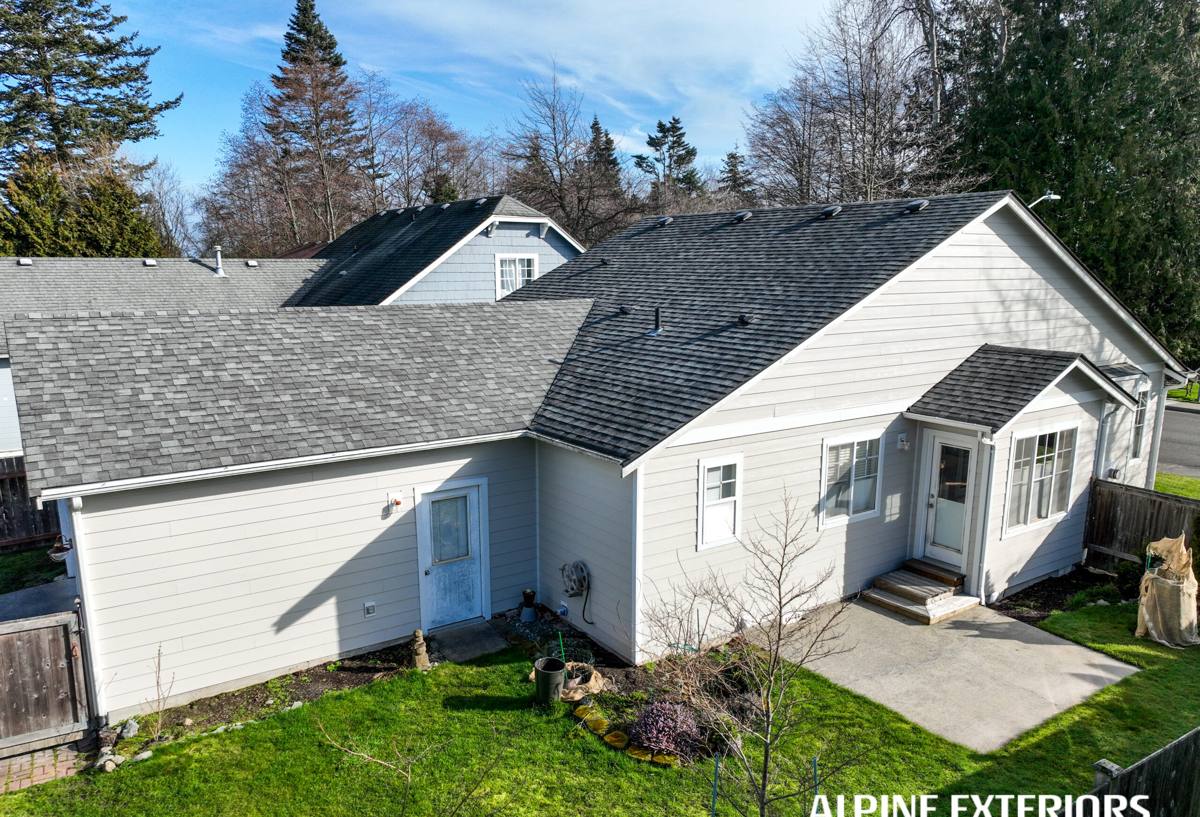
The Real Climate Challenges for Nooksack Homes
Driving Rain and Sustained Moisture
Whatcom County doesn't just get rain — it gets rain that comes in sideways during winter storms, driven by wind off the water and funneled through the valleys and low hills around Nooksack. That kind of driving rain finds its way into seams, laps, and butt joints that would stay dry in a calmer climate. Siding that isn't installed with the right clearances, flashing, and overlap will eventually let moisture behind the cladding, where it can sit against sheathing and framing for months at a time during the wet season.
A Long Moss Season
Shaded lots, tree cover, and consistent dampness make this a strong moss climate. Moss doesn't just grow on roofs — it takes hold on north-facing siding, in horizontal trim, and anywhere water sits or airflow is poor. Beyond looking bad, moss holds moisture against the surface underneath it, which is a slow but real problem for any material that isn't dimensionally stable or that can absorb water into its core.
Salt Air and Coastal Influence
Nooksack isn't right on the water, but Whatcom County as a whole sits close enough to Bellingham Bay and the Strait of Georgia that salt-laden air moves inland, especially with onshore wind patterns. Salt air accelerates corrosion on fasteners and metal flashing, and it can affect how paint and coatings hold up on some siding materials over time. It's a slower effect than driving rain, but it's a real factor in material selection this close to the coast.
Why We Standardized on James Hardie Fiber Cement
We install James Hardie fiber cement siding exclusively. We don't install vinyl, LP SmartSide, Cemplank, Allura, primed spruce, or cedar. That's a deliberate standard, not a default, and it's worth explaining why, especially in a climate like this one.
Vinyl siding is affordable and low-maintenance in mild climates, but it's a thin material that expands and contracts significantly with temperature swings, and it can become brittle over time. In a driving-rain climate, vinyl's loose-fit installation method (it's designed to float, not seal tight) means wind-driven water can get behind it more easily than with a rigid, tightly-installed material. Engineered wood products like LP SmartSide use wood strand technology with resin treatments that resist moisture better than raw wood, and they're a reasonable product — but they're still a wood-based substrate, and wood-based substrates depend heavily on caulking, flashing, and maintenance staying ahead of moisture exposure. In a region with this much sustained dampness and moss growth, that maintenance margin gets thinner than we're comfortable installing behind our name.
Cedar and primed spruce carry the same fundamental issue at a more basic level: they're organic materials that will absorb moisture, check, cup, and eventually rot if coatings aren't renewed on schedule. Cedar has real aesthetic appeal, and some homeowners love the look enough to accept the upkeep — but that's a maintenance commitment we won't quietly install and walk away from. Cemplank and Allura are also fiber cement products, similar in basic composition to Hardie, and not inherently defective — but we standardized on one manufacturer so our crews install one system to spec every time, and we chose Hardie for its factory-applied ColorPlus finish, its HZ5 product engineering for the Pacific Northwest's moisture-heavy climate zones, and its transferable warranty structure.
James Hardie fiber cement is non-combustible, dimensionally stable across temperature and moisture swings, and finished at the factory under controlled conditions rather than painted on site. That factory finish matters here specifically: it holds color and resists the kind of fading and streaking that moss, algae, and driving rain tend to accelerate on field-painted surfaces.
How We Approach a Siding Project in Nooksack
Inspection First
Every project starts with a real look at the existing siding and the wall assembly behind it — not just a visual pass from the driveway. We check for soft spots, moisture staining, moss buildup patterns that point to poor drainage, and flashing conditions around windows, doors, and roof-to-wall intersections. In this climate, those transition points are where problems start.
Installation Details That Matter Here
Fiber cement performs the way it's supposed to only when it's installed to manufacturer spec, and in a driving-rain climate the details matter more than usual:
- Correct clearance between siding and grade, decks, and roof lines to keep splash-back and standing moisture away from the bottom course
- Properly lapped and sealed flashing at every window, door, and penetration
- Corrosion-resistant fasteners, given the salt air influence common across the county
- Rainscreen or drainage plane detailing where the wall assembly calls for it, so any incidental moisture has somewhere to go
- Factory-cut and factory-primed edges kept intact, with field cuts sealed per Hardie's specifications
Color and Product Line Selection
Hardie's ColorPlus finishes are baked on and warranted against fading in a way field-applied paint isn't, which is a real advantage in a climate where moss and algae growth put extra stress on painted surfaces. Depending on the home, we'll talk through lap siding, panel siding, or shingle-style Hardie products, and match trim and accent choices to what suits the house and the neighborhood.
Beyond Siding: Roofing, Windows, and Decks in This Climate
Siding is only part of the exterior envelope, and in Whatcom County the same weather that stresses siding stresses everything else attached to the house.
Roofing takes the most direct hit from moss and sustained moisture. A roof with poor ventilation or aging material grows moss fast in this climate, and moss on a roof holds water against shingles or panels well past when they'd otherwise dry out, shortening their service life. Roof condition also affects siding indirectly — bad flashing at a roof-to-wall intersection is one of the most common ways water gets behind siding in the first place.
Windows are the other major point of failure for moisture intrusion. Old or poorly flashed windows let driving rain track down into the wall cavity, which shows up later as damage that looks like a siding problem but actually started at the window opening. When we replace siding, we always check window flashing and integration as part of the job, not as an afterthought.
Decks in this region deal with the same standing-moisture and moss issues as everything else, plus direct foot traffic and weathering. Ledger board flashing where a deck attaches to the house is another common water-entry point that affects the siding right above it, so deck and siding work often need to be coordinated rather than treated as separate projects.
Signs a Nooksack Home May Need New Siding
Not every siding problem is obvious from the street. Some of the clearer signs worth a closer look:
- Persistent moss or algae streaking that comes back quickly after cleaning
- Soft or spongy spots when you press on the siding, especially near the bottom courses or trim
- Visible cupping, warping, or checking in wood-based siding
- Peeling or bubbling paint that returns within a year or two of repainting
- Gaps opening up at seams, corners, or trim boards
- Interior signs like musty smells, peeling interior paint, or staining near exterior walls
Comparing Common Siding Materials in This Climate
| Material | Moisture Behavior in Driving Rain | Moss/Algae Resistance | Typical Maintenance |
|---|---|---|---|
| James Hardie fiber cement | Rigid, tightly installed, factory-sealed edges | Factory finish resists staining and fading | Occasional wash; no repainting on schedule |
| Vinyl | Floats/overlaps loosely by design; wind-driven water can penetrate seams | Can trap moisture and grime in laps | Low, but limited repair options once damaged |
| LP SmartSide (engineered wood) | Resin-treated but still wood-based; depends on sealed edges and caulking | Moderate; needs coatings maintained | Periodic caulk and paint upkeep required |
| Cedar / primed spruce | Absorbs moisture; prone to cupping and checking over time | Low without regular treatment | Frequent refinishing and inspection |
What Affects the Cost and Timeline of a Siding Project
| Factor | Why It Matters Here |
|---|---|
| Home size and wall complexity | More corners, gables, and penetrations mean more flashing detail work |
| Existing wall condition | Rot or moisture damage found during removal requires repair before new siding goes on |
| Product line and finish choice | Panel vs. lap vs. shingle-style Hardie products vary in material and labor cost |
| Weather window | Wet-season scheduling around Whatcom County's rain patterns can affect timeline |
| Coordinated work | Combining siding with roofing, window, or deck work can save on setup and access costs |
We give straightforward, honest ranges once we've actually looked at a house — broad national averages don't mean much when moisture damage or wall condition varies so much from one property to the next.
Why a Local Whatcom County Crew Matters
A crew that works this region regularly knows what driving rain does to a poorly flashed window, what a shaded north wall in a moss-heavy yard needs versus a south-facing wall, and how salt-influenced air factors into fastener and hardware choices. That's not something a crew passing through the area for one job tends to pick up. It also means we're around after the job is done — for questions, for warranty support, and because we're working on other homes in the same towns and dealing with the same weather every week.
If you're weighing siding, roofing, window, or deck work on a Nooksack home, we're happy to take a look and talk through what your house actually needs — no pressure, no generic sales pitch, just a straight assessment from a crew that works in this climate every day. Reach out below for a free estimate.