 Whatcom County
 Why Nooksack Roofs Take a Different Kind of Beating
Nooksack sits in a part of Whatcom County where the weather doesn't do anything halfway. Rain moves through in long, soaking systems rather than quick storms, which means roofing materials here spend more hours of the year wet than dry for much of fall, winter, and spring. Add in the moisture-laden, faintly salt-tinged air that rolls inland off the Salish Sea and up the river valleys, and you've got conditions that quietly work against a roof year-round, not just during the occasional windstorm.
The most visible result of all that dampness is moss. Whatcom County's long moss season — often eight months or more where shade and moisture combine — is one of the most common reasons we get called out to Nooksack homes. Moss isn't just cosmetic. It holds water against the roofing surface, lifts shingle edges, and works its way into seams and fastener lines. Left alone through a few wet seasons, a moss problem turns into a leak problem.
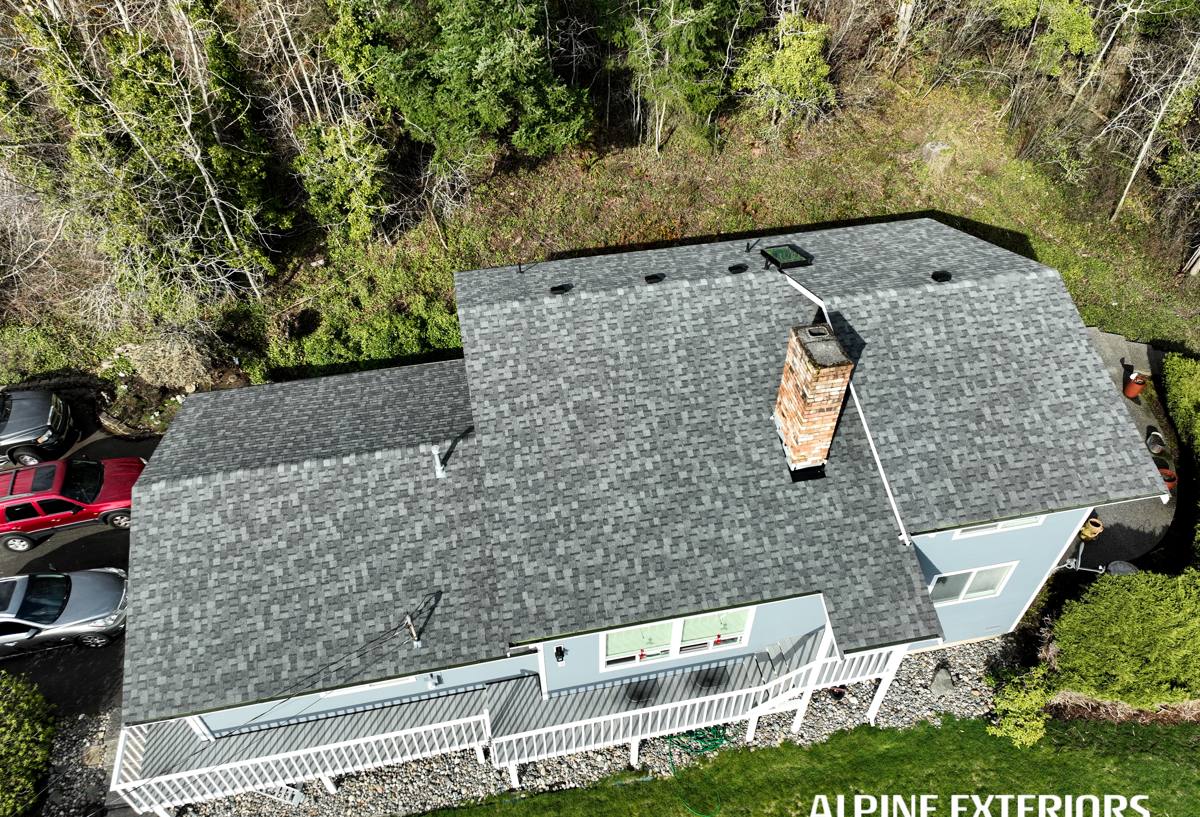
The Roof Repair Nooksack Homes Actually Need
"Roof repair" covers a lot of ground, and not every roof problem in Nooksack looks the same. The damage patterns we see most often here include:
- Moss and organic growth lifting shingle tabs, especially on north-facing slopes and under tree cover
- Valley and flashing leaks where driving rain gets pushed sideways under improperly lapped material
- Gutter and downspout backups that send water up under the roof edge instead of off it
- Nail pops and fastener corrosion from repeated wet-dry cycling
- Soft spots or staining in the attic decking where a slow leak has gone unnoticed
A correct repair addresses the actual cause of the damage, not just the spot where water happens to be showing up inside the house. Water that shows up on a ceiling three feet from an exterior wall didn't necessarily start there — it can travel along rafters or decking before it drips. That's why diagnosis matters as much as the fix itself.
Why Quick Patch Jobs Don't Hold Up Here
In a drier climate, a bead of roofing cement over a crack might buy a homeowner a few seasons. In Whatcom County's rain, that kind of patch tends to fail fast because it doesn't account for how water actually moves under wind-driven rain — sideways and upward, not just straight down. A repair that isn't tied back into proper flashing, underlayment, and shingle lapping is a repair that's likely to leak again within a wet season or two.
What a Correct Roof Repair Involves
Diagnosis Before Anything Gets Touched
We start by tracing the leak or damage to its actual source — checking the roof surface, flashing points, valleys, penetrations (vents, chimneys, skylights), and the attic side where accessible. Guessing at the cause and replacing shingles without finding the entry point is one of the most common reasons homeowners end up paying for the same repair twice.
Matching Materials, Not Just Covering the Spot
Whenever possible, we match the repair to your existing roofing material — same shingle type, similar weight and color — so the fix blends in rather than standing out as an obvious patch. On older roofs where an exact match isn't available, we'll talk through the honest options rather than force a mismatch and call it done.
Flashing and Underlayment Get Rebuilt, Not Reused
Flashing around chimneys, skylights, walls, and valleys is one of the most common failure points on Whatcom County roofs, because it's the one place where two different materials and slopes meet. When we open up a repair area, we replace compromised flashing and underlayment rather than resealing it over old, brittle material — sealant alone is not a permanent fix against sustained rain.
Moss and Debris Management as Part of the Repair
If moss contributed to the damage, removal and treatment are part of the job, not an afterthought. That includes clearing growth without gouging the shingle surface, addressing the moisture or shade conditions feeding it where practical, and leaving the roof in a state where moss is slower to return.
Repair vs. Replacement: How We Help You Decide
Not every damaged roof needs full replacement, and not every leak is worth chasing with repairs indefinitely. We give homeowners a straight answer based on the roof's age, condition, and how widespread the damage is — not a sales pitch toward the bigger job.
| Signal | Usually Points to Repair | Usually Points to Replacement |
|---|---|---|
| Roof age | Under 15-20 years, materials still flexible | Near or past expected lifespan for its material |
| Damage extent | Isolated to one slope, valley, or penetration | Spread across multiple areas or slopes |
| Decking condition | Solid, no soft spots found | Soft, delaminated, or water-stained decking |
| Moss/algae history | Recent growth, shingles still sound underneath | Years of buildup with granule loss and lifted edges throughout |
| Leak pattern | Single, traceable source | Multiple or recurring leaks in different spots |
These are general guideposts, not hard rules — a 25-year-old roof with one localized flashing failure can still be a good repair candidate. That's why an in-person look matters more than a rule of thumb.
Our Process for Nooksack Roof Repair
- Inspection and diagnosis — We look at the roof surface, flashing, penetrations, gutters, and attic access to trace the actual cause of damage.
- Straight explanation — We walk you through what we found, in plain terms, including whether repair or replacement makes more sense.
- Written estimate — Scope of work and cost range before anything is scheduled, so there are no surprises mid-job.
- Repair work — Removal of damaged material, moss and debris clearing where relevant, new flashing and underlayment as needed, and matched shingle or roofing material installed correctly.
- Cleanup and check — Site cleaned up, debris removed, and the repair area reviewed with you before we consider the job done.
Signs Your Nooksack Home Needs Roof Repair Now
Roof problems in this climate rarely announce themselves loudly at first. Watch for:
- Moss buildup thick enough to hold visible water after a dry day or two
- Shingle granules collecting in gutters or at downspout outlets
- Curling, cracked, or lifted shingle edges, especially on shaded slopes
- Water stains or discoloration on interior ceilings or upper walls
- Daylight visible through the roof deck from inside the attic
- Sagging along a ridge line or roof plane
- Rusted, cracked, or separated flashing around chimneys and vents
- Gutters that overflow or pull away from the fascia during heavy rain
Any one of these on its own may not be urgent. Two or three together, or anything paired with an active interior leak, is worth a prompt inspection.
Materials and Methods We Use
We install and repair with roofing materials suited to the Pacific Northwest's wet, moss-prone conditions — algae-resistant asphalt composition shingles where that fits the home, along with proper synthetic underlayment and metal flashing rather than tar-based patches that break down under repeated wet-dry cycling. Where a roof is heading toward replacement rather than repair, we'll talk through material trade-offs honestly, including maintenance burden and how each option handles this region's moss and moisture rather than just upfront cost.
We size every repair to the actual scope of damage. That means we won't sell a full tear-off when a targeted flashing and shingle repair will hold up, and we won't quote a patch job on a roof where the decking underneath is already failing.
Why a Crew That Already Works Nooksack Matters
A roofing crew that regularly works Whatcom County knows what moss growth looks like at different stages here, understands how driving rain off the river valleys tends to find weak points in flashing, and isn't guessing at local permitting or code requirements when a repair crosses into replacement territory. That local familiarity shows up in faster, more accurate diagnosis — and in a repair built to actually hold through the next wet season rather than the next dry week.
It also means a shorter response time when a leak shows up mid-storm. Homeowners dealing with an active leak don't need a crew driving in from across the region — they need someone who already knows the area and can get eyes on the roof quickly.
Maintaining Your Roof Between Repairs
A repair holds longer when it's not fighting the same conditions that caused the original damage. A few habits make a real difference in this climate:
- Keep gutters and downspouts clear, especially heading into fall's heaviest rain
- Trim back overhanging branches that keep roof sections shaded and damp
- Have moss treated or removed before it spreads across an entire slope
- Check attic ventilation — poor airflow traps moisture and speeds up decking damage
- Schedule a roof check after any major windstorm, even without visible leaks
None of this replaces a professional inspection, but it buys time and reduces how often repairs are needed in the first place.
If you're seeing moss buildup, a stain on the ceiling, or just want a second opinion on a roof that's been through a few too many Whatcom County winters, we're glad to take a look. Fill out the form below for a free, no-pressure estimate on roof repair for your Nooksack home.