 Whatcom County
 Columbia's Exterior Challenge: Water on Three Fronts
Columbia is one of Bellingham's older established neighborhoods, sitting close to the water on the city's south side. That proximity is part of what makes it a great place to live, and it's also exactly why the homes here take a harder beating than houses just a few miles inland. In Columbia, exterior materials deal with salt-laden air off Bellingham Bay, driving rain that comes in sideways off the water during winter storms, and a moss season that can run eight months or longer in a shaded, moisture-heavy microclimate. Add in the tree cover common to older Whatcom County neighborhoods, and you've got siding, roofing, and trim that rarely get a chance to fully dry out between weather events.
None of this is unique to Columbia in a dramatic way — it's simply concentrated. Salt air accelerates corrosion of fasteners and metal flashing. Constant dampness feeds moss, algae, and mildew on anything with texture or shade. And older housing stock in this part of Bellingham often has original or once-replaced siding that was never designed with today's moisture management details in mind. We work on homes in this neighborhood regularly, and the patterns repeat: it's rarely one catastrophic failure, and almost always a slow accumulation of moisture damage that homeowners don't notice until it's already expensive.
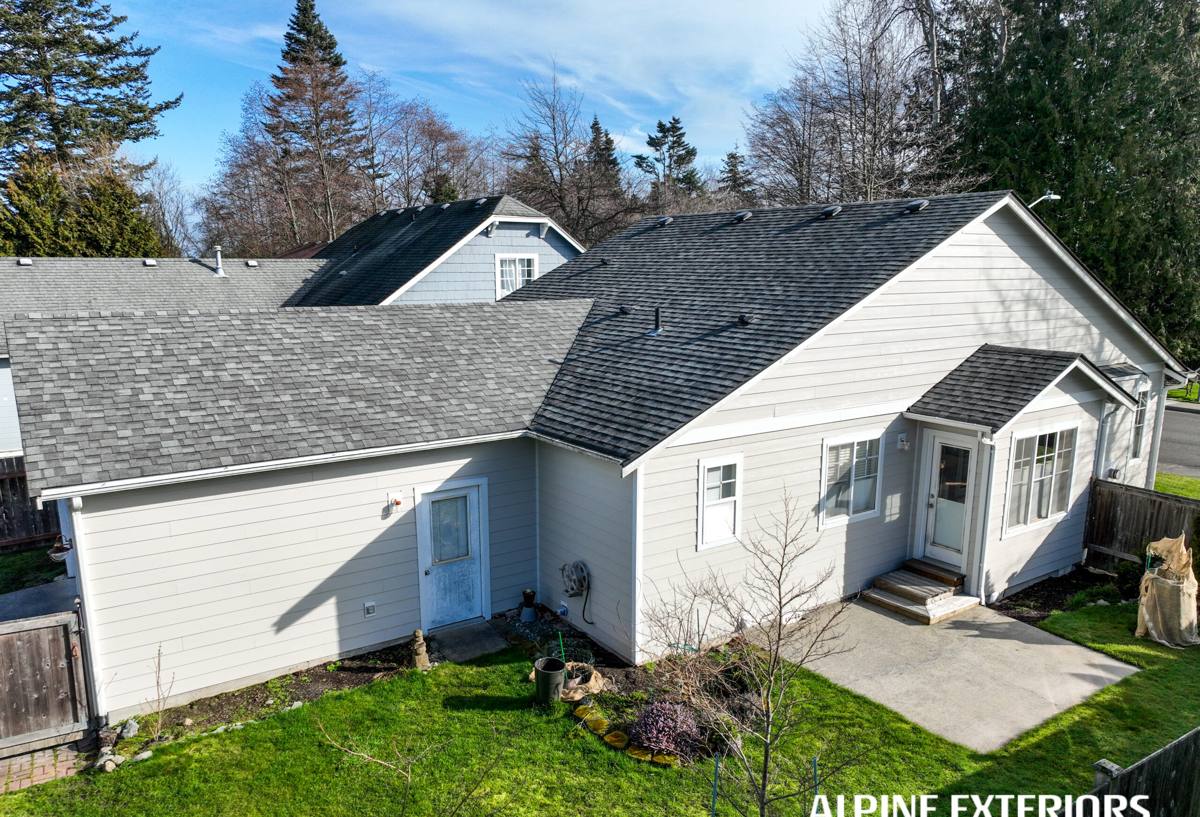
What We See on Columbia Homes
Moss and Organic Growth
Shaded lots near the water hold moisture longer, and moss doesn't just sit on the surface — it holds water against whatever it's growing on. On wood-based siding, that means slow rot underneath a green film that looks more cosmetic than structural. On composite products, it means a maintenance cycle that never really ends. Moss is a symptom of a damp microclimate, not just a cleaning problem, and treating it as a one-time pressure-wash fixes the look without fixing the cause.
Fastener and Flashing Corrosion
Salt air is hard on exposed metal. Nail heads, flashing seams, and hardware that isn't corrosion-rated show rust and pitting years before they would inland. Once a fastener starts to corrode, the seal around it weakens, and that's a direct path for water into the wall assembly.
Paint and Finish Failure
Field-applied paint on siding in a damp, salt-air environment tends to fail from the inside out — moisture gets behind the paint film through hairline cracks or seams, then blisters and peels the finish from underneath. Homeowners often repaint on a shorter cycle here than they expected to, which is a maintenance cost that adds up over the life of a house.
Why We Install James Hardie — and Only James Hardie
We don't install vinyl, LP SmartSide, Cemplank, Allura, primed spruce, or cedar. That's a deliberate standard, not a marketing line, and in a neighborhood like Columbia the reasoning is straightforward.
- Vinyl expands and contracts with temperature swings and can warp or crack in wind-driven rain events; it also isn't fire-resistant, which matters as wildfire smoke and regional fire risk become a bigger conversation in the Pacific Northwest.
- LP SmartSide and other wood-strand products are engineered wood — better than raw lumber, but still wood at the core. In a chronically damp, low-airflow setting like a shaded lot near the bay, any breach in the factory coating gives moisture a path into a wood-based substrate.
- Primed spruce and cedar are traditional, attractive, and genuinely vulnerable to exactly the conditions Columbia has in abundance: standing moisture, moss, and slow rot. Cedar in particular demands a maintenance commitment — refinishing, sealing, moss removal — that most homeowners underestimate when they choose it.
- Cemplank and Allura are also fiber cement, and fiber cement as a category is the right material for this climate. We standardized on James Hardie specifically for its ColorPlus factory-applied finish, its HZ5 product engineering for wetter climates, and the strength of its transferable warranty when installation is done to spec.
Fiber cement itself is non-combustible and doesn't feed moss and mildew the way wood fiber does. James Hardie's ColorPlus finish is baked on at the factory under controlled conditions, which gives it better fade and chip resistance than field-applied paint — directly addressing the repaint cycle we see on older Columbia homes. It's not a cheap fix, but it's the one we're willing to put our name behind.
Comparing Siding Options for a Coastal Bellingham Lot
| Material | Moisture/Moss Resistance | Maintenance Cycle | Fire Resistance |
|---|---|---|---|
| James Hardie fiber cement | High — engineered HZ lines, factory finish | Low — no repainting on ColorPlus finish | Non-combustible |
| Vinyl | Moderate — can trap moisture behind panels | Low, but warps/cracks over time | Not fire-resistant |
| LP SmartSide | Moderate — vulnerable if coating is breached | Moderate | Combustible core |
| Cedar | Low in shaded/damp settings | High — sealing, staining, moss removal | Combustible |
| Primed spruce | Low — prone to swelling and rot | High | Combustible |
Roofing, Windows, and Decks: The Rest of the Envelope
Siding is only one piece of how a Columbia home handles this climate. We do roofing, window, and deck work as well, because a house's exterior only performs as a system — a great siding job undermined by a failing roof or a leaking window trim detail just moves the water problem somewhere else.
Roofing
Moss on a roof is more than a cosmetic issue near the water — it holds moisture against shingles and can work its way under tabs and flashing over a wet Whatcom County winter. Roof condition also directly affects how well your siding performs, since poor roof drainage and clogged gutters send extra water down exterior walls exactly where you don't want it.
Windows
Older windows in this part of Bellingham often have flashing and sealant details that were adequate decades ago but don't meet what we'd install today. When we replace siding around existing windows, we check and correct flashing at the same time — it's one of the most common places we find hidden water intrusion on a home that otherwise looks fine from the street.
Decks
Outdoor living spaces near the water deal with the same moss, mildew, and moisture exposure as siding, just underfoot instead of on the wall. Deck ledger connections and framing joints are common trouble spots when a structure has been exposed to years of driving rain.
What Correct Installation Looks Like in This Climate
James Hardie siding performs the way it's rated to perform only when it's installed to the manufacturer's specifications — and in a wet coastal setting, the installation details matter more than in a dry climate. That means proper starter strip and clearance off grade, correctly lapped and sealed house wrap, rain-screen or drainage gap detailing where appropriate, corrosion-resistant fasteners driven to the right depth, and factory-mitered or properly caulked joints at trim and corners. Skipping any one of these doesn't show up as a problem on day one — it shows up three or five years later as trapped moisture, and by then the damage is behind the wall, not on the surface where it's easy to catch.
This is also where a local crew matters. A contractor who works in Whatcom County day in and day out knows which details actually get tested by this weather versus which ones just look good on paper. We've installed and repaired exteriors on homes with the same salt air and shade exposure that Columbia has, and we bring those lessons to every job rather than treating each house as a first attempt.
Questions Worth Asking Before You Sign a Siding Contract
- Is the crew installing to the manufacturer's written specifications, or to a generic standard?
- What fastener type will be used, and is it rated for coastal/salt-air exposure?
- How is moisture managed behind the siding — house wrap, flashing, drainage gap?
- Does the warranty cover installation labor, or only the material itself?
- Has the crew worked on homes in this specific neighborhood or similar coastal conditions before?
Timing a Project Around Whatcom County Weather
Siding, roofing, and deck work in this area go smoother when scheduled around the driest stretches of the year, typically summer into early fall. That said, moisture damage doesn't wait for good weather to reveal itself — if you're seeing soft spots, peeling paint, or heavy moss buildup on siding or trim, it's worth getting an assessment regardless of season so a small problem doesn't turn into a larger one over another wet winter.
If you're noticing moss buildup, paint failure, or aging siding on a home in Columbia, we're happy to take a look and give you a straightforward, no-pressure assessment. Use the form below to request a free estimate for siding, roofing, window, or deck work.