 Whatcom County
 Why Whatcom County Siding Takes More Punishment Than It Looks Like
Most homeowners think of siding damage as a slow, even fade — a little peeling paint, a little discoloration, nothing urgent. In Whatcom County, that assumption gets people into trouble. Between the marine air rolling off Bellingham Bay and the Strait of Georgia, the driving rain that comes sideways off Puget Sound storms, and a wet season that can stretch from October well into May, siding here is under near-constant moisture load for most of the year. Add in the shaded, tree-covered lots common from Bellingham to Ferndale to Lynden, and you get long stretches where siding simply never fully dries out between rain events.
None of that means siding is doomed. It means moisture management has to be treated as the central design problem of an exterior, not an afterthought. This page walks through how moisture actually damages siding and framing, what the warning signs look like before they become expensive, and how material choice and installation quality change the outcome.
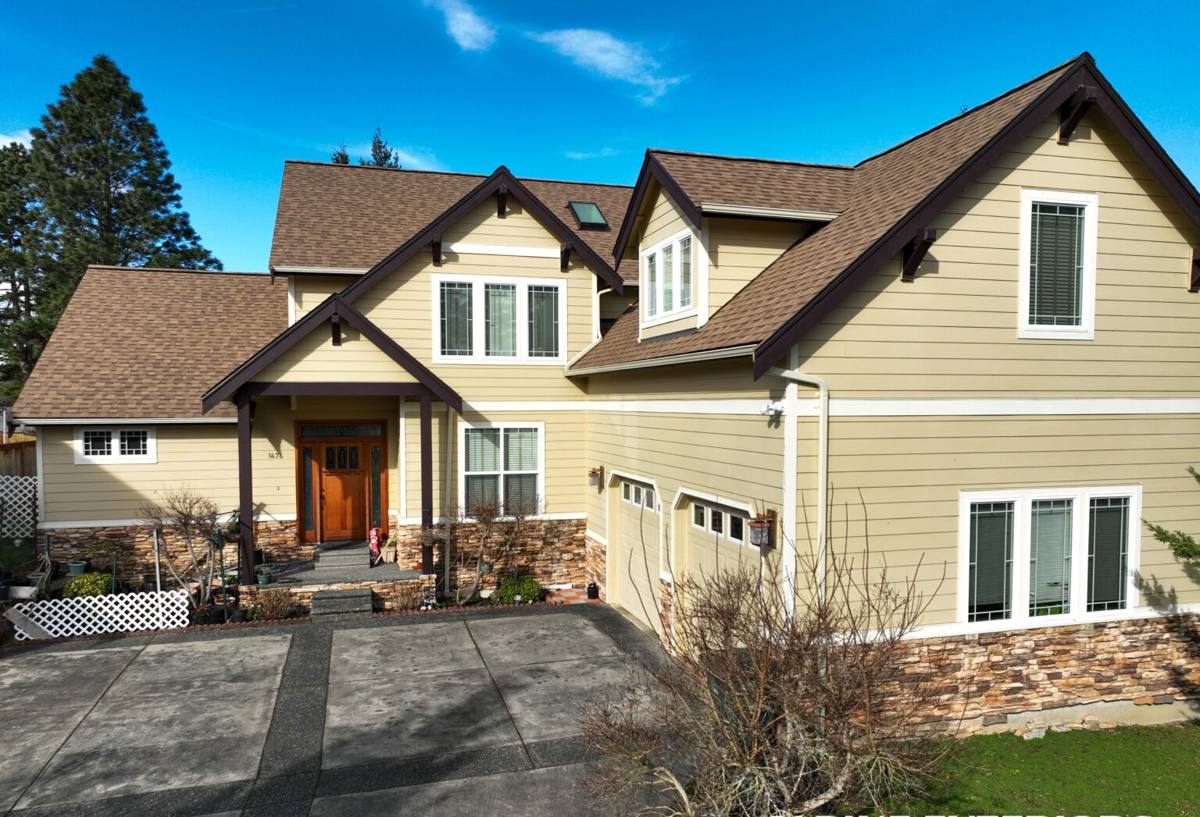
How Moisture Actually Gets Behind Your Siding
Rot rarely starts because water gets past the face of the siding in a sheet. It starts small, in a handful of predictable places, and then does its damage slowly and out of sight.
Bulk Water Intrusion
This is water finding a direct path in — through a failed caulk joint, a nail hole that was never sealed, a window or door flashing detail that was installed wrong, or a butt joint between siding boards that wasn't lapped or flashed correctly. Whatcom County's driving rain, especially in wind-exposed spots near the water or on open lots, pushes water into gaps that would stay dry in a calmer climate.
Capillary Action and Wicking
Water doesn't need a gap to travel — it can wick upward through porous materials, especially wood and wood-based products, wherever siding sits too close to grade, a deck, a roofline, or another horizontal surface. This is one of the most common rot starting points inspectors find, and it's almost always invisible until the damage is well underway.
Trapped Vapor
Even siding that keeps bulk water out can trap moisture vapor behind it if there's no path for the wall assembly to dry — inadequate house wrap detailing, missing rain screen gap, or house wrap installed with seams facing the wrong direction. In our climate, where the air itself carries a lot of moisture for much of the year, a wall that can't dry to the outside stays damp longer after every rain event, and damp sheathing and framing are what eventually rot.
The Signs That Actually Matter
Homeowners often watch for the wrong things. Fading color or chalky paint is a maintenance issue, not a structural one. The signs below are the ones worth acting on.
- Soft or spongy spots when you press on siding, especially near the bottom courses or around window and door trim
- Paint that's bubbling or peeling in a localized patch rather than evenly across a wall
- Visible gaps, cracks, or separated caulk joints at butt seams, corners, and penetrations
- A musty smell inside near an exterior wall, which often means moisture has already reached the sheathing or framing
- Dark staining streaks running down from a specific point, which usually traces back to a flashing or gutter failure above it
- Siding boards that have visibly swelled, bowed, or pulled away from the wall
- Interior drywall staining, bubbling, or soft spots on the same wall where exterior siding shows damage
If you catch any of these early, the repair is usually localized. Left alone through another wet Whatcom winter, they tend to spread into the sheathing and framing, which turns a siding repair into a structural one.
Moss, Algae, and Biological Growth: What It Means and What It Doesn't
Green or black growth on siding is one of the most common calls we get, and it's worth separating fact from worry. Moss and algae need sustained moisture and shade to establish, which describes a lot of north-facing walls and tree-shaded elevations across the county for a good chunk of the year. Surface growth on its own is mostly cosmetic — it means that section of wall stays wet longer than others, not that rot is guaranteed.
What matters is what's happening underneath. On wood and wood-based siding, sustained surface moisture from moss cover eventually does contribute to decay, because the substrate itself absorbs and holds water. On fiber cement, surface growth can generally be cleaned without the underlying material breaking down, since cement board doesn't absorb and swell the way wood-based products do. Either way, moss that's allowed to build up for years without ever being cleaned is a sign that a wall isn't drying properly, and it's worth having someone check what's going on behind it — not just power-wash the surface and move on.
How Different Siding Materials Actually Handle Our Climate
Every siding material handles moisture differently, and the differences matter more here than in drier parts of the country. This is a general comparison, not a claim that any one product will fail — it's about where the real-world risk and maintenance burden sit.
| Material | How It Responds to Sustained Moisture | Typical Maintenance Burden Here |
|---|---|---|
| Primed spruce / solid wood | Absorbs water readily; swells, cups, and eventually decays if paint film fails or joints open up | High — repainting and caulk inspection needed every few years |
| Cedar | Naturally rot-resistant heartwood, but sapwood and cut edges absorb moisture; needs consistent finish maintenance | High — periodic refinishing, more in shaded/wet locations |
| Vinyl | Doesn't absorb or rot itself, but doesn't stop water at seams and penetrations; traps moisture against sheathing if house wrap detailing is off | Low surface maintenance, but hidden wall assembly moisture can go unnoticed |
| LP SmartSide / OSB-based products | Engineered wood strand substrate; factory-treated, but any breach in the outer resin-saturated layer exposes wood fiber that can swell and decay at cut edges and joints | Moderate — edge sealing and caulk maintenance is important, especially at field cuts |
| James Hardie fiber cement | Cement-based composition doesn't absorb water the way wood fiber does and won't rot; moisture management still depends on correct flashing and installation | Low — periodic cleaning and caulk checks, no repainting cycle with ColorPlus finish |
The common thread across every material on this list is that installation quality matters as much as the material itself. Even a rot-resistant material will fail early if flashing, lapping, and clearances are done wrong. And even a moisture-tolerant material like fiber cement will have joint and trim issues if the crew doesn't treat cut edges and penetrations correctly.
Installation Details That Decide Whether Moisture Becomes a Problem
Flashing
Every window, door, deck ledger, and roof-to-wall intersection needs flashing that directs water outward and downward, lapped correctly with the house wrap and siding above and below it. This is the single most common failure point we find in older Whatcom County homes — flashing that was skipped, reversed, or installed without proper laps.
Clearances
Siding should never sit directly against grade, a roof surface, a deck, or a patio. Building codes specify minimum clearances for a reason — it gives water somewhere to go besides straight up the bottom edge of the siding.
Rain Screen / Drainage Gap
A small gap between the house wrap and the back of the siding lets any water that does get past the cladding drain and lets the wall assembly dry to the outside. This detail matters more in a climate like ours, with long wet stretches, than it does in drier regions.
Fastening and Joints
Over-driven nails, wrong fastener spacing, and butt joints that aren't properly backed or sealed all create entry points. On engineered wood products especially, cut edges that aren't field-sealed per the manufacturer's instructions are a known vulnerability.
Repair or Replace: How to Think About It
Not every sign of moisture damage means a full re-side. A localized soft spot around one window, caught early, is often a targeted repair — cut out the damaged section, check and fix the flashing underneath, and patch in matching material. The calculation changes when:
- Damage shows up in multiple, unrelated areas of the house rather than one isolated spot
- The siding is original wood or an older engineered product nearing or past its expected service life
- Moisture has reached the sheathing over a wide area, not just the siding itself
- Repeated past repairs haven't stopped new damage from appearing
In those cases, a full tear-off gives you the chance to correct the underlying flashing and drainage details, not just patch the symptom — which is the only way to actually stop the cycle rather than revisiting it every few years.
A Practical Moisture-Prevention Checklist
- Walk the exterior twice a year and press-test siding near grade, decks, and roof intersections
- Keep gutters clean and downspouts directing water well away from the foundation and wall base
- Trim back vegetation and tree cover that keeps specific wall sections shaded and damp longer than the rest of the house
- Recaulk failed joints promptly rather than waiting for a full maintenance cycle
- Check that soil, mulch, or hardscaping hasn't crept up over the years and reduced siding clearance from grade
- Have a professional check flashing at any window, door, or deck that's ever shown a water stain, even a small one
- Don't power-wash siding at close range or high pressure — it can force water behind joints and seams
Why We Install Only James Hardie
Given how much of siding failure in this climate traces back to a material absorbing and holding moisture, we made the decision to install James Hardie fiber cement exclusively. It isn't that other products can't be installed correctly — it's that fiber cement's cement-based composition simply doesn't have the same failure mode as wood, wood-strand, or absorbent substrates when a flashing detail is imperfect or a joint opens up over time. Paired with a factory-applied ColorPlus finish and a strong transferable warranty, it gives Whatcom County homeowners a material that's engineered to hold up against exactly the conditions this region produces year after year: salt air, sustained rain, and long stretches without full drying.
If you're seeing any of the warning signs above, or you just want an honest read on how your current siding is holding up, we're happy to take a look. Reach out for a free, no-pressure estimate using the form below.