 Whatcom County
 Siding Built for Samish's Corner of Whatcom County
Samish sits in one of the more distinct microclimates in Whatcom County. Homes here deal with a combination most exterior products aren't designed to handle at the same time: moisture-laden air moving in off the water, driving rain that comes in sideways during winter storm systems, and heavy tree canopy that keeps siding shaded and damp long after a storm passes. That combination is exactly why we install only James Hardie fiber cement siding on the homes we work on in this area. We've seen what happens to lesser products out here, and we'd rather put something on your walls that's still doing its job in twenty years than something that looks good for five.
This page walks through what Samish homes actually face, how our siding, roofing, window, and deck work fits together as a system for this climate, and what to expect if you're considering a replacement.
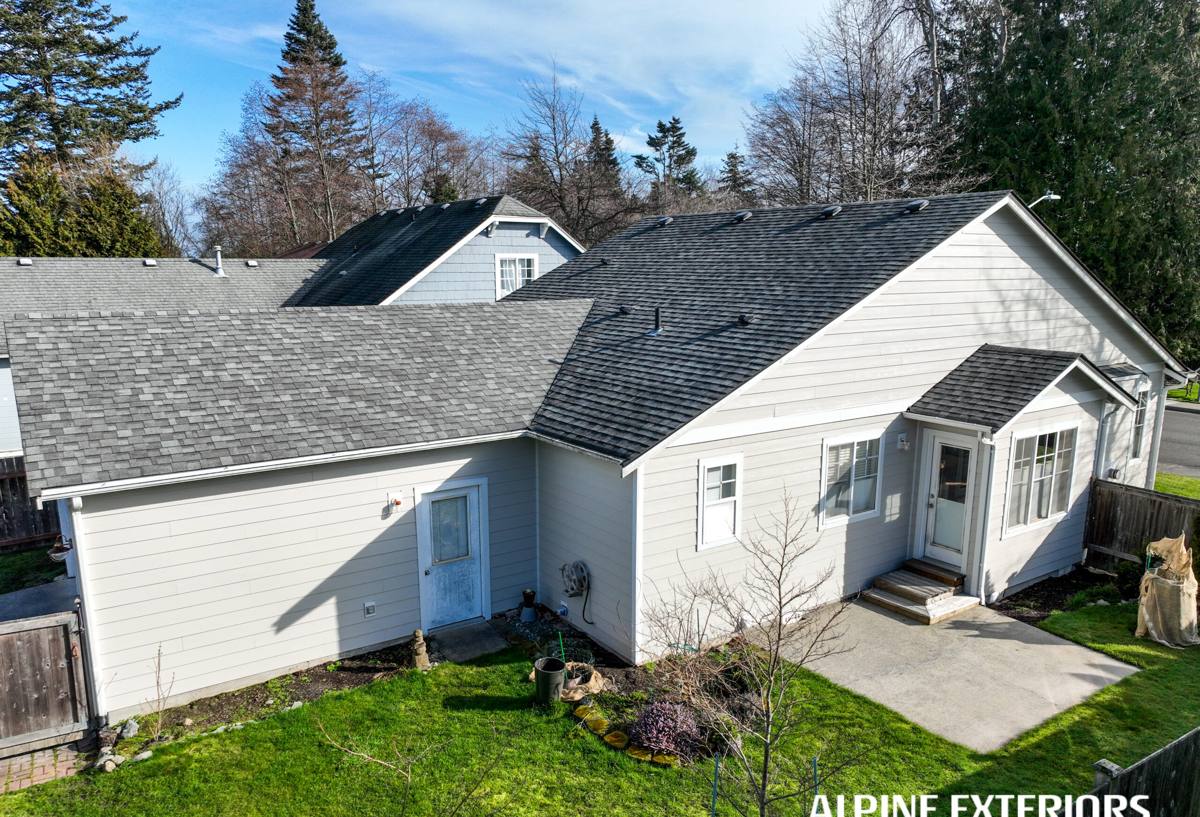
What the Samish Climate Does to a House
Salt Air and Moisture
Proximity to water means airborne salt and near-constant moisture in the air, even on days without rain. Salt air accelerates corrosion on fasteners, flashing, and any metal trim components, and it contributes to the slow breakdown of coatings and finishes that aren't formulated to resist it. Over years, this shows up as fading, chalking, and premature failure on siding materials that weren't engineered with coastal exposure in mind.
Driving Rain
Whatcom County gets a lot of rain, but it's the wind-driven rain that does the real damage. When rain is pushed sideways into a wall assembly, it finds every gap, seam, and unsealed joint. Siding that relies on paint film or a thin factory coat to keep water out is fighting a losing battle here. What matters more is how the product itself handles moisture at the core, and how carefully the installation manages water at seams, corners, and penetrations.
Moss and Prolonged Dampness
Wooded lots and shaded elevations mean siding often stays damp for days after a storm rolls through. That's ideal growing conditions for moss, algae, and mildew. On wood-based or wood-look products, sustained dampness is also the trigger for rot at seams, butt joints, and anywhere water can wick into the material. A siding product that doesn't absorb and hold moisture in the first place removes most of that risk.
Why We Only Install James Hardie
We get asked regularly why we don't offer vinyl, LP SmartSide, cedar, or primed spruce as options. It's not that these products don't have a place in the market — it's that we've made a professional judgment call about what holds up in this specific climate, and we'd rather stand behind one product we trust completely than offer a menu of options we have reservations about.
The Short Version
- Non-combustible core — fiber cement doesn't burn, which matters for wildfire-conscious insurance underwriting as much as direct exposure risk.
- Engineered for moisture, not just coated against it — the cement-based composition doesn't absorb water and swell, warp, or delaminate the way wood-based products can under sustained dampness.
- Factory-baked ColorPlus finish — the finish is cured onto the board in a controlled factory environment, which holds up to UV and salt-air exposure far longer than field-applied paint.
- Climate-specific product lines — Hardie engineers different formulations (HZ5 for colder, wetter climates like ours) rather than selling one generic board everywhere.
- Strong transferable warranty — a real, honored warranty backing the product matters when you're deciding what goes on the largest surface of your home.
None of this means other products are junk. It means that for a house that has to survive Samish winters year after year, we don't think the trade-offs are worth it, and we're not willing to install something on your home that we wouldn't put on our own.
How We Approach a Siding Project in Samish
Assessment First
Before we talk product or price, we look at the actual condition of your walls: what's underneath the current siding, whether there's existing moisture damage, how the house is oriented relative to wind and rain exposure, and where past water management has failed. A house on a shaded, north-facing slope needs different attention at seams and flashing than one in a more open, sun-exposed spot.
Installation Details That Actually Matter
James Hardie siding performs the way it's rated to perform only when it's installed to spec. That means correct fastener patterns, proper clearances at grade and roofline, correctly lapped and sealed flashing, and attention to every penetration point — hose bibs, vents, light fixtures, and anywhere else something breaks the plane of the wall. Sloppy installation is the most common reason any siding product underperforms, Hardie included, and it's the part of the job we control entirely.
Working Around Established Landscaping
A lot of Samish properties have mature trees and established plantings close to the house. We plan our staging and material handling to minimize disruption to landscaping, and we account for the extra care needed when working near root systems, low branches, or tight side yards.
Siding Doesn't Work Alone — The Rest of the Exterior
Siding is one piece of a bigger system. If the roof, windows, or decking aren't also managing water correctly, siding takes on stress it wasn't meant to handle. We handle all four because they're interconnected:
Roofing
Roof-wall intersections are one of the most common places we find water intrusion on older homes. Proper step flashing and kick-out flashing where the roof meets siding is what keeps water from running behind the wall assembly instead of off the roof edge.
Windows
Old or poorly flashed window openings are a direct path for driving rain to get behind siding. When we replace siding around existing windows, we check and correct flashing details at every opening rather than just cutting siding to fit around a potential problem.
Decks
Ledger board connections and any point where a deck attaches to the house need the same moisture-conscious detailing as the siding itself. A deck ledger that's trapping water against the rim joist can quietly rot a wall from the inside out.
Comparing Siding Options for a Samish Home
| Factor | James Hardie Fiber Cement | Vinyl | Wood / LP SmartSide |
|---|---|---|---|
| Moisture absorption | Very low | Low, but seams can trap water | Higher; core can swell if compromised |
| Salt air / coastal exposure | Engineered for it (HZ5) | Can become brittle over time | Coatings degrade faster near salt air |
| Fire resistance | Non-combustible | Combustible | Combustible |
| Finish longevity | Factory-baked, long-lasting | Can fade or chalk | Field-applied paint needs recoating |
| Typical lifespan with proper install | Multiple decades | 15-25 years | Varies; sensitive to moisture exposure |
Cost Factors Worth Understanding
Every home is different, so we don't quote pricing without seeing the property, but the main variables that drive cost on a Samish project are generally:
- Total square footage and the complexity of the wall surfaces (dormers, gables, multiple stories)
- Condition of the sheathing and framing underneath the existing siding — hidden damage adds scope
- Whether trim, fascia, and soffit are being replaced alongside the siding
- Siding profile chosen (lap siding, shingle-style panels, board and batten) and color/finish selection
- Site access and how much hand-carrying of material is required on tighter lots
We give straightforward, itemized estimates so you know exactly what you're paying for and why.
Why a Local Crew Matters Here
A crew that works across Whatcom County regularly, rather than one flown in for a single job, knows how the water table, tree cover, and storm patterns in areas like Samish differ from a subdivision closer to town. That local knowledge shows up in small decisions — where to add extra flashing, how much drainage gap to build in behind the siding, which details to double-check on a shaded, damp elevation — that don't show up on a spec sheet but make a real difference over the life of the siding.
Maintenance Expectations After Installation
James Hardie siding is low-maintenance, not zero-maintenance. In a climate like Samish's, we recommend:
- An annual visual check for any moss or algae buildup, especially on shaded north- or west-facing walls
- Gentle rinsing rather than pressure washing, which can force water behind panels at seams
- Keeping gutters clear so overflow isn't running down the face of the siding
- Trimming back vegetation that's holding moisture directly against the wall
Done right, that's about all it takes to keep it performing for decades.
If you're weighing a siding, roofing, window, or deck project on a Samish property, we're happy to take a look and give you a straightforward, no-pressure estimate — just fill out the form below.