 Whatcom County
Siding Built for Samish's Coastal Exposure
Samish sits close enough to the water that siding here does a different job than siding twenty miles inland. Salt-laden air, wind-driven rain off the water, and a moss season that can run most of the year all work on a home's exterior at once. Whatcom County homeowners in this area often find that siding problems show up first in the details other regions barely think about: fastener corrosion, moisture creeping in behind trim, and a persistent green film on north-facing walls that no amount of pressure washing seems to fully solve.
A siding installation done right for Samish isn't just about picking an attractive product. It's about choosing a material and installation method that account for salt exposure, sustained moisture, and the biological growth that comes with shade and dampness. That's the lens we bring to every siding installation in this part of the county.
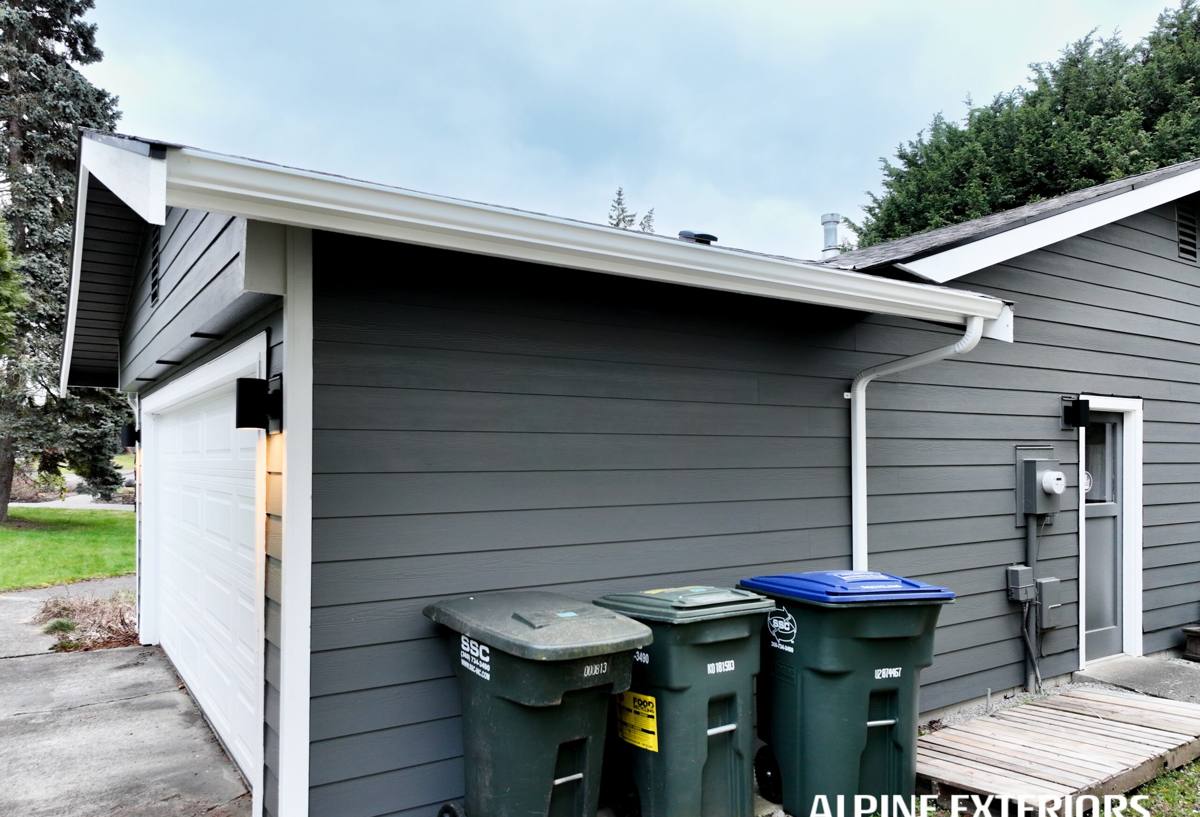
What Samish's Climate Actually Does to Siding
Salt Air and Corrosion
Proximity to saltwater means airborne salt settles on exterior surfaces and works into fastener heads, trim joints, and any exposed metal. Over years, this accelerates corrosion in lower-grade fasteners and flashing, which in turn creates small gaps where water intrudes. Siding systems that aren't specified with corrosion-resistant fasteners and flashing details tend to show staining and premature wear near the coast well before their inland counterparts.
Driving Rain
Wind off the water doesn't just drop rain straight down — it pushes it sideways into wall assemblies, seams, and window and door penetrations. Siding that relies on face-sealed joints or minimal overlap can let water past the surface layer even when it looks fine from the street. The real defense is in the water-resistive barrier, flashing, and lap details underneath the siding, not just the siding itself.
Moss and Sustained Moisture
Whatcom County's long wet season means siding stays damp for extended stretches, especially on shaded north and west elevations near tree cover. That moisture is what moss, mold, and mildew need to establish themselves. Materials that absorb water or swell when saturated give moss more to grow on and take longer to dry out between rain events, which shortens their service life and increases maintenance.
Why We Only Install James Hardie Fiber Cement
We've made a deliberate decision to install James Hardie fiber cement siding exclusively — not vinyl, not LP SmartSide, not Cemplank, Allura, primed spruce, or cedar. This isn't a marketing preference; it's a standard we hold because of what we see in coastal Whatcom County climates like Samish's.
- Non-combustible core: Fiber cement doesn't burn, warp, or soften in heat the way vinyl can.
- Engineered for moisture: Hardie's HZ5 product line is specifically formulated for wet, freeze-prone climates, resisting moisture absorption better than wood-based composites.
- Dimensionally stable: It doesn't expand and contract with humidity swings the way wood or composite products can, which keeps seams and caulk joints intact longer.
- Factory-applied ColorPlus finish: A baked-on finish resists fading and chalking from UV and salt exposure far better than field-applied paint.
- Strong transferable warranty: Backed by a manufacturer warranty structure that reflects confidence in long-term performance, not just initial appearance.
Products like vinyl or wood-based composites aren't without merit — vinyl is inexpensive and low-maintenance in mild climates, and cedar has genuine aesthetic appeal. But in a salt-air, high-moisture environment, vinyl can become brittle and warp under sun and salt cycling, wood-based composites are vulnerable to swelling and edge deterioration if moisture gets past the finish, and cedar demands a maintenance commitment — periodic refinishing, moss treatment, caulk inspection — that most homeowners underestimate until they're several years in. We'd rather install one product correctly than offer several we can't fully stand behind in this climate.
What Correct Installation Looks Like
The siding material is only part of the equation. In a coastal, high-moisture area like Samish, the installation details are what actually determine whether a home stays dry for the next thirty years.
Water Management Comes First
Before a single piece of siding goes up, the wall needs a properly lapped water-resistive barrier, correctly flashed windows and doors, and drainage planes that let any incidental moisture escape rather than pool behind the cladding. Rushing this stage is the single most common cause of siding failures we see on inspections, regardless of what material was installed.
Fastening and Clearances
Fasteners need to be corrosion-resistant and driven to Hardie's specification — not too shallow, not overdriven, and set at the correct spacing. Siding also needs proper clearance from grade, roofing, decks, and other transitions so it isn't sitting in a splash zone or trapping water against untreated cuts.
Field-Cut Edges
Any cut edge on fiber cement siding needs to be sealed per manufacturer spec. An unsealed cut edge is one of the few places fiber cement can absorb moisture, and it's an easy detail to skip if a crew isn't used to working with the product day in and day out.
Caulking and Joint Design
Overuse of caulk to compensate for poor fit is a red flag. Correctly installed Hardie siding relies on proper laps, gaps, and flashing — caulk should be a finishing touch at specific joints, not a substitute for correct construction underneath.
Our Process for a Samish Siding Installation
- On-site assessment: We walk the exterior, check for existing moisture damage, moss buildup, and problem areas around windows, trim, and grade clearance.
- Product and color selection: We help you choose the right Hardie product line and ColorPlus finish for your home's exposure and style.
- Tear-off and inspection: Old siding comes off and we inspect the sheathing underneath for rot or hidden moisture damage before anything new goes up.
- Water-resistive barrier and flashing: We install or verify a continuous drainage plane and properly flashed penetrations before siding installation begins.
- Siding installation to spec: Fastening, spacing, clearances, and cut-edge sealing all follow James Hardie's published installation guidelines.
- Final walkthrough: We review the finished work with you and flag any maintenance notes specific to your home's exposure.
Cost Factors for Siding Installation in Samish
Every home is different, but a few factors consistently move the price of a siding installation in this area:
| Factor | Why It Matters |
|---|---|
| Extent of moisture damage found at tear-off | Rotted sheathing or framing must be repaired before new siding goes on — this is discovered, not predicted, during demolition. |
| Home elevation and complexity | Multiple stories, dormers, and cut-ups increase labor time and scaffolding needs. |
| Existing siding type | Removing brittle vinyl or failing wood siding is generally faster than removing masonry-adhered products. |
| Trim and detail work | Custom trim, corner treatments, and accent bands add material and labor beyond flat wall coverage. |
| Access and site conditions | Tight lots, mature landscaping, or waterfront exposure can affect staging and scheduling. |
Why Hiring a Crew That Already Works Samish Matters
Fiber cement installation quality varies enormously between crews, and it's not something you can fully judge by looking at a finished wall from the street. A crew that regularly works this stretch of Whatcom County already knows which elevations on a given lot take the worst of the driving rain, how much clearance to leave near grade given local drainage patterns, and where moss tends to establish first. That local pattern recognition translates directly into better flashing decisions and fewer callbacks down the road.
It also matters for accountability. A contractor who's been doing this work in your immediate area has a reputation to protect with your neighbors, not just a one-off job to finish and move on from.
Maintenance After Installation
Even correctly installed Hardie siding benefits from basic upkeep in a climate like this:
- Rinse siding periodically to remove salt residue and organic buildup, especially on shaded elevations.
- Keep gutters clear so overflow doesn't run down and saturate wall sections repeatedly.
- Trim back vegetation and tree cover that keeps siding shaded and damp longer than necessary.
- Inspect caulk joints at trim and penetrations every couple of years and touch up as needed.
- Address any moss growth early rather than letting it establish and hold moisture against the surface.
Get a Straightforward Estimate
If your Samish home's siding is showing salt staining, persistent moss, or signs of moisture getting behind the surface, it's worth having someone look at it before those problems reach the sheathing. We offer free, no-pressure estimates and can walk you through exactly what we'd recommend and why — fill out the form below to get started.