 Whatcom County
 Why the Color Decision Is Bigger Than It Looks
Picking a siding color feels like the fun part of a project, right up until you're standing in a parking lot holding six nearly identical gray swatches wondering which one is actually going to look right on a house that sits under Whatcom County's flat winter light for half the year. The color you choose isn't just a design decision. With James Hardie ColorPlus siding, it's also a decision about how the finish is applied, how long it holds up, and what your maintenance schedule looks like ten and twenty years from now. Get it right and you're done thinking about paint for a long, long time. Get it wrong and you're back up a ladder sooner than you'd like.
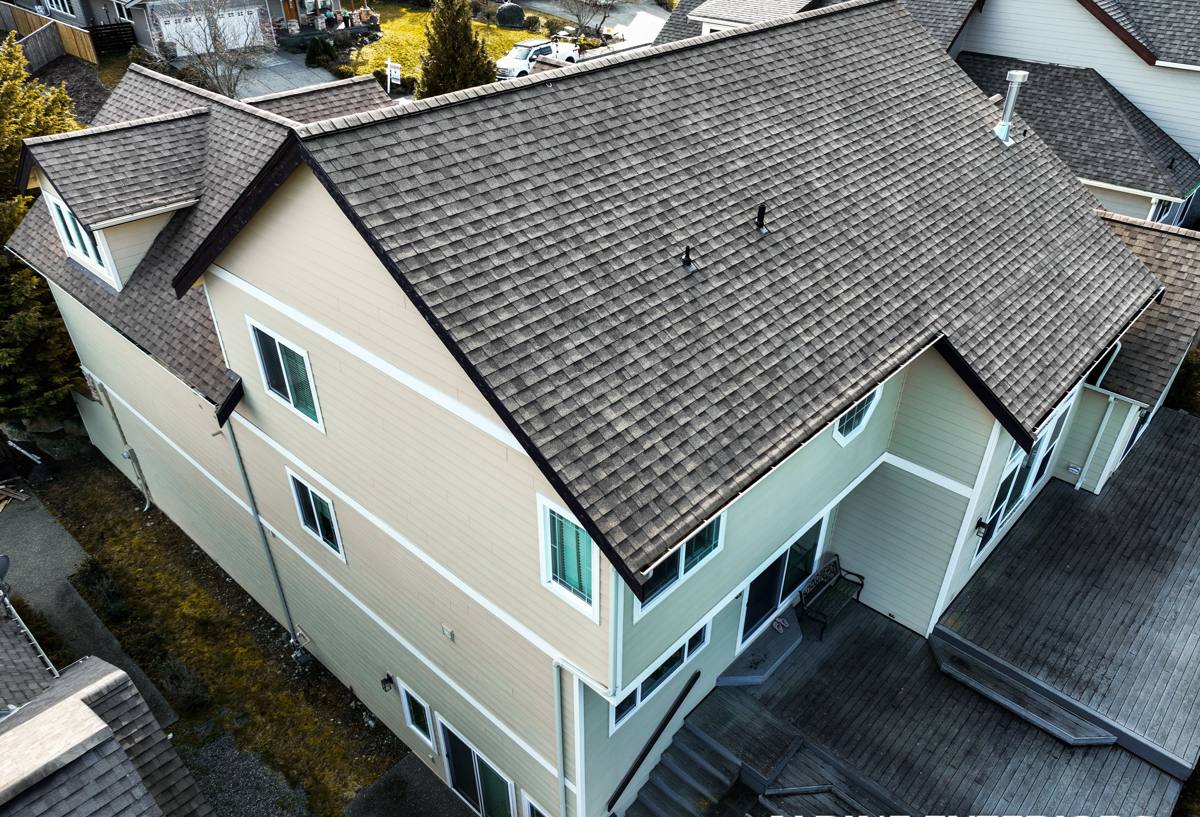
What ColorPlus Actually Is
ColorPlus isn't a paint color you pick off a fan deck at the hardware store. It's a factory-applied finishing process. Each plank or panel gets multiple coats of a baked-on finish, cured under controlled conditions before it ever leaves the plant. That matters for a few practical reasons:
- Color and sheen are consistent across every board in the shipment — no batch-to-batch drift you sometimes get with field-mixed paint.
- The finish cures fully before installation, so it isn't fighting job-site humidity, temperature swings, or rain while it sets up.
- Coverage is even on the edges and cut lines, not just the face of the board, which reduces the chance of a thin spot that fails early.
Field-applied paint, by contrast, is only as good as the weather on the day it goes on and the skill of whoever's holding the sprayer. In a county where a dry, calm painting window can be hard to find between fall and spring, that's not a small difference.
Why Finish Durability Matters More Here Than in Most Places
Whatcom County siding takes a specific kind of beating. Homes closer to Bellingham Bay and the Strait of Georgia deal with salt-laden air that's tough on cheaper finishes and fasteners alike. Almost everywhere in the county gets long stretches of driving rain that finds every gap in a poor paint job. And the shaded, damp conditions common under mature Douglas fir and cedar canopy — plus our extended gray, wet winters — create a moss and algae season that runs longer here than in drier parts of the state. A finish that's marginal in Spokane can fail years early on a north-facing wall in Ferndale or Lynden.
That's the environment ColorPlus was built to handle, and it's part of why this company installs James Hardie exclusively rather than mixing in vinyl or field-painted fiber cement alternatives. The finish is engineered and warrantied as a system with the board itself, not applied as an afterthought once the siding is already on the wall.
What the Warranty Actually Covers
James Hardie backs ColorPlus finishes with a separate finish warranty from the substrate (the fiber cement board itself), and both are transferable to a new owner if you sell the home within the warranty period — something worth mentioning to a future buyer. Ask your contractor for the specific current warranty terms in writing rather than relying on memory or a brochure; coverage details can change between product lines, and you want the version that applies to your job.
The ColorPlus Palette: What You're Actually Choosing From
The standard ColorPlus lineup is a curated palette — a core set of standard colors plus premium collections aimed at different architectural styles, from muted historic tones to deeper contemporary shades. This isn't an infinite custom-match system, and that's intentional: every color in the lineup has been tested for fade resistance and finish performance as a matched system. If you're coming from a mindset of "I want this exact Benjamin Moore color," it's worth recalibrating early. You're choosing the closest, best-performing match from a tested palette, not commissioning a custom blend.
Reading Samples Correctly
Small chip samples lie. A 2-inch swatch under fluorescent showroom light will not tell you what a color does across an entire elevation under Pacific Northwest overcast. Before committing:
- Look at the largest sample board available, not a paint chip.
- View it outdoors, in direct daylight and in shade, since our cloud cover shifts color perception more than people expect.
- Check it against your roof, stone, brick, or existing trim you're keeping — undertones that clash indoors often clash worse outdoors.
- View it wet as well as dry. A color that reads warm and dry can look noticeably cooler and darker when it's been raining, which in this county is a real percentage of the year.
Matching Color to Your Home and Neighborhood
Whatcom County's housing stock runs from turn-of-the-century farmhouses in Lynden and Everson to craftsman bungalows in Bellingham's older neighborhoods to newer construction throughout Ferndale and the county's unincorporated growth areas. Color choice should respect the architecture:
- Farmhouse and craftsman homes generally read best in classic, slightly muted tones — warm whites, soft grays, deep greens — paired with contrasting trim.
- Contemporary builds can carry darker, more saturated colors without looking heavy, especially with clean trim lines.
- Homes near water or open exposure tend to hold lighter colors visually better against gray skies, though this is a preference call, not a rule.
If you're in an HOA or a neighborhood with design covenants, get your color approved in writing before ordering material. Some Whatcom County developments have specific palette restrictions, and swapping a ColorPlus color after the fact is a real cost, not a quick fix.
HZ5 and Why the Underlying Product Matters as Much as the Color
Color performance depends partly on what's under it. James Hardie engineers its HZ product lines for specific climate zones, and this region falls into a zone where moisture resistance and freeze-thaw performance are the priority, not just heat and UV like in the Southwest. Installing the correct HZ line for our climate — with the right fastening, clearances, and flashing details — is what lets the ColorPlus finish perform for its full warranty life. A great finish over a poorly installed or wrong-zone board will still fail early. Installation quality and product selection aren't separate from the color decision; they're the foundation it sits on.
ColorPlus vs. Field-Applied Paint: The Practical Trade-Offs
| Factor | ColorPlus (Factory Finish) | Field-Applied Paint |
|---|---|---|
| Application conditions | Controlled factory environment, cured before install | Dependent on job-site weather, humidity, temperature |
| Coverage consistency | Even across face and edges | Can vary by crew, sprayer, and conditions |
| Warranty structure | Manufacturer finish warranty, transferable | Typically contractor or paint-brand warranty only |
| Repaint interval | Long-interval touch-up only, not full repaint | Full repaint typically needed on a shorter cycle |
| Upfront cost | Built into material cost | Often lower material cost, added labor cost |
Field-painting fiber cement isn't inherently wrong as a concept, but it shifts the durability variable from a controlled factory process to whatever happens on your job site the week it's painted — which in a county with our rain patterns is a real gamble.
Trim, Accents, and Multi-Color Schemes
Most homes look best with two to three coordinated colors: a field color for the main siding, a contrasting trim color, and sometimes an accent color for a door, shutters, or a feature gable. James Hardie's trim boards and accessories are designed to pair with the ColorPlus field colors, which keeps sheen and tone consistent rather than mixing a factory finish with a separately sourced trim paint that will age at a different rate. If you want a bold accent — a dark front-facing gable, for instance — talk to your contractor about which combinations are available as matched ColorPlus products versus which would require field paint on that one element.
A Practical Selection Checklist
- Pull large-format samples, not chips, and view them outdoors in your own light.
- Check the color wet and dry, and at different times of day.
- Hold the sample against your roof, stone, brick, and any trim you're keeping.
- Confirm HOA or covenant approval in writing before finalizing.
- Ask specifically which HZ product line is being specified for your home and why.
- Get the current ColorPlus finish and substrate warranty terms in writing.
- Decide your trim and accent colors alongside the field color, not as an afterthought.
- Ask how touch-up paint is provided and matched for future minor repairs.
Cost Factors Worth Understanding
Color itself doesn't usually move the price much within the standard ColorPlus palette — premium collections and custom trim combinations can add cost, and that's worth asking about directly rather than assuming. The bigger cost drivers are almost always the scope of the job: how much of the existing siding and moisture barrier needs replacing, complexity of the home's elevations, and how much trim and accent work is involved. A straightforward re-side with a standard color and simple trim scheme will price differently than a multi-color scheme with custom accents on a home with a lot of architectural detail.
Getting an Estimate
If you're weighing colors, product lines, or just trying to figure out what a ColorPlus re-side would look like on your specific home, we're happy to walk the property, bring real sample boards, and talk through what fits your house and your neighborhood — no pressure, no obligation. Reach out any time for a free estimate.