 Whatcom County
 Siding Built for the Sunnyland Climate
Homes in Sunnyland sit close enough to Bellingham Bay to feel the effects of salt-laden air, and far enough into Whatcom County's marine weather pattern to get the region's signature combination of driving rain, long gray stretches, and heavy moss growth on anything that stays damp too long. That's a tough environment for exterior building materials, and it shows up on older homes in the neighborhood as chalky paint, soft trim, streaked siding, and green growth creeping up north-facing walls. We've built our business around exteriors that hold up to exactly this kind of weather, and we only install one siding product because of it: James Hardie fiber cement.
This page covers what Sunnyland homeowners should know about siding, roofing, windows, and decks in a climate like this, and why we standardized on Hardie instead of the vinyl, engineered wood, or other fiber cement products you'll see marketed around Whatcom County.
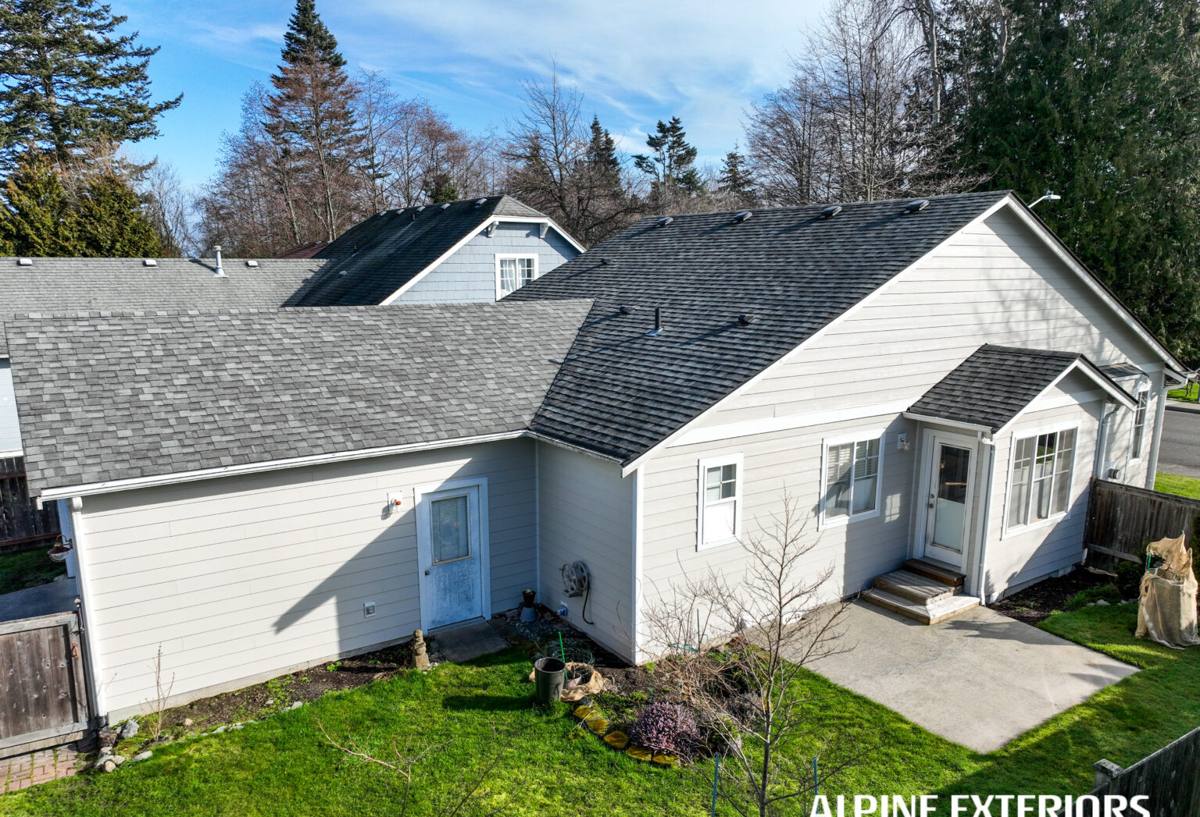
What Whatcom County Weather Does to a House
Moisture Is the Real Enemy
Whatcom County doesn't get extreme weather so much as it gets persistent weather. Rain that falls sideways in a windstorm drives water into seams, laps, and fastener points that a straight-down rain never touches. Add in the long stretches of overcast, damp days typical of a Pacific Northwest fall through spring, and any exterior material that traps or absorbs moisture is going to struggle. Wood-based sidings swell, delaminate, or rot at the edges. Paint films crack and let water behind them. Once moisture gets behind siding, it doesn't dry out quickly here — the air itself stays humid for months at a time.
Salt Air and Coastal Exposure
Proximity to Bellingham Bay means homes in and around Sunnyland deal with airborne salt, even a few miles inland. Salt air accelerates corrosion on fasteners, flashing, and any metal trim, and it degrades certain coatings faster than a purely inland location would experience. Materials and finishes need to be chosen with that in mind, not just for looks but for how they age.
Moss Season Is Long, Not Occasional
In much of the country, moss is a seasonal nuisance. In Whatcom County, especially on shaded or north-facing walls, moss and algae growth can be a near year-round condition. It thrives on porous, moisture-retentive surfaces and on any siding with grooves, gaps, or rough texture where spores can settle and hold water. A siding product's surface density and finish quality directly affect how much moss and mildew take hold, and how easy it is to keep clean.
Why We Install Only James Hardie Fiber Cement
We get asked regularly why we don't offer vinyl, LP SmartSide, cedar, primed spruce, or other fiber cement brands like Cemplank or Allura. It's not that these products have no merit — each has situations where it performs reasonably. It's that after years of doing exterior work in this specific climate, we decided we'd rather install one product exceptionally well than offer several options and let homeowners gamble on which one holds up.
The Trade-Offs We Weighed
| Material | What It Gets Right | Why It's a Harder Sell Here |
|---|---|---|
| Vinyl siding | Low upfront cost, low maintenance in mild climates | Can warp or crack under temperature swings and wind-driven rain intrusion; seams are a moisture entry point; not fire-resistant |
| LP SmartSide (engineered wood) | Workable, wood-like appearance, reasonable cost | Wood-strand core is moisture-sensitive; edge sealing and caulking must be maintained precisely or moisture wicks in over time |
| Cedar / primed spruce | Natural, traditional look many homeowners love | Requires ongoing painting/staining and caulk maintenance; rot risk is real in a climate this consistently damp |
| Other fiber cement brands | Share fiber cement's core durability advantages | Factory finish warranties, engineered climate zone lines, and installation specs vary by manufacturer; we standardized on the system we know best and trust most |
| James Hardie fiber cement | Non-combustible, engineered for moisture and moss resistance, factory-baked ColorPlus finish | Higher material and labor cost than vinyl; requires correct installation to perform as designed |
What Makes Hardie Different for This Climate
James Hardie fiber cement is engineered specifically for regional conditions through its HZ5 product line, which is built for the moisture and temperature patterns of the Pacific Northwest. The material itself is dense and non-combustible, resists moisture absorption far better than wood-based products, and holds its factory-applied ColorPlus finish for years without the chalking and fading that painted wood or lower-grade coatings show in this much rain and gray light. It also gives moss and algae less to grip onto compared to rougher, more porous sidings, which matters a lot in a neighborhood where shaded walls stay damp for months.
None of that means Hardie is maintenance-free — no exterior product is. But it means the maintenance burden is lighter and more predictable, and the failure modes we see most often in this climate (edge rot, seam intrusion, coating breakdown) are far less common with a correctly installed Hardie system.
Beyond Siding: Roofing, Windows, and Decks
Siding doesn't work in isolation. A roof that's shedding water improperly, windows that leak at the flashing, or a deck that's trapping moisture against the house all undermine even the best siding job. We handle all four because they're connected systems on a Whatcom County home.
Roofing
Roofs here take a beating from sustained rain and moss growth on shaded slopes. Proper underlayment, flashing details at valleys and penetrations, and ventilation all matter more in a climate that rarely gives a roof a chance to fully dry out.
Windows
Window flashing and integration with the siding plane is one of the most common places we find water intrusion on older Sunnyland homes. Replacing windows as part of a siding project lets us tie the flashing and weather barrier together correctly instead of patching around an old window with new siding.
Decks
Decks attached to the house need proper ledger flashing and drainage away from the wall, or they become a moisture source instead of a feature. In a climate this wet, deck materials and detailing need the same scrutiny as siding.
What a Siding Project Looks Like in Sunnyland
Assessment First
We start by looking at what's actually happening on the house — where moisture has gotten in, where moss has taken hold, what condition the sheathing and trim are in underneath the existing siding. That tells us whether it's a straightforward re-side or whether there's underlying damage to address first.
Correct Installation Matters as Much as the Product
James Hardie siding is only as good as its installation. Proper fastening, clearances, caulking at penetrations, and flashing integration are what actually keep water out — the product gives you the tools, but installation is what makes the system work. A local crew that installs Hardie regularly in this specific climate knows the details that matter here versus a drier region.
What to Check Before Hiring Anyone for Exterior Work
- Are they licensed and insured to work in Washington State, and can they show proof without hesitation?
- Do they have specific experience with the product they're proposing, not just general contracting experience?
- Will they explain flashing and moisture management details, not just color and style choices?
- Do they offer a written scope of work and a real warranty on both materials and labor?
- Are they familiar with how this climate — salt air, driving rain, prolonged damp — affects material choice?
- Do they have a local presence, so a warranty call five years from now is a phone call, not a mystery?
Why a Local Crew Matters
Exterior work in Whatcom County is not the same as exterior work in a dry climate, and it's not identical to coastal work in other parts of the Pacific Northwest either. A crew that works this region regularly understands how salt air affects fastener choice, how moss behaves on different wall orientations, and how much wind-driven rain a given exposure actually sees. That knowledge shows up in the details — flashing laps, caulk joints, fastener spacing — that determine whether a siding job lasts fifteen years or thirty.
Cost Factors Worth Understanding
Every home is different, but a few factors consistently drive cost on Whatcom County siding projects:
| Factor | Why It Affects Cost |
|---|---|
| Existing wall condition | Rot or moisture damage found under old siding adds repair scope before new siding goes on |
| Home size and complexity | More corners, dormers, and trim detail mean more labor and material cuts |
| Siding profile and finish | Lap width, texture, and color selections within the Hardie line affect material cost |
| Access and site conditions | Tight lots, slopes, or landscaping near the house can add setup and protection time |
| Scope beyond siding | Combining roofing, window, or deck work with siding can improve efficiency but adds overall project cost |
We don't quote broad price ranges without seeing the house, because the honest answer depends heavily on what's underneath the current siding and how much of the project scope you're bundling together.
Get an Honest Look at Your Home
If you're in Sunnyland and dealing with siding that's showing its age — moss buildup, soft spots, chalky paint, or just a home that's due for an upgrade — we're happy to come take a look and walk you through what we see, no pressure and no obligation. Fill out the form below for a free estimate.