 Whatcom County
Sunnyland Homes Are Working Against the Weather Every Day
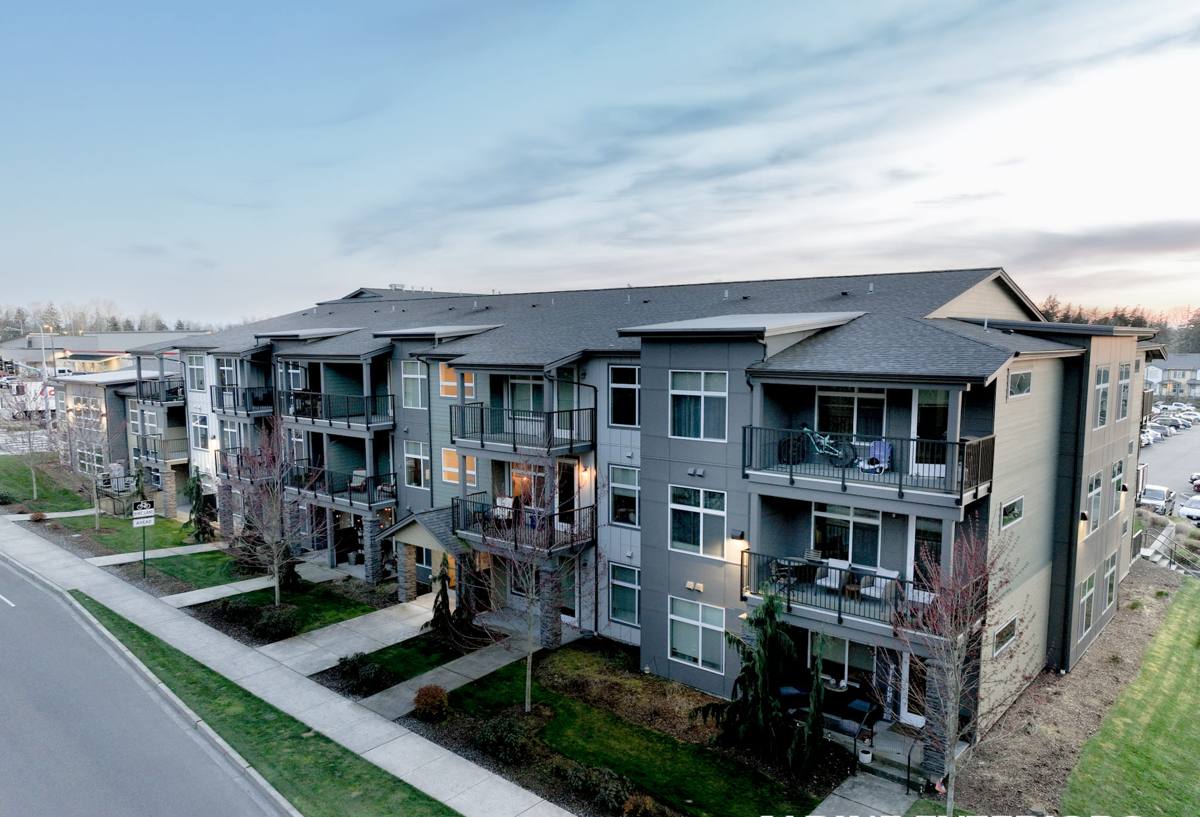
Sunnyland sits close enough to the water that homes here deal with a combination most inland neighborhoods never see: salt-laden air, sustained wind-driven rain, and a moss season that can run most of the year. None of that is dramatic on any given day. It's the accumulation that does the damage — siding that looks fine in year three and is failing by year twelve because it was never matched to what this climate actually does to a building envelope. We install James Hardie fiber cement siding exclusively, and on homes in this part of Whatcom County, that's not a marketing preference — it's the product line that holds up to this specific mix of conditions when it's installed correctly.
What Whatcom County's Climate Actually Does to Siding
Salt Air and Corrosion
Proximity to Puget Sound means airborne salt is a real, ongoing factor for homes in and around Sunnyland — not just for properties with a water view. Salt-laden moisture accelerates the breakdown of fasteners, coatings, and any siding material that relies on a surface-applied finish rather than a factory-cured one. Over years, that shows up as chalking, fading, and corrosion around trim and fastener heads long before the siding itself would otherwise need replacing.
Driving Rain and Wind Pressure
This isn't a light-drizzle climate. Storms coming off the Sound push rain sideways into wall assemblies, and wind pressure forces water into any gap, seam, or fastener hole that wasn't sealed and flashed correctly. Siding systems that depend on tight overlaps or caulk alone to stay weathertight tend to fail here faster than in drier regions, because the water is actively being driven into the wall rather than just running down it.
Moss, Algae, and Prolonged Dampness
Long, mild, wet stretches — especially fall through spring — keep exterior surfaces damp for extended periods, which is exactly what moss and algae need to take hold. On wood-based products, sustained dampness also means sustained risk of rot, swelling, and delamination. Siding on a home's north and shaded sides in this climate rarely gets enough sun exposure to dry out quickly between rain events, so the material has to tolerate repeated wet-dry cycling without breaking down.
Why We Standardized on James Hardie for This Climate
James Hardie fiber cement is a cement, sand, and cellulose fiber composite — it doesn't absorb and swell the way wood-based products do, and it doesn't rely on a paint film alone to keep moisture out. The ColorPlus factory finish is baked on under controlled conditions, which holds color and resists the salt-air fading and chalking that shortens the life of field-applied paint. Hardie also engineers its siding by climate zone: the HZ10 formulation is built for wetter, more humid regions like the Pacific Northwest, with moisture and moss/mildew resistance tuned for exactly the conditions Sunnyland deals with. That's a meaningful difference from a one-size-fits-all siding product — it's the reason we don't treat "fiber cement" as interchangeable across brands, and don't install alternatives like vinyl, LP SmartSide, Cemplank, Allura, primed spruce, or cedar. Each of those has real strengths, but none combines non-combustible material, a factory-cured finish, and climate-specific engineering the way James Hardie's HZ10 line does.
What a Correct Installation Involves
Fiber cement siding is only as good as the installation behind it. Most siding failures we see on inspections in this area aren't product failures — they're installation shortcuts that let water behind the cladding. A correct James Hardie install includes:
- A properly lapped and sealed weather-resistive barrier behind the siding, not just tar paper tacked up quickly
- Flashing at every window, door, and roof-to-wall transition — the points where wind-driven rain intrudes first
- Manufacturer-specified nailing patterns and fastener spacing, using corrosion-resistant fasteners appropriate for a coastal-influenced climate
- Correct clearance gaps at the bottom of the siding, around penetrations, and at butt joints so the material can expand, contract, and drain
- Caulking only where Hardie specifies it — not as a substitute for proper flashing
- Painted or factory-finished cut edges, since exposed raw edges are a common entry point for moisture
Skip any one of these and you can end up with premature failure on even the best siding product on the market. This is why we treat installation training as seriously as product selection — a Hardie board installed wrong will disappoint a homeowner just as fast as the wrong material would.
How Whatcom County's Climate Compares to a Correctly Matched Siding System
| Material | Salt Air / Coastal Exposure | Wind-Driven Rain Resistance | Moss & Algae Resistance | Maintenance Burden |
|---|---|---|---|---|
| James Hardie (HZ10) Fiber Cement | Strong — factory finish resists fading and chalking | Strong when flashed and installed to spec | Engineered for wet-climate resistance | Low — no repainting cycle for the ColorPlus finish |
| Vinyl Siding | Moderate — can fade, warp, or become brittle over time | Depends heavily on installation; seams are vulnerable | Prone to algae staining in shaded, damp areas | Low, but limited repair options once damaged |
| Cedar | Moderate — natural wood resists rot better than most woods | Weak without diligent upkeep; absorbs moisture | Requires regular treatment to resist moss and mildew | High — refinishing, sealing, and moisture monitoring |
| Primed Spruce / Engineered Wood | Weak to moderate — coating quality is critical | Weak at cut edges and joints if not fully sealed | Vulnerable if moisture reaches the wood substrate | High — repainting and edge sealing over time |
This table isn't meant to declare other materials worthless — cedar has real appeal, vinyl is inexpensive, and engineered wood has its place. But for the specific combination of salt air, driving rain, and prolonged dampness that Sunnyland sees, James Hardie's HZ10 fiber cement is the option that requires the least ongoing intervention to keep performing.
Our Process for Sunnyland Projects
- On-site assessment: We look at existing siding condition, sheathing and framing underneath where accessible, moisture history, and sun/shade exposure on each elevation.
- Tear-off and inspection: Old siding comes off and we check the sheathing for rot or water damage before anything new goes up — this is where hidden problems from a previous poor install usually surface.
- Weather-resistive barrier and flashing: A new moisture barrier is installed and lapped correctly, with flashing at every penetration and transition.
- Hardie installation: Boards, panels, or trim are installed to manufacturer spec — correct fastening, gaps, and caulking only where called for.
- Final inspection and cleanup: We walk the job before calling it finished, checking fastener patterns, caulk lines, and trim details.
Because we work regularly in Whatcom County, we already know how local permitting, typical framing conditions, and this area's weather windows for installation affect scheduling — that's not something a crew driving in from outside the region can match on day one.
Living With Hardie Siding in a Marine, Mossy Climate
One advantage of the ColorPlus finish is how little upkeep it demands compared to painted materials. It still benefits from a periodic rinse to keep salt residue and organic buildup from accumulating, and gutters and downspouts should be kept clear so water isn't dumping directly onto siding or foundation areas. Trim and caulk joints are worth a visual check once a year, since caulking is the one component of the system that ages faster than the board itself and is easy to touch up before it becomes a moisture path. None of this is heavy maintenance — it's closer to routine home care than a siding-specific chore list.
What Drives Siding Project Cost in This Area
| Cost Factor | Why It Matters |
|---|---|
| Tear-off vs. install over existing siding | Full tear-off costs more up front but lets us inspect and repair sheathing — important on older homes with a history of moisture issues |
| Home size and wall complexity | More corners, dormers, and roof-to-wall transitions mean more flashing detail and labor time |
| Trim and accent selection | HardieTrim boards, shakes, or panel accents add material and installation time beyond standard lap siding |
| Site access | Tight lots, fencing, or limited staging area can add labor time for material handling |
| Existing damage | Rotten sheathing or framing found during tear-off requires repair before new siding goes on |
We give homeowners a real, itemized number after seeing the house — not a per-square-foot estimate pulled from a national average that ignores what this climate and this specific home actually need.
Signs a Sunnyland Home May Need New Siding Soon
- Soft or spongy spots when you press on the siding, especially near the bottom edges
- Persistent moss or dark streaking that returns shortly after cleaning
- Visible gaps, warping, or buckling boards
- Paint that's peeling, bubbling, or chalking heavily on painted wood or engineered wood siding
- Rising heating bills that suggest the wall assembly behind the siding is no longer keeping moisture and air out
- Fastener corrosion or staining bleeding through the siding surface
Why Hiring a Crew That Already Works in Sunnyland Matters
Siding performance in this climate comes down to details a crew only gets right consistently once they've done it repeatedly under the same conditions — how much flashing overlap a Whatcom County storm actually demands, which elevations need extra moss-resistant detailing, how local moisture patterns affect drying time during installation. A crew that specializes in James Hardie and works this specific area isn't guessing at those answers on your project. That specialization is also why we don't spread ourselves across multiple siding brands and materials — every crew member trains on one system, installed one correct way, on homes that face this exact set of conditions.
If you're weighing a siding replacement or repair in Sunnyland, we're glad to take a look and give you a straightforward, no-pressure estimate — just fill out the form below.