 Whatcom County
What Cordata's Climate Does to Siding Over Time
Cordata sits in north Bellingham, close enough to the water that homes here live under the same marine weather pattern that shapes the rest of Whatcom County: salt-tinged air drifting in off the bay, driving rain that comes in sideways during fall and winter storms, and a stretch of gray, damp months where moss and algae get a real head start on anything that stays wet. None of that is dramatic on any single day. It's the accumulation that wears siding down — moisture that never fully dries between rain events, UV exposure in the brief summer stretch, and organic growth that takes hold in shaded, north-facing wall sections and never lets go.
Siding in this environment isn't just a cosmetic layer. It's the first line of defense against a climate that stays damp for months at a time. Products that handle a drier climate fine — or that rely on paint film or factory coatings not engineered for constant moisture cycling — tend to show their weaknesses here faster than they would somewhere with less rain and lower humidity. That's the backdrop for every decision on this page: what material goes on the wall, how it's installed, and who's doing the work.
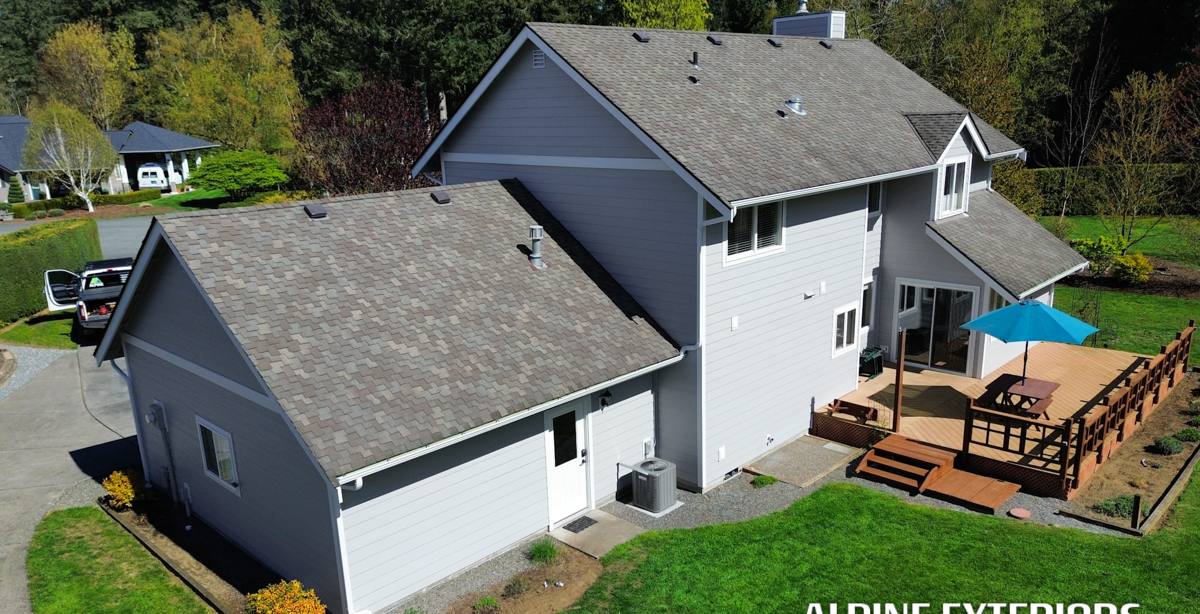
What a Correct Siding Installation Actually Involves
Siding installation is often talked about like it's a finish step — panels go up, house looks new. In a climate like Whatcom County's, the finish is the easy part. The work that actually determines whether siding lasts 10 years or 40 happens underneath it, in details most homeowners never see once the job is done.
Flashing and Water Management
Every window, door, and horizontal trim break is a place where water wants to get behind the siding. Correct flashing — head flashing above openings, kick-out flashing where roof lines meet walls, properly lapped house wrap — is what keeps driving rain moving down and away from the wall assembly instead of soaking into it. Skipping or shortcutting flashing is one of the most common causes of hidden rot behind siding that looks fine from the driveway.
Fastening and Clearances
Fiber cement siding has specific fastening patterns — nail placement, spacing, and depth all affect how the panel performs in wind and how it handles expansion and contraction. Ground clearance and gaps at trim, corners, and butt joints matter just as much: siding installed tight to grade or without expansion gaps traps moisture and accelerates damage, especially in a climate that rarely gives a wall assembly a long dry stretch to recover.
Caulking and Sealant Choices
Not every seam should be caulked, and the ones that should use a sealant rated for exterior movement and UV exposure — not a bargain tube that goes brittle after one wet winter. Over-caulking traps moisture in; under-caulking lets it in. Getting this balance right is a judgment call that comes from experience with this specific climate, not a generic installation manual.
Why This Crew Installs Only James Hardie Fiber Cement
We made a decision as a company to install James Hardie fiber cement siding exclusively — no vinyl, no LP SmartSide, no primed wood, no other fiber cement brands. That's not a marketing position; it's a standard we hold because of what we've seen perform, and not perform, in exactly this kind of climate.
Fiber cement is non-combustible and dimensionally stable in a way that matters when a wall assembly spends half the year damp. James Hardie's ColorPlus factory-applied finish is baked on under controlled conditions, which gives it more consistent, longer-lasting color and moisture resistance than field-applied paint can match — a real advantage in a region where a fresh paint job doesn't always get the dry cure time it needs. Hardie also engineers its HZ5 product line specifically for climates with sustained moisture exposure, which is a closer match to Whatcom County conditions than a one-size-fits-all national product. We're not going to tell you every other product on the market is bad — some have real strengths. But when we weighed moisture behavior, long-term maintenance burden, and warranty structure against what this climate actually does to a house, Hardie is the one product we're willing to put our name behind.
Choosing the Right Hardie Line and Color for This Neighborhood
Cordata has a mix of housing stock — newer construction alongside older homes that have already been through one or two siding cycles — which means the right Hardie product depends on the specific house, not a blanket recommendation.
| Hardie Product | Best Fit For | Why It Works Here |
|---|---|---|
| HardiePlank lap siding | Most single-family homes | Traditional profile, widest color range, proven track record in wet climates |
| HardiePanel vertical siding | Accent walls, gables, modern facades | Clean lines for contemporary designs, pairs well with board-and-batten details |
| HardieTrim boards | Corners, window/door surrounds, fascia | Matches the moisture resistance of the field siding instead of mixing in wood trim that fails first |
| HardieSoffit panels | Eaves and overhangs | Resists the moss and mildew that collect in shaded, poorly ventilated soffit areas |
On color, ColorPlus finishes hold up better against the county's damp, low-sun months than field-painted siding, and darker tones on north- or west-facing walls should be weighed against how much shade and moisture exposure that wall actually gets — dark colors in a shaded, damp spot show algae and moss faster than the same color on a wall that gets more sun and airflow.
Our Installation Process, Start to Finish
- On-site evaluation: we look at the existing siding, sheathing condition, and any signs of moisture damage before quoting anything.
- Tear-off and inspection: once old siding is off, we check the sheathing and framing underneath for rot or damage that needs to be addressed before new siding goes on — this is where hidden problems from a previous installation usually surface.
- Weather barrier and flashing: house wrap is installed or repaired, and flashing goes in at every window, door, and horizontal transition.
- Hardie installation to spec: panels are fastened, gapped, and finished according to James Hardie's published installation requirements — not a generalized approach, since following spec is also what keeps the manufacturer's warranty valid.
- Trim, caulking, and touch-up: trim boards, corner details, and sealant go in last, followed by a final walk-through.
Cost Factors for Siding Installation in Cordata
Every siding job is priced around the specifics of the house, but the same handful of factors move the number up or down on most Whatcom County projects.
| Factor | Impact on Cost |
|---|---|
| House size and wall complexity | More corners, gables, and dormers mean more cutting, trim, and labor time |
| Condition of existing sheathing | Rot or moisture damage found during tear-off adds repair cost before new siding can go on |
| Siding profile chosen | Lap widths, panel styles, and trim details affect material and labor |
| Color selection | Standard ColorPlus colors are typically more cost-effective than custom or premium finishes |
| Access and site conditions | Tight lots, slopes, or limited staging area can add labor time |
We give straightforward, itemized quotes rather than a single lump number, so you can see exactly what's driving the cost on your specific house.
Mistakes We Find When We Re-Side a Cordata Home
Tear-off is often the moment where the real story of a house's previous siding job comes out. A few patterns show up often enough in this area that they're worth mentioning:
- Missing or improperly lapped flashing above windows and doors, leading to hidden water staining on sheathing
- Siding installed with no gap at grade, wicking moisture up from ground level
- Caulk used in place of proper flashing at trim transitions — a shortcut that fails once the caulk ages
- Fastener patterns that don't match manufacturer spec, causing buckling or loosening over time
- Ventilation gaps at soffits blocked or covered, trapping moisture and accelerating moss growth
None of these are visible from the curb when the job is finished — they show up years later as soft spots, staining, or siding that's failing well before it should.
Why a Crew That Already Works in Whatcom County Matters
Installation quality depends on judgment calls specific to the climate a crew works in every day — how much expansion gap to leave given the moisture cycle here, where flashing needs extra attention on a wall that catches driving rain, which wall orientations need more caulking attention because they never fully dry out. A crew that's worked on homes across Whatcom County, including neighborhoods like Cordata, has already made those calls hundreds of times and knows what actually holds up locally versus what looks fine on installation day.
Local experience also means familiarity with the permitting and inspection process for this jurisdiction, and a realistic sense of project timing around the county's wetter months, when work sometimes needs to be sequenced around weather windows to keep sheathing dry during tear-off.
Keeping Your New Siding Looking Right
A correct installation is most of the battle, but a small amount of upkeep keeps Hardie siding performing the way it's designed to in this climate:
- Rinse siding once or twice a year, focusing on shaded, north-facing walls where moss and algae take hold first
- Keep gutters clear so overflow doesn't run directly down a wall section during heavy rain
- Trim back landscaping that keeps siding shaded and damp against the wall
- Check caulking at trim joints periodically and have it refreshed before it cracks, not after
- Have any soft spots, staining, or bubbling addressed promptly rather than waiting for a full inspection cycle
If you're weighing a siding replacement or new installation in Cordata, we're happy to walk the house with you and give a straightforward, no-pressure estimate — no obligation, just an honest look at what your home needs.