 Whatcom County
 Birchwood and the Whatcom County Climate
Birchwood sits in a part of Whatcom County where the exterior of a house works hard, whether the homeowner notices it or not. Marine air moves through constantly, rain arrives sideways more often than straight down, and the gray months stretch on long enough that anything organic on a wall has plenty of time to take hold. None of this is unusual for western Washington, but it does mean that siding, trim, roofing, and windows here are under a different kind of load than the same products would face in a drier inland climate.
Homes in Birchwood aren't fighting one big dramatic weather event. They're fighting slow, steady exposure — moisture that never fully dries out between storms, salt-laden air drifting in off the water, and moss and algae that find a foothold on anything with texture or a north-facing shadow line. Over years, that combination is what separates a house that still looks tight and well-kept from one that's showing chalky paint, soft trim, or streaked, mossy siding.
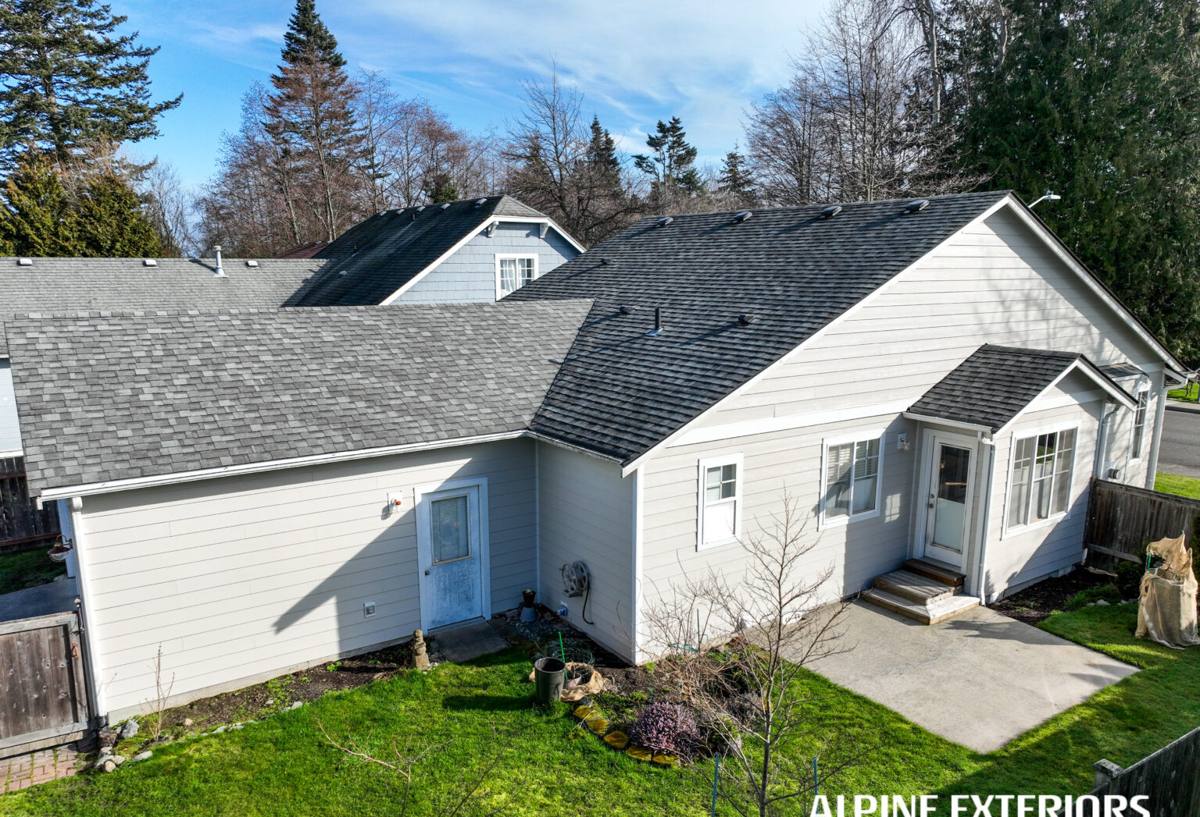
What This Climate Does to a House Over Time
Moisture That Doesn't Give Up
Driving rain doesn't just wet a wall — it pushes water sideways into laps, seams, and fastener points that a calmer rain would never reach. If a siding product isn't dimensionally stable or the installation details aren't right, that moisture finds a way in and stays there through the next dry spell, which in this climate might not come for weeks.
Salt Air and Metal Fasteners
Proximity to Puget Sound and the Salish Sea means airborne salt is a real factor, not a coastal cliché. Salt accelerates corrosion on exposed metal — fasteners, flashing, hardware — and it can be tough on lower-grade coatings and finishes that weren't engineered with a marine environment in mind.
The Long Moss Season
Shaded roof slopes, north walls, and anything under tree cover in Birchwood deal with moss and algae for a good chunk of the year. On siding, that shows up as green-black streaking and a surface that stays damp longer than it should. On a roof, moss lifts shingles and holds water against the deck. It's a maintenance issue more than a structural one in the early stages, but it's the first visible sign of a home that isn't shedding water the way it should.
What We Do in Birchwood
We're a full exterior contractor, not a single-trade outfit, which matters in a climate where the envelope of a house has to work as a system. Our work in and around Birchwood covers:
- Siding — James Hardie fiber cement installation and replacement, including full re-siding and trim work
- Roofing — replacement and repair, with attention to the moss and moisture issues specific to this region
- Windows — replacement windows installed with proper flashing and integration into the siding plane
- Decks — built and detailed to shed water rather than trap it against structural framing
We treat these as connected pieces. A new roof that dumps water onto old, failing siding, or new windows flashed poorly into old siding, just relocates the problem instead of solving it. When we're on a Birchwood property, we're looking at how water moves across the whole exterior, not just the one component we were called out for.
Why We Only Install James Hardie Siding
We made a decision a while back to install one siding product: James Hardie fiber cement. Not because it's the cheapest option or the easiest to install, but because it's the product we trust to hold up to exactly the conditions Birchwood homes deal with — sustained moisture, salt air, and years of moss and algae exposure.
Non-Combustible and Dimensionally Stable
Fiber cement doesn't expand and contract with moisture the way wood-based products do, and it doesn't rot. That stability matters in a climate where the siding is rarely bone dry. It's also non-combustible, which is a meaningful long-term consideration regardless of region.
ColorPlus Factory Finish
James Hardie's ColorPlus finish is baked on at the factory under controlled conditions, rather than field-applied paint. In a climate with this much damp weather, a factory-cured finish holds its color and resists the chalking and fading that field-painted surfaces are more prone to, and it means fewer repaint cycles over the life of the siding.
Engineered for This Climate
Hardie makes climate-specific product lines, including an HZ formulation engineered for wetter regions like the Pacific Northwest. That's a meaningful distinction — the same base material performs differently depending on how it's engineered for moisture exposure, and we specify the version that's built for what Whatcom County actually throws at a house.
A Warranty Backed by the Manufacturer
James Hardie backs its siding with a strong, transferable limited warranty. That matters to homeowners who plan to sell — a warranty that transfers to the next owner is a real selling point, not just paperwork.
How Hardie Compares to Other Common Siding Choices
We get asked fairly often why we don't install vinyl, LP SmartSide, cedar, or primed spruce. Each of those products has legitimate uses and each has real trade-offs in a climate like this one. Here's the honest comparison we give homeowners:
| Siding Type | Moisture Behavior in Wet Climates | Maintenance Burden | Fire Resistance |
|---|---|---|---|
| James Hardie Fiber Cement | Dimensionally stable, doesn't rot | Low — factory finish holds up for years | Non-combustible |
| Vinyl | Doesn't rot, but can warp and doesn't allow moisture behind it to escape as well | Low, but color fades and it's hard to repair invisibly | Combustible |
| LP SmartSide | Wood-based; treated for moisture resistance but still an engineered wood product | Moderate — seams and cut edges need diligent sealing | Combustible |
| Cedar / Primed Spruce | Natural wood; absorbs and releases moisture, prone to rot without upkeep | High — regular refinishing required | Combustible |
None of these products are "bad." They're just built around different priorities, and in a marine climate with a long wet season, the moisture stability and low maintenance of fiber cement is what we've found holds up best over the long run. It's why we standardized on it rather than offering a menu of options.
What Correct Installation Looks Like
Fiber cement siding performs the way it's supposed to only when it's installed to spec. That's not a minor detail — improper installation is the most common reason any siding product underperforms, Hardie included. On a Birchwood job, that means:
- Proper clearance between siding and grade, decks, and roof lines so water doesn't wick up into the board
- Correct fastener type, spacing, and placement — no over-driven or under-driven nails
- Weather-resistant barrier and flashing details at every window, door, and penetration
- Properly sized and caulked joints, with attention to butt joints and corners
- Painting or caulking of factory-cut edges when field cuts are unavoidable
These details are what separate siding that lasts decades from siding that starts showing problems in year five. A local crew that installs Hardie regularly in this specific climate — and understands why driving rain and salt air change how those details get handled — is worth more than a low bid from a crew unfamiliar with the region.
Why a Local Crew Matters
A contractor working across Whatcom County sees the same patterns repeat on Birchwood homes: north-facing walls that hold moisture longer, roof valleys that collect moss, trim that takes the brunt of driving rain off the water. That pattern recognition shapes how we sequence a job, where we pay extra attention to flashing, and what we flag to a homeowner before it becomes a bigger repair. It also means we're not learning the region on someone's roof — we already know what this climate does to an exterior over ten and twenty years, not just what it looks like on install day.
What Affects the Cost of a Siding Project
| Factor | Why It Matters |
|---|---|
| Existing siding removal | Tear-off and disposal of old material adds labor, especially with hidden rot |
| Sheathing and moisture damage | Damaged sheathing found underneath must be repaired before new siding goes on |
| Home size and complexity | Cut-up walls, multiple stories, and detailed trim take more time than simple rectangular walls |
| Product line and profile | Hardie offers several plank profiles, shingle styles, and panel options at different price points |
| Color selection | Standard ColorPlus palette vs. custom color affects lead time and cost |
We won't quote a number without seeing the house — anyone who does is guessing — but these are the variables that actually move the price, and we walk through each one with the homeowner during the estimate.
Signs Your Birchwood Home May Need Attention
A few things worth a second look, especially heading into another wet season:
- Persistent green or black streaking on siding, especially on shaded or north-facing walls
- Paint that's chalking, peeling, or fading unevenly
- Soft spots or visible warping in wood-based siding or trim
- Moss buildup on the roof, particularly in valleys and along the north slope
- Water stains or soft drywall near windows, which often point back to flashing failures at the exterior
Any one of these on its own might be minor. Several together, or any of them going unaddressed for a couple of wet seasons, is usually when a small maintenance item turns into a real repair.
Getting Started
If you're in Birchwood and dealing with tired siding, a roof that's holding onto moss, windows that leak, or a deck that's seen better days, we're happy to take a look and give you a straight assessment — no pressure, no inflated quote to scare you into a decision. Fill out the form below for a free estimate and we'll walk the property with you.