 Whatcom County
Fiber Cement Siding Built for Birchwood's Climate
Birchwood sits close enough to the water and the wet weather patterns that move through Whatcom County that siding here takes a different kind of beating than siding fifty miles inland. Salt-laden air corrodes fasteners and trim faster than dry-climate air ever would. Driving rain, pushed sideways by wind off the water, finds every gap in flashing and caulk that a calmer climate would never expose. And a moss season that can stretch for months keeps north-facing walls and shaded eaves damp long after the rain has stopped. None of that is exotic — it's just what Whatcom County weather does, year after year, to the outside of a house.
Fiber cement siding, when it's the right product and it's installed correctly, handles all three of those stressors well. It doesn't rot, it doesn't feed moss the way wood does, and it holds paint and factory finish through decades of wet-dry cycling. But "fiber cement" isn't a single guarantee — how it's engineered, finished, and installed determines whether it actually delivers on that promise in a place like Birchwood.
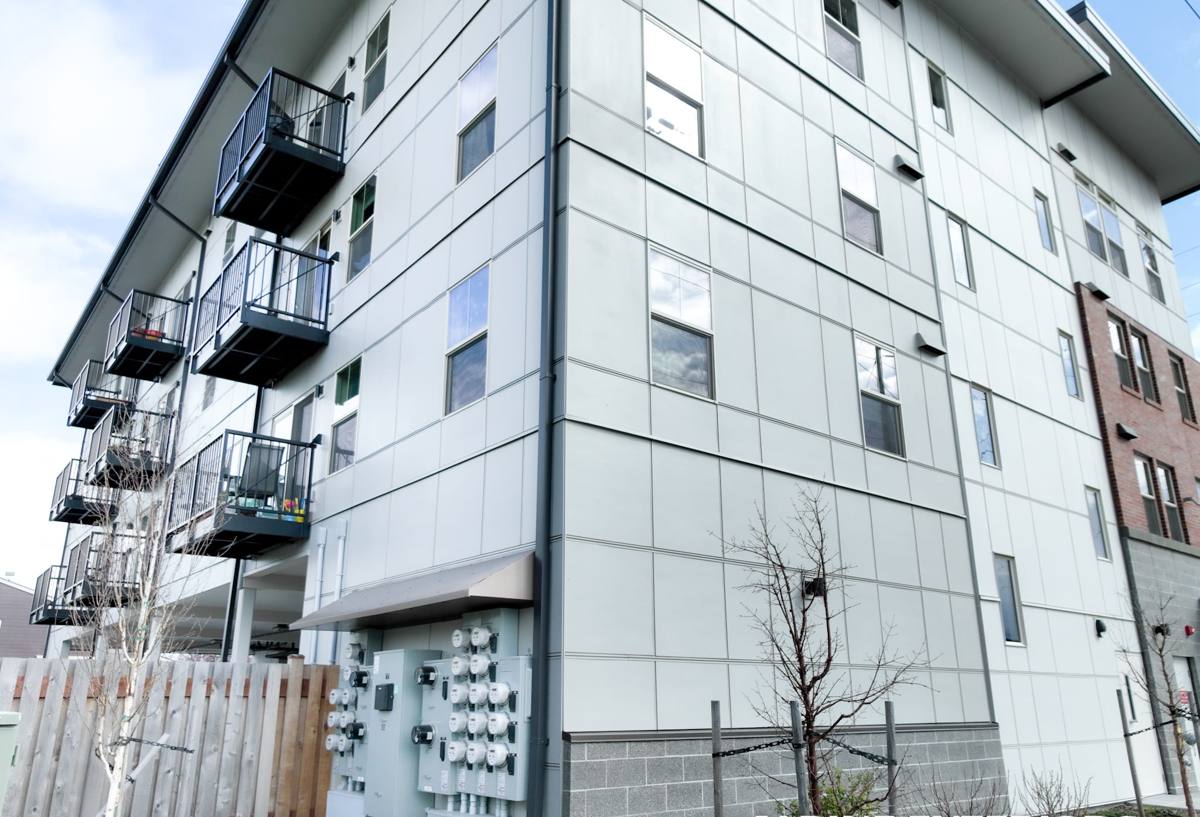
What Birchwood's Weather Actually Does to Siding
Salt Air and Metal Fatigue
Homes closer to Bellingham Bay and the surrounding waterways deal with airborne salt that settles on every exterior surface. Over years, that salt accelerates corrosion on exposed fasteners, uncoated trim edges, and any hardware that wasn't rated for a marine-influenced environment. Siding itself doesn't corrode, but the fasteners holding it up and the flashing tying it into windows and rooflines absolutely can — and once those fail, water gets behind the siding regardless of how good the siding itself is.
Driving Rain and Wind-Driven Moisture
Whatcom County doesn't just get rain — it gets rain pushed at an angle by wind coming off the water and through the valley. That means water hits vertical wall surfaces with real force, not just falling straight down. Every seam, every window head, every point where trim meets siding is a place wind-driven rain will test. A siding job that looks fine in a still, dry install can fail within a couple of wet seasons if the flashing details and joint treatment weren't built for that kind of exposure.
Moss, Shade, and Prolonged Dampness
Birchwood's mature tree cover and the region's long overcast stretches mean north walls, siding under eaves, and anything shaded by landscaping stays damp far longer than south-facing walls in full sun. That extended dampness is exactly what moss, algae, and mildew need to take hold. On wood or wood-composite siding, that moisture retention eventually softens the substrate. On fiber cement, moss and mildew are mostly a surface and finish issue rather than a structural one — but only if the finish and installation gaps are handled correctly.
Why Fiber Cement Is the Right Answer Here — If It's the Right Product
Fiber cement is dense, dimensionally stable, and non-combustible. It won't swell, cup, or delaminate the way lower-grade composite products can when they take on repeated moisture exposure. That stability matters more in Birchwood than it would in a drier climate, because the wet-dry cycle here is longer and more frequent. But not all fiber cement is engineered the same way, and this is where our company draws a hard line: we install James Hardie fiber cement exclusively, and we don't install LP SmartSide, vinyl, Cemplank, Allura, primed spruce, or cedar. We're glad to explain why on any of those products individually — but the short version is that Hardie's HardieZone system builds products specifically for Pacific Northwest moisture exposure, and their ColorPlus factory finish is engineered to hold up to UV and moisture cycling far longer than field-applied paint does.
HardieZone HZ5 and Why It Matters for This Area
Whatcom County falls into the HZ5 climate zone in Hardie's system, which accounts for the freeze-thaw and moisture patterns typical of the Pacific Northwest. Product engineered for HZ5 is formulated and tested for exactly the kind of prolonged damp exposure Birchwood sees — it's not a generic siding product being sold everywhere in the country. That regional engineering is part of why we don't treat fiber cement as interchangeable across brands.
What a Correct Installation Involves
The siding panel itself is only part of the equation. Most siding failures we get called out to inspect in this area aren't failures of the material — they're failures of installation detail. In a climate like Birchwood's, these details are not optional extras; they're the difference between siding that lasts thirty-plus years and siding that starts showing problems in five.
- Weather-resistive barrier and rainscreen gap: A drainage plane behind the siding lets any moisture that does get past the surface drain out and dry, rather than sitting against the wall sheathing.
- Correct fastening: Fasteners rated for the exposure, driven to the manufacturer's specified depth and spacing — not overdriven, which crushes the panel and opens a path for water.
- Flashing at every penetration: Windows, doors, hose bibs, vents, and roof-to-wall intersections all need flashing detailed to shed water outward, not just caulk relied on as the only barrier.
- Proper clearances: Siding held off decks, roofs, and grade by the manufacturer's minimum clearance so it isn't sitting in standing water or splash-back.
- Joint and butt seam treatment: Sealed or flashed per spec so wind-driven rain can't work its way in at the seams.
- Factory-finished color maintained correctly: Touch-up done with the matched ColorPlus product, not generic exterior paint, to preserve the finish warranty.
Skip or rush any one of these steps and you can end up with siding that looks correct for a year or two before problems start showing up behind the wall, where they're much more expensive to fix than they would have been to prevent.
Signs Your Current Siding Isn't Holding Up in Birchwood's Climate
- Persistent green or black staining on north-facing or shaded walls that comes back shortly after cleaning
- Soft spots, bubbling, or visible swelling, especially near the bottom courses or around window trim
- Caulk that's cracked, shrunk, or pulled away from joints and trim edges
- Paint that's peeling, chalking heavily, or fading unevenly wall to wall
- Rust streaking below fasteners or trim hardware
- Visible gaps or warping at panel seams and corners
- Interior signs — musty smell, discoloration, or soft drywall near exterior walls — that suggest moisture is already getting through
Any one of these on its own might be minor. Several showing up together, particularly on the shaded or water-facing side of a Birchwood home, usually means the siding assembly is losing the fight against the local climate and it's worth having someone look at it before it turns into sheathing or framing damage.
Our Process for a Birchwood Fiber Cement Job
Every siding job we take on in this area follows the same sequence, because skipping steps is exactly how climate-related failures happen down the road.
1. On-Site Assessment
We look at the existing siding and wall assembly, check for hidden moisture damage, note which walls take the worst weather exposure, and identify any trim, flashing, or drainage issues that need to be corrected as part of the job — not papered over.
2. Prep and Substrate Correction
Any damaged sheathing or framing found during tear-off gets repaired before new siding goes up. Installing new siding over a compromised substrate just hides the problem temporarily.
3. Weather Barrier and Rainscreen Installation
We install the drainage plane and rainscreen system appropriate for the wall assembly, giving any incidental moisture a path to drain and dry rather than being trapped.
4. Hardie Panel Installation to Manufacturer Spec
Fastening, clearances, flashing, and joint treatment are all done to James Hardie's published installation requirements for the HZ5 zone — not shortcuts that happen to look fine on install day.
5. Trim, Caulking, and Finish Detail
Final trim and sealant work at all penetrations and terminations, using products compatible with the ColorPlus finish so the warranty stays intact.
6. Walkthrough
We walk the finished job with the homeowner, cover basic care and what to expect from the finish over time, and answer questions specific to that property's exposure.
Why Hiring a Crew That Already Works in Birchwood Matters
Siding installation instructions read the same everywhere in the country, but how they get applied changes based on what the wall is actually up against. A crew that's used to drier inland conditions can install fiber cement perfectly well by the book and still under-detail the flashing or rainscreen for an environment with Birchwood's rain volume, wind exposure, and moss pressure. A crew that works this area regularly already knows which walls in a given home take the worst weather, where moss tends to establish first, and which flashing details actually matter here versus which are just code minimums. That local pattern recognition is what closes the gap between "installed correctly on paper" and "actually performs for thirty years in this specific climate."
Cost Factors for a Birchwood Fiber Cement Project
Every home is different, but the factors that move the price on a fiber cement siding job in this area are fairly consistent:
| Factor | Why It Matters Here |
|---|---|
| Existing siding removal | Tear-off and disposal of old wood, vinyl, or composite siding, plus any substrate repair uncovered underneath |
| Wall assembly upgrades | Adding or upgrading the weather barrier and rainscreen gap for better performance against wind-driven rain |
| Home size and wall complexity | More corners, dormers, and trim details mean more flashing and cutting, especially around windows and rooflines |
| Product line and profile | Lap siding, panel siding, and shingle-style profiles differ in material and labor cost |
| Color selection | Factory ColorPlus finishes versus field-painted primed panels affect both cost and long-term maintenance |
| Access and site conditions | Tree cover, slope, and tight lot lines common in established Birchwood neighborhoods can affect scaffolding and staging |
We walk through all of these during the on-site assessment so a homeowner understands exactly what's driving the number before any work starts — no generic estimate given without seeing the house.
Caring for Fiber Cement Siding in a Wet, Shaded Climate
- Rinse shaded and north-facing walls periodically to keep moss and algae from establishing, especially through the wetter months
- Keep landscaping and tree branches trimmed back from siding so walls get airflow and sun exposure to dry out
- Inspect caulk joints and trim annually and re-seal before gaps develop, not after
- Use manufacturer-matched touch-up product for any scuffs or nicks rather than generic exterior paint
- Check gutters and downspouts each fall so overflow isn't running down or pooling against siding
- Watch clearance points at grade and decks to make sure nothing has shifted to reduce the gap over time
None of this is heavy maintenance — fiber cement is chosen specifically because it doesn't demand the upkeep wood does — but a little seasonal attention goes a long way toward getting the full lifespan out of the material in a climate this consistently wet.
Why We Only Install James Hardie
We made a deliberate decision to standardize on James Hardie fiber cement rather than offering a menu of siding brands, because the products we chose not to carry each come with trade-offs — moisture sensitivity, finish durability, installation tolerance, or warranty structure — that show up specifically in a climate like Whatcom County's. Hardie's HZ5-engineered products, factory-applied ColorPlus finish, and transferable warranty are built around exactly the conditions Birchwood homes face: salt air, driving rain, and a moss season that doesn't let up for months. When we put siding on a home here, we want it backed by a product system engineered for this weather, not one that happens to work in a milder climate.
If you're weighing a siding replacement or repair in Birchwood and want a straight answer about what your home actually needs, we're happy to take a look. Request a free, no-pressure estimate using the form below and we'll walk the property with you before recommending anything.