 Whatcom County
Deck Repair Built for Happy Valley's Climate
Happy Valley sits close enough to Bellingham Bay that salt-tinged air, driving rain off the Sound, and a long, damp moss season all show up in the wood, fasteners, and framing of local decks faster than most homeowners expect. A deck that would last two decades in a dry inland climate can start showing soft boards, rusted hardware, or slick, moss-covered surfaces in Whatcom County in half that time if it isn't built and maintained with our conditions in mind. Deck repair here isn't just about replacing a broken board — it's about understanding why that board failed and making sure the fix doesn't fail the same way in three more winters.
We work on decks throughout Happy Valley and the surrounding Bellingham area regularly, which means we see the same patterns over and over: ledger boards that trapped moisture against the house, post bases that sat in standing water, and fastener corrosion that started from the inside out, invisible until a board gave way underfoot. A repair crew that only shows up once won't catch those patterns. A crew that knows this neighborhood's exposure, drainage quirks, and typical construction era will.
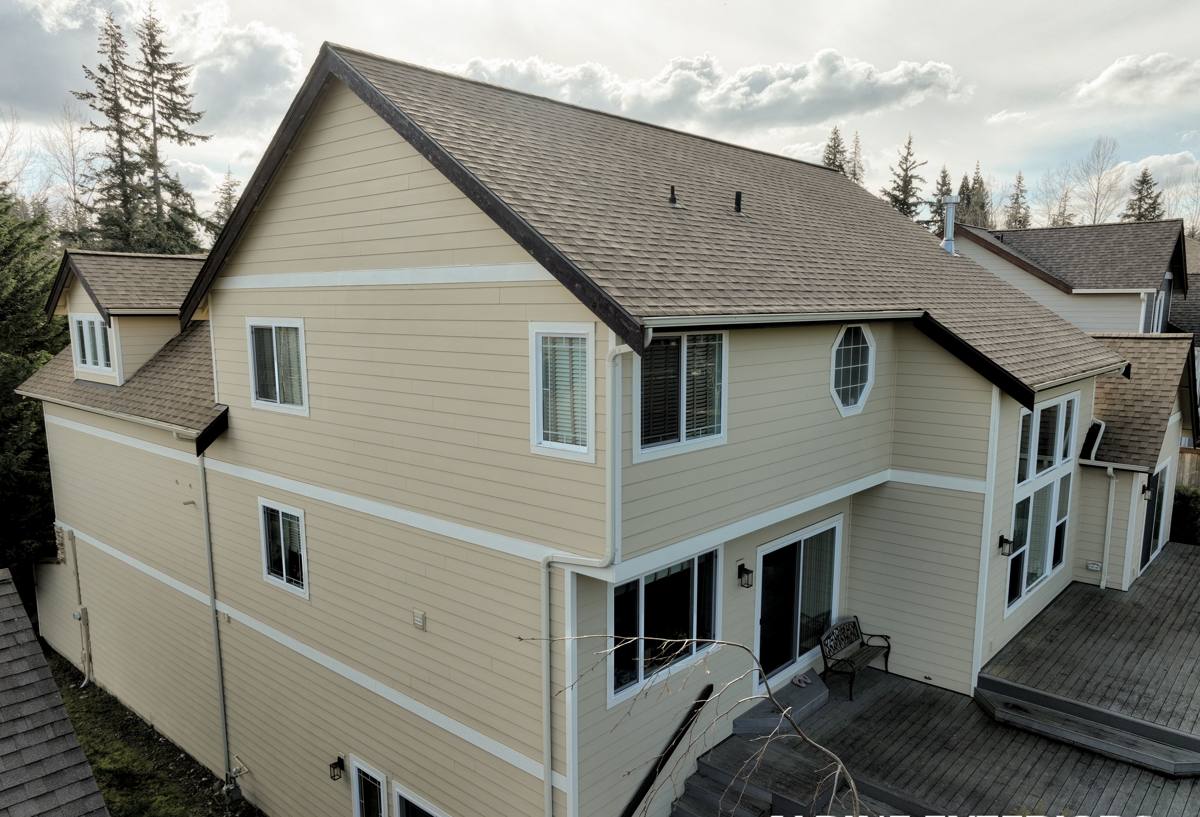
How Whatcom County's Weather Attacks a Deck
Three climate factors do most of the damage to decks in this part of Washington, and each one attacks a different part of the structure:
Salt Air and Moisture-Driven Corrosion
Proximity to Bellingham Bay means airborne salt settles on exposed metal — nails, screws, joist hangers, and railing hardware — accelerating rust well beyond what you'd see further inland. Corroded fasteners lose their grip strength long before they look obviously bad from the surface, which is why a deck can feel solid right up until it isn't.
Driving Rain and Water Intrusion
Wind-driven rain off the Sound doesn't just fall straight down — it gets pushed sideways into ledger connections, under railing caps, and into any gap where flashing was skipped or installed poorly. Once water gets behind a board or into a joist end, it stays there far longer than surface moisture would, because airflow in those hidden spots is poor.
Moss, Algae, and Surface Decay
Whatcom County's long wet season means moss and algae get a real foothold on deck boards, especially on the north side of a house or under tree cover. Beyond making the surface slippery, moss holds moisture against the wood grain constantly, which is one of the fastest ways to start rot in an otherwise sound board.
What a Correct Deck Repair Actually Involves
A lot of deck "repairs" amount to swapping out the board that looks bad and calling it done. That approach misses the point when the underlying cause — bad drainage, failed flashing, corroded fasteners — is still there and will just take out the next board too. A repair done right starts with diagnosis, not replacement.
- Full structural inspection: checking ledger board attachment, joist condition, post bases, and beam bearing points, not just the decking surface
- Moisture testing on suspect boards: using a moisture meter rather than guessing from appearance, since surface-dry wood can still be soft underneath
- Fastener and hardware check: looking for rust bleed, loosened screws, and corroded joist hangers, especially on decks more than 10-12 years old
- Flashing and ledger review: confirming the ledger board has proper flashing separating it from the house, which is one of the most common failure points we find
- Railing and stair safety check: since these get the most repeated stress and are the most dangerous to get wrong
- Drainage assessment: making sure water isn't pooling under the deck or against posts where it can sit for weeks at a time
Common Deck Problems We See in Happy Valley
Every deck is a little different, but the failure points repeat often enough that we can usually predict where trouble is likely before we even get up on the structure.
| Problem | Typical Cause | What We Check |
|---|---|---|
| Soft or spongy boards | Trapped moisture from poor drainage, moss buildup, or lack of gap spacing between boards | Moisture meter reading and probe test on suspect areas |
| Rust streaks around fasteners | Salt-air corrosion on standard (non-coated) screws and nails | Fastener material and coating type, extent of corrosion |
| Wobbly railings or posts | Loosened lag bolts, rot at the post base, or undersized original hardware | Post base condition and connection hardware rating |
| Water staining on the house siding near the deck | Missing or failed ledger flashing | Flashing presence, condition, and ledger board moisture content |
| Slippery green film on boards | Moss and algae growth from shade and persistent dampness | Surface treatment needs and long-term shade exposure |
| Uneven or sagging deck surface | Settled or undersized footings, or a failing beam | Footing depth, beam span, and load-bearing adequacy |
Repair vs. Replacement: Making the Honest Call
Not every deck problem needs a full rebuild, and not every deck is worth patching either. We'd rather tell a homeowner the truth about which category their deck falls into than sell a repair that won't hold or a replacement that wasn't necessary.
Generally, repair makes sense when the framing and footings are structurally sound and the damage is isolated — a few boards, a section of railing, a ledger connection. Replacement becomes the more honest recommendation when rot has spread into multiple joists, when footings are undersized or frost-heaved, or when the deck was built without proper permits or flashing from the start, meaning the same failures will keep recurring no matter how many boards we swap.
We'll walk you through which situation you're in and why, including what happens if you defer the more expensive fix. Sometimes that's a reasonable short-term choice; sometimes deferring just means a bigger repair bill in two years once rot spreads further into the frame.
Materials: What Holds Up Here and What Doesn't
Material choice matters more in this climate than in drier parts of the state, because everything is exposed to more moisture cycling for more months of the year.
Fasteners
We use corrosion-resistant, exterior-rated fasteners on repairs — standard interior-grade screws or nails corrode quickly this close to salt air and become a repeat failure point. This is a maintenance and longevity call, not a brand preference: cheaper hardware costs less up front and more over the life of the deck.
Decking Material
Pressure-treated lumber, cedar, and composite decking all have a place here, and each comes with real trade-offs worth understanding before you choose:
- Pressure-treated lumber: affordable and strong, but needs regular sealing to resist moisture absorption in our wet season
- Cedar: naturally rot-resistant and handsome, but softer and more prone to surface wear without upkeep
- Composite decking: low maintenance and moss-resistant on the surface, but installation sensitivity around ventilation and fastening matters more than with wood, and repairs to composite boards can be less forgiving than a wood patch
Flashing and Hardware
Ledger flashing and joist hangers get upgraded to corrosion-resistant, code-compliant materials during any repair that touches the structural connection points — this is the single detail most likely to prevent a repeat call in a few years.
Our Process for Happy Valley Deck Repairs
- Inspection and diagnosis: we walk the full deck structure, not just the visible surface, and explain what we find in plain terms
- Written scope and estimate: a clear breakdown of what needs repair, what's optional, and what we'd recommend watching for future seasons
- Repair work: addressing the root cause first — drainage, flashing, framing — before cosmetic board replacement
- Hardware and fastener upgrade: replacing corroded connectors with corrosion-resistant materials suited to our coastal exposure
- Final walkthrough: checking railing safety, surface finish, and drainage before we consider the job done
Seasonal Maintenance That Extends Deck Life
A repaired deck stays repaired longer with a little seasonal attention, and most of it doesn't require a professional visit:
- Clear leaves and debris from between boards before fall rains set in, since trapped organic matter holds moisture against the wood
- Treat visible moss growth early in the wet season rather than letting it establish through winter
- Check railing connections annually for looseness, especially after a windy winter
- Reseal wood decking on the manufacturer's recommended schedule — skipping a season in this climate matters more than it would somewhere drier
- Look for water staining on siding near the ledger board, an early sign of flashing failure
- Keep gutters and downspouts near the deck clear so runoff isn't dumping directly onto or under the structure
Why Local Experience Matters for This Job
Deck repair looks straightforward from a distance, but the failure points in Whatcom County decks are specific to this climate, and a crew unfamiliar with local conditions can miss them. We've spent enough time working on homes throughout Bellingham and the surrounding Whatcom County area to recognize which symptoms point to salt-driven corrosion versus simple age, and which drainage patterns around Happy Valley properties tend to cause standing water at post bases. That local pattern recognition is what separates a repair that lasts from one that's back on the schedule in two years.
We're also straightforward about scope. If a deck genuinely needs replacement rather than repair, we'll say so and explain why — including what continuing to patch it would likely cost over time. If a repair is the right call, we'll tell you that too, without upselling work that isn't needed.
Get a Straightforward Estimate
If your deck in Happy Valley has soft boards, rusted hardware, a wobbly railing, or just needs an honest once-over before another wet Whatcom County winter, we're happy to take a look. Use the form below to request a free, no-pressure estimate — we'll tell you exactly what we find and what we'd recommend, no more and no less.