 Whatcom County
 Exterior Work Built for South Hill's Climate
South Hill sits close enough to the water and the weather patterns that roll through Whatcom County that its homes take a particular kind of beating year-round. It's not one dramatic storm that does the damage — it's the accumulation. Salt-tinged air moving in off the water, driving rain that hits siding sideways instead of straight down, and a moss season that seems to start earlier and last longer every year. Add in the humidity that never fully lifts between October and May, and you've got a recipe for exterior materials that look fine for a year or two and then start failing all at once.
We've worked on homes throughout this part of the county long enough to know which problems are cosmetic and which ones are structural warnings. A siding contractor who only shows up for one job doesn't have that context. A local crew does — and that context changes what we recommend and how we install it.
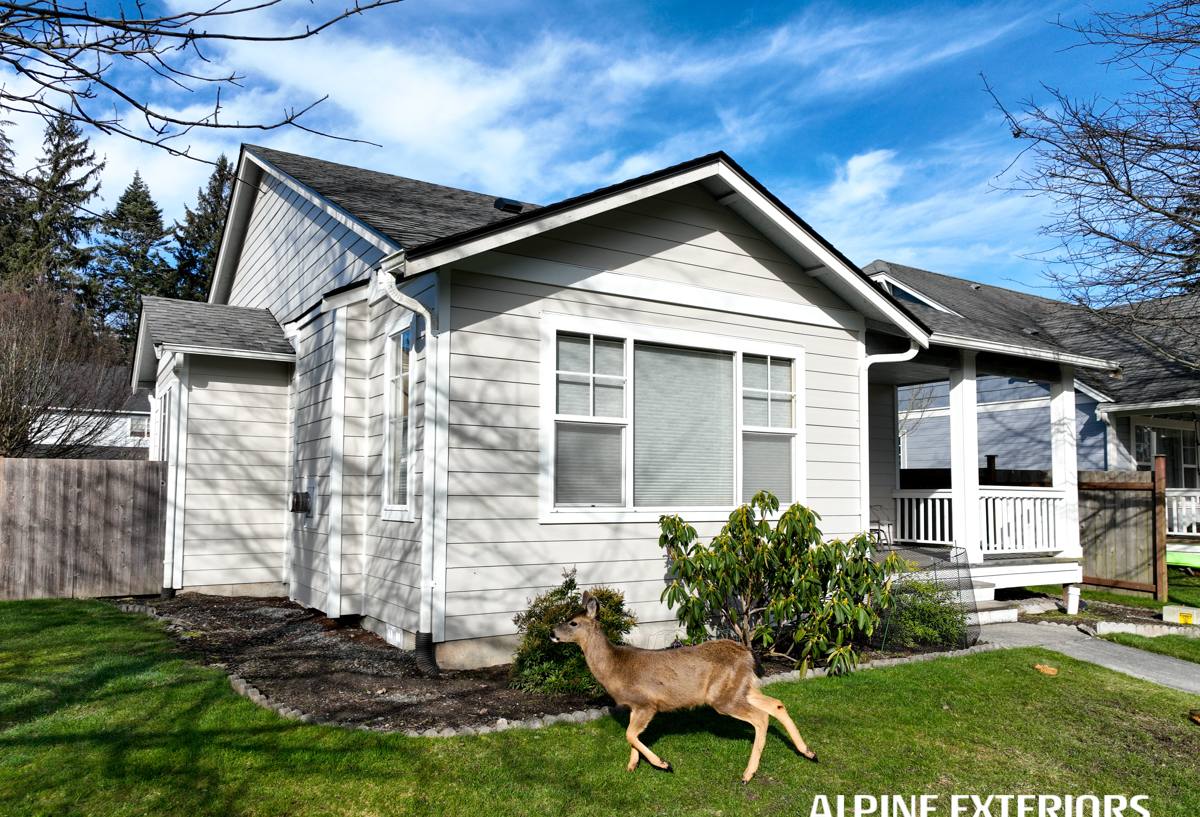
What South Hill Homes Actually Face
Salt Air and Slow Corrosion
Homes closer to the water deal with airborne salt that settles on every exterior surface. It's subtle — you won't see white crust on your siding — but over years it accelerates the breakdown of paint films, corrodes fasteners that aren't rated for it, and speeds up wood rot in anything that isn't sealed properly. Vinyl siding can also become brittle faster in this kind of environment, and cheaper trim products show chalking and fading sooner than their warranties suggest they should.
Driving Rain, Not Just Rain
This region's rain rarely falls straight down. Wind-driven rain gets pushed up under laps, around trim, and into any gap in the water-resistive barrier. That means the details — flashing, kick-out diverters, proper caulking joints, correct overlap — matter more here than they would in a drier climate. A siding job that looks identical to one installed in Arizona can behave completely differently once wind-driven rain starts testing every seam.
Moss Season
Moss doesn't just grow on roofs here — it colonizes north-facing siding, shaded decks, and anything that stays damp for extended stretches. Beyond the appearance issue, moss holds moisture against the surface it's growing on, which is exactly what accelerates rot in wood-based siding and lifts and stains lower-grade shingles. Homes on shaded or tree-covered South Hill lots see this more than most.
Why We Install Only James Hardie Siding
We made a decision as a company to stop installing several products that are common in this market — vinyl, LP SmartSide, primed spruce and cedar, and other fiber cement brands like Cemplank or Allura. That wasn't a marketing decision. It came from watching how these materials actually perform in Pacific Northwest conditions over years, not just what their spec sheets promise.
James Hardie fiber cement is what we put on homes instead, for a few specific reasons:
- It's non-combustible. Fiber cement doesn't feed a fire the way wood-based products can, which matters more every year as wildfire smoke and dry summer stretches become part of the region's climate reality.
- It doesn't absorb water the way wood-based siding does. Products like LP SmartSide and primed wood rely on paint films and sealed edges to keep moisture out. Once that film is compromised — by a scratch, a nail pop, or just age — the substrate underneath can swell and rot. Fiber cement's core material doesn't behave that way.
- ColorPlus factory finish outperforms field-applied paint. Instead of a coat of paint applied on-site (which is only as good as the weather conditions on install day and the prep work underneath it), Hardie's ColorPlus finish is baked on in a controlled factory environment. It holds color and resists fading and chalking far longer than field-painted alternatives — a real advantage against salt air and UV exposure.
- HZ product lines are engineered for exactly this climate. Hardie makes region-specific formulations — HZ5 for the Pacific Northwest — built to handle the freeze-thaw cycles and moisture load common here.
- The warranty is real and transferable. A siding warranty is only worth something if the manufacturer stands behind it decades out and if it transfers to the next owner. That matters for resale, and it matters for peace of mind.
To be fair to the alternatives: vinyl is inexpensive and low-maintenance in mild climates, LP SmartSide has improved its engineered-wood formulation over the years, and cedar has a look some homeowners genuinely prefer. We're not claiming these products are junk. We're saying that after years of callbacks, moisture inspections, and warranty disputes tied to these materials in exactly this kind of weather, we decided we'd rather install one product correctly than several products with asterisks attached.
How We Approach a South Hill Siding Job
Inspection Before Anything Else
Before we quote a siding replacement, we look at what's underneath the current siding — sheathing condition, existing flashing, any signs of past moisture intrusion. Whatcom County homes of a certain age often have layers of history back there, and skipping this step is how contractors end up covering up a problem instead of fixing it.
Installation Details That Matter Here
- Correct flush-mount or reveal spacing per Hardie's climate-specific install guide, not a generic national spec
- Proper flashing at every window, door, and roofline transition — the places wind-driven rain finds first
- Kick-out flashing at roof-to-wall intersections to direct water away from siding and framing
- Fasteners rated for coastal and high-moisture exposure
- Correct caulking and sealant at butt joints, with attention to manufacturer-specified gaps
Roofing, Windows, and Decks — Not Just Siding
Siding doesn't work in isolation. A roof that's shedding granules or has failing flashing will send water down behind good siding regardless of how well it's installed. Windows with failed seals let moisture into wall cavities from the inside out. Decks exposed to the same driving rain and moss growth need the same attention to drainage and material choice. We handle all four because on a lot of South Hill homes, the real fix touches more than one system, and coordinating that as one job is more efficient — and more honest — than three separate contractors pointing at each other's work.
Cost Factors to Understand Before You Budget
Every home is different, but these are the variables that actually move the number on a siding project in this area:
| Factor | Why It Matters Here |
|---|---|
| Home size and wall complexity | More corners, dormers, and transitions mean more flashing and labor time |
| Current siding removal | Tear-off complexity varies widely if there's rot or multiple existing layers |
| Sheathing/substrate repair | Moisture damage found during tear-off adds cost but prevents covering up a bigger problem |
| Siding profile and trim detail | Board-and-batten, varying reveals, and custom trim take more time than a simple lap profile |
| Access and site conditions | Tree cover, slope, and tight lot lines common on some South Hill properties affect scaffolding and staging |
| Color and finish selection | ColorPlus factory-finished boards vs. field-painted options affect both cost and long-term maintenance |
We'd rather walk your specific home and give you real numbers than quote a "starting at" figure that doesn't hold up once we're actually on the ladder.
Maintenance: What Ownership Actually Looks Like
No siding is maintenance-free, but the maintenance burden is very different depending on what's on your walls. Fiber cement's biggest advantage in a climate like this is that it doesn't need repainting anywhere near as often as field-painted wood products, and it doesn't require the annual inspection-and-recaulk routine that keeps wood-based siding watertight. That said, a few basics apply no matter what siding you have:
- Keep gutters clear so water isn't overflowing directly onto siding and trim
- Trim back vegetation that's shading walls and holding moisture against them — a direct moss-season defense
- Have caulking and sealant joints checked every few years, especially around windows and doors
- Address any staining, soft spots, or bubbling paint promptly rather than waiting for the next dry season
Why a Local Crew Matters
A contractor based elsewhere in Washington or brought in from out of state can install siding. What they usually don't have is a working memory of how last winter's storms behaved in this specific area, which lots hold moisture longest, or which older homes in the neighborhood have known sheathing issues from certain building eras. That local knowledge shapes real decisions — where we add extra flashing attention, which side of a house needs closer inspection before we quote, and how we sequence a job around the wetter months instead of fighting them.
We also stand behind our work locally, which means if something needs a look after the job is done, we're not driving in from three counties over to handle it.
Get a Straightforward Estimate
If your South Hill home's siding is showing its age — chalking paint, soft spots near the bottom edges, or moss creeping across shaded walls — it's worth getting an honest look before you decide what to do next. We offer free, no-pressure estimates for siding, roofing, windows, and decks, and we'll tell you plainly what we see, what we'd recommend, and why.