 Whatcom County
South Hill's Exteriors Face a Different Kind of Wear
South Hill sits close enough to Whatcom County's marine air and weather patterns that its homes take on a specific combination of stress: salt-laden air off the water, long stretches of driving rain through fall and winter, and a moss and mildew season that can run for months on shaded north- and west-facing walls. None of these factors are dramatic on their own, but together they add up to siding that has to hold paint, resist moisture intrusion, and shed organic growth better than siding built for a drier climate ever needs to.
Homes in this part of Whatcom County that were sided decades ago, especially with wood or older composite products, tend to show the same failure pattern: paint that chalks and peels faster than it should, soft spots at the bottom courses where rain wicks up from grade, and dark streaking or moss buildup in the shaded corners. That's not a sign the homeowner did anything wrong — it's a sign the siding material wasn't matched to the environment it was asked to survive in.
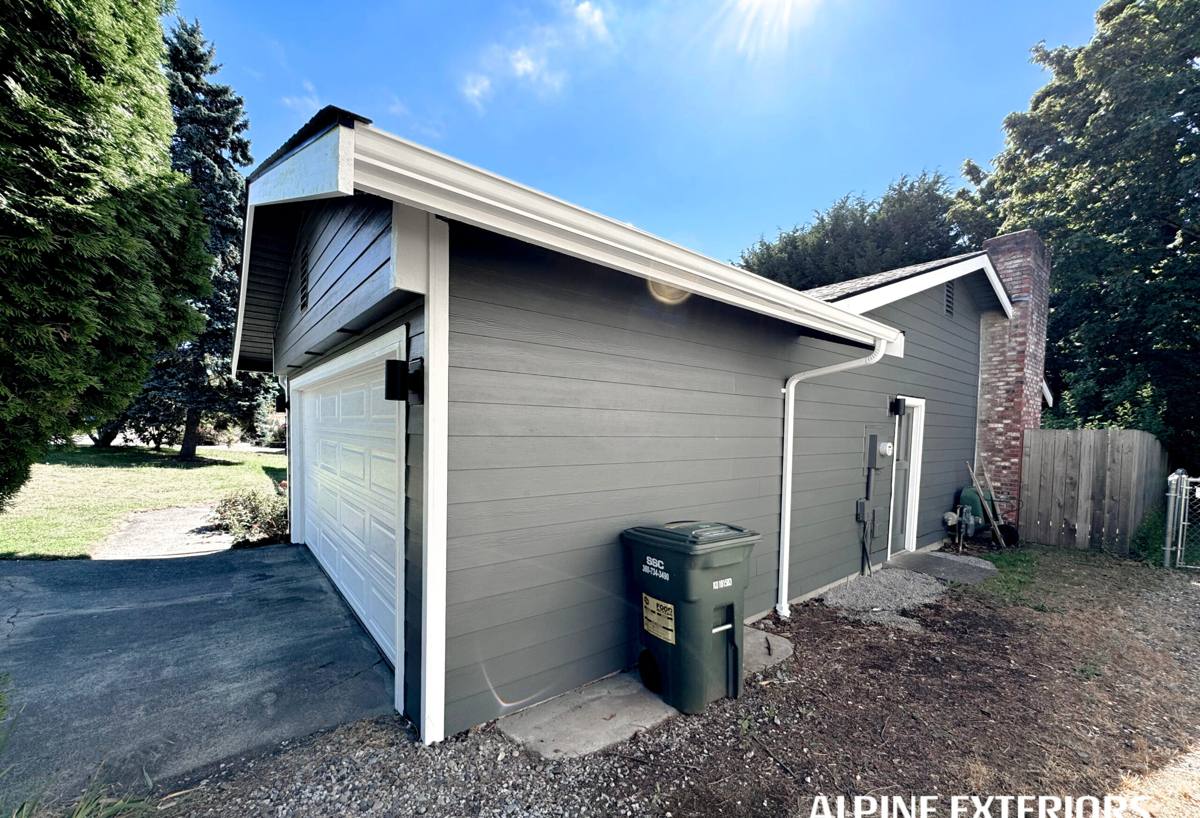
Why We Install Only James Hardie Fiber Cement
We don't install vinyl, LP SmartSide, Cemplank, Allura, primed spruce, or cedar. That's a deliberate standard, not a lack of options. James Hardie fiber cement is non-combustible, dimensionally stable in wet-dry cycling, and available in HZ (HardieZone) formulations engineered for specific climate zones — including the wetter, milder Pacific Northwest zone that covers Whatcom County. The factory-applied ColorPlus finish is baked on under controlled conditions rather than field-painted, which matters a great deal in a climate where a field-applied coating has to cure through unpredictable rain windows.
We're not going to tell you other products are junk — every siding material is a set of trade-offs. Vinyl is inexpensive and low-maintenance but can warp under heat and doesn't hold up well to impact in the same way fiber cement does. Wood and primed spruce look great fresh but demand a repainting and caulking schedule that most homeowners underestimate, especially with South Hill's rain exposure. LP SmartSide and other engineered wood products perform reasonably when installed and maintained to spec, but they're still wood-based composites, which means moisture management at seams and cut edges is non-negotiable. We standardized on James Hardie because, installed correctly, it removes most of those maintenance variables for the life of the product.
What "Climate-Engineered" Actually Means
Hardie's HZ product lines aren't a marketing label — they're formulated with different moisture and freeze-thaw performance depending on the zone they're rated for. For Whatcom County's wetter, milder climate, the goal is a product that resists moisture absorption at the board level and holds its factory finish through repeated wet-dry cycles rather than a product optimized for dry heat or hard freezes. Using the correct HZ formulation for this region is one of the first things we confirm before we ever order material for a South Hill job.
What a Correct James Hardie Installation Involves
The siding material is only part of the equation. Most of the failures we see on older installations — Hardie or otherwise — trace back to installation shortcuts rather than the product itself. A correct install on a South Hill home includes:
- A proper weather-resistive barrier behind the siding, lapped correctly with flashing at every penetration, window, and door
- Rainscreen or drainage gap furring where conditions call for it, so bulk water has somewhere to go besides sitting against the wall assembly
- Correct starter strip placement and a minimum clearance from grade, decks, and roof lines so the bottom courses aren't sitting in standing water or splashback
- Manufacturer-specified fastener type, spacing, and embedment — over-driven or under-driven nails are one of the most common causes of premature failure
- Properly caulked and sealed butt joints, corners, and penetrations using compatible sealants, not general-purpose caulk that fails in a few seasons
- Field-cut edges primed or sealed per Hardie's specifications, since raw cut edges are the most vulnerable point on any fiber cement board
Skipping any one of these steps doesn't usually cause an obvious problem in year one. It shows up two, five, or ten years later as trapped moisture, sheathing damage, or a finish that's failing well before its expected lifespan — the exact outcome fiber cement siding is supposed to prevent.
Our Process for a South Hill Home
1. On-Site Assessment
We walk the exterior, check the condition of the existing siding and sheathing where it's exposed, and look specifically at the areas most affected by South Hill's exposure — north-facing walls, low clearance points near grade or hardscaping, and anywhere moss or staining has already taken hold. This tells us whether we're dealing with a straightforward re-side or whether there's underlying moisture damage that needs to be addressed before new siding goes on.
2. Prep and Water Management
Old siding, damaged sheathing, and compromised flashing come off and get replaced before anything new goes up. We install or verify the weather-resistive barrier and flashing details at every window, door, and penetration — this is the step that determines whether the siding performs for thirty-plus years or fails early, and it's the step that's easiest to shortcut if you're not paying attention.
3. Installation to Manufacturer Spec
Hardie boards, panels, or trim go on with the correct fasteners, spacing, and clearances, following James Hardie's published installation requirements rather than generic best practices. This is what keeps the transferable warranty intact if you ever sell the home.
4. Final Inspection and Walkthrough
Before we call the job done, we walk the exterior with you, check caulking and trim details, and confirm drainage paths are clear. You should be able to see and understand exactly what was done and why.
ColorPlus Finish and Color Selection
James Hardie's ColorPlus technology applies the finish in a factory setting with multiple baked-on coats, which holds color and resists fading, chipping, and cracking far better than a job-site paint application — particularly relevant in a climate where field painting has to fight rain windows and humidity during cure. The color palette includes a range of tones that work well against the muted, overcast light common to Whatcom County, and touch-up products are formulated to match factory colors if a board is ever damaged.
Cost Factors on a South Hill Siding Project
Every home is different, and we don't quote sight-unseen, but these are the main variables that move the price on a Hardie installation in this area:
| Factor | Why It Matters |
|---|---|
| Existing wall condition | Rot or moisture damage found under old siding adds sheathing repair before new siding can go on |
| Siding profile chosen | Lap siding, shingle-style panels, and board-and-batten have different material and labor costs |
| Home size and complexity | Cut-up facades with lots of corners, dormers, and trim take more labor per square foot than a simple rectangular wall |
| Trim and accent work | Fascia, soffit, and trim board upgrades alongside the siding change overall scope |
| Access and site conditions | Tight lots, slopes, or landscaping near the foundation affect staging and scaffolding time |
Why Hiring a Crew That Already Works South Hill Matters
A crew already familiar with South Hill isn't guessing at how the site conditions here behave — the exposure patterns, the moss growth on shaded elevations, the way driving rain hits certain wall orientations harder than others. That familiarity shows up in small decisions: where to add extra flashing attention, which elevations need closer inspection for existing moisture damage, and how to sequence a project around this area's weather windows so materials aren't sitting exposed longer than necessary. It also means a company with a track record you can actually check locally, rather than a crew passing through the region for one job.
What to Expect After Installation
Correctly installed James Hardie siding is genuinely low-maintenance, but "low-maintenance" isn't "zero-maintenance." An occasional rinse to keep moss and organic buildup from taking hold on shaded walls, a yearly visual check of caulked joints and trim, and prompt attention to any landscaping that's grown up against the siding will keep it performing as designed. None of that compares to the repainting and caulk-replacement cycle that wood or primed spruce siding demands in this climate.
Questions Worth Asking Any Siding Contractor
- Are you a certified or preferred James Hardie installer, and can you explain your flashing and drainage approach?
- Will you inspect and repair sheathing before installing new siding, not just install over what's there?
- What fastener schedule and clearance details will you follow, and are they per Hardie's published specs?
- Is the manufacturer's transferable warranty registered properly at project completion?
- Can you point to other work you've completed in this immediate area?
If your South Hill home's siding is showing peeling paint, soft spots, persistent moss staining, or you're simply planning ahead for a replacement, we're happy to take a look and walk you through what correct James Hardie installation looks like for your specific home. Reach out for a free, no-pressure estimate using the form below.