 Whatcom County
Siding Installation Built for South Hill's Elevation and Exposure
South Hill sits up above the rest of Bellingham, and that elevation cuts both ways. Homeowners get some of the best views in Whatcom County, but the siding on those homes takes a harder hit than siding down in a sheltered valley lot. Wind off Bellingham Bay reaches South Hill with less to slow it down, rain arrives at an angle instead of falling straight, and the tree cover that shades many of the older lots up here keeps moisture sitting against exterior walls longer than it should. None of that is unusual for western Whatcom County. It's just concentrated on South Hill in a way that makes siding choice and installation quality matter more than they would on a flatter, more open lot.
We've worked on siding across Whatcom County, and the pattern on South Hill is consistent: homes with poorly installed or poorly chosen siding show moisture damage, cracking, and moss growth years before they should. Homes with correctly installed, climate-appropriate siding hold up for decades. The difference isn't luck. It's the material and the install.
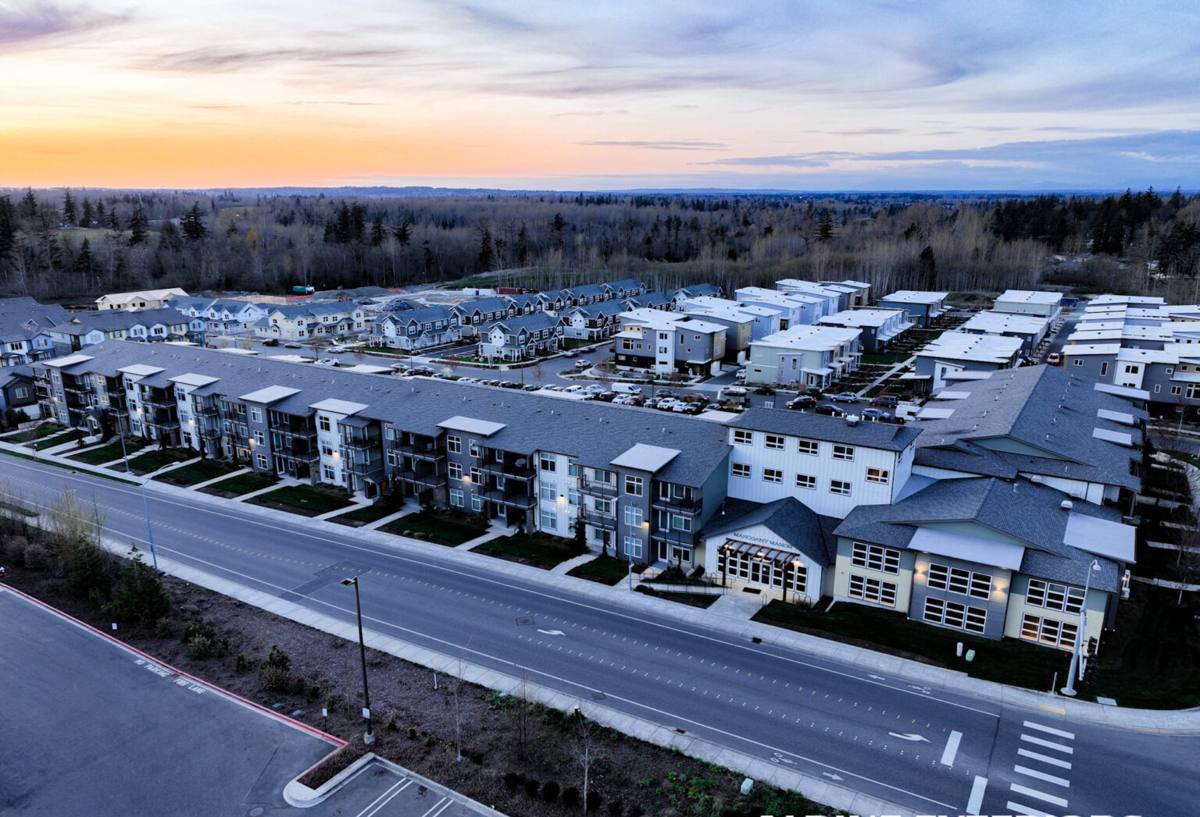
What South Hill's Climate Actually Does to Siding
Salt Air
South Hill's elevation and proximity to Bellingham Bay mean airborne salt reaches exterior surfaces more than homeowners expect from a home that isn't waterfront. Salt air accelerates corrosion on fasteners and trim hardware, and it degrades cheaper paint finishes and some composite sidings faster than inland products of the same type. Over years, that shows up as chalking, fading, and fastener staining that bleeds through the finish.
Driving Rain
Rain that falls straight down is manageable for almost any siding product. Rain that's pushed sideways by wind — which is common on an exposed hillside like South Hill — finds every gap in flashing, every under-caulked seam, and every place where siding wasn't held to the correct clearance. Wind-driven rain is the single biggest reason siding fails at the seams and corners rather than across the flat face of the wall.
A Long Moss Season
Whatcom County's wet season runs long, and shaded, north-facing walls on tree-covered South Hill lots stay damp for weeks at a stretch. Moss and algae don't just look bad — they hold moisture against the siding surface, and on materials that aren't dimensionally stable or properly sealed, that constant dampness is what starts rot and delamination underneath a finish that still looks fine from the street.
What a Correct Siding Installation Actually Involves
Most siding problems we get called out to inspect aren't material failures — they're installation shortcuts. A correct install on a South Hill home involves several things that don't show up in a driveway estimate but matter enormously over the life of the siding.
Weather-Resistive Barrier
A continuous, properly lapped weather-resistive barrier behind the siding is the home's actual first line of defense against wind-driven rain. Siding sheds most of the water, but any that gets behind it needs somewhere to drain — not a path into the sheathing.
Flashing at Every Penetration
Windows, doors, hose bibs, vents, and deck ledgers all need flashing detailed to shed water outward and downward, lapped correctly with the weather barrier above and below. This is the single most common place we find prior installations cut corners, and it's the most common source of hidden rot.
Fastening and Clearances
Fiber cement siding has manufacturer-specified fastener patterns, nailing zones, and minimum clearances from grade, roofing, and decks. Getting these wrong doesn't fail immediately — it fails in year six or eight, when the homeowner has long forgotten who installed it.
Caulking and Sealant Joints
Sealant belongs at specific joints, not everywhere. Over-caulking traps moisture; under-caulking lets it in. Knowing the difference is part of doing this correctly, not an afterthought.
Why We Only Install James Hardie Fiber Cement Siding
We install James Hardie siding exclusively, and South Hill's climate is a good illustration of why. Hardie's fiber cement is non-combustible, dimensionally stable in wet-dry cycling, and finished at the factory with ColorPlus technology, which holds color and resists the fading and chalking that salt air and UV accelerate. The HZ5 product line is engineered specifically for cold, wet Pacific Northwest climates like ours, and the factory finish comes with a strong transferable warranty that isn't contingent on repainting every few years.
| Factor | James Hardie Fiber Cement | Typical Alternatives |
|---|---|---|
| Moisture behavior | Dimensionally stable; resists swelling/warping | Vinyl can warp; wood-based products absorb and swell |
| Salt air / UV exposure | Factory ColorPlus finish resists fading and chalking | Field-applied or lower-grade finishes fade faster |
| Fire performance | Non-combustible | Vinyl and wood-based sidings are combustible |
| Moss-prone shaded walls | Holds up under sustained dampness when installed correctly | Some composites are more prone to edge swelling and delamination |
| Warranty | Strong transferable manufacturer warranty | Varies widely; often shorter or non-transferable |
We get asked why we don't offer vinyl or LP SmartSide as a lower-cost option. The honest answer is that on an exposed, wet-season, moss-prone hillside like South Hill, the maintenance burden and moisture sensitivity of those products show up sooner than most homeowners expect, and we'd rather stand behind one product we trust completely than offer options we know will disappoint some of our customers in year eight.
Our Installation Process on South Hill
- On-site assessment. We walk the exterior, check existing sheathing and flashing condition, and note wind exposure, shade patterns, and any moisture damage already present.
- Tear-off and sheathing inspection. Old siding comes off and we inspect the sheathing underneath for rot or soft spots before anything new goes up — this is where hidden problems from a prior install usually surface.
- Weather barrier and flashing. We install a continuous weather-resistive barrier and flash every window, door, and penetration before the siding goes on.
- Hardie panel or plank installation. Installed to manufacturer nailing schedules and clearance requirements, accounting for South Hill's wind exposure at corners and eaves.
- Trim, caulking, and touch-up. Joints sealed where they should be, ColorPlus touch-up applied at cut edges and fastener heads.
- Final walkthrough. We review the finished job with the homeowner and point out anything they should watch for over the first year.
Signs Your South Hill Home May Need New Siding
- Persistent moss or algae staining on shaded or north-facing walls that returns quickly after cleaning
- Visible warping, buckling, or gaps at seams and corners, especially on wind-exposed elevations
- Soft spots or give when you press on siding near the base of walls or below windows
- Paint or finish that's chalking, peeling, or fading unevenly, particularly on sides facing the bay
- Rising energy bills that suggest the wall assembly behind the siding is no longer performing
- Visible fastener corrosion or staining bleeding through the siding face
Cost Factors for South Hill Siding Projects
Every home and job is different, so we don't quote prices without seeing the house, but the same factors drive cost on nearly every South Hill project we bid.
| Factor | Why It Matters |
|---|---|
| Home size and wall complexity | More corners, dormers, and elevation changes mean more cutting, flashing, and labor |
| Condition of existing sheathing | Rot found during tear-off adds repair scope before new siding can go on |
| Access and hillside terrain | Steep or tight lots common on South Hill can affect staging and equipment access |
| Siding profile chosen | Lap, shingle, and panel Hardie products vary in material and labor cost |
| Trim and detail work | Older South Hill homes often have more trim and architectural detail than newer builds |
Why a Crew That Already Works South Hill Matters
Siding installation isn't just a product — it's a set of site-specific decisions, and a crew that already knows South Hill's terrain, exposure, and older housing stock makes better ones. We know which elevations on a hillside lot typically take the worst wind-driven rain, we know what to expect when we open up an older wall on a shaded lot, and we know how to sequence a job around steep driveways and tight staging areas without surprises mid-project. That familiarity translates directly into fewer change orders, fewer callbacks, and a job that's flashed and sealed correctly the first time.
It also matters for warranty support. James Hardie's transferable warranty is only as good as the installation behind it — a poorly installed job can void manufacturer coverage regardless of the product. Working with an installer who follows Hardie's specifications isn't a nicety, it's what keeps that warranty valid if you ever need it.
Maintenance After Installation
Correctly installed Hardie siding is low-maintenance, not no-maintenance. On South Hill specifically, we recommend an annual check of shaded and north-facing walls for early moss growth, a rinse-down rather than pressure-washing directly at seams, and a visual check of caulked joints every couple of years since sealant has a shorter service life than the siding itself. None of this is heavy upkeep — it's the kind of five-minute check that catches a small issue before it becomes a repair.
If your South Hill home needs new siding, or you're not sure whether what's up there now is doing its job, we're happy to take a look. We offer free, no-pressure estimates — no obligation, just an honest read on what your home actually needs.