 Whatcom County
Building Decks for South Hill's Particular Climate
South Hill sits close enough to the water and high enough on the terrain that homes here take on a mix of exposures most inland Whatcom County properties don't deal with. Salt-laden air moves through on a regular basis, rain comes in sideways during fall and winter storms, and the shaded, damp stretch from October through April gives moss and algae months to get established on any horizontal wood surface. A deck built without those three factors in mind will look fine for a season or two and then start showing problems that are expensive to fix after the fact. A deck built with them in mind from day one just needs normal upkeep.
This page covers what actually matters when you're putting a custom deck on a South Hill home — the materials, the structural details, and the process — so you know what a correct job looks like whether you hire us or someone else.
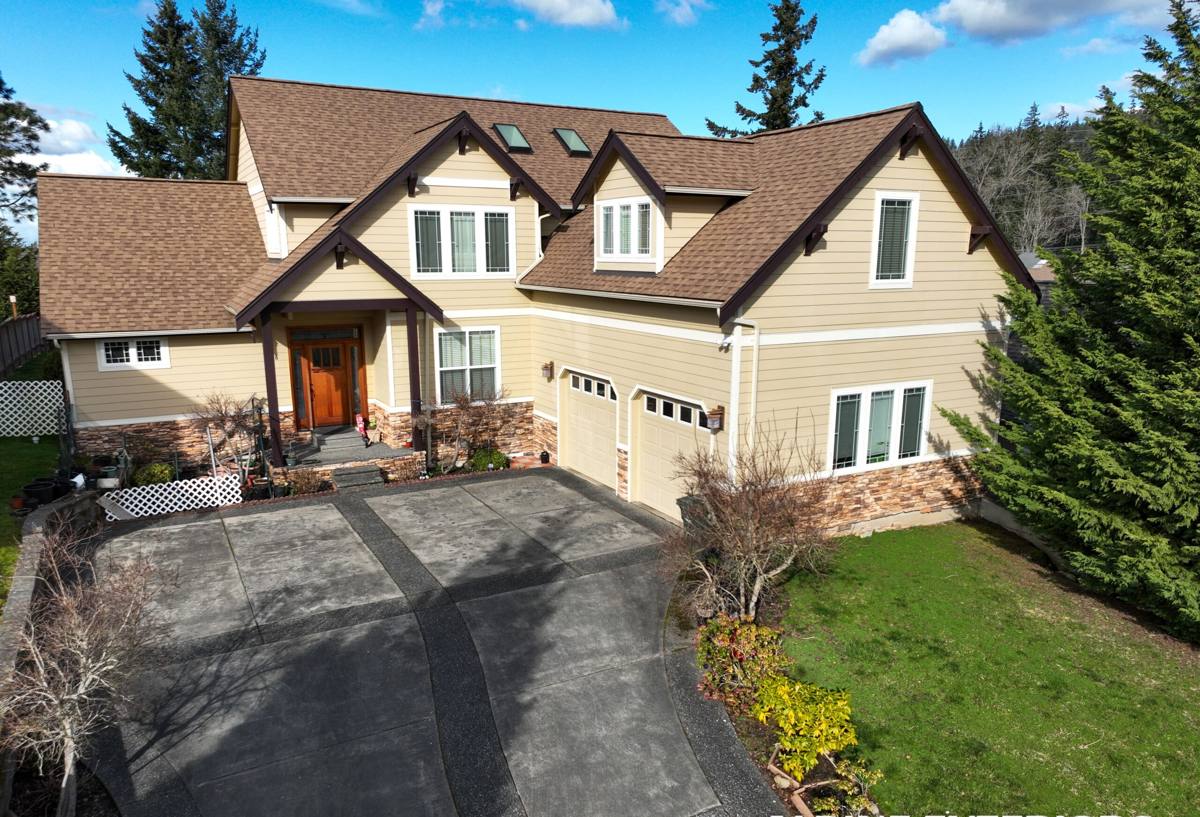
What Whatcom County Weather Does to a Deck Over Time
Salt Air and Corrosion
Homes with any proximity to Bellingham Bay or the Strait deal with airborne salt that settles on everything outdoors, including deck hardware. Standard zinc-coated fasteners and cheap connector hardware can start rusting within a few years in this environment. Once a fastener rusts, it loses holding strength long before it looks bad enough to notice, which is part of why so many older decks develop soft spots or loose railings without an obvious cause.
Driving Rain and Water Intrusion
Whatcom County storms rarely come straight down. Wind-driven rain gets pushed sideways and upward under railings, around ledger boards, and into any gap where flashing was skipped or installed wrong. The ledger board — where the deck attaches to the house — is the single most common failure point on decks in this region, because water that gets behind it rots the house's rim joist as well as the deck framing, hidden from view until the damage is significant.
Moss Season and Surface Traction
From roughly October through April, low sun angles and persistent damp keep shaded deck surfaces wet for days at a time. Moss and algae take hold fastest on north-facing decks, under overhangs, and anywhere debris collects instead of draining. Beyond looking bad, a mossy deck surface gets genuinely slick, and the moisture held against the boards accelerates rot in untreated or poorly finished wood.
Decking Material Options for South Hill Homes
There's no single "best" decking material — the right choice depends on budget, how much upkeep you want to do, and how exposed the deck's location is. Here's how the common options actually compare under Whatcom County conditions:
| Material | Upfront Cost | Moss/Moisture Behavior | Maintenance | Realistic Lifespan |
|---|---|---|---|---|
| Pressure-treated fir/hem-fir | Lowest | Absorbs water if not sealed; prone to moss and splintering without upkeep | Annual cleaning, re-sealing every 1-2 years | 10-15 years with upkeep |
| Cedar | Moderate | Naturally rot-resistant, but still needs sealing to prevent graying and moss | Cleaning and oil/sealer every 1-2 years | 15-20 years with upkeep |
| Capped composite | Higher | Sheds water, resists moss much better, doesn't absorb and rot | Periodic washing, no sealing or staining | 25-30 years, backed by manufacturer warranty |
| PVC decking | Highest | Fully synthetic, essentially immune to rot and moisture absorption | Occasional washing | 30+ years, backed by manufacturer warranty |
We generally steer clients away from uncapped, budget composite boards for decks with heavy shade or north exposure — the surface texture on older-generation composites holds moisture and grows moss faster than a well-sealed wood deck would. That's a product-generation issue, not a knock on composite decking as a category; the capped versions on the market now behave very differently.
Framing Lumber and Hardware Matter as Much as the Decking
Homeowners often focus entirely on the decking material and skip past the framing, but the frame is what actually determines how long the deck lasts. For South Hill's salt exposure, we default to stainless steel or heavy hot-dip galvanized fasteners and structural connectors rather than standard coated hardware, and we use ground-contact-rated or naturally durable lumber for anything near or below grade.
What a Correctly Built Deck Involves
A deck that's going to hold up to Whatcom County weather comes down to a handful of details that aren't visible once the project is finished:
- Footings sized and set below frost depth and bearing on undisturbed soil, not fill
- Ledger board attached with proper flashing (not caulk alone) and a water-resistant barrier behind it
- Joist spacing and beam sizing matched to actual span tables for the decking and load, not just "what's normal"
- Corrosion-resistant fasteners and joist hangers throughout, not just at visible connections
- Positive drainage — the deck surface and any structure beneath it shed water instead of trapping it
- Railings and stair stringers built to current code, with hardware rated for outdoor structural use
- Gaps between boards sized for the specific material, since composite and wood expand differently
Skipping any one of these doesn't usually cause an immediate problem — it causes a problem in year four or five, which is exactly why cutting corners on a deck build is hard to catch during a walkthrough.
Design Considerations Specific to South Hill Lots
South Hill's terrain includes a fair amount of slope and elevation change from lot to lot, which affects deck design more than people expect. A few things we account for on-site rather than assuming:
Slope and Footing Placement
Sloped lots often need taller posts and additional bracing on the downhill side, plus footings that account for the grade rather than a flat, uniform layout. This isn't a cost-adder we invent — it's a structural necessity on a sloped site, and it's one reason two decks of the same size can come in at different prices depending on the lot.
Exposure and Orientation
Where the deck faces relative to prevailing wind and rain direction affects how much water-shedding detail (larger overhangs, sloped surfaces, gapped boards) is worth building in versus how much sun it gets for drying out between storms. We look at the specific orientation of your home before recommending a material or layout, rather than applying the same plan everywhere.
Drainage Below the Deck
For elevated decks, what happens to water once it passes through the decking matters as much as the decking itself. Without a plan for it, the space underneath becomes a permanently damp, shaded pocket — exactly the conditions moss and rot need.
Our Process for a South Hill Deck Project
- On-site visit to assess slope, drainage, sun exposure, and the condition of the house at the attachment point
- Design and material discussion based on your budget, maintenance preference, and how the deck will be used
- Straightforward written estimate — no vague allowances that turn into surprise costs later
- Permitting and inspection scheduling, since Whatcom County jurisdictions require permits for most attached decks
- Construction, with ledger flashing, footing depth, and fastener choices handled to the standard above, not the code minimum where it matters
- Final walkthrough covering how to care for the specific material you chose
Maintenance Through the Moss Season
Whatever material you choose, a little seasonal attention goes a long way in this climate. Before the wet months set in, clear debris out of gaps and off the surface so water has somewhere to go instead of sitting. A yearly wash — plain water and a stiff brush is often enough, with a mild deck cleaner for stubborn spots — keeps moss from getting a foothold in the first place, since it's far easier to prevent than to remove once established. Wood decks need their sealer or stain checked annually and reapplied as it wears, while composite and PVC decking mainly just need to stay clear of leaves and standing water. Check hardware and railings once a year for looseness, since that's often the first sign of a fastener starting to corrode.
Why It Matters to Hire a Crew That Already Works This Area
A deck contractor who mostly builds inland or in drier climates isn't necessarily thinking about salt exposure or eight-month moss seasons by default — those aren't universal concerns, they're specific to areas like South Hill and the rest of Whatcom County. Working locally means we've seen how different materials and details actually hold up here over years, not just on paper, and we can tell you honestly which choices are worth the extra cost for your specific lot and which aren't.
If you're planning a new deck or replacing one that's showing its age, we're happy to take a look and give you a straightforward, no-pressure estimate — just fill out the form below.