 Whatcom County
 One Product, One Standard — Why We Stopped Offering Choices
Most siding contractors will install whatever a homeowner picks off a brochure: vinyl, LP SmartSide, a fiber cement alternative, even primed wood if that's what the budget calls for. We used to do the same. We don't anymore. Every job we take on in Whatcom County now goes up in James Hardie fiber cement, full stop, and we think homeowners deserve to know exactly why before they hire us — or before they hire someone else.
This isn't a manufacturer partnership dressed up as an opinion. It's a decision built from watching what actually happens to different siding products after five, ten, and twenty years on homes exposed to Pacific Northwest weather. Whatcom County sits in a specific kind of punishing climate: salt-laden air off Bellingham Bay and the Strait of Georgia, driving rain that comes in sideways for months at a stretch, and a moss season that can run from October through May. Some siding materials shrug that off. Others slowly lose the fight.
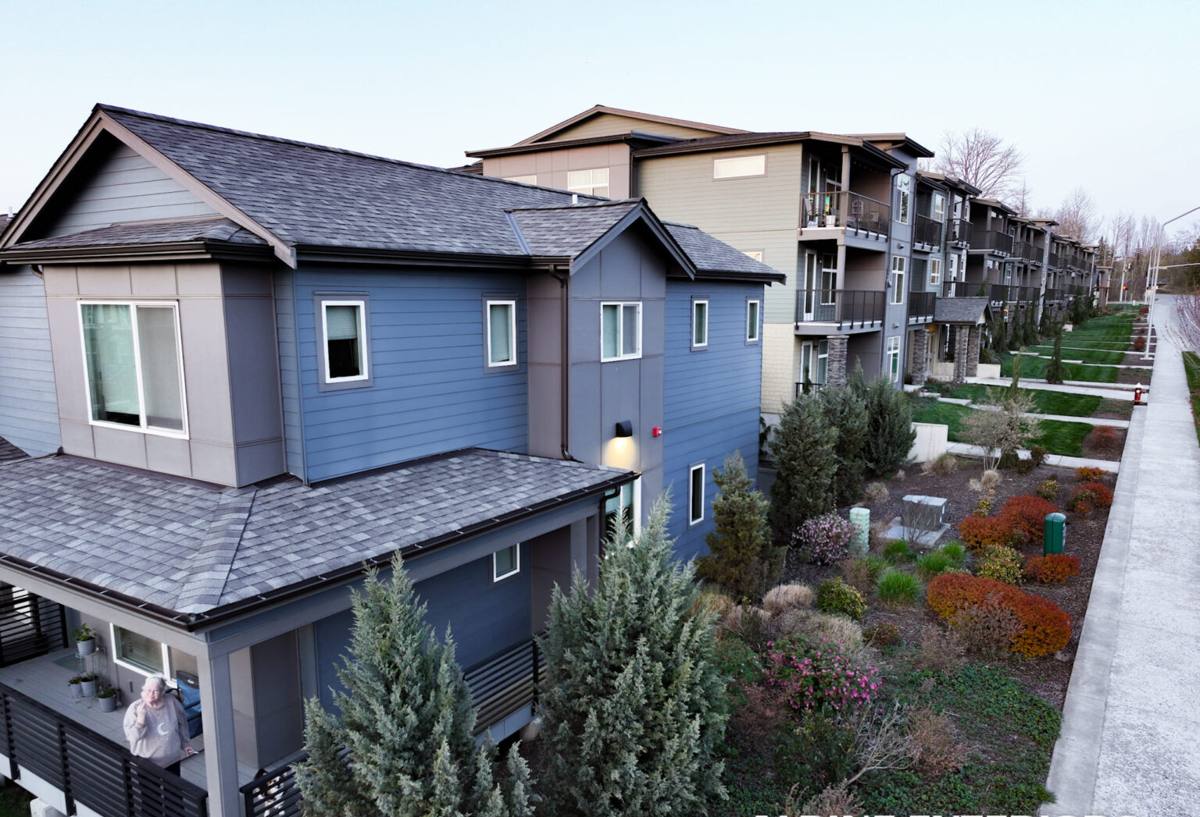
What Whatcom County's Climate Actually Does to Siding
Before explaining what we install, it helps to understand what we're defending a home against. Three factors do most of the damage here:
Salt Air
Homes within a few miles of the water — which describes a large share of Whatcom County, from Birch Bay down through Bellingham to Chuckanut — take on airborne salt that accelerates corrosion of fasteners, degrades certain coatings, and speeds up moisture absorption in porous materials.
Driving Rain
Whatcom County doesn't get gentle, straight-down rain for most of the wet season. Wind-driven rain off the Sound pushes moisture sideways into seams, laps, and butt joints — exactly the spots where inferior materials and sloppy installation fail first.
Extended Moss and Mildew Season
Cool, damp, shaded conditions for much of the year mean anything with an organic component — wood fiber, certain composite cores — stays wet longer than it should and becomes a food source for moss, algae, and mildew. Once that biological growth takes hold, it holds moisture against the surface and the cycle accelerates.
Any siding product can be marketed as weather-resistant. Very few are actually engineered, tested, and warrantied against this specific combination of conditions.
What James Hardie Fiber Cement Actually Is
James Hardie siding is made from a mix of Portland cement, sand, and cellulose fiber, cured under pressure and heat. It is not vinyl, not a wood composite, and not the same manufacturing process as competing fiber cement brands like Allura or Cemplank, even though the raw ingredient categories sound similar on paper.
The practical result: it does not rot, it is not a food source for insects, it does not expand and contract with moisture the way wood-based products do, and it is non-combustible — a genuine safety consideration, not a marketing footnote, given how much of Western Washington borders wildland areas during dry summer stretches.
Fiber cement is heavier and more rigid than vinyl or engineered wood siding, which is part of why it holds a straight line, resists impact damage, and doesn't ripple or sag over time the way lighter products can once fasteners loosen or substrate moves.
HZ5 Climate Engineering — Built for This Exact Region
One detail most homeowners never hear about: James Hardie doesn't make one universal product for the entire country. The company engineers regional formulations — called HZ (HardieZone) products — calibrated to the moisture and freeze-thaw conditions of specific climate zones.
Whatcom County falls in the HZ5 zone, which covers most of the wet, temperate Pacific Northwest and Northeast. HZ5 products are formulated with moisture and freeze-thaw resistance suited to exactly the conditions described above — sustained dampness, moss-friendly shade, and salt exposure — rather than the drier, hotter formulations used in HZ10 zones like the Southwest.
This matters because a fiber cement or composite product engineered for a dry climate and simply shipped to Western Washington can perform noticeably worse here than the same category of product engineered for this zone. Climate-zone matching is one of the quieter reasons product selection matters as much as installation quality.
ColorPlus Technology vs. Field-Painted Siding
Every unpainted siding product eventually needs paint, and every repaint is a maintenance event: scraping, priming, weather windows, and a bill. James Hardie's ColorPlus finish is baked on in a factory-controlled environment before the boards ever reach a job site, using a multi-coat process that's more consistent and more UV- and fade-resistant than anything achievable with a brush and roller in the field.
The practical difference shows up over time, not on day one. Field-applied paint on any siding substrate is only as good as the weather conditions during application, the prep work underneath it, and the paint quality chosen — all variables. A factory finish removes most of those variables and comes backed by its own separate finish warranty, distinct from the product warranty.
This is one of the specific reasons we stopped installing primed products that require a field-applied topcoat. The color is the first thing to fail on a poorly finished install, and it's the hardest thing for a homeowner to evaluate at the time of installation — by the time it shows, the crew is long gone.
The Hardie Product Lines We Install
James Hardie makes several distinct product lines, and matching the right one to a given home and application matters as much as the brand decision itself.
| Product | Typical Use | Notes |
|---|---|---|
| HardiePlank Lap Siding | Primary wall cladding, most homes | Most common choice; multiple textures and exposures |
| HardiePanel Vertical Siding | Modern facades, accent walls, gables | Clean vertical lines, often paired with board-and-batten trim |
| HardieShingle Siding | Accent areas, gables, Craftsman-style detail | Staggered or straight-edge shingle profiles |
| HardieTrim Boards | Corners, window and door casing, fascia | Matched finish system with the field siding |
| HardieSoffit Panels | Eaves and overhangs | Vented and non-vented options for attic airflow |
Using the matched trim, soffit, and panel systems together — rather than mixing a Hardie field product with off-brand trim — keeps expansion rates, fastening methods, and finish consistency aligned across the whole exterior. It also keeps the warranty coverage clean, since mixed systems can create disputes about what caused a given failure.
Warranty: What "Transferable" Actually Means
James Hardie's product warranty is a meaningful part of the decision, but the fine print matters more than the length of coverage. A few things worth understanding before comparing warranties across products:
- Coverage is typically tied to installation performed to Hardie's published installation instructions — this is a real reason installer quality affects what's actually covered, not just how the job looks.
- Hardie's warranty is transferable to a subsequent homeowner within a defined window, which matters for resale value in a county where a lot of buyers are now asking directly about siding material.
- The ColorPlus finish warranty and the substrate warranty are separate documents with separate terms — read both, not just whichever one a salesperson quotes.
- Warranty claims almost always require documentation of proper installation, which is one more reason to keep photos and paperwork from your project.
We register every eligible installation and keep our own documentation on file specifically so a warranty claim isn't a fight years down the road.
Why Installation Quality Matters as Much as the Product
A premium siding product installed poorly will fail in the same places a cheap product fails — just more slowly. Most of the real-world siding failures we get called to inspect in Whatcom County trace back to installation mistakes, not product defects: wrong fastener spacing, missing or improper flashing at windows and penetrations, siding installed too tight to the ground or a deck surface, or caulk used as a substitute for proper flashing detail.
Before hiring anyone for a siding project, a homeowner should be comfortable asking about each of these:
- Is the crew factory-trained or certified on the specific product being installed?
- What clearance is maintained between the bottom of the siding and grade, decks, and roof lines?
- How are butt joints and seams flashed — caulk alone, or a proper flashing detail behind the joint?
- What house wrap or weather-resistive barrier is used underneath, and how are penetrations sealed?
- Are fastener type and spacing specified in writing, matched to the product manufacturer's requirements?
- Does the installer register the manufacturer warranty on the homeowner's behalf?
If a contractor can't answer these clearly, that's worth weighing as heavily as which siding brand they're proposing.
Cost Factors to Understand Before Comparing Bids
James Hardie siding typically costs more upfront than vinyl and is often comparable to or somewhat above other fiber cement and engineered wood products, depending on the product line and trim package chosen. The table below breaks down what actually drives that number rather than treating it as a single price point.
| Cost Factor | What Drives It |
|---|---|
| Product line and texture | Smooth vs. cedar-textured, lap width, panel vs. plank |
| Trim package | Matched HardieTrim corners, window casing, and fascia vs. mixed materials |
| Tear-off and disposal | Removing and disposing of existing siding, especially if it contains hazardous materials |
| Substrate repair | Rot or moisture damage discovered underneath the old siding, common on older Whatcom County homes |
| House wrap and flashing detail | Quality and completeness of the weather barrier system installed before siding goes up |
| Color and finish | Factory ColorPlus finish vs. primed-for-field-paint options |
The single biggest swing factor is usually what's found once the old siding comes off. A straightforward re-side over sound sheathing costs meaningfully less than a project that uncovers water damage from years of a failing weather barrier — which is common enough in this climate that we always budget a contingency conversation into the estimate up front.
What This Decision Means for You as a Homeowner
Standardizing on one product means we're not incentivized to steer anyone toward whatever has the best margin that month. It also means our crews install the same system, the same flashing details, and the same fastening schedule on every job, which is where real installation consistency comes from — not from a crew that installs five different brands and has to remember five different sets of manufacturer instructions.
It won't be the cheapest quote on every bid comparison, and we're upfront about that. What it buys is a siding system engineered for this specific climate zone, a factory finish that isn't dependent on field weather conditions, and a warranty structure that holds up because the installation behind it is documented and done to spec.
If you're weighing a siding replacement or new construction project anywhere in Whatcom County, we're happy to walk your home, look at what's there now, and put together a free, no-pressure estimate — no obligation, and no pitch for a product we don't actually install.