 Whatcom County
 Why Siding Wears Out Faster Here Than Almost Anywhere Else
Whatcom County sits in a tough spot for exterior building materials. You've got salt-laden air rolling in off Bellingham Bay and the Strait of Georgia, a marine climate that delivers driving, wind-blown rain for months at a stretch, and a shaded, damp growing season that's practically an invitation for moss and algae to move in and stay. Add in the freeze-thaw swings we get in the foothills and the county's older housing stock, and you have a recipe for siding that ages faster than it would in a drier inland climate.
Most homeowners don't think about their siding until something looks obviously wrong — a crack, a stain, a soft spot underfoot on the porch. But siding failure is almost always progressive. By the time it's visible from the sidewalk, moisture has usually been doing damage behind the surface for a while. Knowing the early signs buys you time to fix a small problem before it becomes a wall-sheathing or framing problem.
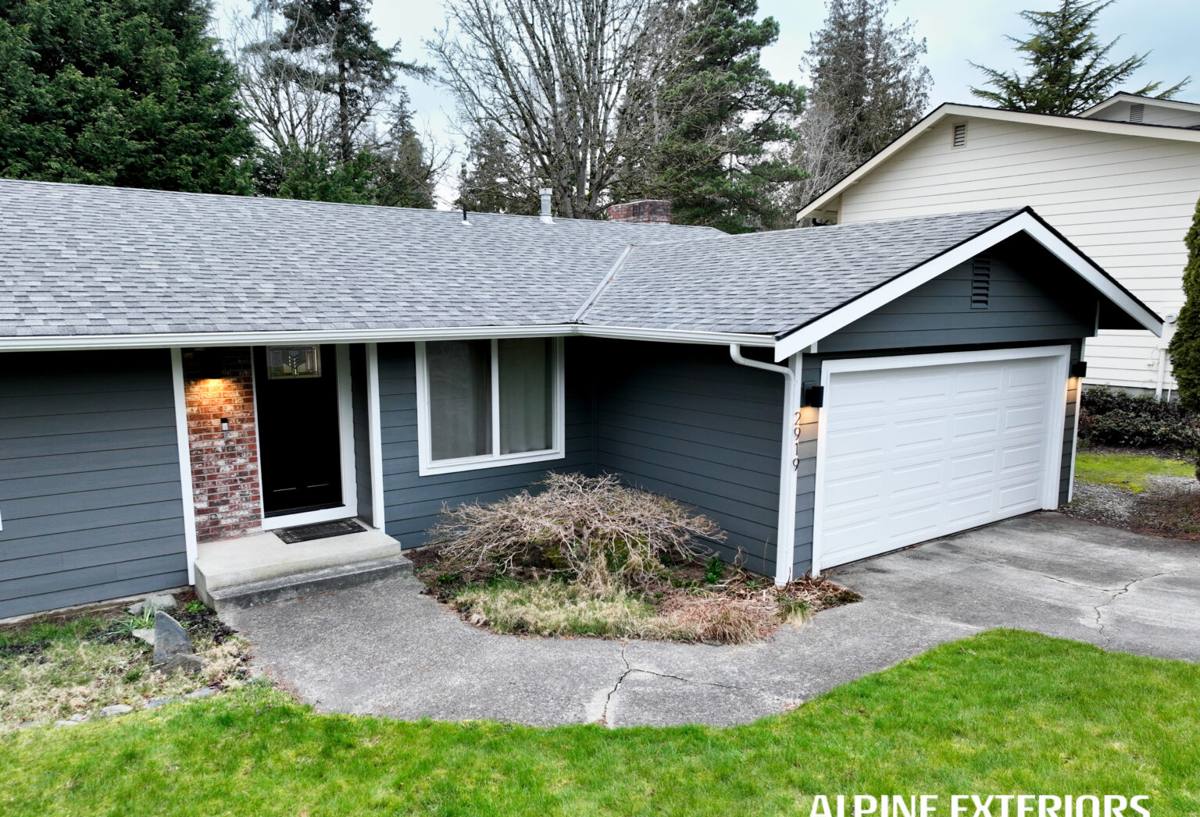
Sign 1-3: What Your Eyes Can Catch From the Ground
1. Peeling, Bubbling, or Chalky Paint
Paint failure is often the first visible symptom of a bigger issue. If paint is bubbling or peeling in patches — especially near seams, corners, or the bottom courses closest to grade — it usually means moisture is trapped underneath and pushing the finish off from the inside. A little chalkiness after years of sun exposure is normal aging; bubbling and peeling within a few years of a paint job is not.
2. Visible Warping or Buckling
Wood-based sidings (cedar, primed spruce, and some engineered wood products) absorb moisture and swell, then dry and shrink, over and over through our wet season and drier summer stretches. Over time that cycle causes boards to warp, cup, or buckle away from the wall. Once a board has visibly warped, it has already lost some of its structural integrity and its ability to shed water properly.
3. Cracking or Splitting at the Board Face
Cracks that run with the grain on wood siding, or hairline cracks on fiber cement that wasn't installed or finished correctly, both give water a direct path into the wall assembly. A crack that looks cosmetic in July can be a soaked, swollen mess by January once our rainy season really sets in.
Sign 4-6: What Moss, Mold, and Discoloration Are Telling You
4. Persistent Moss or Algae Growth
Some green tinge on a north-facing wall in the Pacific Northwest is close to unavoidable. But thick, established moss growth — especially moss that keeps coming back a few weeks after cleaning — is a sign that a surface is staying damp longer than it should. That could mean poor drainage, inadequate ventilation gaps behind the siding, or overhanging vegetation keeping a section of wall in permanent shade and moisture.
5. Dark Streaking or Staining, Especially Near Seams
Dark vertical streaks running down from a seam, window trim, or fastener are a classic sign that water is finding a way behind the cladding and running down the back side before it reappears at a lower gap. This is different from surface dirt — it tends to follow a consistent path every time it rains hard.
6. Interior Signs: Musty Smell, Bubbling Paint, or Stains on Interior Walls
Siding problems don't always announce themselves outside first. A musty smell in a room on an exterior wall, a soft spot in interior drywall, or a stain that keeps returning after you paint over it can all trace back to siding that's no longer keeping water out. By the time it shows up inside, the damage is usually beyond a simple patch.
Sign 7-10: Structural and Mechanical Red Flags
7. Soft, Spongy, or Crumbling Spots
Press on a suspect area — gently, with your palm, not a screwdriver — near the bottom of walls, under windows, and around any penetration (hose bibs, light fixtures, vents). If it gives under light pressure or feels spongy, there's likely rot or saturated material underneath. This is one of the most reliable failure signs and usually means the siding in that area is no longer salvageable.
8. Gaps, Loose Boards, or Siding Pulling Away From the Wall
Fasteners that have backed out, corners that have separated, or boards that flex when you push on them all point to a siding system that's lost its grip — sometimes from wood shrinkage, sometimes from failed adhesive or fastening on manufactured products, sometimes from wind and moisture cycling loosening things over years.
9. Insect Activity
Carpenter ants and other wood-boring insects go after damp, softened wood. Small holes, sawdust-like debris (frass) at the base of a wall, or visible insect trails are a sign that moisture has already compromised the wood enough to attract pests — the siding failure came first, the insects are a symptom.
10. Rising Utility Bills or Drafts You Can Feel Indoors
Siding is part of your home's weather barrier, not just its face. When it fails, gaps and saturated materials reduce the effectiveness of the insulation and air sealing behind it. If you've noticed rooms that are harder to keep comfortable or a heating bill that's crept up without an obvious cause, failing siding is worth ruling out.
Matching the Sign to the Likely Cause
| Sign | Likely Cause | Urgency |
|---|---|---|
| Peeling or bubbling paint | Trapped moisture under the finish | Moderate — inspect soon |
| Warping or buckling boards | Repeated wet/dry swelling cycles | Moderate to high |
| Persistent moss or algae | Poor drainage or ventilation, shade | Low to moderate |
| Dark streaking near seams | Water tracking behind the cladding | High |
| Musty smell or interior stains | Water intrusion reaching the wall cavity | Urgent |
| Soft or spongy spots | Rot in the siding or sheathing | Urgent |
| Loose or gapped boards | Fastener failure or material shrinkage | High |
| Insect activity | Softened, moisture-damaged wood | Urgent |
A Quick Self-Inspection You Can Do This Weekend
You don't need a ladder or special tools to get a decent read on your siding's condition. Walk the perimeter of your house on a dry day and check these:
- Press firmly (not hard enough to damage anything) on siding near the ground, under windows, and around outdoor faucets — note any give or sponginess
- Look at inside and outside corners for gaps, separation, or caulk that's cracked and pulling away
- Check north- and west-facing walls, and anywhere shaded by trees, for heavy moss or algae buildup
- Look for streaking below window sills, seams, and any place two materials meet
- Check the bottom few courses of siding closest to grade, decks, and roof lines — these areas take the most water exposure
- Walk your interior exterior walls and note any musty smell, soft drywall, or recurring stains
- Check fasteners for rust streaks or heads that have backed out and are sitting proud of the surface
If you find one issue on this list, it's worth a closer look. If you find three or more, it's worth having someone experienced take a full look before another wet Whatcom County winter does more damage.
Cosmetic Damage vs. Structural Damage
Not every sign on this list means you need full replacement. A patch of moss, some chalky paint on a south wall, or a loose piece of trim can often be addressed directly without touching the rest of the siding. The signs that matter most are the ones tied to moisture getting past the surface: soft spots, interior staining, persistent streaking, and insect activity. Those point to problems in the water-resistive barrier or the sheathing behind the siding, not just the visible face — and that's a different scope of repair, sometimes involving opening up a wall section to assess how far the damage has spread.
This is also where the choice of siding material starts to matter for how a home ages. Wood-based products depend heavily on maintaining an intact paint or finish layer, because the wood itself absorbs and releases moisture readily. Once that finish layer is compromised in our climate, deterioration can move quickly. It's a big part of why we standardized on James Hardie fiber cement for the homes we side: it's not a moisture-wicking wood product, it holds a factory-applied ColorPlus finish far longer than field-applied paint typically lasts, and it's engineered for exactly this kind of wet, marine climate through Hardie's HZ5 product line.
What It Costs to Wait
Every one of these ten signs is cheaper to deal with early than late. Peeling paint is a maintenance job. Peeling paint left for two more wet seasons can become a sheathing repair. A loose corner board is a quick fix. A loose corner board that lets water track down into the wall for a winter can mean replacing framing, insulation, and drywall along with the siding itself. Whatcom County's wet season runs long, and every month a small opening in your siding stays open is another month of exposure.
None of this means every sign requires an emergency call. It means it's worth getting an honest assessment of what you're actually looking at — cosmetic wear you can plan around, or the early stage of a moisture problem you want to get ahead of.
Get an Honest Look Before You Decide Anything
If you've spotted one or more of these signs on your home, we're happy to take a look and tell you plainly what we see — no pressure, no upsell. Reach out for a free estimate and we'll walk the property with you, point out what's cosmetic and what isn't, and lay out your options.