 Whatcom County
 Siding in Silver Beach: Built for the Bay, Not Just the Weather
Silver Beach sits close enough to the water that it earns its name honestly, and that proximity shapes what a house needs from its exterior. Homes here deal with a combination most inland Whatcom County neighborhoods don't see in the same intensity: salt-tinged air moving off Bellingham Bay, wind-driven rain that hits siding at an angle instead of falling straight down, and a wet season that stretches long enough for moss and algae to get a real foothold on north- and east-facing walls. None of that is exotic or unusual for this part of Washington, but it does mean the exterior material and the installation details matter more here than they would in a drier, more sheltered location.
We install James Hardie fiber cement siding exclusively. That's not a marketing position — it's a decision we made after years of servicing homes in exactly this kind of coastal-adjacent environment, watching which materials held up and which ones needed constant attention. We'll walk through why below, but the short version is that fiber cement handles moisture, salt air, and biological growth in ways that wood-based and vinyl products generally don't match.
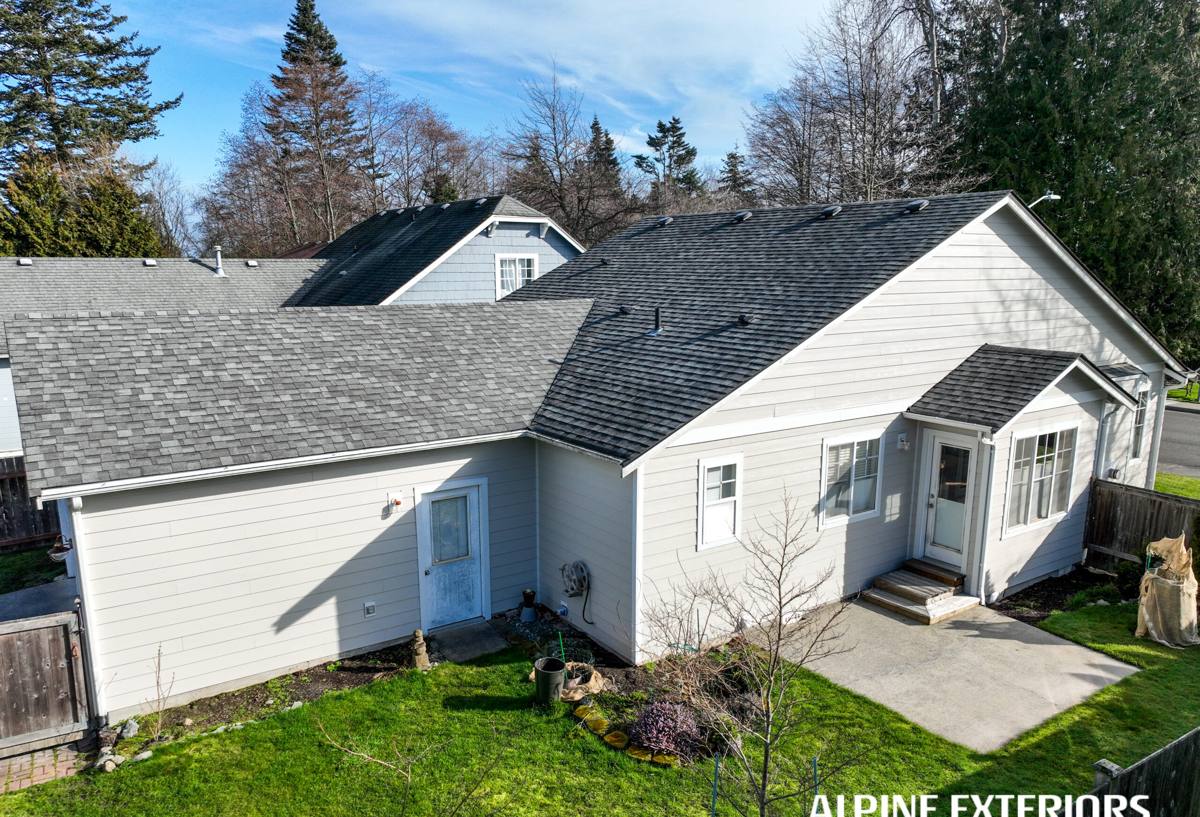
What Silver Beach's Climate Actually Does to a House
Salt Air and Moisture
Even a few blocks from the water, airborne salt accelerates corrosion on fasteners, flashing, and any exposed metal components. It also tends to keep exterior surfaces slightly damp longer than homes further inland, which matters a lot for any siding material that's sensitive to sustained moisture exposure.
Driving Rain
Storms coming off the Strait of Georgia and the Sound don't always drop rain straight down. Wind-driven rain gets pushed sideways into wall assemblies, which puts real pressure on butt joints, trim intersections, and anywhere the water-resistive barrier and flashing details weren't done correctly. This is where installation quality tends to separate a siding job that lasts twenty-plus years from one that starts showing problems in five.
Moss and Algae Season
Whatcom County's wet season runs long, and Silver Beach's tree cover and proximity to water keep humidity elevated on shaded and north-facing walls for much of the year. Materials that absorb moisture give moss and algae something to grow into, not just onto — which turns a cosmetic cleaning job into a maintenance cycle that never really ends.
Why We Standardized on James Hardie
James Hardie fiber cement is engineered specifically for climates like this one. It's non-combustible, dimensionally stable, and doesn't absorb moisture the way wood-based products can, which directly addresses the three pressures we outlined above. Hardie also offers HZ5 formulations engineered for colder, wetter climate zones — the Pacific Northwest falls into that category, and using the right formulation for the region is part of doing the job correctly, not an upsell.
The factory-applied ColorPlus finish is another piece of this. Instead of relying on field-applied paint that has to cure properly on-site (harder to guarantee in a damp climate) and that will need repainting on a normal cycle, ColorPlus is baked on at the factory under controlled conditions, backed by its own finish warranty, and holds color and resists fading substantially longer than typical field paint.
| Concern | Why It Matters in Silver Beach | How Hardie Fiber Cement Addresses It |
|---|---|---|
| Moisture absorption | Long wet season, coastal humidity | Cement-based composition doesn't swell, rot, or wick water the way wood-based siding can |
| Salt air exposure | Proximity to the bay accelerates material breakdown | Non-organic composition isn't vulnerable to salt-driven decay |
| Moss and algae growth | Shaded, damp walls stay wet longer | Non-porous factory finish gives growth less to anchor into |
| Wind-driven rain | Storms push water sideways into joints and trim | Engineered panel systems and correct flashing details manage water intrusion |
| Fire exposure | Regional wildfire smoke and ember risk in dry summer stretches | Fiber cement is non-combustible by composition |
What We Chose Not to Install, and Why
We get asked fairly often about LP SmartSide, vinyl, and occasionally cedar or primed spruce. Each of those has legitimate uses and reasonable manufacturers behind them — we're not going to tell you they're junk, because that's not honest. But for the specific conditions Silver Beach homes face, here's our reasoning:
- Vinyl siding can warp or become brittle with temperature swings, and its seams and panel joints give wind-driven rain more opportunities to work behind the material over time. It also isn't factory-finished the way ColorPlus is, so color fading is a longer-term concern.
- LP SmartSide and other engineered wood products use a wood-strand core, which means their long-term performance depends heavily on the integrity of the factory coating and correct field sealing at every cut edge. In a climate with this much sustained moisture exposure, that's a maintenance commitment we're not willing to install and then walk away from.
- Cedar and primed spruce are genuinely attractive materials, but real wood siding in a coastal-adjacent, high-moisture, high-moss environment means an ongoing cycle of repainting, caulking, and monitoring for rot — a bigger long-term time and cost commitment than most homeowners realize when they choose it.
We standardized on one product line because it lets us install to a consistent, high standard every time, and because we believe it's the material that actually fits this climate rather than fighting it.
How We Approach a Siding Job in Silver Beach
Assessment First
Every project starts with a look at the existing siding, the wall sheathing underneath it if accessible, and any signs of past moisture intrusion — soft spots, staining, or trim that's separated from the wall. This tells us whether we're dealing with straightforward re-siding or whether there's underlying damage that needs to be addressed before new siding goes on.
Water Management Details
The siding itself is only part of what keeps a house dry. Flashing at windows, doors, and roof intersections, correct house wrap installation, and proper panel spacing for expansion all matter as much as the material choice. This is where a lot of siding failures actually originate, even when the material itself is sound.
Installation to Manufacturer Spec
James Hardie's warranty coverage depends on installation following their documented specifications — fastener patterns, clearances, caulking practices, and more. We install to that standard as a baseline, not an exception, because it's what keeps the warranty valid and the wall assembly performing the way it's supposed to.
Beyond Siding: Roofing, Windows, and Decks
Siding doesn't work in isolation. A roof that's shedding water improperly, windows with failed flashing, or a deck ledger board that's trapping moisture against the house can all undermine even a well-installed siding job. We handle roofing, windows, and decks alongside siding work specifically because the exterior of a house needs to be looked at as one connected system, especially in a climate that gives water this many chances to find a way in. If we're on-site for a siding project and notice a related issue in one of these areas, we'll flag it honestly rather than let it become next year's emergency call.
What to Expect: A Practical Checklist
- An on-site assessment of your current siding condition and any underlying moisture damage
- A clear explanation of which James Hardie product line and profile fits your home and budget
- A written estimate with no pressure to sign on the spot
- Attention to flashing, house wrap, and water management details, not just panel installation
- Installation following James Hardie's documented specifications to keep your warranty valid
- A crew that's familiar with Whatcom County's coastal climate conditions, not a crew learning on your house
Why a Local Crew Matters Here
Silver Beach's exposure to bay-driven wind and rain isn't identical to a job three miles inland, and a crew that only works in drier, more sheltered parts of the county can miss details that matter here — how far to hold panels off grade near the waterline, where extra flashing attention pays off on a wall that takes rain at an angle, which sides of the house are going to fight moss regardless of material. Working across Whatcom County day in and day out means those details aren't guesswork for us; they're just part of how we plan the job from the start.
Cost Factors Worth Understanding
Every home is different, so we won't quote a number without seeing the project, but a few factors consistently drive cost on Silver Beach homes specifically:
| Factor | Why It Affects Cost |
|---|---|
| Extent of moisture damage found under old siding | Rot repair and sheathing replacement add labor before new siding can go on |
| Home size and wall complexity | More corners, trim, and cutouts mean more labor and material waste |
| Product line and profile chosen | Hardie's lap, shingle, and panel styles vary in material and install cost |
| Access and site conditions | Waterfront lots, slopes, and tight lot lines can affect scaffolding and staging |
| Trim and accessory work | Full trim replacement alongside siding adds cost but improves long-term water management |
If you're weighing a siding project on a Silver Beach home, we're happy to take a look, walk you through what we see, and put together a straightforward estimate — no pressure, no obligation. Use the form below to get started.