 Whatcom County
Building a Deck for Silver Beach's Marine Climate
A deck in Silver Beach lives outside year-round, and Whatcom County doesn't give outdoor structures an easy ride. Salt-laden air off the water, driving rain that comes in sideways more often than straight down, and a moss season that can stretch from fall through spring all work against a deck that wasn't built with this climate in mind. We build and repair decks specifically for these conditions — not a generic deck design dropped into a wet county, but one detailed for the way weather actually behaves here.
Most deck failures we get called out for aren't dramatic. They're slow: a soft spot near the house where the ledger board meets the siding, corroding hardware nobody can see until a board finally gives, or a walking surface so covered in moss by January that it's a slip hazard every morning. All of it is preventable with the right materials and the right details at the parts of the deck that actually take the abuse.
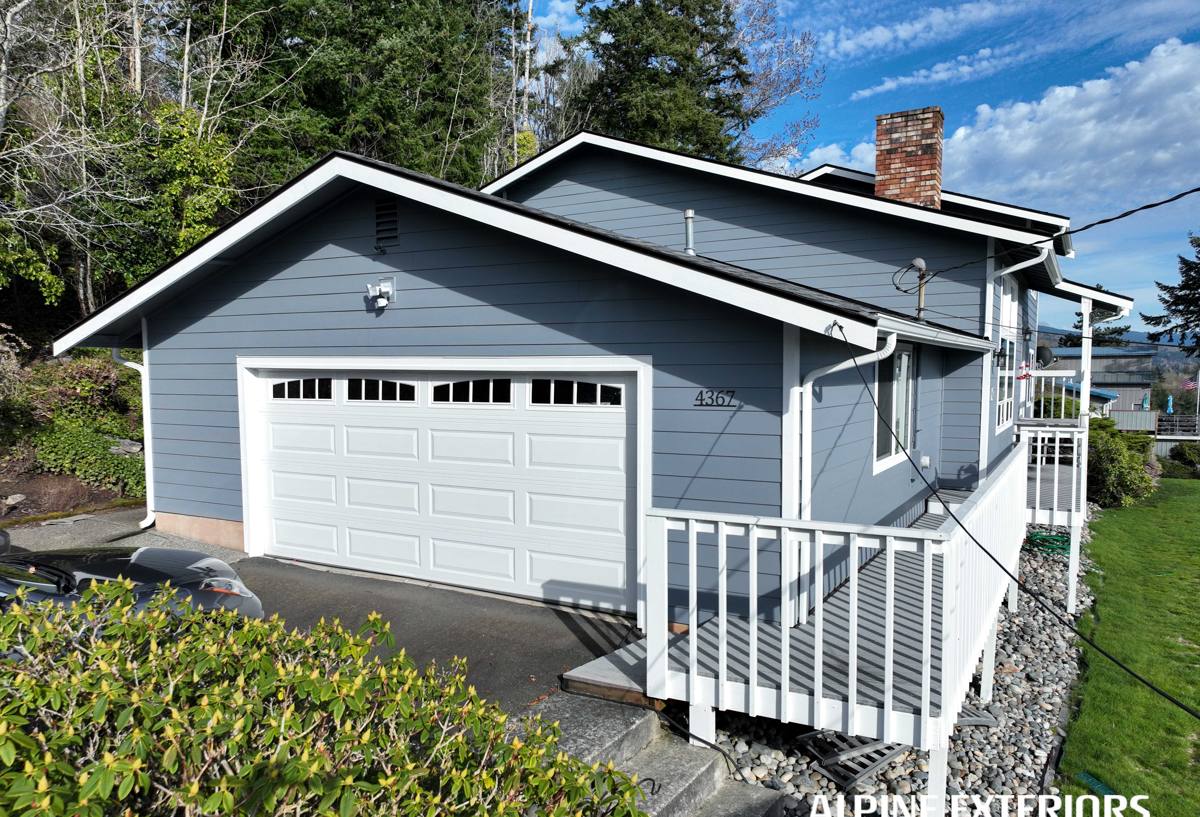
What This Climate Does to a Deck That Wasn't Built For It
Salt Air and Corrosion
Airborne salt doesn't need a deck to sit right on the water to cause problems — it travels on the wind and settles on anything metal outdoors. Standard fasteners, brackets, and framing connectors can corrode faster than homeowners expect, especially at joist hangers and post bases that stay damp between rain events. Once a fastener weakens, the joint it's holding loses strength long before it looks bad on the surface.
Driving Rain and Hidden Moisture
Rain that comes in at an angle finds its way into gaps that vertical rain never would — behind ledger boards, under poorly lapped flashing, and into end-grain cuts that weren't sealed. The ledger connection, where the deck attaches to the house, is the single most common place we find rot on decks we're asked to inspect or rebuild. Water gets behind the ledger, the framing stays wet longer than it should, and by the time it's visible from underneath, the damage has usually been building for a couple of seasons.
A Long Moss Season
Whatcom County's stretch of damp, mild, low-sun months is exactly what moss and algae need to take hold on any shaded or low-airflow surface. On a deck, that means slick boards, staining that's hard to fully clean off some materials, and — if moisture stays trapped under the growth — accelerated wood decay. Decks that don't get enough sun or airflow underneath are the ones that need the most moss management every year.
What a Correctly Built Deck Requires Here
Ledger Attachment and Flashing
The ledger board is where a deck meets the house, and it's the one connection that has to be both structurally solid and completely watertight. That means proper lag or through-bolt fastening into the house framing (not just siding), continuous metal flashing set correctly against the water-resistive barrier, and flashing tape at every penetration. Skipping or shortcutting this step is the fastest way to end up with hidden rot a few years down the road.
Footings Set for Local Soil and Frost Conditions
Deck footings need to be sized, spaced, and set to the depth your soil and Whatcom County's building code call for on your specific lot. Soil drainage varies block to block, and a footing that's undersized or too shallow is the reason some older decks develop noticeable movement or bounce over time. We size footings to the deck's actual load and the site conditions, not a one-size guess.
Fasteners and Hardware
Given the salt air this area sees, we build with fasteners and structural hardware rated for corrosion resistance — stainless steel or heavy coated hardware at connections that matter most, rather than standard-grade screws and brackets that are fine in drier inland climates but age poorly here. It costs more up front and saves you from hidden failures later.
Drainage and Airflow Underneath
A deck that sheds water properly and gets airflow underneath dries out between storms instead of staying damp. That means correct decking gap spacing, a slight slope away from the house on any solid surface, and keeping skirting or landscaping from sealing off ventilation underneath the frame. Airflow is one of the cheapest defenses against both rot and moss, and it's often the first thing left out on a poorly planned deck.
Choosing a Decking Material for This Climate
There's no single right answer for every homeowner — budget, maintenance tolerance, and how much moss and moisture exposure the site gets all factor in. Here's how the common options actually compare for a Whatcom County deck.
| Material | Upfront Cost | Maintenance | Moss/Moisture Behavior |
|---|---|---|---|
| Pressure-treated lumber | Lowest | Needs regular cleaning and periodic sealing | Absorbs moisture; prone to moss if not cleaned and not enough airflow |
| Cedar | Moderate | Sealing/staining every couple of years to hold appearance | Naturally more rot-resistant than PT lumber, but still needs airflow and cleaning to stay moss-free |
| Composite decking | Higher | Occasional washing; no staining or sealing | Doesn't absorb water like wood, but still needs cleaning to keep algae/moss from growing on the surface film |
We'll walk through these trade-offs against your actual site — how much shade it gets, how exposed it is to wind-driven rain, and how much upkeep you actually want to do — rather than push one product as a default.
Our Deck Building Process
- On-site assessment. We look at your lot's drainage, sun/shade exposure, and how the deck will attach to the house before recommending materials or layout.
- Design and permitting. We handle the design details and the Whatcom County permit process so the structure is documented and inspected correctly, not just built and hoped for.
- Footings and framing. Footings are set to code depth for your soil, and framing goes in with corrosion-resistant hardware throughout.
- Ledger flashing. The house connection gets proper flashing and sealing before a single deck board goes down — this step doesn't get shortcut.
- Decking and railing installation. Boards are spaced and secured for drainage and airflow; railing and stairs are built to code for height and baluster spacing.
- Final walkthrough. We go over the finished deck with you, including what maintenance it'll need and when.
Railings, Stairs, and Code Requirements
Guardrails, stair railings, and baluster spacing aren't optional design choices once a deck reaches a certain height above grade — they're set by building code, and inspectors here check them. Beyond the legal requirement, correctly built railings matter more in this climate because wet, mossy stair treads and landings are exactly where a loose railing turns into a real fall risk. We build railings to the same fastening and hardware standard as the rest of the deck, not as an afterthought once the decking is down.
Living With a Moss-Season Deck
Even a well-built deck needs some seasonal attention in a climate like ours. A little regular upkeep goes a long way toward avoiding slippery boards and catching small problems before they become expensive ones.
- Sweep off fallen leaves and debris regularly — trapped organic matter holds moisture and feeds moss growth
- Wash the deck surface at least once a year, more often in shaded areas, to keep moss and algae from getting a foothold
- Check the ledger board area and any spots where the deck meets the house for soft wood, staining, or gaps in flashing
- Keep gutters and downspouts near the deck clear so runoff isn't dumping extra water onto or under the structure
- Look underneath the deck once or twice a year for standing water, blocked airflow, or early signs of rot on framing
- Reseal or restain wood decking on the schedule it needs — don't wait until it's visibly gray and worn
Why Hire a Crew That Already Works in Silver Beach
A deck built by a crew unfamiliar with this specific climate often looks fine on completion day and starts showing problems within a few wet seasons — the wrong fastener grade, a ledger detail that wasn't fully sealed, or decking spaced without enough thought to drainage. We build decks in Whatcom County conditions regularly, so the details that matter here — corrosion-resistant hardware, proper ledger flashing, footing depth suited to local soil, and layouts that actually dry out between storms — aren't an afterthought. They're just how we build.
If you're planning a new deck in Silver Beach or need an honest look at one that's showing its age, we're happy to come take a look. Fill out the form below for a free, no-pressure estimate — we'll walk the site with you and tell you straight what it needs.