 Whatcom County
Roofing in Silver Beach Comes With Its Own Set of Problems
Silver Beach homes take a beating that inland Whatcom County houses simply don't deal with. The combination of salt-laden air, driving rain off the water, and shade from mature trees creates a microclimate that ages a roof faster than most homeowners expect. A roof that might get 25 years of service in a drier, more open part of the county can start showing real trouble at 15 or 18 years out here if it wasn't installed with these conditions in mind.
We've replaced roofs on homes throughout this area long enough to know the pattern: it's rarely one catastrophic failure that brings a homeowner to the point of replacement. It's a slow accumulation — a little moss here, a soft spot there, a few more granules in the gutter every fall — until one wet winter finally pushes things past the point of patching.
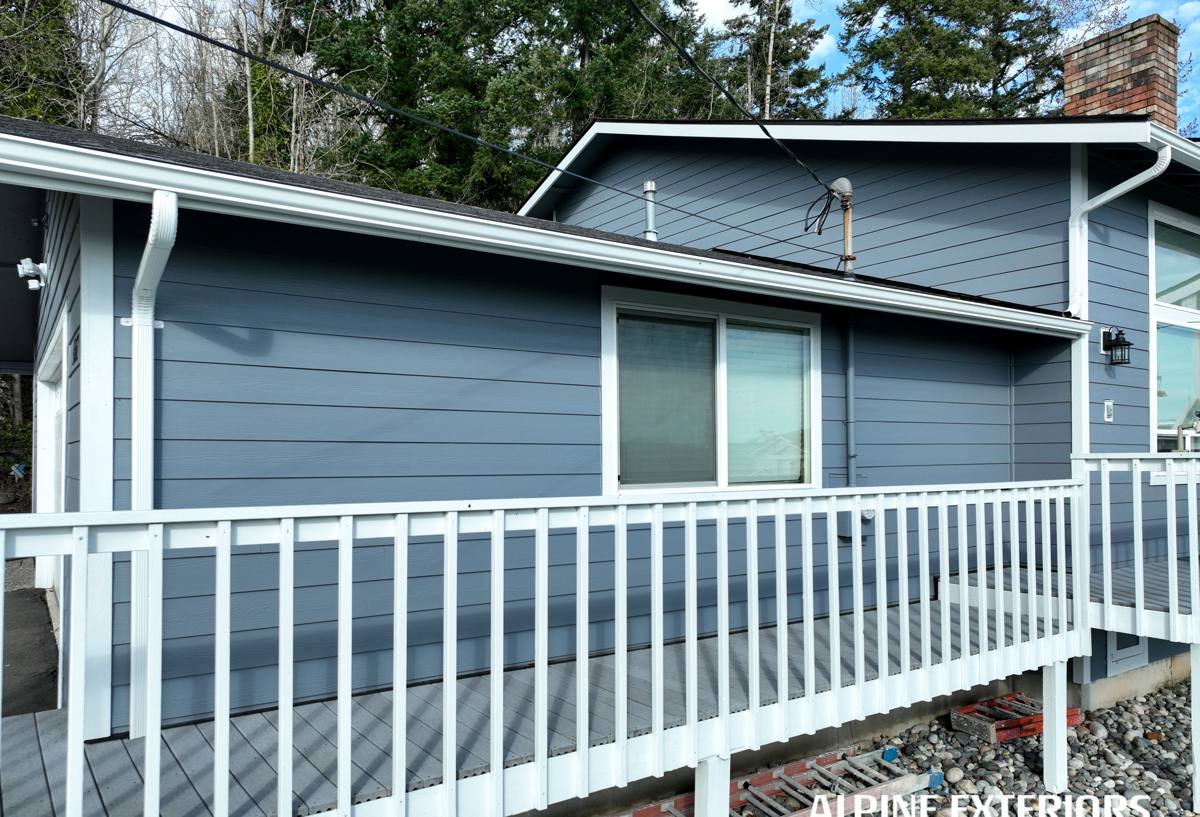
Why This Climate Is Hard on Roofs
Salt Air and Metal Fasteners
Homes closer to the water deal with airborne salt that accelerates corrosion on exposed metal — nail heads, flashing, vent stacks, and gutter hardware. Standard fasteners and flashing that would hold up fine 20 miles inland can start rusting and staining a roof within a handful of years near the water. This is one of the most overlooked details in a Silver Beach roof job, and it's often the reason a roof fails at the flashing points long before the shingles themselves wear out.
Driving Rain and Wind-Driven Water
Whatcom County gets a lot of rain, but the wind direction and exposure around Silver Beach can push rain sideways into laps, valleys, and wall-to-roof transitions that a calmer rain event would never reach. That means underlayment quality, valley detailing, and step flashing matter more here than they would in a more sheltered spot.
Moss and Shade
Tree cover keeps a lot of these homes cooler in summer, but it also means roofs stay damp longer after every rain. Moss and algae get a foothold fast in shaded, north-facing sections, and once moss establishes itself under shingle tabs, it lifts them just enough to let water in. A long moss season here isn't a cosmetic issue — it's a moisture management problem that shortens roof life if it's ignored.
Signs a Silver Beach Roof Needs Replacing, Not Just Patching
- Granules collecting in gutters or at downspout outlets, especially after a hard rain
- Moss established on more than just the ridge line — especially thick moss under tab edges
- Curling, cupping, or cracked shingles, particularly on south and west-facing slopes
- Rusty streaking below metal flashing or vent stacks
- Soft or spongy spots when walked, or visible sagging along the roofline
- Daylight visible through the roof deck from inside the attic
- Interior water stains on ceilings that appear or worsen after wind-driven rain
- A roof that's had two or more rounds of moss treatment or spot repairs in the last five years
Any one of these on its own might just call for a repair. Several together, especially on a roof already past 15-20 years old, usually mean replacement is the more honest and cost-effective answer.
What a Correct Roof Replacement Actually Involves Here
A roof replacement done right for this area isn't just stripping old shingles and nailing down new ones. Given the salt exposure and moisture load, a few steps matter more here than they would on a drier, more sheltered lot.
Tear-Off and Deck Inspection
We remove the existing roofing down to the deck rather than layering over it. This is the only way to actually see what's happening underneath — soft or rotted decking from long-term moisture intrusion is common on older Silver Beach roofs, especially around valleys and chimney flashing, and it has to be replaced before new roofing goes down.
Underlayment Built for Wet Climates
We use synthetic underlayment rated for high-moisture climates, with self-adhering ice-and-water membrane in valleys, eaves, and around penetrations — the areas most exposed to wind-driven rain. This is the layer that protects the deck if wind ever drives water past the shingles themselves, which happens more often here than homeowners realize.
Corrosion-Resistant Flashing and Fasteners
Given the salt air, we specify flashing and fastener materials chosen for corrosion resistance rather than the cheapest option that meets code. This is a small cost difference at install time and a large difference in how the roof looks and performs a decade later.
Ventilation Correction
Poor attic ventilation traps moisture that then finds its way back into the roof deck from underneath — a problem separate from rain entirely. Many older homes in this area have inadequate or blocked venting. We check and correct this as part of the job, not as an afterthought, because a new roof over a poorly ventilated attic will develop the same moss and moisture problems the old one did.
Moss-Resistant Details Where They Matter
On shaded, north-facing sections, we can incorporate moss-resistant shingle products or zinc/copper strip details near the ridge that help suppress regrowth. This isn't a cure-all, but it meaningfully extends the interval between moss treatments on the sections of roof that see the least sun.
Material Options for This Environment
| Material | Salt Air Performance | Moss Resistance | Typical Lifespan Here |
|---|---|---|---|
| Standard asphalt shingle | Fair — flashing is the weak point, not the shingle itself | Moderate; benefits from moss-resistant granule options | 15-20 years |
| Architectural/laminated shingle | Good with proper flashing | Better than standard 3-tab; heavier profile sheds moss more easily | 20-25 years |
| Standing seam metal | Very good with coated/corrosion-resistant panels and fasteners | Excellent — moss struggles to grip smooth metal | 35-50 years |
| Composite/synthetic shingle | Good; doesn't corrode, but check fastener spec | Good, product-dependent | 25-35 years |
We don't push one product on every home. A shaded, heavily-treed lot near the water is a very different roofing problem than an open, sun-exposed lot a few blocks away, and the right material depends on exposure, budget, and how the roof's pitch and shape actually shed water and moss.
Why We're Cautious With Certain Low-End Products
We generally steer clients away from the cheapest 3-tab shingle lines and unrated flashing packages for homes in this specific area — not because those products are inherently bad everywhere, but because our professional standard accounts for the added corrosion and moisture stress this location puts on a roof. A shingle or flashing detail that performs adequately inland can fall short of its warranty life here, and we'd rather set that expectation honestly up front than have a homeowner disappointed at year twelve.
Our Process for a Silver Beach Roof Replacement
- On-site inspection — we walk the roof and attic, check ventilation, look at flashing condition, and assess moss and moisture patterns specific to the lot's shade and exposure.
- Written estimate — a clear scope covering tear-off, deck repair allowance, underlayment, flashing, material choice, and ventilation work, with no vague line items.
- Material selection — we walk through the trade-offs in the table above based on your home's actual sun/shade exposure and how close it sits to the water.
- Scheduling around weather — we watch the forecast closely and plan tear-off days to minimize the window the deck is exposed, which matters more here than in drier parts of the county.
- Installation — deck inspection and repair, underlayment, flashing, ventilation correction, and final roofing material, installed to manufacturer spec.
- Final walkthrough — we go over the finished roof, ventilation changes, and what maintenance (if any) will help it hold up in this climate.
Why a Crew That Already Works Silver Beach Matters
Anyone can put shingles on a roof in dry weather on flat, open ground. What separates a competent job from one that lasts here is familiarity with this specific set of conditions — knowing which flashing details fail first near the water, which slopes hold moss the longest under the tree cover common in this area, and how to sequence a tear-off around Whatcom County's rain patterns without leaving a deck exposed overnight. A crew that's worked other roofs in this neighborhood has already seen what breaks down here and builds around it by default, rather than learning it on your roof.
It also matters for the parts of the job that aren't glamorous — pulling the right permits, knowing which inspectors to expect, and being reachable afterward if a question comes up. Roofing has its share of contractors who show up for one season and disappear; when you're vetting anyone for a job this size, ask how long they've been working in Whatcom County specifically, ask for their contractor license number, and confirm they carry liability insurance and workers' comp coverage before signing anything.
What to Expect on Cost
Roof replacement cost depends on roof size, pitch, current layer count, deck condition once we open it up, and material choice — we won't quote a number without seeing the roof. In general, expect standard asphalt shingle replacement to sit at the lower end of the range, architectural shingle and composite products in the middle, and standing seam metal at the higher end, with the trade-off being significantly longer service life and lower long-term maintenance in this climate. Any reputable estimate should break out tear-off, deck repair, materials, and labor separately rather than bundling everything into one number.
Get a Straight Answer About Your Roof
If your roof is showing moss buildup, granule loss, or you're just not sure how much life it has left given how this location wears on roofing, we're happy to take a look and give you an honest assessment — whether that means a repair, a partial section replacement, or a full tear-off. We offer free, no-pressure estimates for Silver Beach homeowners; use the form below to get one scheduled.