 Whatcom County
 Why Silver Beach Roofs Wear Differently Than Roofs Inland
A roof in Silver Beach doesn't age the same way a roof twenty miles inland does. The combination of salt-laden air, wind-driven rain coming off the water, and a moss season that can stretch from October through May puts a specific kind of stress on shingles, flashing, and fasteners. We've replaced enough roofs in this part of Whatcom County to know the failure patterns are consistent: fasteners corrode faster near the water, north-facing slopes stay damp long enough to grow moss even under algae-resistant shingles, and valleys collect debris that holds moisture against the roof deck longer than manufacturers account for in their general warranty language.
None of that means a roof here has to fail early. It means the installation has to account for these conditions from the start — the right underlayment, the right fastener metal, and ventilation that actually moves the moisture out instead of trapping it in the attic. A roof installed the way it would be installed in a dry inland climate will underperform here, even if every shingle is nailed correctly.
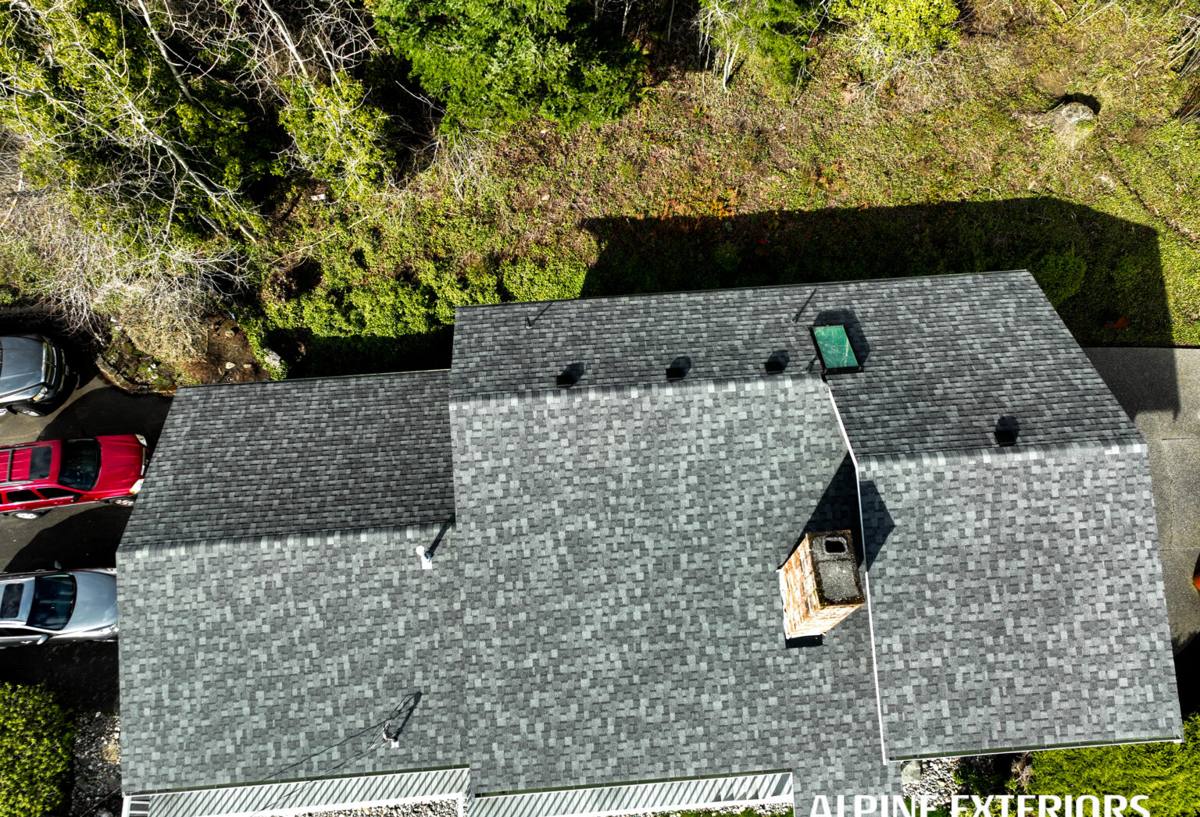
Signs Your Silver Beach Home May Need a New Roof
Roofs rarely fail all at once. Most homeowners notice a combination of smaller issues before a full failure happens. If you're seeing more than one or two of these, it's worth having someone look at the roof rather than waiting.
- Shingles that are cupping, curling at the edges, or missing granules in the gutters
- Thick moss growth on north- or shade-facing slopes, especially near roof valleys
- Dark streaking that keeps coming back within a season or two of cleaning
- Soft spots or slight sagging when walked on, or a spongy feel underfoot in the attic
- Rusted or lifted flashing around chimneys, vents, or skylights
- Daylight visible through the roof deck from inside the attic
- Interior ceiling stains, especially ones that appear after wind-driven storms
- A roof already past 20-25 years old for asphalt, or showing granule loss well before that age
Any one of these on its own might just need a repair. Several together, or a roof already near the end of its expected life, usually means a repair is a short-term patch on a longer-term problem.
What a Correct New Roof Installation Actually Involves
Tear-Off and Deck Inspection
We don't install over an existing roof, and we don't recommend it in this climate. A tear-off is the only way to actually see the roof deck — and in Whatcom County, that matters, because moisture that's been sitting under old shingles for years often shows up as soft or delaminated plywood once the old layer comes off. Any damaged decking gets replaced before anything new goes down. Skipping this step is one of the most common reasons a "new" roof fails within a few years.
Underlayment Built for Wind-Driven Rain
Standard felt underlayment is not what we use on homes exposed to the kind of driving rain this area gets in the fall and winter. We install synthetic underlayment rated for wind-driven moisture, with self-adhering ice-and-water membrane at the eaves, valleys, and any roof-to-wall transitions — the spots where wind pushes rain sideways and uphill under the shingle line.
Flashing and Fasteners That Won't Corrode
Salt air accelerates corrosion on standard galvanized fasteners and flashing far faster than most manufacturers' published lifespans assume. We use corrosion-resistant flashing and fasteners rated for coastal exposure at chimneys, vents, skylights, and valleys — the details that cause the majority of leaks aren't the shingle field, they're the transitions.
Attic Ventilation
A roof deck that can't breathe traps moisture from below, which shortens shingle life from underneath even if the surface looks fine. We check intake at the soffits and exhaust at the ridge and correct the balance where needed as part of the installation — not as an upsell afterward.
Choosing a Roofing Material for This Climate
There's no single "best" roofing material — the right choice depends on your home's exposure, your roofline, and how long you want to go before your next re-roof. Here's how the common options actually perform under Whatcom County's coastal-influenced conditions.
| Material | Moss & Moisture Resistance | Typical Lifespan Here | Trade-Offs |
|---|---|---|---|
| Architectural Asphalt Shingle | Good with algae-resistant granules; still needs periodic moss removal | 20-30 years | Most economical upfront; widest color/style range |
| Standing Seam Metal | Excellent — moss struggles to gain a foothold on a smooth, sloped metal surface | 40-60 years | Higher upfront cost; requires an installer experienced with metal detailing |
| Cedar Shake | Poor without diligent maintenance — porous surface holds moisture | 20-30 years with upkeep | High maintenance burden in this climate; we're upfront that it's not our default recommendation here |
| Synthetic/Composite Shingle | Good — engineered to resist moisture absorption | 30-50 years | Mid-to-upper cost; newer product category with shorter track record than asphalt or metal |
We're not going to tell you cedar shake is a bad product — it isn't, and plenty of homes wear it well. What we will tell you honestly is that its performance in a wet, moss-prone climate depends heavily on ongoing maintenance, and we set that expectation before you buy, not after.
Our Installation Process, Step by Step
1. On-Site Assessment
We walk the roof (or inspect from a lift on steep or fragile roofs), check the attic, and look at drainage, slope, and sun/shade exposure specific to your property. Silver Beach lots vary in tree cover and wind exposure block to block, so this isn't a one-size-fits-all estimate.
2. Written Scope and Material Selection
You get a clear, written scope of work — what's being torn off, what underlayment and flashing are going in, what material you're choosing, and why. No verbal promises that don't make it onto paper.
3. Permitting
Roof replacements typically require a permit through the applicable local jurisdiction. We handle that paperwork as part of the job so you're not chasing it down yourself.
4. Tear-Off and Deck Repair
Old roofing comes off, the deck is inspected board by board, and any compromised sections are replaced before we move forward.
5. Underlayment, Flashing, and Field Installation
Ice-and-water membrane and synthetic underlayment go down first, then flashing at every penetration and transition, then the roofing material itself, installed to manufacturer spec so your warranty stays intact.
6. Ventilation Check and Cleanup
We verify intake and exhaust ventilation is balanced, do a full magnetic sweep for stray fasteners, and haul away all debris and old material.
7. Final Walkthrough
We walk the finished roof with you, explain what was done, and go over warranty coverage before we call the job complete.
What Drives the Cost of a New Roof
Every roof is different, so we're not going to quote a number without seeing yours — but these are the factors that actually move the price up or down, so you know what you're paying for before you get an estimate.
| Factor | Why It Matters |
|---|---|
| Roof size and number of planes | More square footage and more complex rooflines mean more material and labor |
| Roof pitch and access | Steep or hard-to-access roofs require more safety setup and take longer |
| Deck condition | Rotted or soft decking found during tear-off adds material and labor to replace it |
| Material choice | Asphalt, metal, and composite options span a wide cost range, as shown above |
| Number of penetrations | Chimneys, skylights, and vents each need proper flashing, which adds time |
| Tear-off layers | Removing multiple existing layers of roofing takes longer than a single-layer tear-off |
Broadly speaking, a straightforward asphalt shingle replacement on an average-size home tends to run in the low-to-mid five figures, with metal roofing and complex rooflines pushing toward the higher end of that range or beyond. The only way to get a real number is a site visit — anything quoted sight-unseen is a guess.
Why Local Experience with Silver Beach Homes Matters
Roofing crews that don't work this specific area regularly tend to under-spec for it — they'll quote standard felt underlayment and standard galvanized fasteners because that's what works fine in drier climates. A crew that's replaced roofs throughout Whatcom County knows to spec corrosion-resistant hardware and wind-rated underlayment by default, not as an add-on you have to ask for. We also know which slopes in this area tend to hold moss longest and where ventilation problems typically show up first, because we've opened up enough attics here to see the pattern repeat.
Local experience also means we're not guessing at permitting requirements or disposal logistics — we know the process and don't add delays figuring it out on your job.
Maintenance That Extends Your New Roof's Life
A correctly installed roof still needs some basic upkeep in this climate, especially through moss season. This isn't a sales pitch for a maintenance contract — it's just what keeps a good roof good.
- Have moss treated or removed before it builds up thick mats, not after — thin growth is easy to manage, established moss can lift shingle edges
- Keep gutters and valleys clear of needles and debris so water has a clear path off the roof
- Trim back overhanging branches that keep shade and moisture on the roof surface longer than necessary
- Have flashing and penetrations glanced at every couple of years, especially after major windstorms
- Address small leaks immediately — a slow drip caught early is a small repair; one left over a winter can mean deck replacement
Warranty and What Happens After Installation
Manufacturer warranties on shingles and other roofing materials only hold up if the installation follows their specifications — that's part of why we install to spec rather than cutting corners on underlayment or fastener choice. On top of the manufacturer's material warranty, we stand behind our own workmanship. Before we leave the job, we walk you through exactly what's covered, for how long, and what would void it, so there are no surprises later.
If you're weighing whether your Silver Beach roof needs full replacement or can hold on with a repair, or you're ready to move forward with a new roof, we're happy to take a look and give you a straight answer. Reach out for a free, no-pressure estimate using the form below.