 Whatcom County
Why Silver Beach Roofs Wear Differently Than Roofs Inland
Silver Beach sits close enough to open water that roofs here deal with a mix of conditions you don't get a few miles inland. There's salt-laden air working on metal fasteners and flashing, wind-driven rain that gets pushed sideways under laps and edges instead of just falling straight down, and a moss and algae season that, in Whatcom County's damp, mild climate, can run nearly ten months of the year. None of these problems are dramatic on their own. What they do is compound — a slightly lifted shingle tab that wouldn't matter in a dry climate becomes an entry point for driving rain here, and a thin mat of moss that would dry out quickly elsewhere stays wet against the roof deck for weeks at a time.
That combination is why roof repair in this part of Whatcom County isn't just "patch the leak and move on." A repair that doesn't account for how water actually behaves on a Silver Beach roof — where it's forced by wind, where moss holds moisture, where salt air accelerates corrosion — tends to fail again within a season or two.
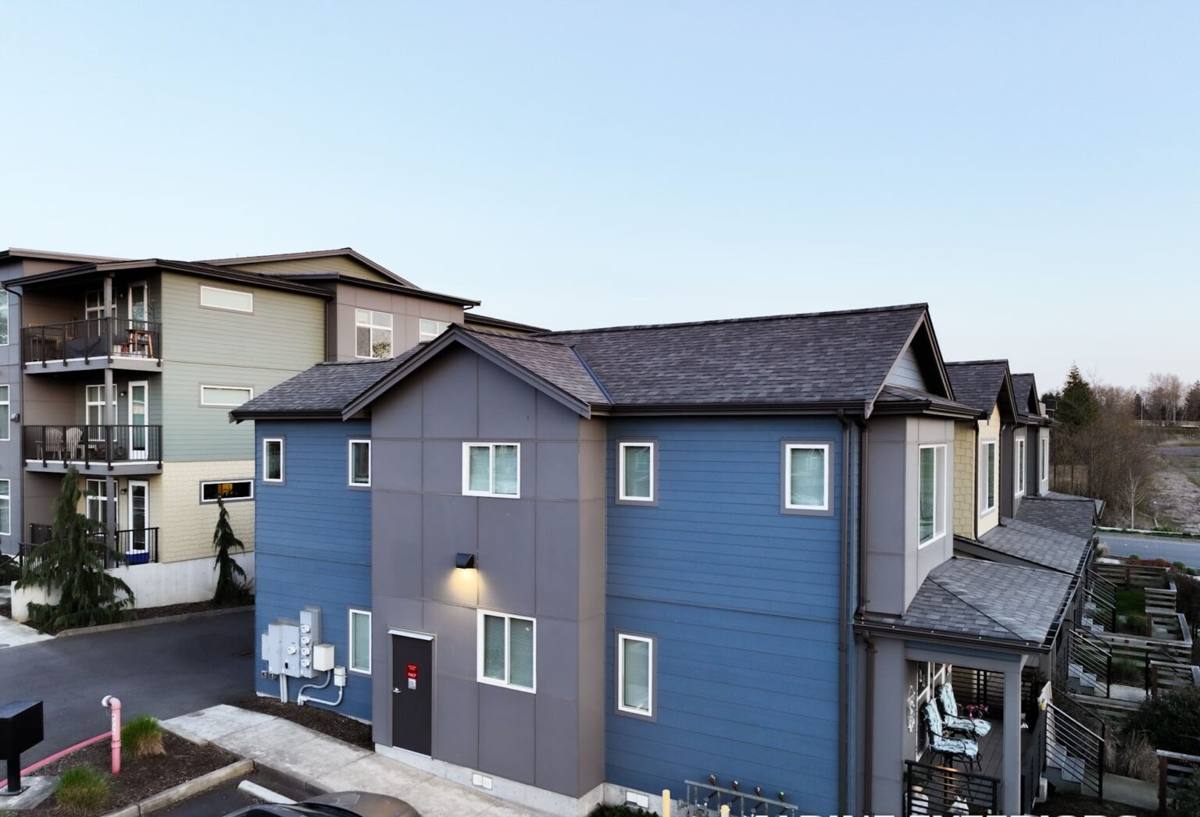
What Local Homes Actually Need From a Roof Repair
Most of the repair calls we see in this neighborhood fall into a few categories, and each one has a different root cause worth understanding before any work starts.
Wind and Rain Intrusion
Water rarely comes straight down here. Storms off the water push rain at an angle, which means it can work its way under shingle tabs, around chimney flashing, and into valleys that would shed water fine in calmer conditions. A repair that only addresses the spot where water is showing up inside the house — without checking upslope for the actual entry point — often misses the real problem.
Moss and Algae Damage
Moss doesn't just look bad. It holds moisture against the roofing material, lifts shingle edges as it grows, and can work its root structure into the granule surface of asphalt shingles over time. On shaded, north-facing slopes — common on lots with mature trees — moss can establish itself within a couple of seasons if it isn't kept in check.
Fastener and Flashing Corrosion
Salt air accelerates the breakdown of unprotected or poor-quality metal. Nail heads, flashing seams, and fastener penetrations that would last decades in a drier inland climate can start to show rust and pinhole leaks sooner near the water. This is one of the most overlooked causes of a "mystery leak" — the roofing material itself looks fine, but a corroded fastener underneath it is letting water through.
Age-Related Wear Accelerated by Moisture
Every roofing material has a normal service life, but constant damp conditions shorten it. Asphalt shingles that might reasonably last 20-25 years in a dry climate often show granule loss, curling, and brittleness sooner when they're rarely fully dry.
Signs You Need a Repair — Not a Full Replacement
A lot of homeowners assume any leak means the whole roof is done. That's often not true. Here's what tends to separate a legitimate repair situation from one where replacement is the more honest answer:
- A leak traced to one specific area — a chimney, skylight, vent pipe, or valley — with the rest of the roofing field in reasonably good shape
- Isolated moss or algae growth on one slope, without widespread granule loss underneath it
- A handful of damaged, lifted, or missing shingles after a windstorm, with the surrounding roof intact
- Flashing that's rusted or separated at a single penetration, while the shingles around it are still sound
- A roof under roughly 15 years old with a localized problem rather than widespread deterioration
If instead you're seeing multiple leaks in unrelated areas, widespread granule loss, soft spots in the decking, or a roof that's already past its expected lifespan, a repair is usually a short-term fix at best. We'll tell you honestly which category your roof falls into — we don't have any incentive to sell a repair when a roof is genuinely at the end of its life, or to push a full replacement when a targeted fix will hold up.
What a Correct Repair Actually Involves
A roof repair done right isn't just sealant on a visible crack. Here's what we actually check and do:
1. Find the Real Source
Interior water stains are often several feet away from where water is actually entering the roof, especially with wind-driven rain. We trace the path upslope along the decking and framing before deciding where the repair needs to happen.
2. Inspect the Surrounding Material, Not Just the Failure Point
If shingles near the damaged area show granule loss, brittleness, or moss staining, patching just the failure point and leaving compromised material next to it is a short-term fix. We flag what's marginal so you know what's coming, even if it's not part of today's repair.
3. Address Flashing and Fasteners, Not Just Shingles
Given how much of the local leak history traces back to flashing and fastener corrosion, a repair that replaces shingles but ignores the metal underneath is incomplete. Flashing gets checked for corrosion, proper lap, and correct sealant — not just re-caulked.
4. Match Materials Properly
Mismatched shingle profiles, colors, or granule types stand out and can also create uneven water shedding at the repair edges. We match as closely as the existing roofing allows, and we're upfront if an exact match isn't available due to product age.
5. Clean and Treat Moss Before Closing Up the Repair
There's no point repairing a leak caused by trapped moisture and then leaving the moss that caused it in place. Affected areas get cleaned and treated as part of the job, not left for a separate future visit.
Roofing Materials Common in the Area: Repair Considerations
What material your roof uses changes how it should be repaired and how well it holds up to salt air and moss. Here's how the common options compare for repair work specifically:
| Material | Moss/Algae Resistance | Salt Air Behavior | Repair Considerations |
|---|---|---|---|
| Asphalt shingle (standard) | Moderate — benefits from algae-resistant granules if available | Fasteners are the weak point, not the shingle itself | Easiest to patch locally; matching older shingle color/wear can be tricky |
| Asphalt shingle (architectural) | Better than standard in most lines | Same fastener concerns as standard | Thicker profile makes patch blending a bit easier |
| Metal roofing | Good — sheds moss more easily due to slope and surface | Coating quality matters a lot near salt air; poor coatings corrode faster | Repairs require matching panel profile and fastener type; seam and sealant work is more specialized |
| Cedar shake | Prone to moss/algae without regular treatment | Natural material handles salt air reasonably but needs upkeep | Individual shake replacement is more labor-intensive; moss removal must be gentle to avoid splitting shakes |
None of these materials is "wrong" for this area — each one just has a different maintenance and repair profile. We'll work with whatever is already on your roof rather than pushing a material swap unless the existing roofing genuinely can't be repaired anymore.
Our Repair Process
We keep this straightforward and try not to waste your time or ours:
- Initial inspection. We look at the roof from the ground and, when it's safe and accessible, get up on it to check the actual condition of shingles, flashing, and fasteners — not just the spot where you're seeing a leak inside.
- Honest scope and estimate. You get a plain explanation of what's actually wrong, what we recommend fixing, and what it will cost — including if we think a repair isn't the right long-term answer.
- Scheduling around the weather. Roof repairs need a dry window to do properly. We watch the forecast and schedule accordingly rather than rushing a repair into questionable conditions.
- The repair itself. Removal of damaged material, inspection of the decking underneath, flashing and fastener correction where needed, matched replacement material, and moss treatment if that's part of the cause.
- Final check. We walk the repair area and the surrounding roof with you (or send photos and notes if you're not on site) so you know exactly what was done and what, if anything, to keep an eye on going forward.
Repair vs. Replacement: What Actually Drives the Decision
Cost isn't the only factor, but it's usually the first question. Here's a general breakdown of what pushes a job toward repair versus replacement:
| Factor | Favors Repair | Favors Replacement |
|---|---|---|
| Roof age | Under 15 years | Approaching or past expected material lifespan |
| Leak pattern | Single, traceable source | Multiple unrelated leaks |
| Moss/algae extent | Isolated to one slope or area | Widespread across most of the roof |
| Decking condition | Solid, no soft spots found | Soft, spongy, or visibly rotted decking |
| Shingle condition nearby | Intact, still flexible | Widespread curling, cracking, granule loss |
| Upfront cost | Lower | Higher, but resets the clock on the whole roof |
We're not going to talk you into a full replacement if a repair genuinely solves the problem, and we're not going to keep patching a roof that's clearly at the end of its useful life just to avoid a bigger conversation. You'll get our honest read either way.
Keeping Moss and Algae Under Control Between Repairs
Given how much of the region's roofing damage traces back to prolonged moisture from moss and algae, a little regular maintenance goes a long way toward avoiding repeat repair calls. A basic seasonal checklist:
- Clear leaves and debris from valleys and gutters before the fall rains settle in
- Have shaded, north-facing slopes checked for early moss growth at least once a year
- Keep overhanging branches trimmed back to reduce shade and debris buildup on the roof
- Address small moss patches early — they're far easier and cheaper to remove before they establish
- Have flashing around chimneys, skylights, and vents inspected periodically, since these are common points where corrosion starts
- Avoid pressure washing shingles yourself — it can strip granules and shorten the roof's life faster than the moss would
Why Hiring a Crew That Already Works This Area Matters
Roof repair isn't identical everywhere in Whatcom County, and it definitely isn't identical to roofing work done in drier parts of the state. A crew that regularly works Silver Beach and the surrounding water-adjacent neighborhoods already knows which slopes tend to hold moss longest, how far wind-driven rain typically travels under shingle edges in a real storm, and which fastener and flashing choices actually hold up to salt air over time instead of just meeting minimum code. That's the kind of judgment that comes from doing the work here repeatedly, not from a generic repair checklist.
It also means someone who understands that a roof here rarely gets a long stretch of dry weather to work with, and plans the job — and the timeline you're given — around that reality instead of promising a schedule that ignores it.
What to Expect When You Call Us
We'll ask a few questions about what you're seeing — where the leak or damage shows up, how long it's been happening, and roughly how old the roof is — then set up a time to take a real look. There's no pressure to sign anything on the spot, and if we think your roof needs more than a repair, we'll tell you plainly and explain why, rather than quietly upselling you into a bigger job.
If you're dealing with a leak, visible moss buildup, or storm damage on a Silver Beach roof, reach out for a free, no-pressure estimate using the form below. We'll take a straightforward look and tell you exactly what we find.