 Whatcom County
Siding Replacement Built for Silver Beach's Water-Adjacent Climate
Silver Beach homes sit close enough to open water that the weather here behaves a little differently than it does further inland in Whatcom County. Salt-tinged marine air drifts through year-round, driving rain comes in sideways during fall and winter storms, and moss finds a foothold on anything shaded or damp for more than a few weeks at a stretch. None of that is dramatic on its own, but stacked together over years, it's exactly the combination that wears out the wrong siding material faster than homeowners expect.
We've replaced siding on enough homes in this pocket of Whatcom County to know what actually fails here and why. This page walks through what Silver Beach siding needs to hold up, what a correct replacement job looks like, and how we handle the work from first inspection to final walkthrough.
Why Silver Beach Is Hard on Siding
Salt Air and Corrosion
Airborne salt doesn't just affect homes directly on the waterfront. It travels on wind and settles on siding, trim, and fasteners well inland from the shoreline. Over time it accelerates corrosion in metal fasteners and flashing, and it can degrade certain paint finishes and composite materials faster than manufacturers' published lifespans suggest. Siding that isn't engineered or finished with this in mind starts showing chalking, fading, or fastener bleed years ahead of schedule.
Driving Rain
Whatcom County gets a lot of rain, but the orientation of Silver Beach relative to open water means storms often push rain horizontally into wall surfaces rather than straight down. That matters because siding systems are rated and installed differently depending on whether they're expected to shed vertical rain or resist wind-driven, horizontal moisture intrusion. A house-wrap detail or lap overlap that's fine in a sheltered inland lot can let water behind the siding here.
A Long Moss Season
Shaded north walls, tree cover, and persistent damp air add up to a moss season that runs longer in Silver Beach than in drier parts of the county. Moss holds moisture against the siding surface, which is bad news for any material that isn't dimensionally stable or that absorbs water at the substrate level. It also isn't just cosmetic — trapped moisture behind moss growth is a slow, steady contributor to rot at seams and butt joints.
What a Correct Siding Replacement Involves
Replacing siding is not a cosmetic swap. Done right, it's an opportunity to fix what's happening underneath the old cladding before it becomes a structural problem. Every replacement we do in Silver Beach includes the same core steps, regardless of the size of the home:
- Full removal of existing siding and trim, not just the visible damaged sections
- Inspection of sheathing for soft spots, rot, or prior water intrusion
- Repair or replacement of any compromised sheathing before new material goes up
- Installation of a weather-resistive barrier detailed for wind-driven rain, with proper overlaps
- Correct flashing at windows, doors, and all penetrations — this is where most leaks actually start
- Rain screen or ventilation gap where the wall assembly calls for it, to let moisture escape rather than sit against the back of the siding
- Fastener selection and spacing to manufacturer spec, accounting for the local corrosion risk
- Factory-finished siding installed per manufacturer instructions, including clearances at grade, decks, and roof lines
Skipping any of these steps is how a siding job looks fine for two or three years and then fails at the seams, the corners, or the bottom courses where moisture collects.
Why We Install James Hardie and Nothing Else
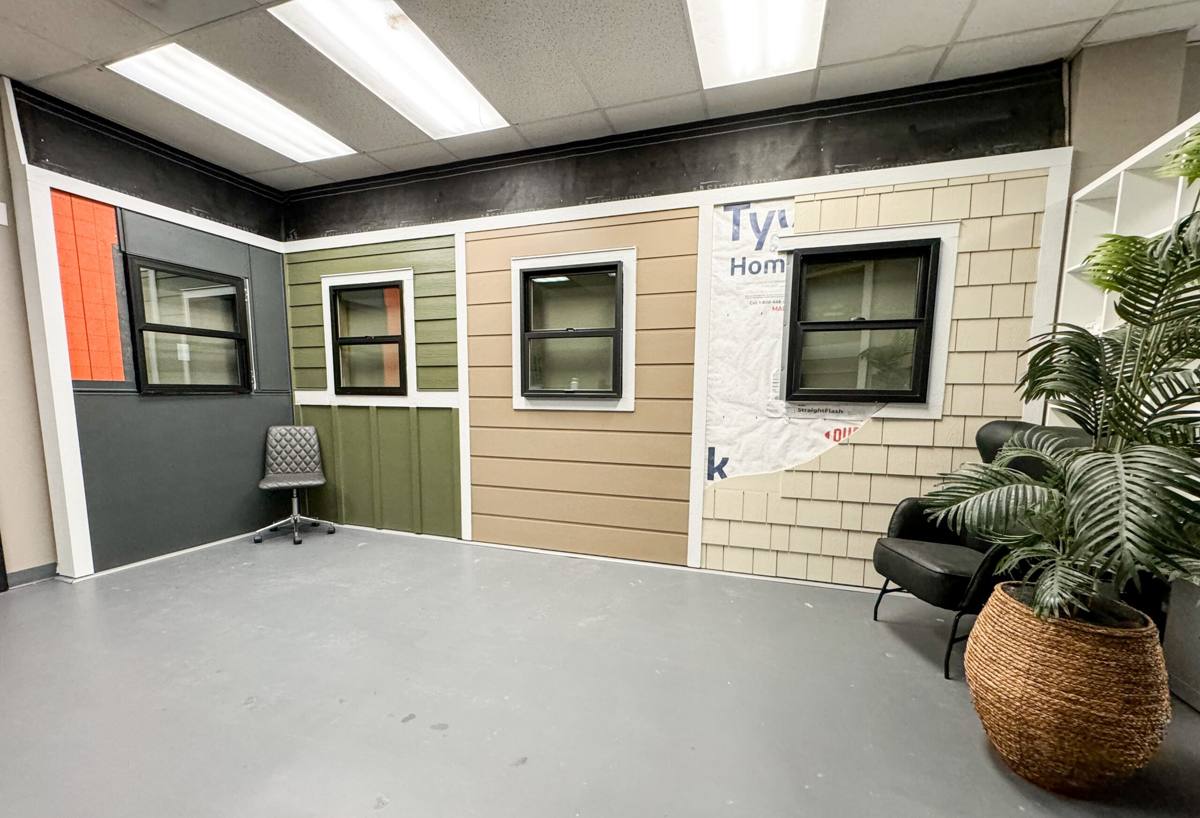
We standardized on James Hardie fiber cement siding for every home we work on, including Silver Beach, and we don't install vinyl, LP SmartSide, Cemplank, Allura, primed spruce, or cedar. That's not a marketing position — it's a decision based on what actually holds up in this climate.
What Wood and Engineered Wood Products Face Here
Cedar and primed spruce are attractive, traditional choices, and when properly maintained they can look great. But they depend on that maintenance — regular repainting or resealing, careful caulking, and prompt attention to any moisture exposure. In a moss-prone, high-moisture environment like Silver Beach, the maintenance window shrinks. Miss a cycle and you're looking at rot, not just a faded finish. LP SmartSide, an engineered wood product, is more moisture-resistant than raw wood but is still wood-based at its core, meaning edge sealing and caulking discipline during installation and over the life of the product matters a great deal — any lapse becomes an entry point for the moisture this area produces in abundance.
What Vinyl Faces Here
Vinyl is affordable and low-maintenance in the sense that it doesn't need repainting, but it's a thin plastic product that expands and contracts significantly with temperature swings, can become brittle and crack over time, and isn't fire-resistant. In a marine climate with salt air, vinyl's color can also fade unevenly over the years. It's a reasonable product for some situations, but it isn't the standard we hold our own installations to.
Why Hardie
James Hardie fiber cement is non-combustible, dimensionally stable across our temperature and humidity swings, and finished at the factory with ColorPlus technology rather than field-painted, which gives a more consistent, longer-lasting finish that resists the fading and chalking salt air accelerates in lesser coatings. Hardie's HZ5 product line is specifically engineered for climates with more moisture and freeze-thaw cycling, which fits Whatcom County generally and water-adjacent neighborhoods like Silver Beach specifically. It also carries a strong transferable warranty, which matters if you sell the home down the road. None of this is a substitute for correct installation — even Hardie fails if flashed or fastened wrong — but as a base material, it's the one we're willing to put our name behind here.
Comparing Siding Materials for a Water-Adjacent Climate
| Material | Moisture Behavior | Maintenance | Fire Resistance | Typical Lifespan Here |
|---|---|---|---|---|
| James Hardie fiber cement | Dimensionally stable, factory-sealed finish | Occasional wash, no repainting needed for years | Non-combustible | 30+ years with correct install |
| Cedar | Absorbs moisture without diligent sealing | High — regular refinishing required | Combustible | Varies widely with upkeep |
| LP SmartSide | Engineered wood, sensitive to edge/seam sealing | Moderate — caulking and touch-up over time | Combustible | Depends heavily on installation quality |
| Vinyl | Doesn't absorb, but can trap moisture behind it if installed poorly | Low, but color and material degrade with age | Not fire-resistant | Variable, shorter in harsh sun/salt exposure |
Our Process for Silver Beach Homes
We keep the process straightforward because siding replacement is disruptive enough without added confusion:
- Walkthrough and assessment — we look at the existing siding, check for soft or damaged sheathing where visible, and identify problem areas like north-facing walls, low-clearance sections near grade, and moss-prone spots.
- Written estimate — a clear scope of work and cost, with no vague allowances hiding potential change orders.
- Removal and inspection — old siding comes off, sheathing gets inspected, and we show you what we find before covering it back up.
- Weather barrier and flashing — detailed specifically for wind-driven rain exposure, not a generic inland install.
- Hardie installation — installed to manufacturer spec, including proper fastening and clearances.
- Final walkthrough — we go over the finished work with you before calling the job done.
Signs It's Time to Replace, Not Repair
- Soft or spongy spots when you press on the siding
- Persistent moss or algae that comes back within weeks of cleaning
- Visible warping, buckling, or gaps at seams and corners
- Paint that's failing faster than it should, or bubbling
- Interior signs of moisture — musty smells, stains near exterior walls
- Siding that's original to a home more than 25-30 years old
Why Local Experience Matters for This Job
A siding crew that's never worked a water-adjacent Whatcom County property will treat every wall the same way. That's how you end up with a flashing detail or overlap that's technically installed correctly by a generic standard but wrong for what Silver Beach actually throws at a house. Knowing which walls take the worst of the driving rain, which areas hold moss longest, and how salt air affects fastener choice over a 20-30 year timeline isn't something you get from a manual — it's something you get from doing the work here repeatedly and paying attention to what comes back as a callback and what doesn't.
What to Expect Cost-Wise
Siding replacement cost depends on the size of the home, how much sheathing repair is needed once the old material comes off, roofline and window complexity, and the specific Hardie profile chosen. Homes with hidden moisture damage behind old siding — more common here than in drier parts of the county — will cost more once that's uncovered and addressed properly. We don't give firm numbers without seeing the house, because guessing on a phone call leads to change orders later, and we'd rather give you an honest number up front.
Get a Free Estimate for Your Silver Beach Home
If your siding is showing wear, holding moss longer than it should, or you're just planning ahead for a home in this climate, we'll come take a look and give you a straightforward, no-pressure estimate. Fill out the form below to get started.