 Whatcom County
Asphalt Shingle Roofing Built for Silver Beach's Climate
Silver Beach sits close enough to the water that homes here take a different kind of weather beating than roofs just a few miles inland. Moisture-laden marine air, driving rain that comes in sideways during fall and winter storms, and a moss season that can stretch eight months or more all put real stress on a roof system. Asphalt shingles are still one of the most practical, cost-effective roofing choices for this kind of climate — but only when they're installed with the local conditions in mind, not just installed by the book.
We work on homes throughout Whatcom County, and Silver Beach roofs tend to show a consistent pattern of problems: moss buildup in shaded, north-facing slopes, granule loss from years of wind-driven rain, and soft spots around valleys and penetrations where water has been finding its way in slowly for a long time before anyone notices a leak inside. A correctly installed asphalt shingle roof addresses all of that from the start, rather than leaving it for the homeowner to fight later.
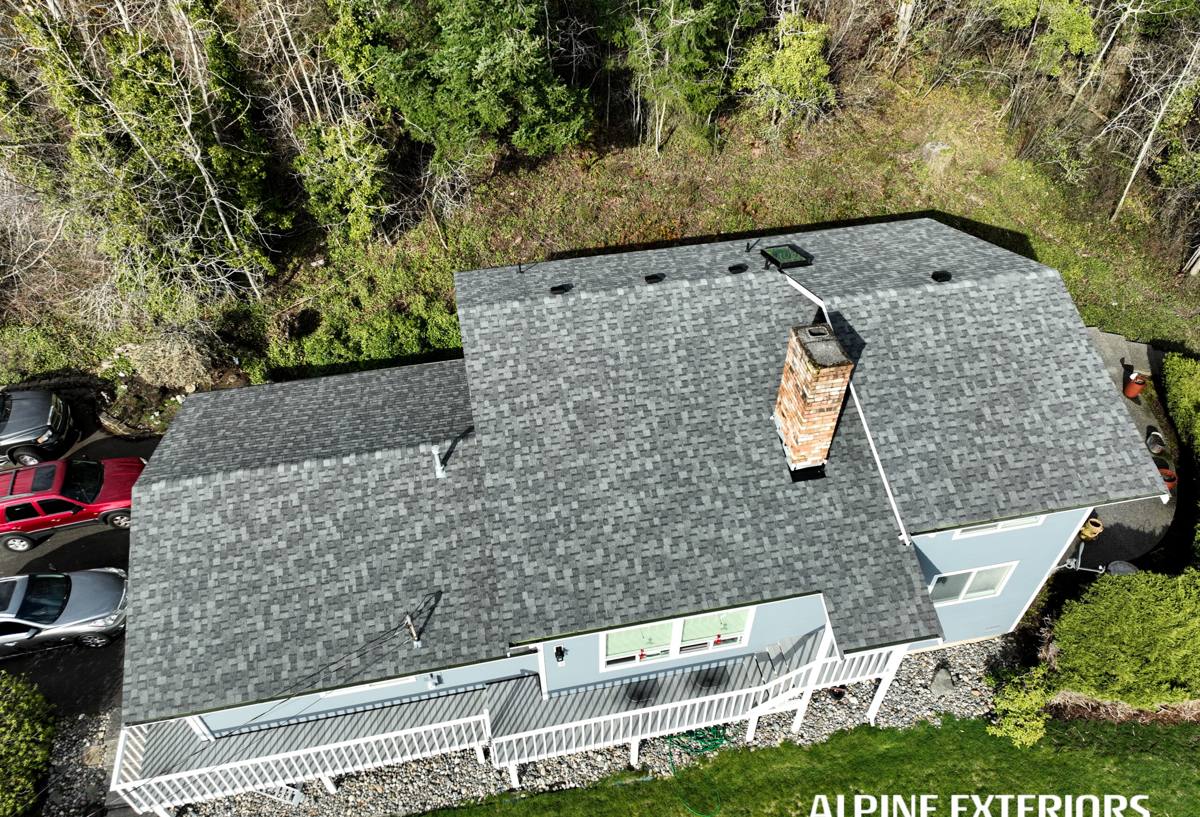
What Silver Beach Homes Actually Need From a Shingle Roof
Moisture Management Comes First
In a lot of drier climates, roofing is mostly about the shingles themselves. Here, the underlayment, flashing, and ventilation matter just as much — sometimes more. Wind-driven rain can push water sideways under shingles that aren't properly lapped or sealed, and the constant damp air keeps roof decks from fully drying out between storms. That's why we treat the water management layer — underlayment, valley protection, and flashing — as the actual first line of defense, with the shingles as the visible, durable top coat.
Moss and Algae Resistance
Shaded roof sections, especially north- and east-facing slopes near tree cover, are where moss takes hold first. Left alone, moss holds moisture against the shingle surface, lifts shingle edges, and shortens the life of the roof significantly. Algae-resistant shingle lines (the ones with copper- or zinc-infused granules) are worth the modest upcharge on most Silver Beach homes, particularly on shaded roof planes.
Wind and Fastening
Storm gusts off the water can be sharper and more sustained than what you'd see further inland. Proper nail placement — correct count, correct location on the shingle, driven flush and not overdriven — is one of the most common things we find done wrong on older or lower-bid roofs in this area. It's invisible once the roof is finished, but it's the difference between shingles that stay put in a windstorm and shingles that start lifting after a few seasons.
What a Correct Asphalt Shingle Job Involves
A shingle roof is a system, not just a layer of shingles nailed to plywood. Here's what we consider non-negotiable on every Silver Beach roof we install or replace:
- Full tear-off to the deck on replacements — we don't layer new shingles over old ones, since that traps moisture and hides deck damage
- Deck inspection and repair of any soft, delaminated, or water-damaged sheathing before anything new goes down
- Synthetic underlayment rated for the exposure, installed with correct overlap and fastening
- Ice-and-water shield style membrane at valleys, eaves, and other vulnerable transition points
- New flashing at all penetrations, chimneys, and roof-to-wall intersections — reused flashing is a common shortcut we won't take
- Balanced intake and exhaust ventilation, sized to the attic space, not just whatever vents were already there
- Correct nailing pattern per manufacturer specification, checked as we go rather than after the fact
- Ridge cap and hip finishing that sheds water properly instead of just looking finished from the ground
Skipping any one of these doesn't usually cause an immediate problem — it causes a problem three, five, or ten years down the road, which is exactly why cutting corners on roofing is so easy to get away with short-term and so expensive to inherit later.
Repair, Re-Roof, or Full Replacement?
Not every Silver Beach roof needs a full replacement, and we'd rather tell a homeowner the truth about that than sell a bigger job than necessary. The right call usually comes down to the age of the roof, how widespread the damage is, and what's happening at the deck level underneath.
| Situation | Likely Approach | Why |
|---|---|---|
| Isolated leak, roof under 12-15 years old | Targeted repair | Deck and most shingles are likely still sound; localized flashing or shingle failure is the probable cause |
| Heavy moss on shaded slopes, roof otherwise intact | Moss treatment and gentle cleaning, monitor | Moss damage is often surface-level if caught before shingle lift or granule loss sets in |
| Widespread granule loss, curling, or brittle shingles | Full replacement | Shingles have lost their protective capacity across the roof, not just in one spot |
| Soft decking, staining in the attic, multiple leak points | Full tear-off replacement | Water has likely been getting past the shingle layer for some time; repair would just mask it |
| Roof original to a home 20+ years old | Replacement, even if it "looks fine" from the ground | Underlayment and flashing at this age have typically outlived their expected service life |
If you're not sure which category your roof falls into, that's exactly what an inspection is for — we'd rather look and tell you it's fine than talk you into work you don't need yet.
Our Process on a Silver Beach Job
1. Inspection and Honest Assessment
We start by walking the roof (or using a lift/drone when pitch or access calls for it), checking the deck condition where visible, looking at flashing points, ventilation, and the overall shingle condition. We'll tell you plainly what we find, including if the answer is "you don't need us yet."
2. A Clear, Written Scope
Before any work starts, you get a written scope covering materials, underlayment and flashing details, ventilation plan, and timeline. No verbal-only promises and no surprise upcharges mid-job for things that should have been caught in the estimate.
3. Protecting the Property During Work
Landscaping, siding, gutters, and driveways get covered or protected before tear-off begins. Nail and debris cleanup, including magnetic sweeps for stray nails, happens at the end of each work day, not just at the very end of the job.
4. Tear-Off, Deck Repair, and Install
Old roofing comes off down to the deck, any damaged sheathing gets replaced (and shown to you, not just replaced and billed after the fact), then underlayment, flashing, shingles, and ventilation go in following manufacturer specifications for this exposure.
5. Final Walkthrough
We walk the finished roof and the property with you, confirm cleanup is complete, and go over warranty paperwork and any maintenance notes specific to your roof — shaded areas that may need moss attention, gutter placement relative to valleys, and so on.
Maintenance in a Marine, Moss-Heavy Climate
Even a correctly installed roof needs some ongoing attention in this climate. A little routine care goes a long way toward getting the full service life out of asphalt shingles here:
- Keep gutters clear so water isn't backing up under the eave edge, especially during heavy fall rain
- Trim back overhanging branches to reduce shade, debris buildup, and moss growth on north-facing slopes
- Have moss treated gently (not pressure-washed, which damages granule surfaces) at the first sign of growth rather than waiting until it's established
- Check attic ventilation isn't blocked by insulation, which traps moisture and shortens shingle and deck life from underneath
- Schedule a visual inspection after major windstorms, since lifted or missing shingles are easy to miss from the ground
Choosing Shingle Products for This Area
Not every shingle line performs the same way in a damp, mossy, wind-exposed climate. We generally steer Silver Beach homeowners toward algae-resistant architectural shingles with a solid wind rating, rather than the lowest-tier three-tab products, because the cost difference over the life of the roof is small compared to the difference in how they hold up to moss, wind uplift, and years of rain exposure. We'll walk through the realistic trade-offs — upfront cost, expected lifespan in this climate, warranty terms, and appearance — so you're choosing based on how the product actually performs here, not just a brochure.
Warranty Considerations
Manufacturer warranties on shingles are usually straightforward, but many of them require the full roofing system — underlayment, ventilation, and accessories — to be from a matched, approved assembly to stay fully valid. Mixing components to save a small amount upfront can quietly void part of that coverage, which is another reason we build the whole system to spec rather than treating shingles as a standalone product.
Why a Crew That Already Works Silver Beach Matters
Roofing crews that split time across very different climates don't always adjust their habits for conditions like Whatcom County's. A crew used to drier regions may under-spec underlayment or skip extra valley protection because it's rarely needed where they usually work. A crew that regularly works Silver Beach and the surrounding Whatcom County communities already knows which roof orientations moss hits first, how much wind exposure to plan for near the water, and which flashing details tend to fail first in this kind of weather — because we've seen it, and fixed it, on roofs just like yours.
That local familiarity also matters for permitting and code requirements specific to the county, and for simply being reachable if a question comes up after the job is done rather than being a crew that worked through once and moved on.
If your Silver Beach roof is showing moss, missing granules, curling edges, or you just want an honest read on how much life it has left, we're happy to take a look. Reach out for a free, no-pressure estimate — the form below gets you started.