 Whatcom County
 Why Silver Beach Windows Face a Tougher Job Than Most
Homes near the water in Whatcom County deal with a different set of conditions than houses a few miles inland. In Silver Beach, that means salt-laden air moving off the water, wind-driven rain that hits window assemblies sideways instead of straight down, and long stretches of shaded, damp weather that keep surfaces wet far longer than in drier parts of the county. Windows here don't just need to look good and keep the heat in — they need to survive an environment that actively works against ordinary building materials year-round.
A window that performs well in a dry inland climate can fail early in a shoreline setting like this one. Corrosion shows up faster, seals break down sooner, and condensation and moss find every weak point. This page is about what actually matters when you're replacing or upgrading windows on a Silver Beach home — not generic advice, but the specific things that make a window last and perform in this exact setting.
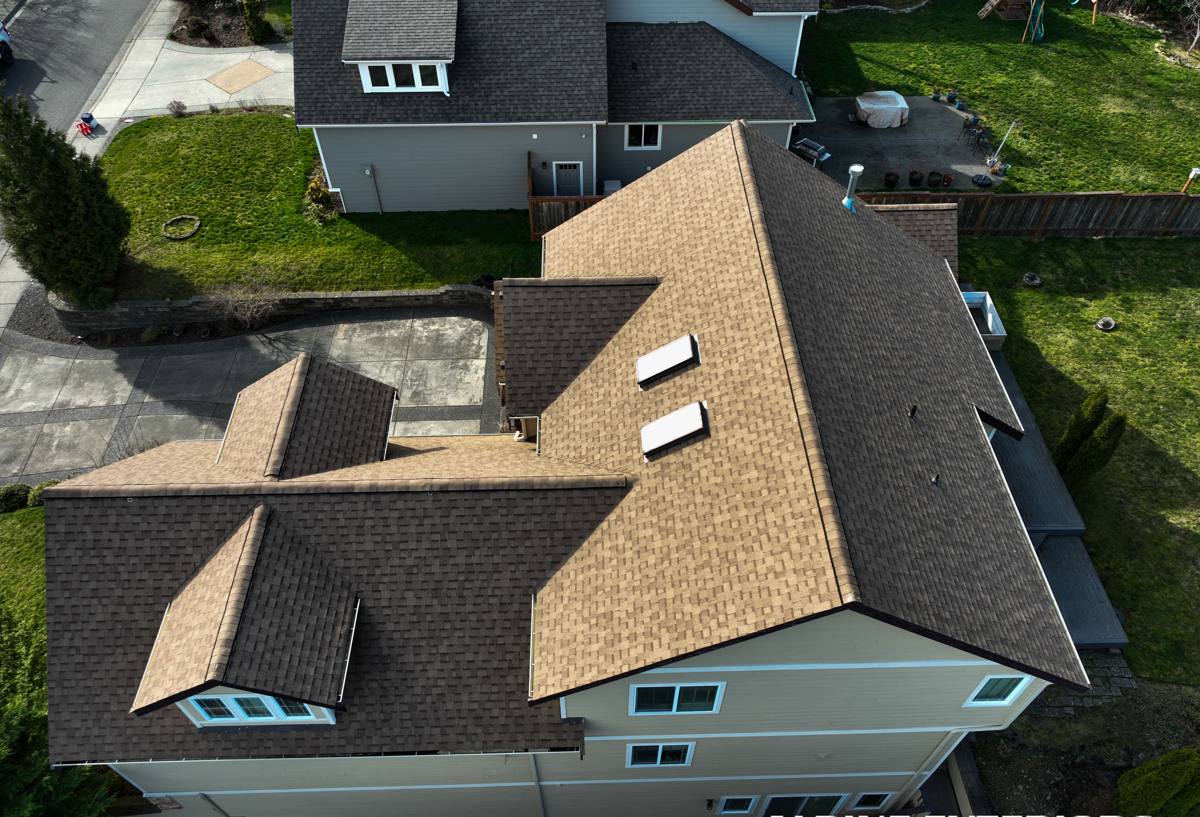
What Salt Air, Driving Rain, and Moss Actually Do to Windows
Salt Air and Hardware
Airborne salt is corrosive to unprotected metal. Over time it attacks window hardware — hinges, locks, balance systems, and screen frames — causing pitting, stiffness, and eventually failure. It also degrades lower-grade finishes on aluminum components, leaving chalky residue or discoloration. This isn't a defect specific to any one product; it's simply what happens when standard hardware is exposed to a marine environment without corrosion-resistant coatings or materials suited for it.
Wind-Driven Rain and Seals
Rain that comes in sideways during a Whatcom County storm tests a window's weatherstripping and flashing details in ways a calm, straight-down rain never will. Seals that are adequate elsewhere can allow water intrusion at the sill or around the frame when wind pressure pushes moisture sideways and upward. Once water gets behind a window frame, it doesn't just cause a stain — it can rot sheathing and framing that's expensive and disruptive to repair.
Shade, Dampness, and Moss
Silver Beach's tree cover and marine humidity extend the region's already-long moss season. Moss and algae don't just grow on roofs — they colonize window sills, tracks, and exterior trim wherever moisture sits and sunlight is limited. Beyond the cosmetic issue, trapped organic growth holds moisture against wood trim and finishes, accelerating rot and paint failure around the window opening.
What "Energy-Efficient" Really Means in This Climate
Whatcom County is a heating-dominated climate — homes lose far more energy through poor windows in the winter than they gain in unwanted summer heat. That changes what "efficient" should mean for a Silver Beach home compared to, say, a house in a hot, dry climate.
- U-factor matters more here than solar heat gain. A low U-factor window resists heat loss through the glass and frame, which is the main driver of comfort and heating bills in our winters.
- Air infiltration rating is critical given how much wind this location sees. A window with a poor air-leakage rating will feel drafty regardless of how good the glass package is.
- Condensation resistance matters because of our humidity. A window that performs poorly here will fog or sweat on the interior during cold, damp stretches — a sign of a weak thermal break, not just a minor annoyance.
- Multi-point locking and compression seals keep the window tight against wind pressure, which directly affects both efficiency and water resistance.
A window that's marketed as "energy-efficient" without strong numbers in these categories may perform fine in a mild, sheltered location but fall short here. We size and spec windows based on this property's actual exposure, not a generic rating sheet.
Frame Materials: What Holds Up Near the Water
Frame material choice matters more in a salt-air environment than almost anywhere else in the county. Here's how the common options compare for a Silver Beach install:
| Material | Salt/Moisture Resistance | Maintenance | Notes for This Location |
|---|---|---|---|
| Vinyl | Good — won't corrode or rot | Low; occasional cleaning | Solid value option; quality varies widely by manufacturer, so reinforcement and weld quality matter |
| Fiberglass | Excellent — very stable, resists corrosion and expansion/contraction | Low | Strong long-term choice for exposed, weathered sites; typically a higher upfront cost |
| Wood-clad | Fair — cladding protects the exterior, but any breach exposes wood to rot | Higher; joints and cladding seams need monitoring | Attractive interior look, but we're cautious recommending it in direct salt exposure without careful detailing |
| Bare Aluminum | Poor without upgraded coatings — prone to pitting and corrosion in salt air | Higher | We steer clients away from standard-grade aluminum in this specific setting; it's simply not built for the exposure here |
None of these materials are wrong in general — each has a place depending on the home and budget. But for a shoreline property with real salt exposure, we're honest about which options carry more long-term risk so you're not the one discovering it in five or ten years.
Installation Details That Make or Break a Window Here
The window unit itself is only part of the equation. In a wind-and-rain-exposed location, how it's installed determines whether it actually performs the way its ratings suggest.
Sill Pans and Flashing
A sloped sill pan and properly lapped flashing (integrated with the house wrap, not just caulked over it) are what actually stop wind-driven rain from working its way behind the frame. This is one of the most common places we find shortcuts on older or poorly done installs.
Sealant Selection and Placement
Caulk is not a substitute for proper flashing — it's a secondary defense, not the primary one. We use sealants rated for exterior, weather-exposed use and apply them at the correct joints, not as a blanket fix over gaps that shouldn't exist in the first place.
Weep Holes and Drainage Paths
Windows are designed to shed the small amount of water that does get past the outer seal. If weep holes are blocked, painted over, or installed incorrectly, that water has nowhere to go and ends up inside the wall assembly instead.
Insulation Around the Frame
Gaps between the window frame and the rough opening need to be properly insulated and air-sealed — not left empty and not overfilled with expanding foam that can bow the frame. Done right, this is a big part of what makes the "energy-efficient" rating actually show up on your heating bill.
Our Process for a Silver Beach Window Project
- On-site assessment. We look at sun/shade exposure, wind direction relative to the home, existing water damage or moss buildup, and the condition of current framing before recommending anything.
- Product selection based on exposure. We match frame material and glass package to how exposed the specific elevation of your home is — a wall facing prevailing wind and rain gets treated differently than a sheltered side.
- Precise measurement and ordering. Ill-fitting windows are one of the most common causes of long-term water and air infiltration problems, so we measure carefully before anything is ordered.
- Removal and opening prep. We check the rough opening and sheathing for hidden moisture damage before the new unit goes in — this is often when older problems are discovered and addressed while the wall is already open.
- Installation with proper flashing and sealing. Sill pans, flashing integration, air sealing, and sealant application are done to manage water and air the way this climate demands, not just to close the gap.
- Final inspection and cleanup. We check operation, seals, and finish work, and leave the site clean.
Living With Moss Season: Maintenance That Protects the Investment
Even a well-installed, high-quality window benefits from some seasonal attention in a place like Silver Beach. Keeping tracks and sills clear of moss and organic debris prevents moisture from sitting against the frame and finish. Rinsing accumulated salt residue off exterior surfaces periodically — especially after storms — helps protect hardware and finishes over the long run. None of this is heavy work, but skipping it entirely tends to shorten the life of even good windows in this environment.
Signs Your Current Windows Are Working Against You
- Visible condensation or fogging between the panes (a sign the seal has failed)
- Drafts you can feel near the frame on windy days
- Difficulty opening, closing, or locking — often a sign of hardware corrosion or a warped frame
- Soft or discolored trim or sill material around the window
- Moss or dark staining building up in the tracks or corners faster than you can keep up with it
- A noticeably colder feeling near windows compared to the rest of the room in winter
- Rising heating bills without a clear other explanation
Any one of these on its own isn't necessarily an emergency, but a few together usually mean the window assembly is no longer doing its job — either the unit, the installation, or both.
Why Local, Whatcom County Coastal Experience Matters
A crew that mostly works drier, inland, or sheltered properties may not think twice about standard flashing details or a lower-grade hardware finish — because in that setting, it holds up fine. Silver Beach isn't that setting. Working regularly in Whatcom County's shoreline communities means knowing which materials and installation details actually hold up against salt air and wind-driven rain here, and which ones look fine on paper but underperform once the first real storm season hits. That's the difference between a window that still works well in ten years and one that's already showing problems in three.
If you're weighing window replacement or upgrade options for a Silver Beach home, we're happy to take a look and give you a straight assessment — no pressure, no upsell, just an honest read on what your home actually needs. Use the form below to request a free estimate.