 Whatcom County
 Building New in South Hill Means Getting the Windows Right the First Time
New construction gives you one real chance to get window installation right before the siding, trim, and interior finishes cover up the details that actually matter. In South Hill, that first chance carries more weight than it does in drier parts of the country. Whatcom County sits under a steady diet of driving rain for much of the year, salt-laden air moves in off the water, and a long moss season settles onto anything shaded or slow to dry. Windows installed without the right flashing sequence or the right product for this climate don't usually fail in year one — they fail quietly, over three to eight years, as water finds its way behind the trim.
We install new-construction windows in South Hill homes as part of the original building envelope, working alongside builders, framers, and the weather-resistive barrier (WRB) installer rather than as an afterthought bolted in after the fact. That coordination is the difference between a window that sheds water for thirty years and one that quietly rots the framing around it.
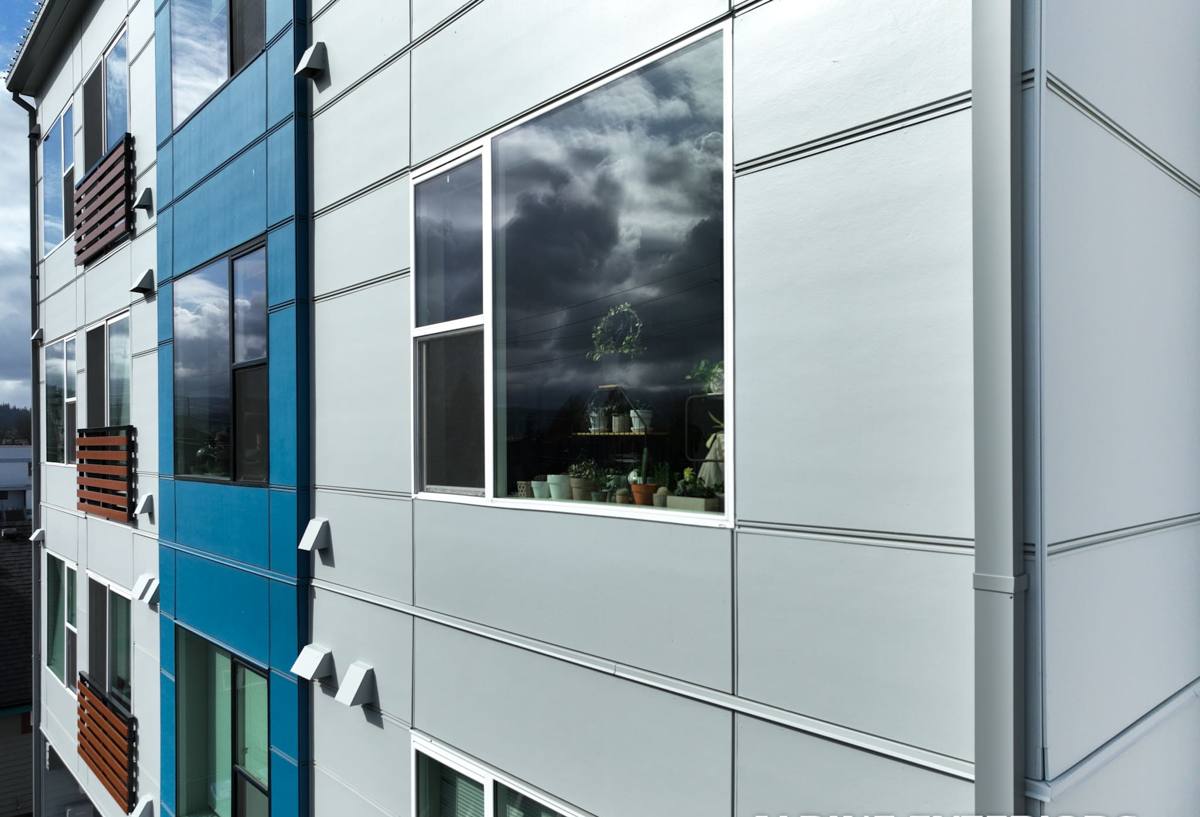
What "New Construction" Windows Actually Means
New-construction windows are built with a nailing flange (also called a nail fin) around the perimeter of the frame. That flange gets integrated into the wall's weather-resistive barrier in a specific shingled sequence — sill first, then sides, then head — so that water draining down the wall always moves over the top of the layer below it, never under. This is different from a replacement or retrofit window, which is designed to insert into an existing opening without disturbing the exterior siding or WRB.
Because new construction lets us build the water management system from the studs out, it's the better long-term option whenever it's available — which is exactly why it matters so much to do it correctly. There's no siding to hide a sloppy job, but there's also no siding to blame later if it leaks.
Where This Applies
- Ground-up new homes and additions in South Hill and the surrounding Whatcom County area
- Garages, shops, and accessory structures being framed for the first time
- Major remodels where exterior walls are opened down to the studs
- Room additions tying into an existing roofline or wall plane
Why Whatcom County's Climate Changes the Window Conversation
Three regional conditions shape every decision we make on a South Hill window install:
Driving, Wind-Driven Rain
Rain here doesn't just fall straight down — wind pushes it sideways into wall assemblies, which means the flashing at the head and sides of a window has to handle water moving at an angle, not just water running straight down the glass. A flat or under-detailed head flashing that would pass in a calmer climate is a liability in South Hill.
Salt Air
Proximity to Puget Sound and the Salish Sea means airborne salt is a real factor for hardware, fasteners, and certain frame finishes. Salt accelerates corrosion on unprotected metal components — hinges, locks, cranks, and some flashing tapes and metals — long before the glass or frame itself shows wear.
Extended Moss and Shade Season
North-facing walls, tree-shaded lots, and the long stretch of grey, damp months common to Whatcom County let moss and algae take hold on window sills, trim, and the top edges of frames. Beyond appearance, sustained moisture retention at the sill is exactly the condition that breaks down sealants and finishes faster than the manufacturer's warranty assumes.
Choosing the Right Window for a South Hill Build
There's no single "best" window brand or material — the right choice depends on the home's exposure, budget, and how much upkeep the owner wants to take on. Here's how the common frame materials stack up against this specific climate:
| Frame Material | Moisture Behavior | Salt Air Tolerance | Maintenance |
|---|---|---|---|
| Vinyl | Doesn't absorb moisture; performs well long-term if installed with proper flashing | Good — resists corrosion, hardware is the main wear point | Low |
| Fiberglass | Very stable dimensionally; minimal expansion/contraction in wet-dry cycles | Very good | Low |
| Aluminum-clad wood | Good if sill flashing and end-dam details are correct; interior wood needs to stay dry | Depends on cladding finish and hardware spec | Moderate to high |
| Bare wood | Most exposure-sensitive; needs consistent maintenance to resist rot in this rainfall pattern | Requires diligent upkeep on hardware and finish | High |
For most South Hill builds, we steer homeowners toward vinyl or fiberglass on the more exposed elevations — south and west walls, and anywhere without deep roof overhangs — simply because they hold up with less ongoing owner effort in this rainfall pattern. Wood and clad-wood still have a place, particularly where the architectural style calls for it or overhangs are generous, but we're upfront that they come with a real maintenance commitment here, not a hypothetical one.
Glazing and Hardware Choices That Matter Locally
Beyond the frame, a few product details make a measurable difference in this climate:
- Low-E, dual or triple-pane glazing — standard for our winters, and it also reduces condensation on the interior glass during the cold, damp stretches when indoor humidity is high
- Corrosion-resistant hardware — stainless or coated hardware on hinges, cranks, and locks holds up far better against salt air than mill-finish or unprotected steel
- Warm-edge spacer systems — reduce the condensation ring at the glass edge that otherwise becomes a slow-motion moss and mildew magnet on interior sills
- Weep system design — every window needs a functioning path for incidental water to drain back out; we check that weep holes aren't blocked by sealant, trim, or paint during install
The Installation Process We Follow
A correctly installed new-construction window is mostly invisible once the siding goes on — which is exactly why the process has to be right, since nobody will be able to check it later without opening the wall back up.
1. Rough Opening Prep
We verify the opening is square, plumb, and sized correctly before the window ever arrives on site. Framing errors caught here are a five-minute fix; caught after installation, they're a full removal.
2. Sill Pan Flashing
A sloped or pre-formed sill pan goes in first, directing any water that gets past the window back outside the wall assembly instead of down into the framing. Given how much sustained rain South Hill sees, we treat sill pans as non-negotiable, not optional upgrades.
3. Window Setting and Shimming
The window is set, shimmed level and plumb at the correct structural points, and fastened per the manufacturer's schedule — enough fasteners, in the right locations, without over-driving them and distorting the frame.
4. Flashing Integration
Flashing tape and/or metal flashing is applied in the correct shingled order — sides, then head — lapping over the layer below so water always drains outward and down, never inward. The head flashing gets special attention here given how much wind-driven rain this area sees hitting walls at an angle.
5. WRB Tie-In
The window flanges are integrated into the house wrap or weather-resistive barrier so the whole wall acts as one continuous drainage plane, not a patchwork of separate systems.
6. Interior and Exterior Sealing
Backer rod and sealant at the interior air seal, exterior sealant only where the manufacturer specifies it — not everywhere, since over-sealing can trap water rather than let it drain.
7. Final Check
Every window gets operated, checked for square, and inspected for a clean, continuous flashing lap before we consider the install complete.
Mistakes We See in New Builds Around Whatcom County
Most window problems we get called to diagnose in newer South Hill homes trace back to a handful of repeatable errors, not product failure:
- Sill pan skipped or improvised with sealant alone instead of a real drainage plane
- Flashing applied in the wrong order — head flashing tucked under the WRB instead of over it, sending water straight into the wall
- Over-caulking the exterior, sealing off the weep path the window needs to drain
- Fasteners over-driven, bowing the frame and creating a gap at the corners
- Standard hardware used on salt-exposed elevations where corrosion-resistant hardware should have been specified
Each of these is easy to prevent during installation and expensive to fix once siding and trim are closed up around it.
Our Process for South Hill Builds
We work directly with builders and homeowners from the framing stage forward:
- Plan review — we look at window schedules, elevations, and exposure before ordering, flagging any spots where a different frame material or hardware spec makes sense given sun, shade, or wind exposure
- Coordination with the framer and WRB installer — so the wall assembly and window flashing are designed to work together, not patched together after the fact
- Installation — following the sequence above, on the schedule the builder needs to keep the project moving
- Documentation — photos of flashing details before they're covered by siding, so there's a record if any questions come up later
- Final walkthrough — every window operated and checked before we sign off
What Affects Cost on a New-Construction Window Job
| Factor | Why It Matters |
|---|---|
| Window count and size | Larger openings and more units mean more material and labor hours |
| Frame material | Vinyl is typically the most budget-friendly; fiberglass and clad-wood cost more upfront |
| Glazing package | Triple-pane and specialty coatings add cost but pay back in comfort and condensation control |
| Exposure and elevation | Salt- and rain-exposed walls may call for upgraded hardware or flashing details |
| Site access and timing | Coordinating around other trades on an active build site affects scheduling and efficiency |
We give straightforward, itemized estimates rather than a single lump number, so a homeowner or builder can see exactly what's driving the cost and where there's room to adjust.
Why It Matters to Hire a Crew That Already Works This Area
Window installation isn't complicated in theory — the physics of shingled flashing is the same everywhere. What changes from region to region is how much margin for error the climate gives you. A crew used to working in a drier, calmer climate may cut a corner that never causes a problem there but becomes a slow leak in South Hill's rainfall and wind pattern within a few winters. Working regularly in Whatcom County means we've seen which details actually matter here — sill pans, head flashing order, hardware corrosion resistance, and weep path clearance — because we've been the ones called back to fix the homes where those details got skipped.
Keeping New Windows Performing Long-Term
A correctly installed window still benefits from basic seasonal attention, especially given the moss and algae pressure common on shaded and north-facing walls in this area:
- Rinse sills and tracks periodically during the wetter months to keep moss and debris from holding moisture against the frame
- Check that weep holes stay clear of dirt, moss, and paint buildup
- Inspect exterior sealant lines yearly for cracking or separation, particularly on south- and west-facing units that see the most weather
- Operate hardware occasionally on windows that don't get regular use, so corrosion or stiffness is caught early rather than at the point of failure
If you're planning a new build, addition, or major remodel in South Hill and want the window installation handled as part of a coordinated, weather-tight wall assembly from the start, we're happy to walk the plans with you and put together a straightforward, no-pressure estimate.