 Whatcom County
 Storm Damage in Birchwood: What Whatcom County Weather Actually Does to a Roof
Birchwood roofs don't fail because of one dramatic storm most years. They fail because of what a long string of ordinary Whatcom County weather does to them between storms. Salt-laden air moving in off the water accelerates corrosion on fasteners, flashing, and metal roofing panels. Driving rain, pushed sideways by wind rather than falling straight down, finds its way under shingle tabs and around flashing details that would stay dry in a calmer climate. And a moss season that can run eight or nine months a year keeps roof surfaces damp, shaded, and slowly deteriorating even when nothing "happened" to the roof at all.
When an actual wind event or heavy rain system does move through, it's rarely starting from a clean slate. It's usually finding the weak point that salt air, moisture, and moss have already been working on for a year or two. That's the context we bring to every storm damage call in Birchwood: we're not just patching what broke today, we're looking at what let it break.
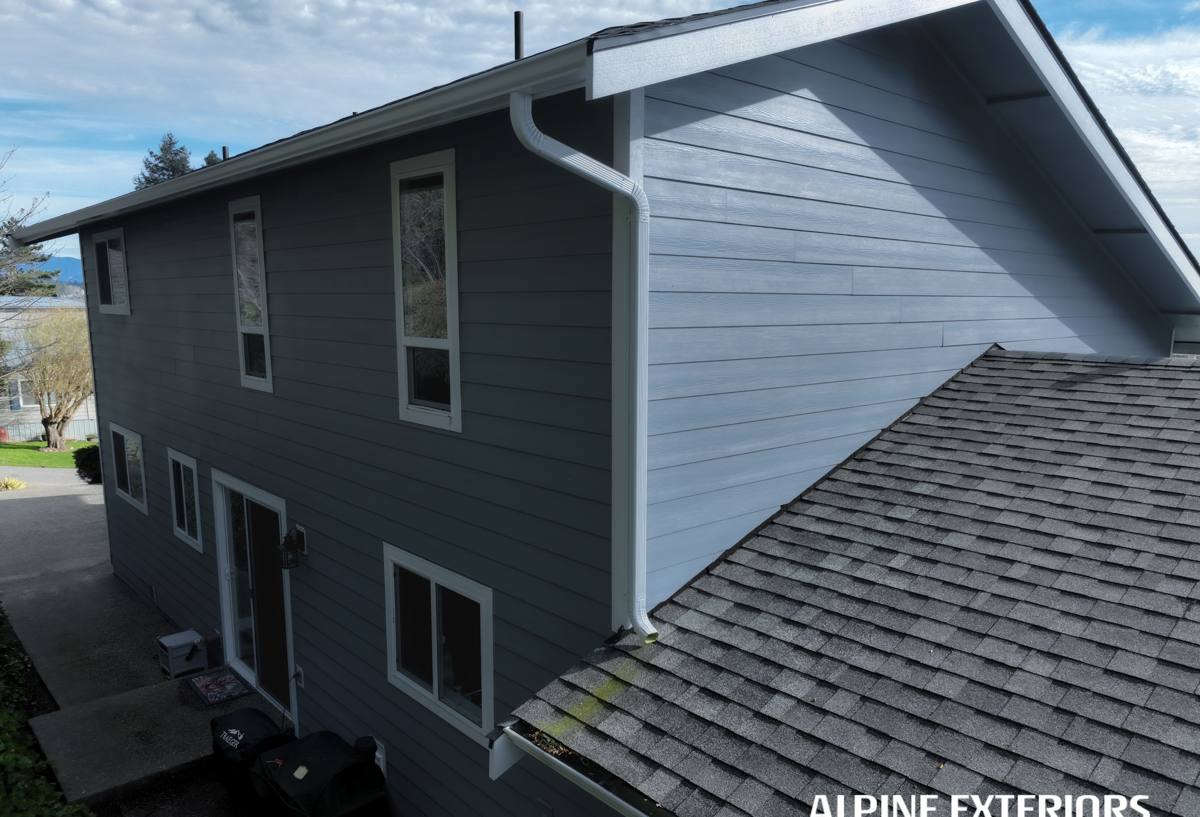
What Counts as Storm Damage — and What Doesn't
Insurance adjusters, roofing crews, and homeowners don't always agree on this, so it's worth being straightforward about it. Storm damage generally means sudden, identifiable damage from a specific weather event: wind lifting or tearing shingles, a branch or tree limb coming down on the roof, wind-driven rain forcing water past flashing that was otherwise intact, or hail (less common here, but it happens) bruising shingle mat.
What isn't storm damage: granule loss from age, moss and lichen growth that's been building for years, nail pops from normal thermal movement, or flashing that was undersized or poorly installed from the start. That kind of wear can absolutely combine with a storm to cause a leak — a roof already thinned by moss and age will fail in a wind event that a healthy roof would shrug off — but it changes how the repair should be approached and, often, how a claim gets handled.
Why This Distinction Matters for Birchwood Homes
Because of the moss season here, we see a lot of roofs where the storm was the trigger but not the whole story. Being honest about that upfront — rather than blaming everything on "the storm" — is part of doing this job right, and it's usually what keeps a claim from getting kicked back for closer review.
Signs Your Roof Took a Hit
Most storm damage isn't obvious from the ground. Some of it isn't even obvious from a ladder unless you know what you're looking at. After any significant wind or rain event, it's worth checking for:
- Shingles that look creased, lifted at the edge, or missing outright, especially on the side of the roof that faces prevailing wind
- Granules collecting in gutters or at downspout outlets — a sign of impact or abrasion damage to shingle mat
- New or worsening water stains on ceilings or in the attic, particularly near chimneys, skylights, or where roof planes meet
- Flashing that's visibly bent, separated, or pulled away from a wall, chimney, or vent pipe
- Debris — branches, needles, moss clumps knocked loose — built up in valleys where water is supposed to drain freely
- Soft or spongy spots when walking the roof, which usually mean the decking underneath has already taken on water
- Daylight visible through the roof deck from inside the attic
If you see any of these, the priority is stopping active water intrusion, not waiting to see if it gets worse. A small, contained leak is a manageable repair. The same leak left through another few weeks of Whatcom County rain can turn into rotted decking, damaged insulation, and interior repair costs that dwarf the roof work itself.
What a Correct Storm Damage Repair Actually Involves
Inspection Before Anything Else
A proper repair starts with a full inspection, not just a look at the obvious damage. We check the whole roof plane, the flashing at every penetration and wall transition, the gutters and downspouts, and — where our siding work already has us up on the wall — the roof-to-wall connection where a lot of Birchwood leaks actually originate. Storm damage rarely stays neatly contained to one spot, and a repair that only addresses the visible hole is a repair that's likely to call us back in a year.
Temporary Protection When It's Needed
If a roof is actively leaking or has an open area exposed to weather, the first step is stabilizing it — tarping, temporary flashing, or sealing an exposed section — before the permanent repair happens. This matters more here than in drier climates. A few days of exposure during an active Whatcom County rain system can do as much damage as the original storm.
Matching Materials Correctly
Repairing a section of roof means matching the existing shingle profile, color, and exposure as closely as possible, and tying new flashing into old correctly so water sheds the way it's supposed to rather than pooling at the seam. Mismatched or poorly integrated repairs are one of the most common causes of a "repaired" roof leaking again within a year or two.
Flashing and the Roof-to-Wall Connection
Because we work on siding as much as roofing, we pay particular attention to step flashing, kickout flashing, and the transitions where a roof meets a wall, dormer, or chimney. These are the details most likely to be undersized, missing, or damaged in a storm — and they're also the details a roofing crew that doesn't think about siding water management can miss entirely. Getting this junction right is often the difference between a repair that lasts and one that doesn't.
Ventilation Check
Storm repairs are also a good time to check attic ventilation. Poor airflow traps moisture under the roof deck, which speeds up rot and makes moss and algae growth worse — a real issue given how long our damp season runs. We won't turn a repair into an unnecessary upsell, but if ventilation is clearly contributing to the problem, we'll tell you.
Repair vs. Replace: How We Help You Decide
Not every storm-damaged roof needs to come off. But sometimes a repair is a short-term fix on a roof that's already near the end of its service life, and it's worth knowing which situation you're in before spending money.
| Factor | Leans Toward Repair | Leans Toward Replacement |
|---|---|---|
| Age of roof | Under 12–15 years, still within expected asphalt lifespan | Approaching or past manufacturer's rated lifespan |
| Extent of damage | Localized to one area or slope | Spread across multiple roof planes |
| Decking condition | Solid, dry, no soft spots found | Soft, delaminating, or water-stained decking underneath |
| Moss/algae history | Managed, roof surface otherwise sound | Heavy, longstanding moss growth degrading shingle mat broadly |
| Prior repairs | First repair, roof otherwise unmodified | Multiple past patches already layered on the same area |
Most storm calls we get in Birchwood fall clearly on one side or the other once we're actually on the roof. When it's genuinely a close call, we'll walk you through what we found and let you make the decision — it's your roof and your budget.
How Our Process Works, Start to Finish
- Contact and scheduling. You describe what happened or what you're seeing; if there's active leaking, we prioritize getting someone out quickly.
- On-site inspection. We walk the roof (weather permitting) or use a safe alternative method, document the damage with photos, and check the attic from inside where accessible.
- Written scope and estimate. You get a clear explanation of what's damaged, what caused it, and what the repair involves — no vague line items.
- Temporary protection if needed. Any active leak gets stabilized before we schedule the permanent fix.
- Repair work. Matching materials, correct flashing integration, and attention to the roof-to-wall details that tend to get overlooked.
- Final walkthrough. We show you what was done and what to watch for going forward, particularly around moss and drainage given our climate.
Insurance Claims and Documentation
A lot of storm damage repair in Whatcom County ends up going through homeowners insurance, and the paperwork can be as frustrating as the repair itself. We're not a public adjuster and we won't promise a claim outcome, but we can document damage thoroughly with dated photos and a clear written description that ties the damage to a specific weather event where that's accurate. That documentation is usually what determines whether a claim moves smoothly or gets delayed. If an adjuster's assessment and our on-roof inspection don't match, we'll explain the discrepancy in plain terms so you can raise it.
Materials and How They Hold Up to This Climate
What we use for a repair depends on what's already on your roof, but it's worth understanding how common roofing materials perform against salt air, driving rain, and heavy moss pressure specifically.
| Material | Salt Air Exposure | Moss Resistance | Notes |
|---|---|---|---|
| Standard asphalt shingle | Fasteners and flashing are the vulnerable point, not the shingle itself | Moderate — benefits from periodic cleaning | Most common in the area; widest range of matching options for repairs |
| Algae-resistant (AR) shingle | Same as standard, with corrosion-resistant fastener options available | Better — copper or zinc granules slow regrowth | Worth considering for full replacement, not always practical for a partial repair |
| Metal roofing/flashing | Higher sensitivity — needs corrosion-rated fasteners and coatings near the water | Good — sheds moss more easily due to smooth surface and pitch | Detailing at seams and penetrations is critical; poor installation shows up faster here than elsewhere |
| Cedar shake | Moderate, but moisture cycling is the bigger long-term concern | Poor without regular maintenance | Requires more frequent upkeep in a climate this damp |
We'll always match your existing material for a repair unless there's a specific reason not to. Recommending a full material change is a replacement conversation, not a storm repair one, and we'll keep those separate.
Why a Crew That Already Works Birchwood Matters
Storm damage repair isn't just a technical skill — it's a familiarity skill. A crew that works Birchwood regularly already has a sense of which roof types and ages are common in the area, how the local wind patterns typically load a roof, and how fast moss actually comes back here versus what a national roofing brand's marketing material assumes. That local pattern recognition shows up in small but real ways: knowing to check a particular flashing detail because it's a known weak point on homes of a certain era, or recognizing storm damage that's compounding an existing moss problem rather than treating it as an isolated event.
It also matters for response time. After a significant wind event, roofing crews get busy fast, and a company that already has routes and relationships in Whatcom County can usually get to an active leak sooner than one coming from further afield.
A Few Things Worth Checking Yourself Before You Call
- Look at your gutters after any storm — granule buildup or debris tells you something happened even if the roof looks fine from the ground
- Check your attic (if accessible) for new stains, damp insulation, or daylight through the deck
- Note the date and general conditions of the storm — wind direction and speed matter for both diagnosis and any insurance claim
- Don't get on the roof yourself after a storm — wet, moss-covered surfaces are genuinely dangerous, and a fall is a far worse outcome than a delayed repair
- Take photos from the ground of anything visible — broken shingles, debris on the roof, obvious flashing damage
If you're seeing any of this on a home in Birchwood, or you just want a second opinion on damage from a recent storm, we're happy to take a look. The estimate is free, there's no pressure to sign anything on the spot, and you'll get a straight answer about whether you're looking at a repair or something bigger — just fill out the form below to get started.