 Whatcom County
 Lynden sits close enough to the water and far enough into the foothills that its homes take a specific kind of weather beating — salt-tinged air moving in off the Strait, long stretches of driving rain through fall and winter, and a moss season that seems to start earlier every year. Siding installed here has to do more than look good on the day it goes up. It has to hold a paint finish, shed water at every seam, and resist organic growth for decades, not just a few seasons. That's the job we specialize in: correct, climate-appropriate siding installation for Lynden homes, using James Hardie fiber cement exclusively.
What Lynden's Climate Actually Does to Siding
Whatcom County's weather is often described in general terms — "wet," "mild," "marine" — but the specifics matter more than the label. Lynden gets sustained, wind-driven rain events where water isn't just falling, it's being pushed sideways into wall assemblies. That kind of exposure finds every gap in flashing, every under-caulked seam, and every siding product that wasn't engineered for it.
Salt Air and Moisture Cycling
Even well inland from the coast, salt-laden moisture in the air accelerates corrosion on fasteners and metal trim, and it keeps organic siding materials damp longer than a dry inland climate would. Wood-based products absorb that moisture, swell, and eventually check or rot at the surface. Siding that can't handle repeated wet-dry cycling starts failing from the outside in — long before the structure underneath is compromised.
Moss and Organic Growth
Whatcom County's moss season isn't a minor cosmetic issue. Moss and algae hold moisture against the siding surface, which speeds up whatever degradation process is already happening underneath. On products with a permeable or absorbent surface, moss doesn't just sit on top — it works into the material's texture and becomes very difficult to remove without damaging the finish.
Temperature Swings and UV
Lynden doesn't see extreme heat, but it does see enough seasonal temperature swing and UV exposure over the years to fade paint and stress caulk joints. A siding system with a factory-applied, baked-on finish holds color far longer than a field-painted surface exposed to this cycle year after year.
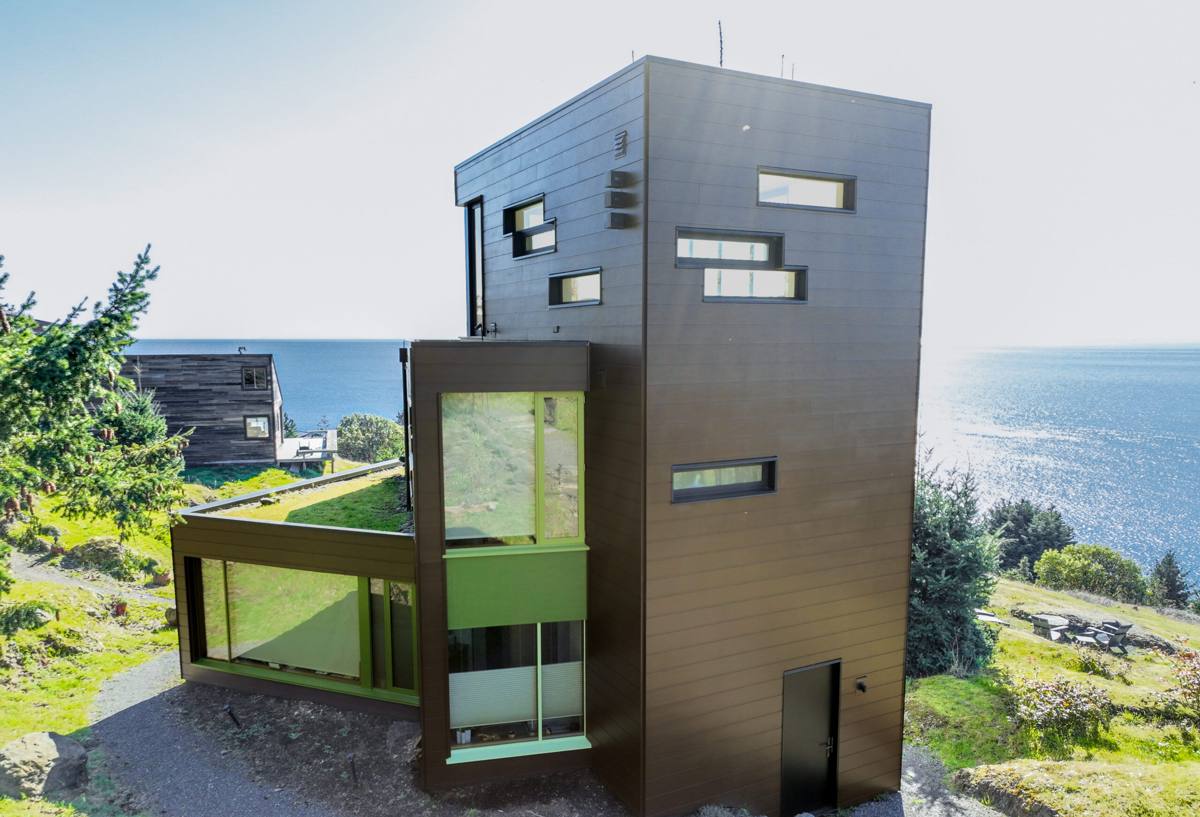
Why We Install Only James Hardie Fiber Cement
We don't install vinyl, LP SmartSide, primed spruce, cedar, Cemplank, or Allura. That's not a marketing position — it's a standard we hold because of what we've seen happen to those products in exactly this climate over enough years to know how the story ends.
- Vinyl expands and contracts with temperature swings, can warp or crack in wind-driven rain events, and offers no real fire resistance.
- Wood products (cedar, primed spruce) are beautiful when new but require ongoing maintenance to survive Whatcom County's moisture load — repainting, caulking, and moss treatment on a recurring cycle, with rot risk if that maintenance slips.
- LP SmartSide is engineered wood with a resin-treated strand structure that performs reasonably in drier climates, but any breach in its factory coating exposes wood fiber to moisture — a real risk in a market with this much sustained rain.
- Cemplank and Allura are also fiber cement, and they're not bad products in the abstract — but we've standardized on one manufacturer, one installation system, and one warranty structure so we can guarantee consistent results and stand behind the work without hedging between product lines.
James Hardie fiber cement is non-combustible, dimensionally stable across our temperature range, and finished with the ColorPlus factory coating system — a baked-on finish that resists fading and chipping far better than field-applied paint. Hardie's HZ5 product line in particular is engineered for climates like ours, with moisture and freeze-thaw performance built into the formulation rather than added afterward.
What a Correct Siding Installation Involves
The material is only half the equation. A huge share of siding failures we get called out to inspect — regardless of brand — trace back to installation mistakes, not product defects. Getting it right in Lynden's climate means paying attention to details that don't matter much in drier parts of the country.
Water Management Comes First
Before a single piece of siding goes up, the wall needs a correctly lapped weather-resistive barrier, properly integrated flashing at every window, door, and penetration, and a drainage plane that lets any moisture that gets behind the siding find its way back out. Siding is the last line of defense, not the only one — if the water management layer underneath is wrong, no siding product will save the wall.
Fastening and Clearances
Hardie siding has specific fastening patterns, nail penetration depths, and butt joint treatment requirements. Just as important are the clearances — siding needs proper gaps from grade, roofing, decks, and other transitions so water has somewhere to go instead of wicking up into the bottom edge of a board.
Caulking and Sealant Discipline
Over-caulking is almost as common a mistake as under-caulking. Hardie's installation guidelines specify exactly where sealant is needed and where it isn't — sealing a joint that's supposed to allow drainage traps water instead of shedding it.
Field Cutting and Dust Control
Fiber cement cutting has to be done correctly, both for the quality of the cut edge (which affects how well it seals and takes paint touch-up) and for safety — respirable crystalline silica is a real jobsite hazard, and a crew that cuts fiber cement regularly has the equipment and habits to handle it properly.
Our Installation Process for Lynden Homes
| Stage | What Happens |
|---|---|
| Site assessment | Inspect existing siding, sheathing, and trim for hidden moisture damage before quoting; identify problem areas specific to the home's exposure and orientation. |
| Tear-off and sheathing check | Remove old siding, inspect sheathing underneath, repair or replace any compromised wood before moving forward. |
| Weather barrier and flashing | Install or correct the weather-resistive barrier and flashing details at every penetration — this is the step that determines long-term performance. |
| Hardie installation | Install fiber cement panels or lap siding to manufacturer specification — fastening, clearances, joint treatment. |
| Trim and detail work | Install corner trim, window and door casing, and transition flashing to shed water at every edge. |
| Final inspection and walkthrough | Walk the completed job with the homeowner, review the work, and confirm warranty registration. |
Choosing the Right Hardie Product for a Lynden Home
Not every Hardie product is the right fit for every home, and part of our job is matching the product line and profile to the house rather than defaulting to one option.
- HardiePlank lap siding — the most common choice, available in several exposures and textures, works well on most Lynden home styles.
- HardiePanel vertical siding — often used for accent sections, gables, or a more modern look.
- HardieShingle — for homes where a shingled or textured look fits the architecture better than a lap profile.
- HardieTrim — matched trim boards that carry the same ColorPlus finish and moisture performance as the field siding, so the whole envelope ages consistently.
Color and texture selection also matters more here than in a sunnier climate — darker colors can show mineral deposits from rain differently than lighter ones, and texture affects how moss and algae tend to sit on the surface over time. We walk homeowners through these trade-offs rather than just defaulting to whatever's in stock.
What This Costs and What Drives the Number
Every Lynden home is different, so we don't quote a number until we've seen the house, but the main cost factors are consistent from job to job.
| Factor | Why It Matters |
|---|---|
| Home size and wall complexity | More corners, dormers, and transitions mean more trim work and labor time, not just more material. |
| Condition of existing sheathing | Hidden rot or moisture damage discovered at tear-off adds repair scope — this is common on older siding jobs and worth budgeting a contingency for. |
| Product line and profile | Panel, plank, and shingle profiles have different material and labor costs; texture and exposure width also factor in. |
| Trim and detail scope | Extensive trim, accent siding, or custom detailing adds time beyond the field siding itself. |
| Access and site conditions | Multi-story sections, tight lot lines, or landscaping that limits staging area can affect labor time. |
Fiber cement installation is a bigger upfront investment than vinyl, but it's also a once-per-generation project when installed and maintained correctly — versus a repaint-and-recaulk cycle every several years with wood, or a full tear-off when vinyl fails.
Why Hiring a Crew That Already Works Lynden Matters
Siding installation isn't just about following a manufacturer's spec sheet — it's about knowing how a specific region's weather actually behaves against a wall over time. A crew that regularly works Whatcom County homes already knows which elevations take the worst wind-driven rain, where moss tends to establish first, and which older sheathing types in this area are prone to hidden moisture problems. That local pattern recognition catches issues a generalist crew might miss, and it means the flashing and drainage details get built for the actual conditions the home will face — not a generic textbook installation.
It also matters for warranty follow-through. James Hardie's product warranty and our own labor warranty both depend on correct installation. A crew that's installed dozens of jobs in this same climate has already worked out the details that make that installation hold up here specifically, not just in ideal lab conditions.
Signs Your Current Siding Is Already Losing the Fight
- Persistent moss or algae staining that returns quickly after cleaning
- Soft spots, bubbling, or visible swelling, especially near the bottom courses or trim joints
- Paint that's chalking, peeling, or fading unevenly across different elevations
- Visible gaps or separation at seams, corners, or window and door trim
- A musty smell or interior wall staining that suggests moisture is getting past the siding
Any of these signs are worth a professional look before they turn into sheathing or framing repairs, which cost considerably more than the siding itself.
Get a Straight Answer for Your Home
If you're weighing a siding replacement in Lynden, we'll walk your home, tell you honestly what condition it's in, and explain what a correct Hardie installation would involve for your specific house — no pressure, no inflated urgency. Request a free estimate using the form below and we'll get back to you with a real assessment.