 Whatcom County
 Window Installation Built for Sehome's Weather, Not Just Its Openings
Sehome sits close enough to the water and under enough tree cover that its windows age differently than windows twenty miles inland. Salt-laden air off the Sound corrodes hardware and fasteners faster than a dry climate ever would. Driving rain, pushed sideways by wind off the water, finds every gap in flashing and trim. And the long, damp Whatcom County shoulder seasons — wet fall through wet spring — grow moss and algae on anything that stays shaded and moist, including window frames and sills. A window installation done for this neighborhood has to account for all three, not just fit glass into a hole.
This page is about one job, done right, in one place: replacing or installing windows on homes in and around Sehome. We're not going to walk through every window type made — we're going to walk through what actually matters here, what a correct install looks like, and why the details we insist on are the ones that keep a window performing for its full service life instead of failing early.
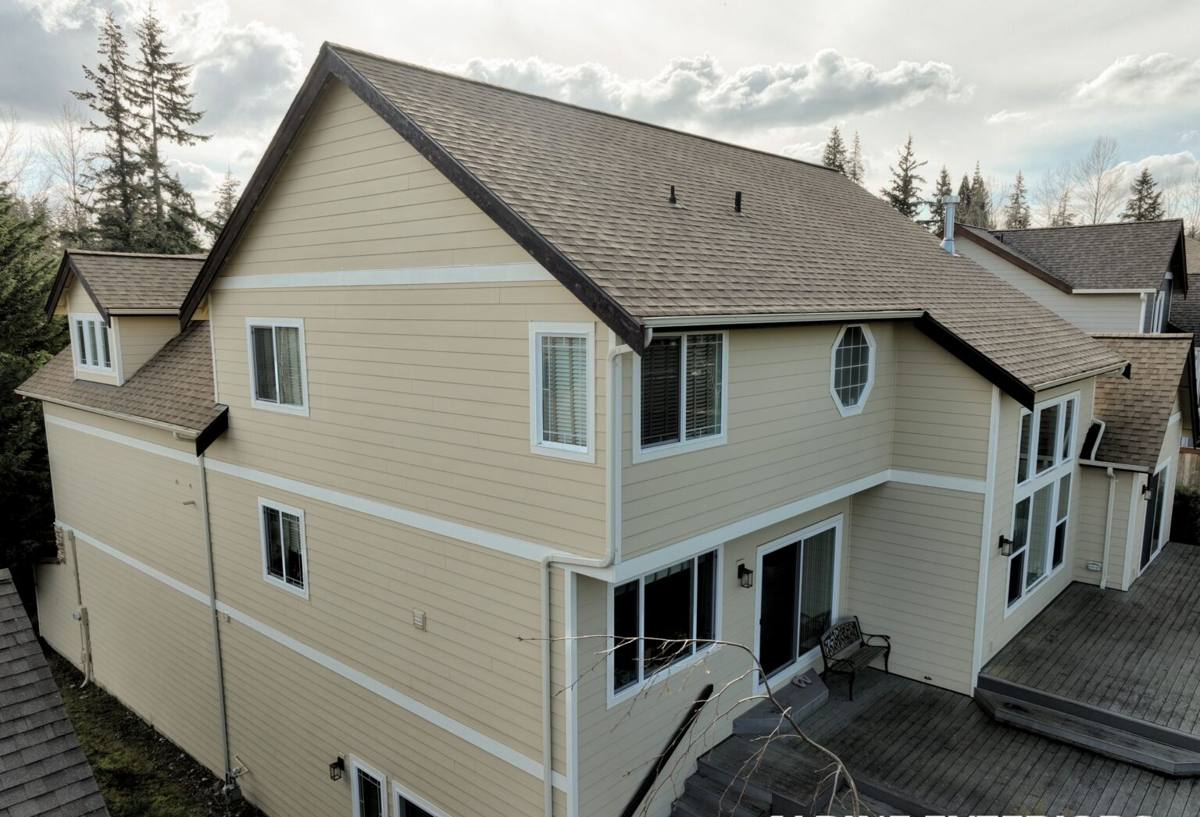
What This Climate Does to Windows Over Time
Salt Air and Hardware Fatigue
Homes closer to Bellingham Bay and the broader Whatcom County shoreline see accelerated corrosion on window hardware — hinges, cranks, latches, and especially uncoated or lower-grade aluminum components. It's slow and easy to ignore until a window won't latch or a crank strips out. Stainless or properly coated hardware costs a little more up front and matters more here than it would in a dry inland climate.
Moss, Algae, and Wood Rot
Shaded, tree-covered lots — common in older Sehome-area streets with mature landscaping — keep window sills and lower sashes damp longer after every rain. That moisture supports moss and algae growth, which holds even more water against wood trim and sashes. Once wood windows or wood trim around any window type start absorbing that moisture, rot follows, usually starting at the bottom corners of the sash and the sill horns where water collects and drains slowest.
Driving Rain and Air Infiltration
Wind-driven rain off the Sound doesn't just sit on a windowsill — it gets pushed up and under trim, siding, and poorly lapped flashing. A window that's watertight in a light, straight-down rain can still leak in a wind-driven storm if the flashing sequence wasn't built for lateral water pressure. This is the single most common cause of hidden water damage we find behind older windows in this area, and it's almost always a flashing and sequencing failure, not a bad window unit.
Signs a Sehome Home Needs Window Work
Most homeowners call us after noticing one or two of these, not because they were watching closely — window problems are easy to miss until they're expensive:
- Fogging or a permanent haze between the panes of a double-pane window (a failed seal, not a cleaning problem)
- Persistent moss, algae, or dark staining on the sill or lower sash that comes back after cleaning
- Visible gaps, soft or spongy wood, or paint that's bubbling around the frame
- Noticeable drafts or cold spots near the window even with it fully closed and locked
- Windows that stick, won't stay open, or take real effort to latch
- Rising heating bills without any other explanation, especially in a home with older single-pane or early double-pane windows
- Water staining on interior drywall or trim below or beside a window after a heavy wind-and-rain event
What a Correct Window Installation Actually Involves
Flashing and Moisture Barrier Integration
The window unit itself is often the least important variable in whether an installation lasts. What matters more is how it's tied into the wall's water-resistive barrier: flashing tape lapped in the correct shingle-style order (sill, jambs, then head), sealant used only where it belongs, and the housewrap or building paper integrated so water is always directed out and down, never trapped behind the window. In a climate with driving rain, this sequencing is non-negotiable — skipping a step or reversing the order is exactly how water ends up inside a wall cavity.
Sill Pan and Drainage
A sloped sill pan under the window gives any water that does get past the sash a way out instead of a place to pool. This is cheap insurance during installation and expensive to add later, since it requires pulling the window back out.
Insulation and Air Sealing
The gap between the window frame and the rough opening needs to be filled with a low-expansion foam or backer rod and sealant — not stuffed with fiberglass batting, which does little to stop air movement and nothing to stop bulk water. This gap is where most of the draft complaints we hear actually originate, more often than the window unit itself.
Choosing a Window Frame Material for a Marine Climate
There's no single "best" window material for every home — the right choice depends on your home's age, style, budget, and how exposed it is to wind and moisture. Here's how the common options actually compare for a climate like this one:
| Material | Moisture Resistance | Maintenance | Typical Lifespan |
|---|---|---|---|
| Vinyl | Good — won't rot, but seams can be a weak point if not welded well | Low | 20–30 years |
| Fiberglass | Excellent — dimensionally stable in wet/dry cycling | Low | 30–40 years |
| Aluminum-clad wood | Good exterior protection, interior wood still needs care | Moderate | 25–35 years with upkeep |
| Bare wood | Poor in shaded, damp settings unless maintained closely | High — repainting/sealing on a cycle | Varies widely with maintenance |
Our standard recommendation for shaded, moss-prone lots in and around Sehome leans toward vinyl or fiberglass for the frame, specifically because they don't feed the same rot cycle that bare or poorly clad wood does in constant shade and dampness. Where a homeowner wants the look of wood — often to match an older home's original character — we'll talk through what a realistic maintenance schedule looks like so there are no surprises five years in.
Full-Frame Replacement vs. Insert Replacement
This decision matters more here than in a drier climate, because it determines whether hidden rot gets fixed or sealed in.
- Insert (pocket) replacement — the new window goes into the existing frame. Faster and less invasive, and fine when the existing frame and surrounding wall are dry and sound.
- Full-frame replacement — the old frame comes out entirely, exposing the rough opening, flashing, and sheathing. This is the right call whenever there's visible rot, past water staining, or a frame that's been shaded and damp for years, because it's the only way to actually inspect and fix what's behind the window instead of covering it up.
We'll tell you honestly which one your situation calls for — insert replacement is not a shortcut we push just because it's faster, and full-frame isn't upsold when it isn't needed.
Permits, Codes, and Older Homes
Whatcom County and City of Bellingham building departments have their own permit thresholds and egress requirements, and those can apply differently depending on whether an opening is being resized, whether the room requires an egress window, and the scope of the job. We handle that determination as part of the estimate rather than leaving it for you to research — if a permit is needed, we account for it in the timeline and pricing up front.
Homes built before 1978 are also subject to federal lead-safe work practice rules whenever painted surfaces are disturbed, which includes window trim and sashes. If your Sehome-area home falls into that window (no pun intended), we follow the required containment and cleanup practices as standard procedure, not as an add-on.
Our Process, Start to Finish
- On-site assessment of existing windows, framing condition, and any visible moisture or rot
- Honest recommendation on insert vs. full-frame replacement, with reasoning explained, not just a quote
- Material and frame selection based on your home's exposure, style, and budget
- Permit handling where required by Whatcom County or City of Bellingham code
- Removal of old units with care taken to inspect the opening before anything new goes in
- Correct flashing, sill pan, and air-sealing sequence — the part that determines whether the job lasts
- Interior and exterior trim finish work to match the home
- Final walkthrough and operation check on every window installed
Why a Crew That Already Works Sehome Matters
A contractor who works this area regularly already knows which streets sit in enough shade to fight moss year-round, which older homes are likely to have original wood-frame windows with hidden rot, and how the local permit office actually wants a job documented. That's not a marketing point — it's the difference between an estimate that holds up and one that grows once the old window comes out and something unexpected is behind it. We'd rather build that possibility into the conversation up front than surprise you mid-job.
If you're seeing fogged glass, drafts, sticking sashes, or moss that keeps coming back on your window sills, we're happy to take a look and give you a straight answer — no pressure, no inflated scope. Fill out the form below for a free estimate on your Sehome window installation.