 Whatcom County
 Why Edgemoor Windows Take More Than a Catalog Order
Edgemoor sits close enough to Bellingham Bay that salt air is part of daily life, not an occasional nuisance. Add the driving rain that comes sideways off the water in the fall and winter, plus the shade and dampness that keep moss going most of the year, and you've got a set of conditions that will find every weak point in a window installation. A window that's fine in a dry inland climate can start failing here in a few seasons if it wasn't chosen and installed with this specific environment in mind.
"Custom" in this context doesn't just mean an unusual shape or a non-standard size, though that comes up often in Edgemoor's older and architecturally varied homes. It means the frame material, the flashing detail, and the sealant system all get chosen to hold up against salt exposure, wind-driven moisture, and the slow, constant dampness that defines a Whatcom County winter.
What Makes a Window Job "Custom" in This Neighborhood
Older Homes, Non-Standard Openings
A lot of Edgemoor housing stock predates modern window manufacturing standards, which means rough openings that don't match today's stock sizes. Bay windows, arched openings, and additions built onto original framing all show up regularly. Custom sizing isn't an upsell here — it's often the only way to get a proper, air-tight fit without tearing into surrounding siding or trim more than necessary.
Waterfront Exposure and Orientation
Homes with west- or southwest-facing elevations toward the water take the brunt of wind-driven rain and salt spray. Those elevations need tighter flashing details and more corrosion-resistant hardware than a north-facing window on the same house. We size up exposure wall by wall, not just house by house.
Matching Character, Not Just Function
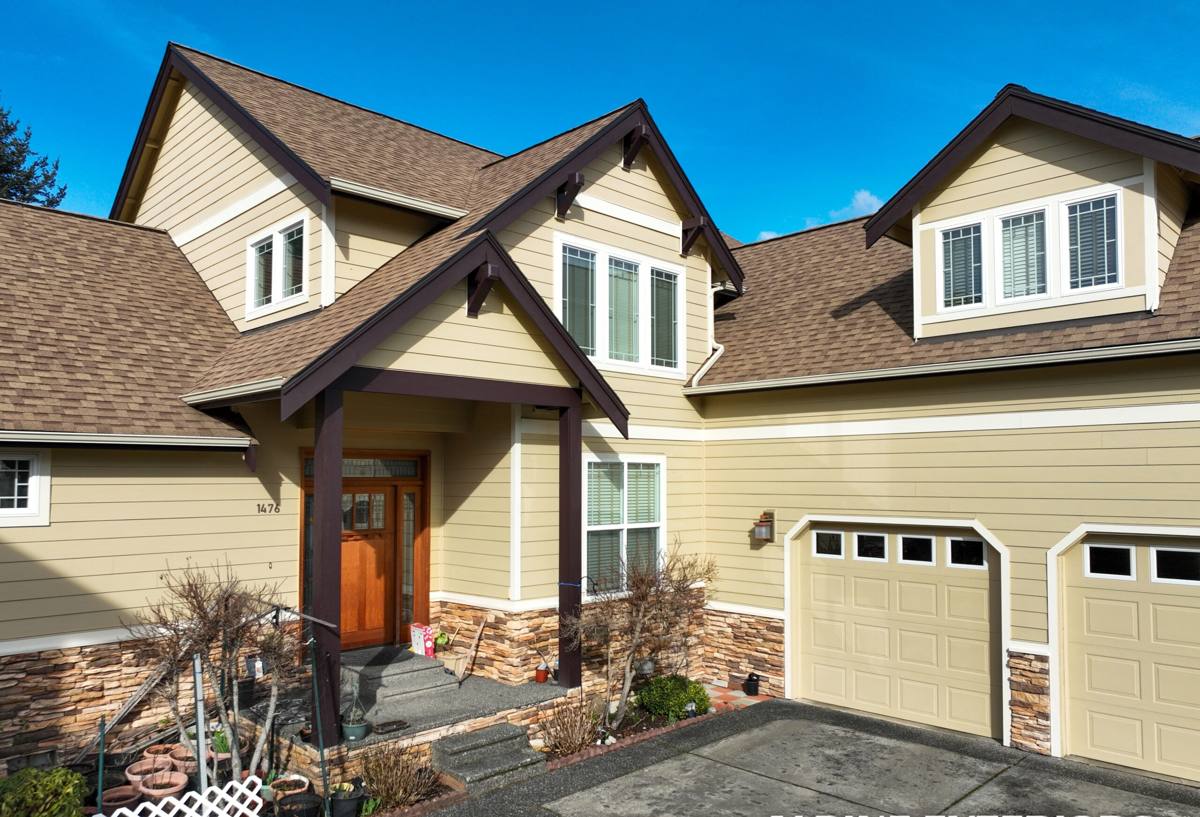
Many Edgemoor homes have a defined architectural character — craftsman details, divided-lite patterns, trim profiles that took decades to look right. A custom window replacement should preserve that look from the street, even when the guts of the window (glass package, frame material, weatherstripping) are entirely modern.
Frame Materials: What Actually Holds Up Near the Bay
There's no single "best" frame material for every house — it depends on exposure, budget, and how much upkeep you want to take on. Here's how the common options compare for this specific climate:
| Material | Salt air / corrosion resistance | Moisture behavior | Maintenance |
|---|---|---|---|
| Vinyl | Good — won't corrode | Doesn't rot; seams can be a weak point if not welded well | Low |
| Fiberglass | Very good — dimensionally stable, resists pitting | Excellent; expands/contracts close to glass, reducing seal stress | Low |
| Aluminum | Poor unless marine-grade and properly finished | Conducts cold, prone to condensation without thermal break | Moderate |
| Wood / wood-clad | Depends entirely on cladding and finish upkeep | Excellent look, but exposed wood is vulnerable in driving rain | High |
Our default recommendation for Edgemoor's wetter, saltier microclimate is fiberglass or a well-built vinyl unit for most walls, with wood-clad reserved for elevations that are protected from direct weather and where the homeowner is committed to the upkeep. We don't push wood-clad on an exposed west wall just because it looks good in a brochure — the maintenance burden and moisture risk aren't worth it there, and we'll say so plainly during the estimate.
Getting the Install Right: Flashing and Moisture Management
The Sill Pan Is Non-Negotiable
Any water that gets past the window — and some always will, over the life of the window — needs somewhere to go besides the wall framing. A proper sill pan with a sloped drainage path is the single most important detail in a wet-climate window install, and it's the detail most likely to get skipped on a rushed job.
Flashing Sequence Matters More Than Sealant
Caulk and sealant are backup, not the primary defense. The house wrap, flashing tape, and window flange need to be layered correctly — shingle-style, top piece over the one below it — so water sheds outward at every layer rather than getting trapped behind the siding. This is standard building science, but it's the step that separates a window that lasts twenty years from one that causes rot in five.
Sealant Choice for Salt Exposure
Salt air breaks down cheaper sealants faster than an inland installation would see. We use sealants rated for exterior, UV, and salt exposure, and we don't rely on sealant alone to do a flashing detail's job.
Moss, Mildew, and Trim: The Maintenance Reality
Moss doesn't grow on the glass, but it absolutely grows on horizontal trim ledges, sills, and anywhere debris collects and stays damp for months at a time — which in Whatcom County can mean most of the year on a shaded elevation. A correct window installation accounts for this with sills that shed water instead of pooling it, and trim details that don't create ledges where organic buildup can sit against wood or caulk joints.
This is also why we're honest about ongoing upkeep expectations. Even a well-installed window benefits from an annual check — clearing debris from sills and weep holes, checking caulk lines for gaps, and knocking back moss growth before it holds moisture against the frame. None of that is difficult, but skipping it in this climate shortens the life of even a good install.
Energy Efficiency and Comfort in Older Homes
Beyond keeping water out, a custom window replacement in an older Edgemoor home usually delivers a noticeable comfort upgrade — less draft near the glass, fewer cold spots in winter, less condensation buildup on the inside of the pane on cold mornings. Double-pane, low-E glass is the standard baseline we install; triple-pane is worth discussing for north- or west-facing rooms that get the most wind exposure, though it adds cost and weight that matters for larger custom units.
Condensation on the interior of older single-pane windows is one of the most common complaints we hear, and it's often mistaken for a leak. In most cases it's simply humid indoor air meeting a cold single-pane surface — a problem that goes away with a properly sealed, insulated modern unit.
Our Process for a Custom Window Job
The process is the same whether it's one window or a whole-house replacement — we just scale the timeline:
- On-site assessment of each opening, exposure, and existing framing condition
- Precise measurement — custom or non-standard openings get templated, not estimated
- Material and glass package recommendation based on that wall's actual exposure, not a blanket house-wide default
- Removal of the old unit with a check of the sheathing and framing underneath for hidden rot before anything new goes in
- Sill pan, flashing, and window installation following manufacturer specs and building-science best practice
- Interior and exterior trim finish work to match existing house character
- Final walkthrough and operation check on every window before we consider the job done
If we find rot or water damage behind an old window during removal — which happens more often in Edgemoor's older homes than people expect — we stop and talk it through with you before proceeding. Patching over hidden damage to save a day of labor isn't how we operate.
What Drives the Cost
Custom window pricing varies a lot based on size, material, and site conditions, so we won't quote a number without seeing the job. What we can tell you is what tends to move the price:
| Factor | Effect on cost |
|---|---|
| Standard vs. custom-sized opening | Custom sizing adds fabrication time and cost over stock sizes |
| Frame material (vinyl vs. fiberglass vs. wood-clad) | Fiberglass and wood-clad run higher than standard vinyl |
| Glass package (double vs. triple pane, low-E coatings) | Upgraded glass adds cost but improves comfort and efficiency |
| Hidden rot or framing repair found during removal | Adds labor and material once discovered — flagged before we proceed |
| Trim complexity and matching existing profiles | Detailed craftsman or period trim work takes more time than plain trim |
Why a Crew That Already Works Edgemoor Makes a Difference
A contractor who's worked this specific stretch of Whatcom County knows which elevations take the worst of the winter storms, what kind of framing to expect opening up an older Edgemoor wall, and how the local moisture and moss cycle actually behaves through the seasons — not from a general Pacific Northwest playbook, but from having done the work here. That local knowledge shows up in fewer surprises mid-project and in flashing and material choices that are right for this specific microclimate from the start, rather than generic choices that happen to work most of the time.
If you're weighing a custom window project for an Edgemoor home, we're happy to take a look and give you a straight, no-pressure estimate — what your home actually needs, what it'll cost, and why. There's a form below to get that started.