 Whatcom County
 Windows Built for Silver Beach's Salt Air and Rain
Silver Beach sits close enough to the water that homes here take a different kind of weather beating than houses a few miles inland. Salt-laden air off the bay works into window frames and hardware in ways that plain rain doesn't. Add Whatcom County's long, wet fall-through-spring stretch and the moss and mildew season that comes with it, and you've got a climate that finds every weak seam in a window installation within a couple of years, not a couple of decades. We install windows in this neighborhood regularly, and the failures we get called out to fix almost always trace back to the same handful of shortcuts: gaps in flashing, sealant used as a substitute for proper drainage, and hardware that wasn't rated for a marine-adjacent environment in the first place.
This page covers what a correct window installation looks like specifically for a Silver Beach home — not a generic new-windows pitch, but the details that matter given where this neighborhood sits.
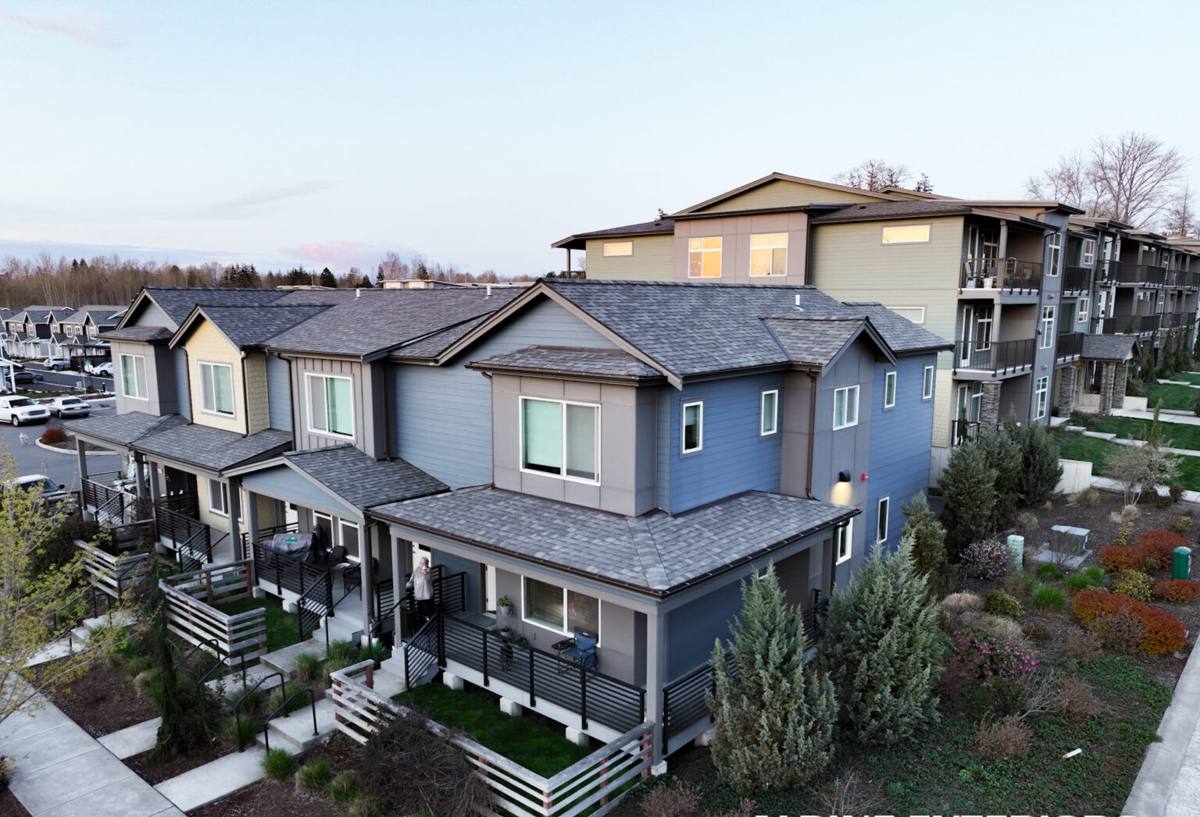
What Salt Air and Driving Rain Actually Do to a Window
Salt Air
Airborne salt is corrosive to unprotected metal hardware — hinges, locks, balance systems, and screws. On homes close to the water, we see pitting and stiff or seized hardware on windows that are barely ten years old if the original install used standard-grade fasteners and hardware instead of corrosion-resistant components. The glass and vinyl or fiberglass frame itself usually holds up fine; it's almost always the metal parts and the seals that give out first.
Driving Rain
Whatcom County storms don't just fall straight down — wind-driven rain gets pushed sideways into wall assemblies, which means a window opening has to shed water actively, not just rely on caulk to keep it out. Any window installed without proper flashing integration (pan flashing at the sill, head flashing above, and correct lapping with the house wrap) will eventually let water track behind the frame and into the wall cavity. By the time you see a stain on the interior trim, that water has usually been getting in for a while.
Moss and Prolonged Moisture
Our moss season isn't just a roof problem. Anywhere wood trim, sills, or exterior casing stay damp for extended periods, you get moss and mildew growth that holds moisture against the surface and accelerates rot. Window sills and the trim around them are common spots for this, especially on north-facing or shaded elevations that don't get much sun to dry out between storms.
What a Correct Installation Involves
A window install that's going to hold up in this environment isn't complicated, but it does require doing several steps in the right order and not skipping any of them.
- Remove the old window and inspect the rough opening for hidden rot, soft framing, or prior water damage before anything new goes in
- Repair or replace any compromised framing — installing a new window into a damaged opening just locks the problem behind the wall
- Install sill pan flashing so any water that does get past the window has a path to drain back out, not pool inside the wall
- Integrate flashing with the house wrap in the correct shingle-lap order (so water is always directed outward and downward)
- Set the window level, plumb, and square, then shim and fasten per the manufacturer's specifications — not just "close enough"
- Use low-expansion foam or backer rod and sealant around the frame perimeter for insulation and air sealing, not as a waterproofing substitute
- Install exterior trim and caulk joints designed to be maintained, with drainage gaps where needed rather than fully sealed dead-end joints
- Choose hardware — hinges, cranks, locks — rated for coastal or marine-adjacent exposure, not standard interior-grade hardware
Skip the flashing step or rush the framing inspection, and you can still end up with a window that looks great and leaks within a couple of winters. The visible parts of a window installation are the easy part; the flashing and drainage details are what actually determine whether it lasts.
Choosing the Right Window for This Location
Not every window product on the market is a good fit for a home this close to salt water. We steer Silver Beach clients toward frame materials and hardware that are known quantities in coastal exposure, and we're upfront about the trade-offs of each option rather than pushing whatever has the best margin.
| Frame Material | How It Handles Salt Air & Moisture | Maintenance |
|---|---|---|
| Vinyl | Doesn't corrode; good moisture resistance; hardware quality varies by manufacturer | Low — occasional cleaning |
| Fiberglass | Very stable in temperature swings and moisture; strong long-term performer in coastal exposure | Low — durable finish, minimal upkeep |
| Aluminum-clad wood | Attractive exterior profile, but wood core is vulnerable if any seal fails and moisture gets in | Moderate — depends on seal integrity over time |
| Bare wood | Highest maintenance burden in this climate; needs regular refinishing to resist moisture and moss growth | High — not our recommendation this close to the water |
We're not going to tell you a given brand or material is "bad" — plenty of manufacturers make solid products. Our standard is matching the material to the exposure. For a Silver Beach home, that usually means steering away from anything with a bare wood exterior component and paying attention to whether the hardware package is rated for coastal use, since that's the detail most homeowners never think to ask about and most retail sales staff won't bring up.
Glass Package Considerations
Beyond frame material, the glass package matters for comfort and condensation control. Dual-pane, low-E glass is the practical standard for this area — it cuts down on heat loss during our cold, damp winters and reduces the interior condensation that shows up on older single-pane windows when warm indoor air meets a cold glass surface. Argon-filled units add a modest efficiency bump; whether that's worth the incremental cost depends on your budget and how many windows are in the project.
Our Process for a Silver Beach Window Installation
- On-site assessment — we look at each opening, check for existing water damage or rot, and note exposure (which elevations take the most wind-driven rain and sun)
- Product recommendation — we walk you through frame material, glass package, and hardware options suited to your home's exposure and your budget, no pressure toward the most expensive option
- Written estimate — clear pricing per window, timeline, and what's included (removal, disposal, flashing, trim, cleanup)
- Removal and opening inspection — old window comes out, framing gets inspected and repaired if needed before the new unit goes in
- Installation with proper flashing and drainage — sill pans, house wrap integration, and sealant applied correctly, not shortcuts
- Final trim, cleanup, and walkthrough — we show you the finished work and answer any questions before we consider the job done
Signs Your Current Windows Are Failing
If you're not sure whether it's time to replace windows or if a repair will hold, these are the signs we see most often on Silver Beach homes:
- Visible fogging or moisture between panes on dual-pane windows (a sign the seal has failed)
- Stiff, hard-to-turn cranks or locks, or visible corrosion on hardware
- Soft or discolored trim and sill wood, or moss/mildew growth on exterior casing
- Drafts or noticeably cold spots near the window frame in winter
- Water staining on interior sills or wall areas below or beside the window after storms
- Difficulty opening or closing due to frame warping or swelling
Any one of these on its own might just need a repair or resealing. Several of them together on the same window, especially combined with soft trim, usually means it's time to talk about replacement before the water damage spreads into the surrounding wall.
Cost Factors for Silver Beach Window Projects
Every home and project is different, so we don't quote pricing sight unseen, but the main factors that move the number are consistent from job to job:
| Factor | Why It Matters |
|---|---|
| Number of windows | Per-window cost typically drops on larger projects due to shared setup and labor efficiency |
| Frame material chosen | Vinyl is generally the most budget-friendly; fiberglass and clad-wood options cost more upfront |
| Condition of existing framing | Rot or water damage discovered during removal adds repair time and cost, but skipping it isn't an option |
| Window size and type | Standard sizes and simple operating styles (single/double-hung) install faster than custom shapes or large sliders |
| Elevation and access | Second-story or hard-to-access windows take more time and equipment than ground-level installs |
We give honest, itemized estimates so you know what you're paying for and why — including where the coastal-exposure upgrades (better hardware, proper flashing materials) add cost and why we think they're worth it for a home in this location.
Why Local Experience in Silver Beach Matters
A window crew that mostly works inland doesn't always think about salt-air hardware ratings or wind-driven rain flashing details, because those problems don't show up as often away from the water. Working regularly in Whatcom County's coastal neighborhoods means we've seen how windows actually fail here — not in a showroom, but a decade into real exposure — and we build installations to head those failures off rather than fix them later. We also know this area's permitting and inspection norms, so there are no surprises mid-project.
If your Silver Beach home needs new windows, or you're not sure whether what you have is still doing its job, we're happy to take a look and give you a straightforward, no-pressure estimate. Use the form below to get started.