 Whatcom County
Siding Built for Silver Beach, Not Just Installed There
Silver Beach sits in a part of Whatcom County where the weather doesn't give siding much of a break. Homes here deal with salt-laden air rolling in off the water, driving rain that comes in sideways more often than straight down, and a moss season that can stretch across most of the year in shaded, north-facing spots. Any siding job done right in this neighborhood has to be built around those three realities from the first course to the final caulk line — not treated as an afterthought once the panels are up.
We install siding across Whatcom County, but a Silver Beach project gets planned differently than one in a drier, more sheltered inland spot. The wall assembly, the flashing details, and even the fastener choices shift based on how much moisture and wind-driven rain a given elevation of the house is going to see year after year.
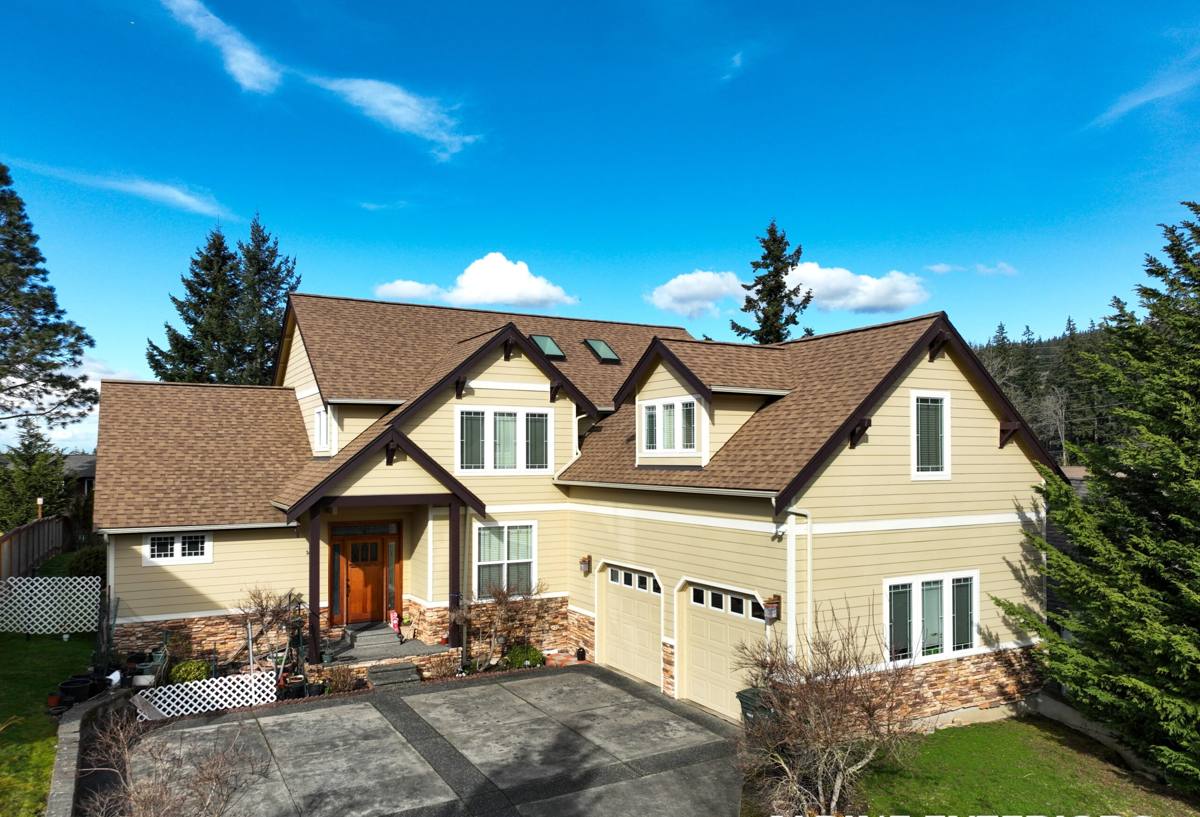
What This Climate Actually Does to Siding
Salt Air and Coastal Moisture
Homes closer to the water pick up airborne salt that settles on exterior surfaces and accelerates corrosion on anything metal — fasteners, flashing, hose bibs, light fixtures. Untreated or poorly coated fasteners can start streaking or failing years before the siding itself would otherwise need attention. This is one of the first things we check on any Silver Beach estimate: what's currently holding the siding on, and whether it was ever rated for a marine-influenced environment.
Driving Rain and Wind-Driven Exposure
Whatcom County gets a lot of rain, but the bigger issue for siding is wind-driven rain — water pushed horizontally into seams, laps, and penetrations rather than falling straight down where gravity and overlap naturally shed it. Corners, window and door openings, and any wall facing open exposure take the brunt of it. A siding system that isn't detailed for wind-driven rain can look fine for a season or two and still be letting moisture behind the cladding the whole time.
The Long Moss Season
Shaded walls, tree cover, and consistent damp conditions add up to a moss and algae season that runs longer here than in drier parts of the state. Moss holds moisture against a wall surface far longer than open air would, which matters more for some siding materials than others. It's also a maintenance issue homeowners underestimate — moss that's allowed to spread across siding and trim traps grit and moisture in seams that should stay clean and dry.
What a Correct Installation Involves
Siding installation is mostly invisible work. The panels are the last five percent anyone sees; the other ninety-five percent is what's underneath them, and that's what determines whether the job holds up in this climate.
Weather-Resistive Barrier and Drainage Gap
A weather-resistive barrier goes on the wall sheathing before any siding, and in a wet, wind-exposed area like Silver Beach we pair it with a drainage gap (a rainscreen) behind the cladding. That gap lets any water that does get past the siding drain and dry out instead of sitting against the wall assembly. It's a detail that costs more up front and is completely invisible once the job is done — which is exactly why it's worth asking about before you hire anyone.
Flashing at Every Penetration
Windows, doors, hose bibs, vents, light fixtures — every penetration through the siding is a place water can get in if it isn't flashed correctly. Head flashing over windows and doors, properly lapped housewrap, and sealed penetrations matter more in a driving-rain environment than they would somewhere sheltered and dry. This is also where a lot of shortcut installs fail first, usually years after the crew that did it is long gone.
Fastening for a Marine-Influenced Climate
Fastener selection isn't a detail we treat as optional this close to salt air. Corrosion-resistant fasteners, installed to the manufacturer's spacing and depth specs, are the difference between siding that holds tight for decades and siding that starts showing rust streaks and loose panels within a few years.
Why We Only Install James Hardie Fiber Cement
We don't install vinyl, LP SmartSide, primed wood, or other fiber cement brands — not because those products don't have a place in the market, but because we've made James Hardie our standard for the conditions Whatcom County homes actually face. Vinyl can warp and become brittle with age and temperature swings, and its seams and J-channels give wind-driven rain more opportunities to find a way in. Wood-based products, including engineered wood siding, depend on an unbroken factory coating and careful field maintenance to keep moisture out — a hard bar to clear in a climate with a long wet season and heavy moss pressure.
James Hardie fiber cement is non-combustible, dimensionally stable, and its ColorPlus factory finish is baked on for a more consistent, long-lasting exterior than most field-applied paint systems. It's engineered in climate-specific HZ product lines, and it comes with a strong transferable warranty when installed to Hardie's specifications — which matters when the whole point is a siding job you don't have to think about again for a long time.
| Factor | Vinyl | Wood / Engineered Wood | James Hardie Fiber Cement |
|---|---|---|---|
| Moisture behavior | Can trap water at seams; warps over time | Absorbs moisture if coating fails | Dimensionally stable, resists moisture damage |
| Salt air exposure | Can chalk and become brittle | Coating breaks down faster near salt air | Holds up well with proper fasteners/flashing |
| Moss/algae resistance | Moderate; seams collect debris | Lower; organic material holds moisture against wood | Higher; factory finish resists staining longer |
| Fire rating | Combustible | Combustible | Non-combustible |
| Typical warranty | Varies by brand | Varies by brand | Long-term, transferable (Hardie-backed) |
Our Process for a Silver Beach Project
Assessment First
We start by walking the exterior and checking for existing moisture problems, soft sheathing, failed flashing, or siding that's already trapping water — issues that are common on older homes in this area and need to be addressed before new siding goes on, not covered up by it.
Prep and Sequencing
Old siding and trim come off down to the sheathing where needed, damaged sheathing gets replaced, and the weather-resistive barrier and drainage gap go on before a single piece of Hardie board is hung. Flashing gets installed at every window, door, and penetration as we go, not patched in afterward.
Installation and Final Check
Panels, fasteners, and trim go on to Hardie's installation specifications — proper nailing pattern, correct exposure, and gapping where the manufacturer calls for it. We finish with a walkthrough so you know exactly what was done and what to expect from the siding going forward.
Why It Matters to Hire a Crew That Already Works This Area
A crew that regularly works Whatcom County's coastal and lake-influenced neighborhoods already knows which walls take the worst of the wind-driven rain, how long moss season really runs here, and what corrosion looks like on a five-year-old install versus a fifteen-year-old one. That's not something you get from a general contractor who does siding occasionally alongside a dozen other trades. Local, repeat experience in this specific climate shows up in the details — the flashing, the fastener choice, the drainage gap — long before it ever shows up as a problem.
What to Expect After Installation
James Hardie siding installed correctly is low-maintenance, not no-maintenance. A little seasonal attention goes a long way in a climate like this one.
- Rinse siding periodically to keep salt residue and grime from building up, especially on walls closer to the water
- Keep gutters clear so overflow isn't running down the face of the siding
- Trim back trees and shrubs that are keeping any wall shaded and damp longer than it needs to be
- Address moss or algae growth early with a gentle wash rather than letting it spread across a season
- Have caulking and trim seams checked every few years, since sealant is the one part of the system that wears out before the siding does
- Watch for any staining around fasteners or flashing and have it looked at before it becomes a bigger repair
Cost Factors for Silver Beach Siding Projects
Every home is different, but a few factors consistently move the price on siding installation in this area.
| Factor | Why It Matters Here |
|---|---|
| Existing sheathing condition | Coastal moisture and older installs sometimes mean hidden damage that needs repair before siding goes on |
| Home size and wall complexity | More corners, dormers, and trim details mean more flashing and labor |
| Wind exposure of the site | Open, exposed elevations may call for extra drainage and flashing attention |
| Siding profile and color | Hardie offers multiple plank widths, textures, and ColorPlus finishes at different price points |
| Trim and accessory work | Corner boards, fascia, and soffit work are often bundled with a full siding project |
We give straightforward, itemized estimates so you know what you're paying for and why — no vague lump-sum numbers.
If your Silver Beach home's siding is showing its age, or you're planning ahead before the next wet season sets in, we'd be glad to take a look and walk you through what a correctly built James Hardie installation would involve for your specific house. Reach out for a free, no-pressure estimate using the form below.