 Whatcom County
Deck Repair Built for South Hill's Weather, Not Just Its Boards
South Hill sits up above Bellingham Bay, which means the decks here take a different kind of beating than a deck fifteen miles inland. You get the salt-tinged air coming off the water, the sideways rain that Whatcom County is known for most of the year, and — because so many South Hill lots are wooded or partially shaded by mature trees — a moss and algae season that can run eight or nine months. None of that shows up as a single dramatic failure. It shows up as soft spots near the house, ledger boards that stay damp long after a storm, and fasteners that rust from the inside out before the wood around them even looks bad. A deck repair that doesn't account for all three of those factors together tends to fail again within a couple of seasons, which is why we treat deck work here as a climate problem first and a carpentry problem second.
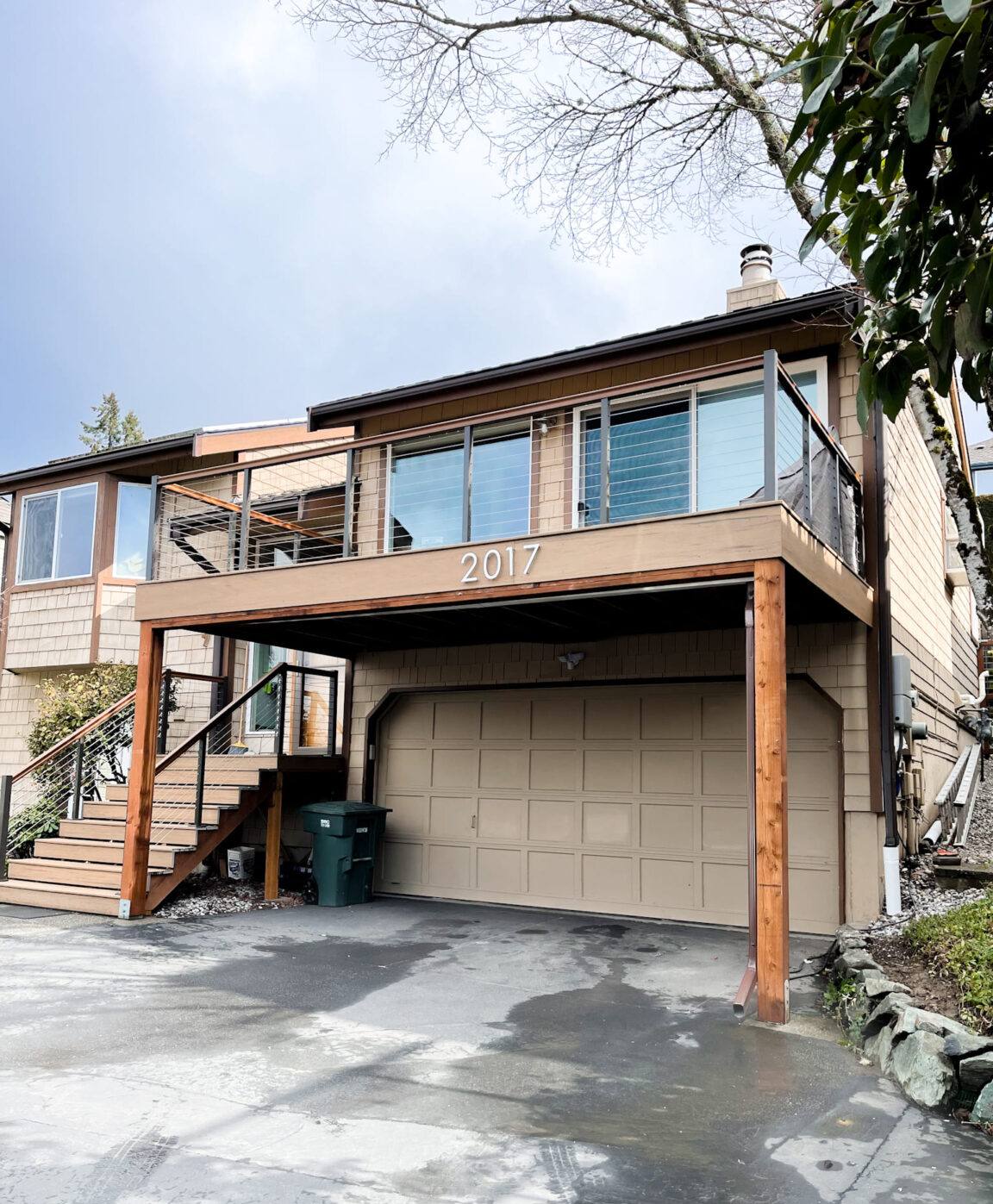
What Whatcom County Weather Does to a Deck Over Time
Every deck in this part of Washington is fighting the same three things, just in different combinations depending on the lot.
Salt Air and Metal Fatigue
Proximity to the bay puts a fine salt content in the air, and that air settles on every exposed fastener, joist hanger, and ledger bolt on the deck. Ordinary coated screws and hangers corrode faster in this environment than they would twenty miles inland. The wood often looks fine on the surface while the hardware holding it together is already compromised — which is why a repair that only replaces boards and ignores the fasteners underneath is a repair that doesn't last.
Driving Rain and Water Intrusion
Whatcom County's rain rarely falls straight down. Wind-driven rain gets pushed sideways into ledger connections, under flashing, and into any gap where a board meets the house. Once water gets behind a ledger board or under a rim joist, it has nowhere to evaporate to, and that's where you get the slow, hidden rot that turns into a structural problem instead of a cosmetic one.
Moss, Algae, and Shade
South Hill's tree cover keeps a lot of deck surfaces shaded and slow to dry. Moss and algae take hold on boards that stay damp, and beyond looking bad, that growth holds moisture against the wood surface and makes decking dangerously slick underfoot — especially on stairs and any sloped transition.
Signs Your South Hill Deck Needs Repair
Most deck problems give warning signs well before anything fails outright. Worth checking for, especially heading into fall and winter rains:
- Boards that feel spongy or flex more than neighboring boards when you walk on them
- Any green, black, or dark staining that keeps coming back within weeks of cleaning
- Rust streaks below screw heads, joist hangers, or railing brackets
- Gaps opening up where the deck meets the house, or flashing that's visibly pulling away
- Railings or posts that wiggle more than they used to
- Stairs that feel slick even when they look dry
- A musty smell coming from underneath the deck
- Fasteners backing out or heads that have sheared off
Any one of these on its own might be minor. Two or three together, especially near the ledger board where the deck attaches to the house, usually means it's worth having someone look underneath before it turns into a bigger job.
What a Correct Deck Repair Actually Involves
A repair that just swaps out the boards you can see is a cosmetic fix, not a structural one. A repair done right starts from the ground up.
Structural Inspection First
Before any board comes off, the framing underneath gets checked — ledger board attachment, joist condition, post bases, and any spot where water has clearly been sitting. This is also where we find problems the homeowner never knew about, because they're invisible from the top of the deck.
Fixing the Cause, Not Just the Symptom
If a section of decking failed because water was pooling there, replacing the boards without correcting the drainage or flashing just resets the clock on the same failure. Part of a proper repair is figuring out why that spot failed in the first place — poor slope, missing flashing, a gap that lets wind-driven rain in — and correcting it.
Matching Fasteners and Hardware to the Climate
Given the salt air on South Hill, we don't reach for whatever fastener is fastest to install. Structural hardware and fasteners get matched to the corrosion resistance the location actually needs, discussed more below.
Blending Repairs Into the Existing Deck
Where boards are being spot-replaced rather than the whole deck resurfaced, we match species, width, and spacing so the repair doesn't stand out as an obvious patch — and so the new boards weather at roughly the same rate as the old ones.
Repair or Replace? How We Help You Decide
Not every deck problem calls for a full rebuild, and not every "just replace a few boards" job is actually enough. The honest answer depends on how much of the structure is affected versus how much is surface-level.
| Factor | Leans Toward Repair | Leans Toward Replacement |
|---|---|---|
| Framing condition | Joists and ledger are sound, only a few boards affected | Rot has reached multiple joists or the ledger connection |
| Age of the deck | Under 12-15 years, built to a reasonable standard | Original construction is old, undersized, or out of code |
| Extent of damage | Localized — one corner, one stair run, isolated boards | Widespread soft spots across most of the deck surface |
| Fastener condition | Hardware still sound, just a few loose screws | Rust and corrosion throughout the connections |
| Budget priority | Extend usable life a number of years affordably | Want long-term, lower-maintenance performance |
We'll tell you plainly which category your deck falls into. There's no benefit to us talking a homeowner into a full rebuild when a targeted repair will genuinely hold up, and there's no benefit to patching a deck whose framing is already compromised — that just costs you twice.
Our Deck Repair Process
Every job on South Hill follows roughly the same sequence, adjusted for what we actually find underneath.
- On-site inspection. We walk the deck, check the framing from underneath where accessible, and probe any soft or discolored areas.
- Honest scope and estimate. You get a plain explanation of what's structural, what's cosmetic, and what your realistic options are — no upsell to a full rebuild if it isn't warranted.
- Demo of affected areas only. We remove exactly what needs replacing, keeping sound material intact.
- Structural correction. Ledger, joist, or post issues get fixed first, including flashing and drainage corrections where water intrusion was the root cause.
- Rebuild with climate-appropriate materials and fasteners. New boards and hardware go in matched to what the salt air and rain exposure actually call for.
- Final check and cleanup. Railings, stairs, and fasteners get tested before we consider the job done, and the site is cleaned up.
Materials and Fasteners We Use in This Climate
The salt content in the air off Bellingham Bay makes fastener choice more important on South Hill than it would be for the same deck built further inland. Standard coated deck screws can start showing corrosion within a few years in this exposure. For structural connections — ledger bolts, joist hangers, post hardware — we favor stainless steel or hot-dip galvanized fasteners rated for coastal or high-moisture exposure, even when it costs a bit more up front, because replacing rusted-out hardware later means tearing back into finished decking to get at it.
On decking material itself, both quality wood and composite decking have a place, and the right call depends on the homeowner's priorities:
- Wood decking (cedar or similar) — natural look, repairable board-by-board, but needs regular cleaning and sealing to fight moss and moisture in a shaded, wet climate like this one.
- Composite decking — resists moss and rot better and needs less maintenance, but isn't repaired the same way wood is; damaged sections typically get replaced as boards rather than patched, and it's worth knowing that going in.
We're not tied to pushing one material over the other. What matters is being upfront about the maintenance and repair trade-offs of whichever material is already on your deck, or whichever one you're leaning toward for a rebuild.
Keeping a Repaired Deck From Needing Repair Again
A good repair job buys you years, but Whatcom County's climate doesn't stop working on your deck just because we fixed it. A few habits make a real difference on South Hill specifically:
- Sweep leaves and debris off the deck surface regularly, especially under tree cover — trapped organic material is what feeds moss growth
- Clean the deck at least once a year to knock back algae and moss before it gets a foothold, particularly on shaded sections and stairs
- Check that gutters and downspouts near the deck aren't dumping extra water onto or under it
- Re-seal or re-stain wood decking on the schedule the product calls for — skipping a cycle in this rain load adds up fast
- Do a quick visual check under the deck each fall for new staining, softness, or rust before winter rains set in
Why Hiring a Crew That Already Works South Hill Matters
A contractor who works decks all over Whatcom County, including South Hill's shaded, elevated lots, has already seen how this specific mix of salt air, wind-driven rain, and moss plays out on real decks in this neighborhood — not decks in a drier climate. That means fewer surprises during the inspection, fasteners and materials chosen correctly the first time, and a repair scoped around what actually fails here rather than a generic checklist. It also means someone who can speak plainly about whether a repair will really hold up through another wet Whatcom County winter, instead of guessing.
If your deck is showing any of the signs above, or you just want an honest read on where it stands, we're happy to come take a look. The estimate is free, there's no pressure to commit to anything, and you'll get a straight answer about whether you're looking at a repair or something bigger — just fill out the form below to get started.