 Whatcom County
Why Barkley Homes Wear Out Siding Faster Than You'd Expect
Barkley sits close enough to Bellingham Bay that salt-laden air is a constant factor on exterior building materials, not an occasional nuisance. Add Whatcom County's driving rain — wind-blown, often near-horizontal during winter storms — and a long, damp moss season that can run from fall through spring under the neighborhood's mature tree cover, and you have three conditions working against siding at the same time. Salt air accelerates the breakdown of paints, sealants, and lower-grade coatings. Driving rain forces water sideways into laps, seams, and trim joints that a calmer climate would never test. And moss and algae, once established, hold moisture directly against the wall surface for months, which is exactly the kind of sustained dampness that rots wood-based products and delaminates weaker composites.
None of this means siding in Barkley is doomed — it means the material and the installation both have to be matched to the conditions. A lot of the failures we get called out to look at aren't failures of "siding" in general; they're failures of a product or a detail that wasn't right for this specific climate.
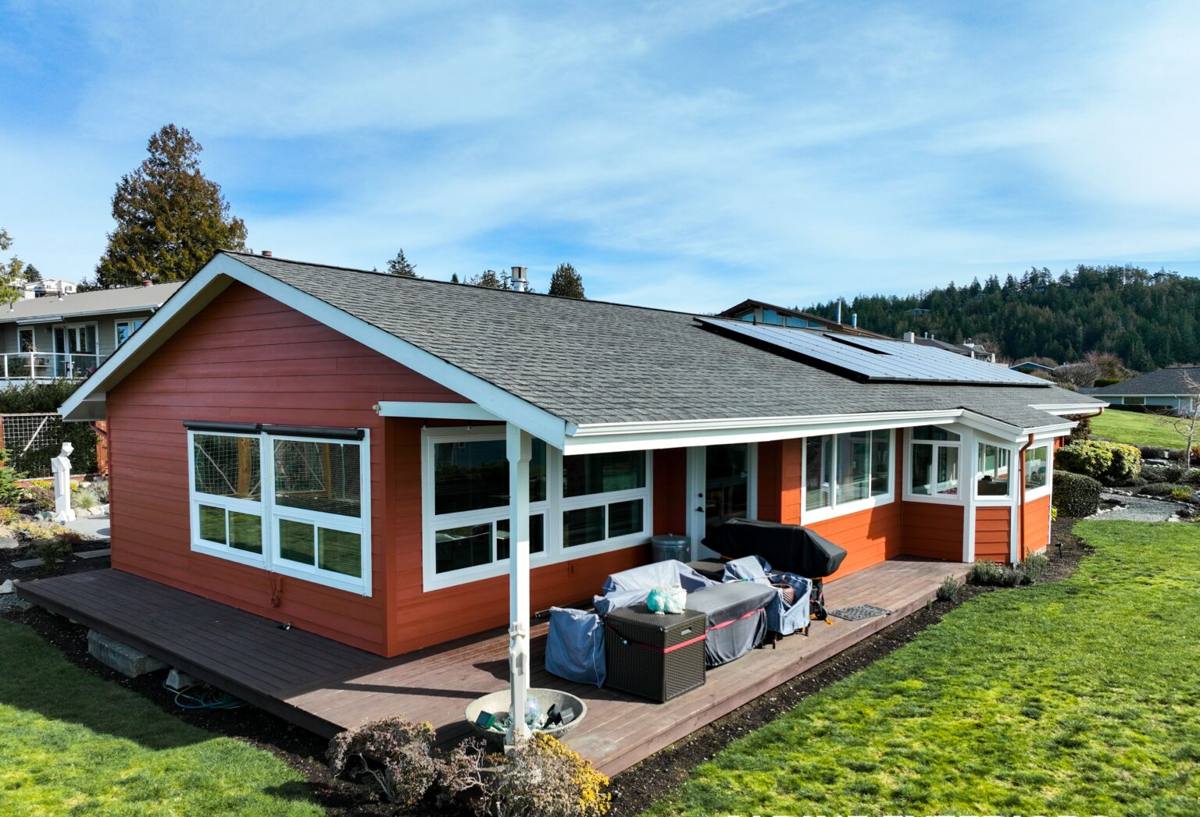
Signs a Barkley Home Needs Siding Replacement, Not Just Repair
Some damage is cosmetic and some is structural. Knowing the difference before you commit to a project — or a contractor — saves money and prevents surprises once walls are opened up.
- Soft or spongy spots when you press on the siding, especially near the bottom courses and around window trim
- Persistent moss, algae, or dark streaking that comes back within weeks of cleaning
- Paint that's peeling, bubbling, or chalking heavily rather than just fading
- Visible warping, cupping, or separation at the seams between boards or panels
- Rising heating bills without another clear explanation, which can point to moisture-compromised insulation behind the siding
- A musty smell in rooms along exterior walls, which often means moisture is already inside the wall assembly
- Siding that's original to a home built in the 1990s or earlier and has never been fully replaced
Any one of these on its own might be a repair. Several together, especially soft spots plus interior odor, usually means the water management behind the siding has already failed and a full replacement is the honest recommendation.
Why We Install Only James Hardie Fiber Cement
What We Deliberately Don't Install
We don't install vinyl, LP SmartSide, Cemplank, Allura, primed spruce, or bare cedar, and we think homeowners deserve the real reasoning, not a sales pitch. Vinyl is inexpensive and low-maintenance, but it's a thin plastic product that expands and contracts with temperature swings, can crack in cold snaps, and offers no real fire resistance. LP SmartSide is a wood-strand product with a real warranty and reasonable performance in drier climates, but it's still an engineered wood product at its core — it depends entirely on unbroken paint and caulking to keep water out, and once that seal is compromised in a wet climate like ours, moisture gets into the strand core and the clock starts. Cedar and primed spruce are beautiful but need ongoing refinishing, and in a marine climate with this much rain and salt exposure, that maintenance schedule gets demanding fast. Cemplank and Allura are also fiber cement, and reasonable products, but we standardized on one manufacturer's system so our crews install it the same correct way every time, and so the warranty coverage is consistent and well-documented.
What James Hardie Gets Right for This Area
Fiber cement is cement, sand, and cellulose fiber — it doesn't rot, it doesn't feed pests, and it's non-combustible. Hardie's ColorPlus finish is baked on at the factory under controlled conditions rather than field-applied, which matters enormously in a climate where wet weather limits the number of good painting days a year and field-applied coatings are more prone to early failure from salt exposure and UV. Hardie also engineers regional product lines — its HZ5 formulation is built specifically for climates with significant moisture exposure like the Pacific Northwest — and backs the product with a long transferable warranty that survives a home sale, which matters if you're not planning to be in Barkley forever.
Matching the Product to Barkley's Weather
| Product Detail | Why It Matters in Barkley |
|---|---|
| HZ5 climate-engineered formulation | Built for high-moisture, marine-influenced climates rather than a one-size-fits-all national spec |
| Factory-applied ColorPlus finish | Consistent coating quality regardless of how many rainy days interrupt a project; better resistance to salt-air fading |
| Lap siding vs. panel systems | Lap siding sheds driving rain more effectively on exposed elevations; panels can suit sheltered walls or accent areas |
| Rainscreen/drainage gap installation | Lets any moisture that does get behind the siding drain and dry instead of sitting against the wall |
What a Correct Installation Actually Involves
Fiber cement performs well only when it's installed to spec — the material isn't the whole story. In a climate that tests every seam, the details below are where jobs succeed or quietly fail over the following few years.
- A proper weather-resistive barrier and flashing at every window, door, and penetration, lapped correctly so water always sheds outward and down
- Correct fastener type, spacing, and depth — over-driven or under-driven nails are one of the most common causes of early siding failure
- A drainage gap or rainscreen strategy so incidental moisture can dry out instead of being trapped against the sheathing
- Proper clearance from grade, decks, and roof lines so splash-back and roof runoff don't sit against the bottom courses
- Factory-cut edges sealed per manufacturer specification, since field cuts left unsealed are a common entry point for moisture
- Caulking used only where the manufacturer calls for it — over-caulking can trap moisture just as easily as under-caulking lets it in
Our Siding Replacement Process for Barkley Homes
- On-site assessment — we look at the existing siding, sheathing condition, and any signs of moisture damage before quoting anything
- Tear-off and inspection — removing the old siding lets us actually see the sheathing and framing underneath, which is where real problems hide
- Repair and prep — any rotted sheathing or framing gets addressed before new siding goes up; we won't cover up a problem
- Weather barrier and flashing installation — this layer does as much work as the siding itself over the life of the home
- Hardie installation — installed to manufacturer spec, including drainage gap, fastening, and edge sealing
- Final walkthrough — we go over the finished work with you before calling the job done
What Siding Replacement Costs in Barkley
| Cost Factor | How It Affects the Estimate |
|---|---|
| Home size and number of stories | More square footage and scaffolding/lift needs for taller walls increase labor time |
| Condition of existing sheathing | Rot or moisture damage found during tear-off adds repair costs before new siding can go on |
| Trim, corners, and architectural detail | More cuts, corners, and transitions mean more labor and material waste |
| Siding profile chosen | Wider reveal lap siding, narrow lap, and panel systems carry different material and labor costs |
| Access and site conditions | Tight lots, mature landscaping, or difficult grading can add setup time |
We give straightforward, itemized estimates rather than a single vague number, because homeowners deserve to know what they're actually paying for — material, labor, and any sheathing repair, broken out separately.
Why a Crew That Already Works in Barkley Matters
A contractor who regularly works this neighborhood already understands how the local tree cover affects drying time, which elevations take the worst of the driving rain, and how salt exposure shows up differently on a home a few blocks from the water versus one further inland. That familiarity shows up in small decisions — where to prioritize flashing detail, which siding profile sheds water best on a given elevation, how much drainage gap to build in — that a crew unfamiliar with Whatcom County's specific weather pattern might not think twice about. It also means faster response if something needs a look after the job is done, since we're not driving in from out of the area.
Keeping New Siding Looking Right in This Climate
Fiber cement is low-maintenance, not no-maintenance. In Barkley, that mostly means staying ahead of moss and algae rather than reacting to it once it's established — a periodic soft wash keeps growth from getting a foothold, especially on shaded, north-facing walls. Keeping gutters clear and downspouts directed away from the foundation also protects the bottom courses of siding, which take the most water exposure of any part of the wall. Beyond that, an occasional visual check for damaged caulking around trim and penetrations is the best way to catch a small issue before it becomes a bigger one.
If your Barkley home is showing signs of wear, or you're just planning ahead, we're happy to take a look and walk you through what we're seeing — no pressure, no obligation. Use the form below to request a free estimate.