 Whatcom County
South Hill's Climate Is Harder on Siding Than It Looks
South Hill sits close enough to the water and the weather patterns that move through Whatcom County that homes here take a steady, low-grade beating most homeowners never fully clock until they're standing in front of siding that's cupping, staining, or soft at the bottom edge. It's rarely one dramatic storm that does the damage. It's the combination: salt-laden air drifting in off the water, driving rain that hits siding sideways instead of straight down, and a moss season that can run most of the year on shaded north- and west-facing walls.
Each of those does something different to a wall system. Salt air accelerates corrosion on fasteners, flashing, and any exposed metal trim. Driving rain doesn't just wet the surface of the siding — it tests every seam, every butt joint, every place where two pieces meet, because wind pressure pushes water sideways and even slightly upward behind loose panels. And moss doesn't just look bad; it holds moisture against the siding surface for weeks at a time, which is exactly the condition that rots wood-based products and stains anything with a weak factory finish.
Siding built for a drier, calmer climate — or installed by a crew used to that kind of climate — often looks fine on day one and starts showing problems in year three or four. In South Hill, the siding and the installation both have to be matched to what the site actually throws at the wall, not just the shape of the house.
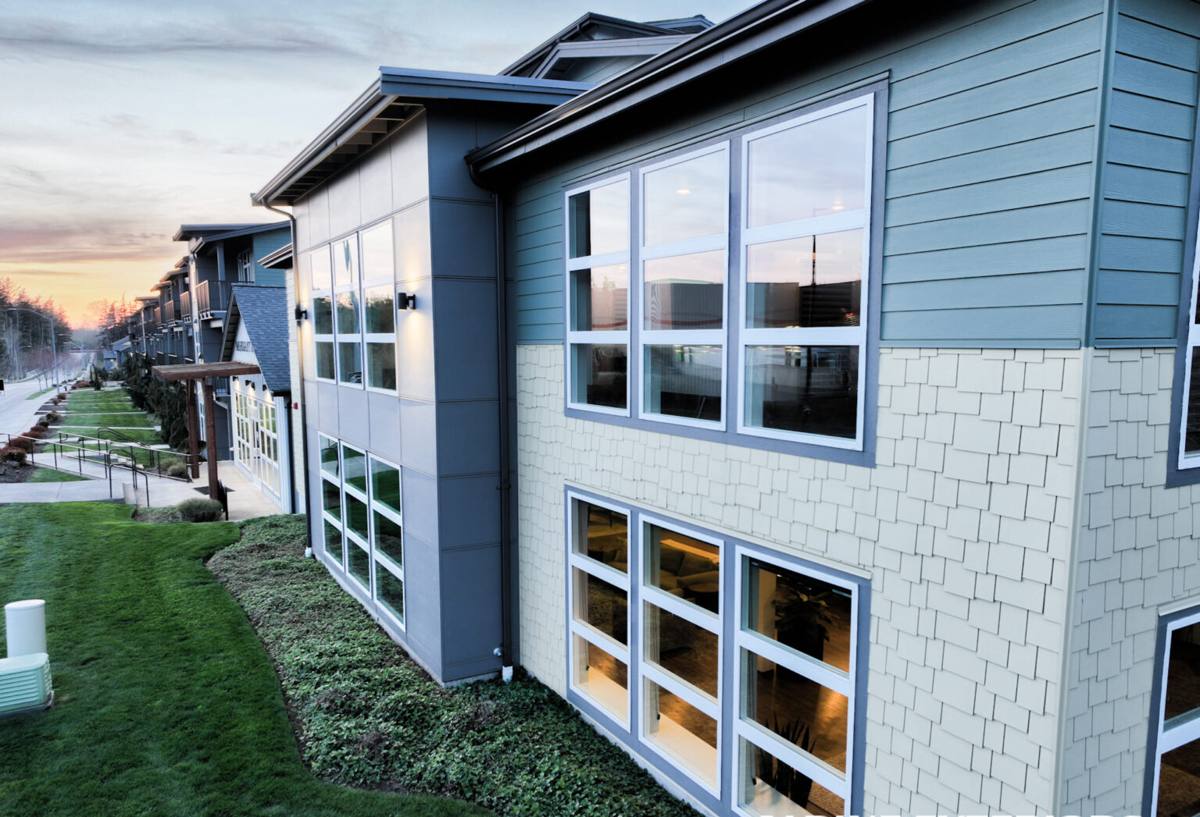
What a Correct Fiber Cement Job Actually Involves
Fiber cement is a strong material, but it's not magic — a poor installation on a good product still fails in a wet climate. A correct job in this area includes several details that are easy to skip and hard to notice until years later:
Water management before a single board goes up
Weather-resistant barrier, correctly lapped and taped, flashing at every window, door, and roof-to-wall transition, and a drainage gap where the siding profile calls for one. This is the layer that actually keeps a home dry — the siding is the second line of defense, not the first.
Fastening and clearances to manufacturer spec
Fiber cement has specific nailing patterns, fastener types, and minimum clearances from grade, roofing, and decks. Skipping these doesn't usually cause an immediate failure — it causes a slow one, which is worse because it's already hidden behind the wall by the time it shows.
Joint and butt-seam treatment
Every horizontal and vertical seam is a place water can find its way in under wind-driven rain. Caulking type, joint flashing, and shingle-lap technique all matter more here than they would in a milder, drier region.
Factory-finished color, not field-painted
A factory finish cures under controlled conditions and resists the fading, chalking, and moisture staining that field-applied paint struggles with in a damp climate. This is one of the biggest differences between a siding job that still looks sharp in ten years and one that needs repainting in three.
Why We Install Only James Hardie Fiber Cement
We don't install LP SmartSide, vinyl, Cemplank, Allura, or bare cedar or primed wood siding, and we're upfront about why. Each of those products has legitimate strengths — vinyl is inexpensive and low-maintenance in mild conditions, wood has a look some homeowners genuinely prefer, engineered wood products are lighter and easier to handle on some job sites. Those aren't imaginary advantages.
But in a climate that combines salt exposure, wind-driven rain, and long stretches of damp shade, the trade-offs stack up differently than they would somewhere drier:
- Engineered wood siding is wood-based, which means moisture intrusion at a cut edge, fastener hole, or failed joint can lead to swelling and deterioration over time — a real risk in a region where siding stays damp for days after a storm.
- Vinyl siding is a floating, non-structural cladding that relies entirely on what's behind it for water management, and it can warp or become brittle with age and UV exposure. It also can't be painted a darker color in most cases without risking heat warping.
- Other fiber cement brands (Cemplank, Allura) are chemically similar to Hardie's product, but we've standardized on one system, one warranty structure, and one factory finish line so every job we do meets the same standard — and because Hardie's HZ5 product line is specifically engineered for cold, wet, high-moisture climates like this one.
- Bare or primed wood (cedar, primed spruce) looks great when new but demands a repainting and caulking schedule that a lot of homeowners underestimate — and moss season here is exactly the condition that shortens that maintenance interval.
James Hardie fiber cement is non-combustible, dimensionally stable in swings of moisture and temperature, and comes with a factory-applied ColorPlus finish backed by its own separate warranty against fading and chipping. That combination — plus a strong transferable product warranty — is why it's the only siding system we put on a home.
Our Process for a South Hill Fiber Cement Installation
- On-site assessment. We look at sun and wind exposure on each elevation, existing moisture damage, current flashing condition, and trim/soffit condition — not just the siding itself.
- Tear-off and sheathing check. Old siding comes off and we inspect the sheathing underneath for rot or soft spots before anything new goes up. This step is where problems that caused the original siding failure usually surface.
- Water barrier and flashing installation. New weather-resistant barrier, properly lapped, with flashing at every penetration and transition point.
- Hardie panel or plank installation to manufacturer fastening spec, with correct clearances from grade, decks, and roofing.
- Trim, joint, and caulking work using materials rated for continuous exposure to wind-driven rain.
- Final walkthrough covering fastener pattern, seam sealing, and finish condition before we call the job done.
None of these steps are unique to South Hill in principle — but the tolerance for skipping any of them is lower here than it would be in a drier region, because the consequences show up faster.
Fiber Cement Compared to Other Siding Options
| Material | Moisture Behavior in Wet, Salt-Air Climates | Finish Durability | Typical Maintenance |
|---|---|---|---|
| James Hardie Fiber Cement | Dimensionally stable, does not rot or swell | Factory ColorPlus finish, separate finish warranty | Periodic wash; minimal repainting |
| Vinyl | Non-structural; relies fully on underlying barrier; can warp | Color molded through, but fades and chalks over time | Low, but limited repair/color options as it ages |
| Engineered Wood (LP SmartSide-type) | Wood-based; vulnerable at cuts, holes, and failed joints | Factory-treated, but edge sealing is critical | Moderate; edge maintenance and joint monitoring |
| Cedar / Primed Wood | Absorbs moisture; prone to swelling and rot without upkeep | Field-applied paint or stain | High; regular repainting and caulking |
Cost Factors on a South Hill Project
Every project is priced on its own specifics, but the biggest cost drivers on fiber cement jobs in this area tend to be the same handful of things:
| Factor | Why It Moves the Price |
|---|---|
| Existing sheathing condition | Rot found during tear-off means repair before new siding goes on |
| Number of stories and roof lines | More cutting, staging, and flashing detail at intersections |
| Panel vs. lap plank profile | Different labor and trim requirements |
| Trim and accent detail | Corner boards, frieze boards, and window trim add labor |
| Paint/color line selected | Standard ColorPlus vs. premium color options |
Living With Fiber Cement in a Salt-Air, Moss-Prone Climate
Correctly installed Hardie siding is low-maintenance, not no-maintenance. A yearly rinse-down — especially on shaded, north-facing walls where moss and algae take hold first — keeps the factory finish looking like it should and keeps organic growth from holding moisture against the surface. Gutters that are cleaned and functioning matter more here than in drier climates, since overflow directly onto siding is one of the more common causes of localized staining and premature wear we see on homes near the water.
It's also worth periodically checking caulked joints around windows and trim, since UV and moisture cycling can eventually dry out sealant faster in a climate that swings between saturated and sunny. None of this is heavy work, but it's worth doing on a schedule rather than waiting until something looks obviously wrong.
Signs Your Current Siding Is Already Struggling
- Soft or spongy spots when pressed, especially near the bottom courses or below windows
- Visible cupping, warping, or gaps opening up at seams
- Persistent moss or algae staining that comes back quickly after cleaning
- Peeling or chalking paint on wood-based or field-painted siding
- Water stains or discoloration on interior walls near exterior corners
- Fastener heads showing rust streaks down the face of the siding
Any one of these on its own might be minor. Several together usually mean the water management behind the siding — not just the siding surface — needs attention.
Why It Matters That We Already Work in South Hill
A crew that installs siding across a wide range of climates has to relearn the local conditions on every out-of-area job. A crew that works Whatcom County regularly already knows how far south-facing walls dry out compared to shaded ones, how aggressive moss growth gets on specific roof pitches and tree cover, and where wind-driven rain tends to concentrate on a given elevation. That local pattern recognition shows up in small decisions — where to add extra flashing, which corners need more attention to sealant, how tight to run a drainage gap — that don't show up on a spec sheet but do show up in how the siding performs five and ten years out.
If you're weighing a siding replacement or repair in South Hill, we're happy to walk the exterior with you, point out what we see, and put together a straightforward estimate — no pressure, no upsell into a product we don't stand behind. Reach out for a free estimate using the form below.