 Whatcom County
Roofing South Hill's Hillside Homes: What Makes This Neighborhood Different
South Hill sits up in elevation compared to a lot of the surrounding area, and that changes what a roof has to deal with day to day. Homes here catch more open wind off the water, more direct exposure during driving rain events, and — thanks to mature tree cover on many lots — a longer, wetter moss season than a roof in a more open, low-lying part of Whatcom County. None of that is a reason to panic about your roof. It's just context that should shape the materials, ventilation, and installation details a contractor chooses when it's time for a new one.
A new roof installation in South Hill isn't a different product than a new roof anywhere else in Whatcom County — it's the same core job done with the local conditions kept front and center: how the deck is prepped, how the underlayment and flashing are detailed, and how the roof is allowed to breathe so moisture doesn't get trapped under moss and shade.
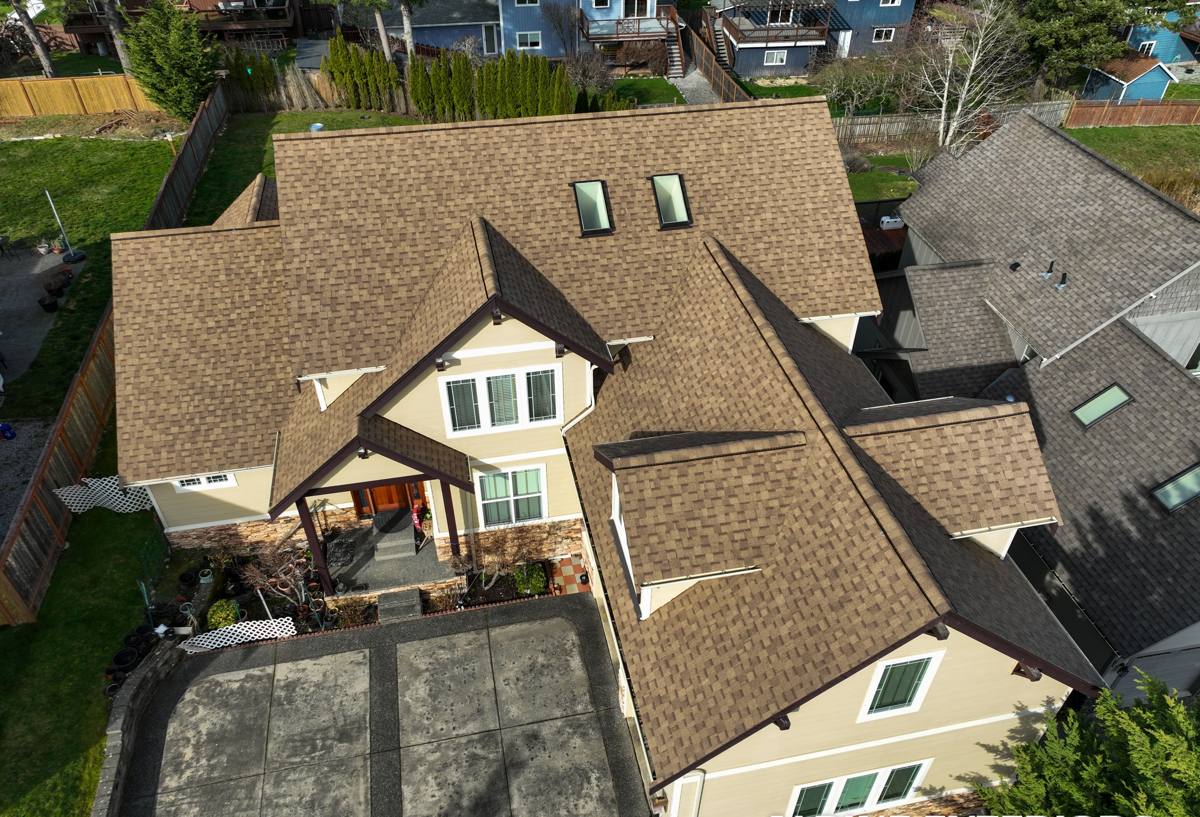
What Salt Air, Driving Rain, and Moss Season Actually Do to a Roof
Each of these three factors wears on a roof in a different way, and understanding the mechanism helps explain why certain installation choices matter more here than they would in a drier inland climate.
Salt Air
Even a few miles inland from the water, airborne salt accelerates corrosion on exposed metal — fasteners, flashing, vent caps, and gutter hardware. Untreated or low-grade metal components can start showing surface corrosion years before the roofing material itself is due for replacement, which is why fastener and flashing spec matters as much as shingle brand.
Driving Rain
Whatcom County's rain doesn't always fall straight down. Wind-driven rain gets pushed sideways and upward under shingle tabs, around vents, and into any flashing detail that's slightly undersized or under-lapped. A roof that would perform fine in a calm-rain climate can leak here if the underlayment and flashing weren't installed with wind-driven moisture specifically in mind.
Moss Season
Shaded, tree-covered lots — common on hillside streets — stay damp longer after every rain. That extended dampness is exactly what moss and algae need to establish. Moss isn't just cosmetic: as it grows, it lifts shingle edges, holds standing moisture against the roof deck, and shortens the usable life of almost any roofing material if it's left unmanaged.
Signs a South Hill Roof Is Due for Replacement
Not every roof problem means a full replacement, but these are the signs we take seriously when we're evaluating a hillside home:
- Granule loss showing up in gutters or at downspout outlets
- Shingles that are cupping, curling, or cracking, especially on the side of the roof that catches the most weather
- Moss buildup that comes back within a season or two of cleaning, even after treatment
- Soft spots in the decking felt underfoot in the attic or from the roof surface
- Daylight visible through the roof deck from inside the attic
- Rusted or deteriorating flashing around chimneys, skylights, and roof-to-wall transitions
- Interior water stains that appear or worsen after wind-driven rain specifically
- A roof approaching or past the upper end of its material's expected lifespan
If you're only seeing one or two of these and the roof is otherwise sound, a repair may be the honest answer. A full installation makes sense when the underlying deck, flashing system, or material has reached the point where patching is just delaying the same failure.
What a Correct New Roof Installation Involves
A roof is a system, not a single product. Skipping any one of these steps is usually where premature leaks and failures come from, especially in a climate that doesn't give a roof much room for error.
Tear-Off and Deck Inspection
We remove the existing roofing down to the deck rather than layering over it. That's the only way to actually see the condition of the sheathing underneath — soft, delaminated, or water-stained decking gets replaced before anything new goes down. Installing new roofing over a compromised deck just hides a problem that will resurface.
Underlayment Built for Wind-Driven Rain
Given how often rain arrives sideways here, underlayment selection and lap direction matter more than they would in a calmer climate. We pay particular attention to valleys, eaves, and any low-slope transitions where wind-driven moisture is most likely to find a way in.
Flashing and Fastener Grade
Around chimneys, skylights, sidewalls, and any roof penetration, flashing has to be sized and lapped correctly — not just present. Given the salt air in this area, we also pay attention to fastener and flashing material grade so corrosion doesn't become the weak point in an otherwise solid roof.
Ventilation
Proper intake and exhaust ventilation keeps the attic space drying out between rain events instead of staying damp. On shaded, tree-covered lots where the roof surface itself takes longer to dry, attic ventilation is one of the few things a homeowner can control that meaningfully reduces future moss growth and moisture buildup on the underside of the deck.
Final Detailing
Ridge caps, valley work, and drip edge get finished to shed water cleanly rather than just cover the roof. This is where a lot of the difference between a roof that lasts and one that underperforms actually shows up.
Choosing a Roofing Material for This Climate
There's no single "best" roofing material for every South Hill home — it depends on the roof's slope, sun and shade exposure, and your own maintenance expectations. Here's how the common options stack up against the specific conditions this neighborhood deals with:
| Material | Moss/Algae Resistance | Wind-Driven Rain Performance | Salt Air Durability | Typical Maintenance |
|---|---|---|---|---|
| Asphalt composition shingle | Moderate (better with algae-resistant granules) | Good when properly flashed | Good; depends on fastener grade | Periodic moss removal on shaded roofs |
| Metal (standing seam or panel) | High — sheds moisture, little surface for moss to grip | Very good, fewer seams and laps to fail | Depends on coating; quality coated metal holds up well | Low; occasional fastener/coating check |
| Cedar shake | Low without regular treatment | Fair; more seams and gaps than shingle or metal | Fair; wood is sensitive to constant moisture cycling | Higher; needs regular treatment and moss management |
| Synthetic/composite shake | Moderate to high depending on product | Good | Good | Low to moderate |
On heavily shaded South Hill lots, we're often steering homeowners toward materials and details that manage moisture and moss with less ongoing upkeep, since a roof surrounded by mature trees is going to face that pressure for as long as the trees are there. That's a maintenance-and-moisture conversation, not a claim that any particular product is inferior — it's about matching the roof to the site.
What Affects the Cost of a New Roof Here
We give real numbers during an on-site estimate rather than a number pulled out of thin air online, but these are the factors that most often move the price up or down:
| Factor | Why It Matters |
|---|---|
| Roof size and number of facets | More square footage and more valleys/hips mean more material and labor |
| Number of existing layers | Tear-off of multiple old layers takes longer and costs more in disposal |
| Deck condition | Rotted or soft sheathing found during tear-off adds replacement cost |
| Roof pitch and access | Steeper hillside roofs and tight lot access take more time and safety setup |
| Material choice | Asphalt, metal, and shake carry different material and labor costs |
| Ventilation upgrades | Adding or correcting intake/exhaust venting adds modest cost but pays off long-term |
Broadly, a straightforward asphalt shingle replacement on an average-size home tends to run less than a metal roof or a job that turns up significant deck repair — but the only honest number is one based on your actual roof, which is what a free estimate is for.
Our Process, Start to Finish
- On-site inspection. We walk the roof and attic, check the deck, flashing, and ventilation, and take photos of anything worth discussing.
- Written estimate. A clear, itemized quote — material, labor, disposal, and any deck repair contingencies spelled out up front, not buried in fine print.
- Scheduling around weather. We plan installation windows with Whatcom County's rain patterns in mind, and we don't leave a deck exposed overnight without protection.
- Tear-off and deck repair. Old material comes off, the deck gets inspected, and any compromised sheathing is replaced before anything new goes down.
- Installation. Underlayment, flashing, ventilation, and the finish material go in following manufacturer specs and the wind-driven-rain detailing this area calls for.
- Final walkthrough and cleanup. We walk the finished roof with you, answer questions, and make sure the site — including a magnetic nail sweep — is left clean.
Why a Crew That Already Works South Hill Matters
A roofer who works this specific part of Whatcom County regularly already knows which details to prioritize before they ever get on your roof: how much shade a hillside lot typically holds, how far wind-driven rain can push under a poorly lapped flashing detail, and which fastener and flashing grades actually hold up against the salt air here over time. That's not something you can fully substitute with a generic, one-size-fits-all install — it comes from doing this specific type of job, in this specific area, more than once.
It also matters for accountability. A local crew is easy to reach if a question comes up two years down the road, and has a reputation in the neighborhood worth protecting — which is a different incentive than a crew that's just passing through the area for one job.
Get a Straight Answer on Your Roof
If your South Hill roof is showing wear, holding onto moss, or you're just not sure whether it's a repair-or-replace situation, we'll come take an honest look. The estimate is free, there's no pressure, and you'll get a clear written breakdown of what your roof actually needs — use the form below to get started.