 Whatcom County
Roof Replacement Built for South Hill's Weather
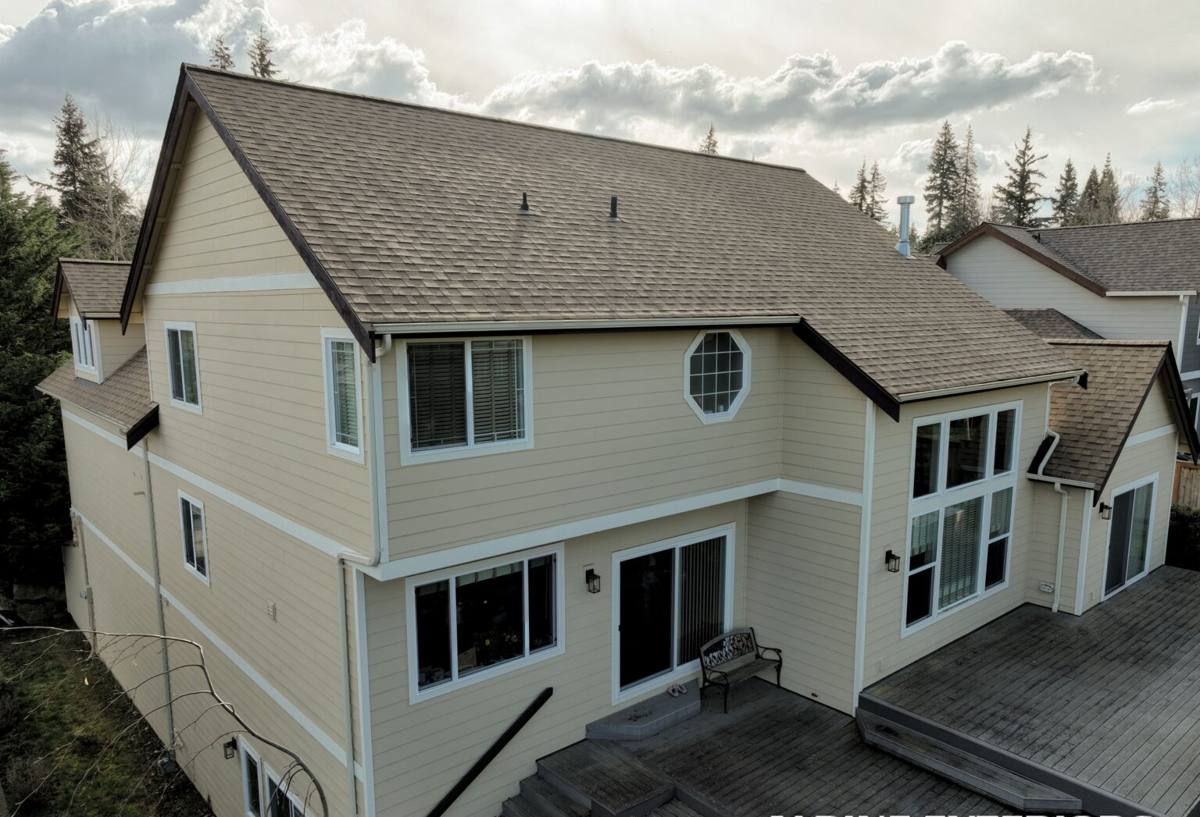
South Hill sits close enough to the water and high enough on the terrain that its roofs take a different kind of beating than roofs just a few miles inland. Homes here deal with salt-laden air off the bay, long stretches of driving rain, and a moss season that can run nine months out of the year in shaded spots. A roof replacement in this neighborhood isn't just about swapping old shingles for new ones — it's about choosing materials and details that actually hold up to what Whatcom County throws at them.
We've worked on roofs throughout South Hill and the surrounding Whatcom County area long enough to know which failure patterns show up here again and again. That local experience shapes every recommendation we make, from underlayment choice to how we handle valleys and eaves.
Why South Hill Roofs Wear Differently
Salt Air and Metal Fatigue
Homes closer to the water pick up airborne salt that accelerates corrosion on exposed metal — flashing, fasteners, vents, and gutter hardware. Standard galvanized fasteners can start showing rust streaks years before a roof is due for replacement. We spec corrosion-resistant fasteners and flashing on South Hill jobs as a matter of course, not as an upsell.
Driving Rain and Wind-Driven Moisture
This part of Whatcom County gets rain that doesn't just fall straight down — wind off the water pushes it sideways, which means it finds its way under poorly lapped shingles, around undersized flashing, and through nail holes that weren't sealed correctly. A roof that would perform fine in a drier climate can leak here within a season or two if the details are cut corners on.
Moss, Shade, and Slow Drying
South Hill has plenty of mature tree cover, and shaded roof sections stay damp far longer after a storm than roofs in full sun. That moisture retention is exactly what moss needs to establish. Moss holds water against the roofing material, works its way under shingle tabs, and can lift material enough to create a path for leaks — long before the shingles themselves would otherwise fail.
Signs a South Hill Roof Needs Replacing, Not Patching
- Granule loss heavy enough that you're finding grit in gutters and downspout runoff every time it rains
- Moss or algae staining that comes back within months of cleaning, even after treatment
- Shingles that are curling, cupping, or cracking, especially on south- and west-facing slopes
- Soft spots or sagging in the roof deck when walked, which usually means water has already reached the sheathing
- Flashing around chimneys, skylights, or valleys that's visibly rusted, lifted, or gapped
- Interior signs — stains on ceilings, musty smell in the attic, or daylight visible through the roof deck
- A roof that's simply reaching or past the manufacturer's expected service life for this climate
Some of these are patchable. Others mean the roof's ability to shed water has broken down at a level a patch won't fix. Part of our job on an inspection is being straight with you about which category you're in.
What a Correct Roof Replacement Involves Here
Tear-Off and Deck Inspection
We remove the old roofing down to the deck rather than layering over it. That's the only way to actually see the condition of the sheathing underneath — soft, delaminated, or water-stained decking needs to be replaced before anything new goes down, and you can't know that's needed until the old material is off.
Underlayment Suited to the Climate
Given how much wind-driven rain this area sees, we don't treat underlayment as an afterthought. Synthetic underlayment with proper lapping, plus self-adhered ice-and-water membrane at eaves, valleys, and roof penetrations, gives the roof a real second line of defense if wind-driven water ever gets past the primary roofing material.
Flashing Details
Most roof leaks trace back to flashing, not the field shingles. Chimneys, skylights, sidewalls, and valleys all need flashing that's correctly lapped, sealed, and — in a salt-air area like South Hill — made of a material that won't corrode out in a decade. We replace flashing during a full roof replacement rather than reusing old pieces, since flashing failure is one of the most common causes of callbacks in this climate.
Ventilation
A roof that can't breathe traps moisture in the attic, which speeds up deck rot and shortens shingle life from underneath. We check existing intake and exhaust ventilation during the estimate and correct it as part of the replacement when it's inadequate — this is easy to overlook and expensive to fix later.
Moss and Algae Prevention
Where shading and past moss growth make it a real risk, we discuss zinc or copper strip options at the ridge, which release trace amounts of metal ions that inhibit moss growth on the courses below. It's not a guarantee against all moss, especially in heavily shaded sections, but it meaningfully extends the time between cleanings.
Material Options for South Hill Homes
| Material | How It Handles This Climate | Maintenance Reality |
|---|---|---|
| Architectural asphalt shingles | Good performance for the cost when installed with proper underlayment and flashing; moss resistance varies by product line | Periodic moss/debris removal, especially on shaded slopes |
| Standing seam metal | Sheds wind-driven rain very well and resists moss better than shingles due to a smooth, less water-retentive surface | Low, but fastener and coating quality matter near salt air |
| Synthetic/composite shingles | Resist moisture absorption well; some lines are rated for algae resistance | Low to moderate, product-dependent |
| Wood shake | Traditional look but holds moisture longer in a wet, shaded climate, which raises moss and rot risk over time | Higher — regular treatment and inspection needed |
We don't push a single product on every job. The right choice depends on your roof's pitch, sun exposure, budget, and how the home looks from the street. What we won't do is recommend a material or installation shortcut that we know performs poorly in this specific climate just because it's cheaper up front — that's a decision that tends to cost more in repairs within a few years.
Our Process for a South Hill Roof Replacement
- Inspection and honest assessment — we get on the roof (or use a lift for steep or inaccessible sections), check the deck condition where visible, and document what's actually wrong, not just what's easy to see from the ground.
- Written estimate — material options, scope of work, and a clear price range, with any deck repair contingencies explained up front rather than discovered mid-job.
- Scheduling around the weather — we plan tear-off in windows where we can get the deck dried in before rain moves back through, which matters more here than in drier parts of the state.
- Tear-off and deck repair — old roofing removed, deck inspected and repaired as needed before anything new is installed.
- Underlayment, flashing, and roofing installation — installed to the standards described above, not the minimum code allows.
- Cleanup and final walkthrough — magnetic sweep for stray fasteners, debris hauled off, and a walkthrough so you know exactly what was done and what warranty coverage applies.
Why a Crew That Already Works South Hill Matters
Roofing crews that mostly work drier inland climates sometimes underbuild for what South Hill actually experiences — lighter underlayment, reused flashing, or ventilation that's technically code-compliant but not enough for a shaded, moisture-heavy lot. A crew that's replaced roofs in this neighborhood before knows which slopes tend to hold moss, which flashing details fail first in wind-driven rain, and which decking issues are common enough to plan for rather than treat as a surprise change order.
That familiarity also shows up in smaller ways — knowing realistic weather windows for tear-off in this specific microclimate, and being available afterward if something needs attention rather than being a crew that worked the neighborhood once and moved on.
What Affects the Cost of a Roof Replacement
- Roof size and number of squares (100 sq. ft. units) being replaced
- Roof pitch and complexity — steep roofs and roofs with many valleys, dormers, or penetrations take more labor
- Deck condition — how much sheathing needs to be replaced once the old roofing is off
- Material selected — asphalt, metal, and composite options carry different material and labor costs
- Flashing and ventilation upgrades needed beyond a like-for-like swap
- Accessibility — steep pitches or tight lot access can require additional equipment
We give a written range after the inspection rather than a number over the phone, since deck condition especially can't be confirmed until the old roof is off.
Get a Free, No-Pressure Estimate
If your South Hill roof is showing granule loss, persistent moss, flashing wear, or just age, it's worth getting a straight assessment before you're dealing with an active leak. We'll walk the roof, tell you honestly whether you're looking at repair or replacement, and put together a clear estimate — no pressure, no hard sell. Use the form below to schedule a free estimate.