 Whatcom County
Why Barkley's Climate Is Hard on Siding
Barkley sits inside the marine climate belt that defines Whatcom County: cool, wet winters, a long shoulder season of drizzle and fog, and enough proximity to salt water and tidal air movement off Bellingham Bay to matter for exterior materials. That combination — salt-laden moisture, near-constant driving rain for much of the year, and long stretches of shade and dampness that never fully dry out — is exactly the environment that wears down siding faster than manufacturers' glossy brochures suggest. Add in Whatcom County's moss season, which for many homes runs from early fall through late spring, and you have a climate that actively works against anything that isn't built to shed water, resist rot, and stand up to constant biological growth pressure.
None of this is unique to one street or subdivision in Barkley — it's the baseline condition for homes throughout this part of Whatcom County. What matters is that the siding on a Barkley home isn't cosmetic. It's the first line of defense against water intrusion, and the material and installation quality decide whether that defense lasts one decade or four.
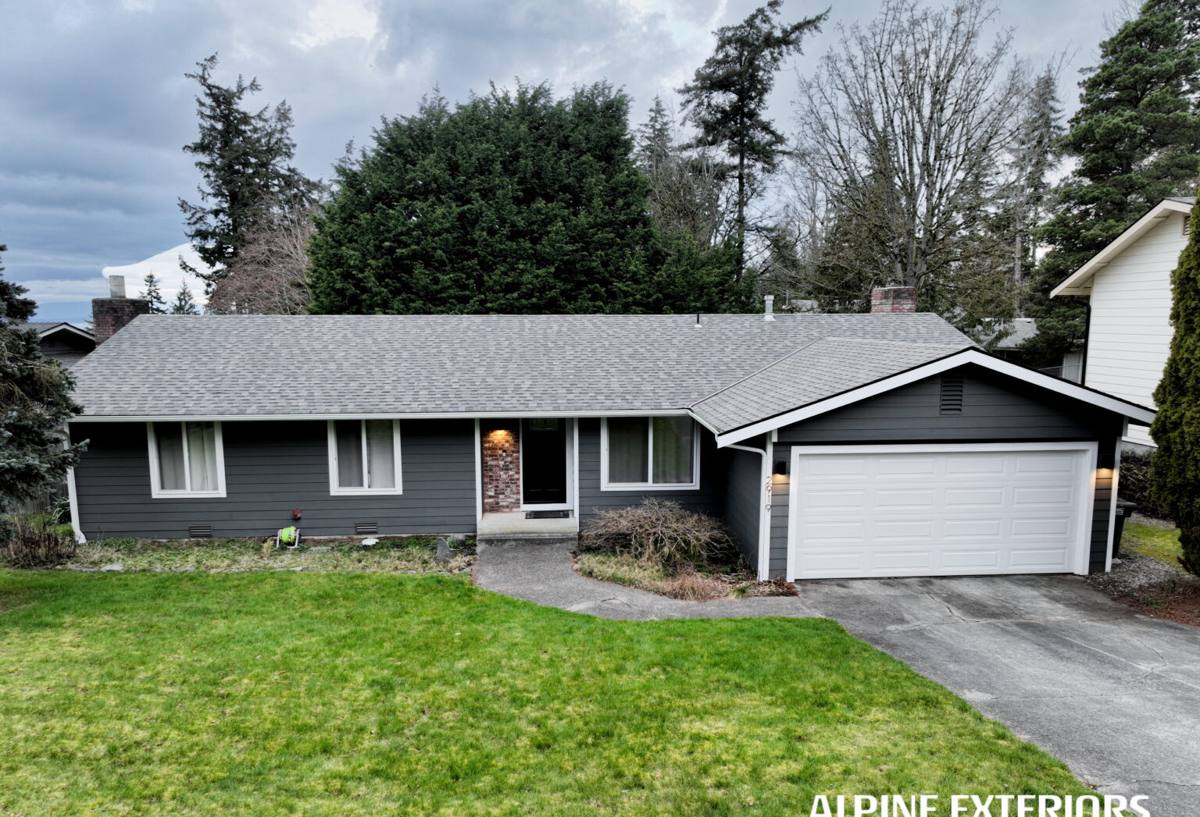
What Local Homes Actually Need From Their Siding
Given the climate above, siding in Barkley needs to do four things well, and most products only do one or two of them:
- Resist moisture absorption — siding that soaks up water swells, cups, and eventually rots from the inside out, especially on north- and west-facing walls that stay damp longest.
- Resist moss and algae growth — a long moss season means any porous or textured surface becomes a growth surface if it isn't treated or engineered against it.
- Hold paint and color under UV and salt exposure — coastal air accelerates the breakdown of standard paint film, leading to chalking, fading, and premature repainting.
- Stay dimensionally stable through wet-dry cycles — materials that expand and contract with moisture eventually loosen fasteners, open seams, and crack caulk lines, which is how water gets behind the cladding in the first place.
Vinyl siding handles moisture reasonably well but is prone to warping and doesn't hold up structurally in high-wind, wind-driven-rain conditions the way a rigid material does. Untreated or primed wood products need aggressive, ongoing maintenance to avoid rot and moss colonization in this climate. This is the gap James Hardie fiber cement siding was engineered to close.
Why We Install Only James Hardie
We standardized on James Hardie fiber cement siding company-wide, and in a climate like Barkley's, the reasoning is straightforward rather than promotional:
Engineered for Pacific Northwest Moisture
James Hardie makes a version of its siding — the HZ10 product line — specifically engineered for climates like ours, with a moisture-resistant formulation designed to perform in areas with prolonged damp conditions and freeze-thaw cycling. That's a meaningful distinction from a generic siding product sold the same way in Arizona and western Washington.
Factory-Applied ColorPlus Finish
Rather than field-painted siding that depends on weather conditions and applicator skill on install day, James Hardie's ColorPlus finish is baked on in a controlled factory environment, over multiple coats, and backed by its own finish warranty. In a climate with strong UV-plus-salt exposure, a factory finish resists fading and chalking far longer than field-applied paint on wood or engineered wood products.
Non-Combustible, Dimensionally Stable
Fiber cement doesn't expand and contract with moisture the way wood-based products do, which means fastener holes stay tight, seams stay sealed, and caulk joints don't get pulled apart by seasonal movement. It's also non-combustible, which matters for insurance considerations independent of the climate discussion.
A Warranty Built Around the System, Not Just the Board
James Hardie backs its siding with a strong transferable limited warranty when installed to their specification — which is precisely why installation quality is not optional. A warranty on a product that was installed wrong is not worth much, which is the entire premise of the next section.
What a Correct James Hardie Install Actually Involves
James Hardie siding fails prematurely almost exclusively because of installation mistakes, not product defects. In a wet climate like Barkley's, these details are the difference between siding that lasts 30-50 years and siding that has moisture problems within five:
| Install Detail | Why It Matters in Barkley's Climate |
|---|---|
| Proper weather-resistive barrier and flashing sequencing | Directs incidental moisture back out instead of trapping it behind the cladding during long wet stretches |
| Correct fastener type, spacing, and penetration depth | Under- or over-driven fasteners create gaps and cracking; wrong fastener metal corrodes faster in salt-influenced air |
| Minimum clearance from grade, roofline, and decking | Keeps board bottoms from sitting in standing moisture or splash-back, a common rot starting point |
| Correct panel gaps and caulking at joints/trim | Fiber cement needs specified expansion gaps; sealing them wrong traps moisture instead of shedding it |
| Painting cut edges on site | Factory ColorPlus finish doesn't cover field-cut edges — sealing them is required to prevent wicking |
Every one of these is a documented manufacturer requirement, not a nice-to-have. Skipping any of them can void the warranty entirely, and in this climate, it usually shows up as visible problems — staining, soft spots, moss colonizing joint lines — well before the siding's rated lifespan.
Our Process for Barkley Homes
- On-site inspection — we assess existing siding condition, wall assemblies, moisture damage, and problem areas specific to the home's exposure (shaded walls, low-clearance sections, prevailing wind-driven-rain sides).
- Moisture barrier and substrate check — any water intrusion or sheathing damage found under old siding gets addressed before new siding goes up, not covered over.
- James Hardie installation to manufacturer spec — correct flashing, fastening, clearances, and joint treatment as outlined above, with HZ10 product selection appropriate to the site's exposure.
- Trim, caulking, and edge sealing — including field-cut edge sealing, which is one of the most commonly skipped steps in lower-quality installs.
- Final walkthrough — confirming clearances, sealed penetrations, and overall finish before we call the job done.
Maintenance: What Ownership Actually Looks Like
James Hardie siding is low-maintenance relative to wood or vinyl, but "low-maintenance" isn't "zero-maintenance," especially with Whatcom County's moss season. A short annual routine keeps it performing at its rated lifespan:
- Rinse siding annually (garden hose pressure, not a pressure washer, which can force water behind panels or damage the finish)
- Inspect and clear moss or algae buildup promptly, particularly on shaded north- and west-facing walls
- Check caulk lines at trim, windows, and joints yearly and re-seal if cracked or pulled away
- Keep gutters and downspouts clear so runoff isn't sheeting directly down the siding face
- Maintain grade and landscaping clearance so soil, mulch, or plantings don't hold moisture against the bottom courses
Why Hiring a Crew That Already Works This Area Matters
Siding installation guides are written generically, but correct execution depends on local conditions. A crew that regularly works Barkley and the surrounding Whatcom County area already knows which wall orientations need extra flashing attention, how much moss pressure to expect on shaded elevations, and how the region's rainfall patterns affect drainage planning at grade. That local pattern recognition is what turns a technically-compliant install into one that actually performs for decades in this specific climate — not a coastal Oregon climate, not an inland Washington climate, but the particular combination of salt air, sustained rain, and moss pressure that defines Whatcom County.
It also matters for warranty support after the job is done. A contractor who's still working in the area years later, and who installed to spec in the first place, is who you want handling any question that comes up down the road — not tracking down someone who did a one-off job and moved on.
Cost Factors to Expect
Every home is different, but a few factors consistently drive cost on Barkley projects: the amount of existing siding removal and substrate repair needed, the home's overall square footage and wall complexity (dormers, gables, multiple stories), trim and accent detailing, and product selection within the James Hardie lineup (lap siding versus shingle-style panels, for example). We won't quote a number without seeing the home, but we're upfront about these variables during the estimate so there are no surprises once work starts.
If your Barkley home's siding is showing moss staining, soft spots, cracked caulk lines, or is simply reaching the age where a proactive replacement makes sense, we're happy to take a look and give you a straightforward, no-pressure estimate — just fill out the form below.