 Whatcom County
Building New in Birchwood Means Getting Windows Right the First Time
When you're framing a new home in Birchwood, the windows aren't a swap-and-go project like they are on a remodel. New-construction windows go in before the siding, before the trim, and often before the house has weathered its first real storm. Whatever flashing detail, sealant, and fastening pattern goes in at this stage is what the house lives with for the next 20-30 years. In a part of Whatcom County that sees a lot of wind-driven rain off the water and long stretches of damp, shaded weather, that first installation matters more than it would in a drier climate.
We install new-construction windows on new builds and additions around Birchwood and the surrounding Whatcom County area, working directly with builders, GCs, and homeowners managing their own project. This page covers what correct installation actually involves here, what the local climate asks of the work, and how to think about window choice before the openings are even framed.
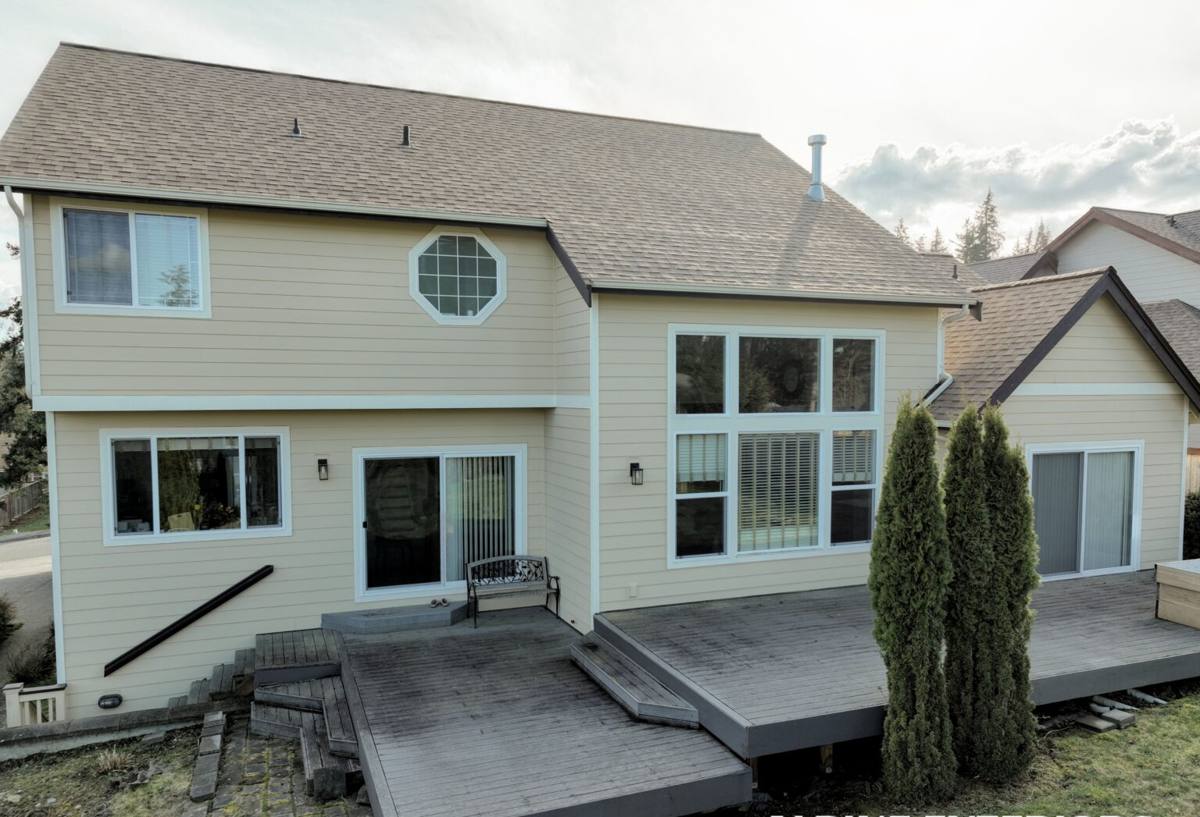
What Whatcom County's Climate Asks of a New-Construction Window Install
Whatcom County sits in a marine climate with a few specific stressors that show up in how windows perform over time. None of them are dramatic on their own, but they compound if the install isn't done with them in mind.
Salt Air and Metal Corrosion
Proximity to Puget Sound and the Strait of Georgia means salt-laden air reaches homes well inland from the immediate waterfront. Salt air accelerates corrosion on unprotected fasteners, aluminum cladding, and hardware. It's not a reason to avoid certain window lines, but it is a reason to be deliberate about fastener material and hardware finish when specifying windows for a Birchwood build.
Driving Rain and Water Management
Whatcom County storms frequently come with sustained wind, which pushes rain sideways into wall assemblies rather than letting it run straight down. A window that would perform fine in a calm-rain climate can leak here if the flashing isn't lapped correctly or if the sill pan isn't sloped to shed water outward. This is a water-management problem, not a window-quality problem — it's solved with correct installation sequencing, not a more expensive window.
A Long Moss and Shade Season
Many lots in and around Birchwood carry mature tree cover, which keeps siding, trim, and window sills damp for extended stretches and feeds moss growth. Moss and algae don't damage the glass or frame directly, but they hold moisture against sills and trim boards, which shortens the life of paint, caulk joints, and any wood components nearby. Detailing the sill and trim so water sheds cleanly reduces how much moss has to work with.
New-Construction Windows vs. Replacement Windows: Not the Same Product
These two window types get lumped together, but they're built and installed differently, and using the wrong one causes problems that show up months or years later.
| Feature | New-Construction Window | Replacement (Pocket) Window |
|---|---|---|
| Flange | Nailing fin around the perimeter, fastened to sheathing | No nailing fin; fits inside existing frame |
| Installation stage | Before siding/exterior finish is applied | After exterior finish exists, into an existing opening |
| Weather sealing method | Flashing tape and WRB integration over the fin | Sealant and interior/exterior trim only |
| Best use case | New builds, additions, full wall reconstruction | Existing openings in good condition, no structural changes |
Using a replacement-style window in a new-construction opening skips the fin and flashing integration that ties the window into the wall's drainage plane — and in a climate with as much wind-driven rain as Whatcom County gets, that's the detail that keeps water out of the wall.
What a Correct New-Construction Install Actually Involves
Flashing and Weather-Resistive Barrier Integration
The window opening should be flashed in sequence: sill pan first, sloped to drain outward, then jamb flashing, then head flashing lapped over the top, all integrated with the house wrap so water is shed down and out rather than trapped behind the siding. Skipping or reversing this order is the single most common cause of hidden wall rot in new builds, and it's invisible once the siding goes on.
Nailing Fin Fastening and Sealant
The fin gets fastened per the manufacturer's schedule — skipping fasteners to save time leaves the window able to flex in wind, which stresses the seal around the glass over time. Sealant goes at the head and jambs, but the sill is typically left unsealed on the exterior face so any water that does get past the cladding has somewhere to drain out rather than pooling inside the wall.
Framing Tolerances and Shimming
Rough openings need to be square and sized correctly before the window ever goes in. A window shimmed to compensate for an out-of-square opening will bind, won't seal evenly, and can crack glass under thermal movement. On a new build this is a framing-crew coordination issue as much as a window-install one, which is why we check openings before we show up with product.
Choosing Frame Material and Glass for a Birchwood Build
Frame Material Trade-offs
Vinyl, fiberglass, and wood-clad frames all perform differently in a wet marine climate:
- Vinyl: Low maintenance, doesn't corrode, budget-friendly; quality varies a lot between manufacturers, so we're selective about which lines we install.
- Fiberglass: Very stable through temperature swings, holds paint well, resists moisture-driven warping — a strong fit for the freeze-thaw and rain cycles here, at a higher price point.
- Wood-clad: Attractive interior wood look with an exterior-facing clad shell; the cladding needs to be fully intact and well-sealed at joints, since any breach exposes wood to the same damp conditions that feed moss and rot elsewhere on the house.
Glass and Coatings
Double-pane, low-E glass is standard for new builds in this region and helps with both heat retention through the wet, overcast months and reducing solar gain in summer. Argon-filled units are worth the modest upcharge for the added insulating value. We don't push triple-pane as a default — it adds weight and cost that isn't always justified unless the home has specific noise or energy targets.
Our Process for New-Construction Window Installation
- Opening review: We check rough openings for square, level, and correct sizing before installation day, and flag framing issues to the builder early rather than compensating with shims later.
- Sill pan and flashing: Sill pans are installed and sloped, then jamb and head flashing are integrated with the WRB in the correct shingle-lap order.
- Window setting: Windows are set plumb, level, and square, fastened per manufacturer schedule, and checked for proper reveal and operation before sealing.
- Sealing and insulation: Perimeter gaps are insulated (not overpacked, which can bow the frame) and sealed per the manufacturer's warranty requirements.
- Final walkthrough: Every unit is operated, checked for square, and inspected for consistent sightlines before we sign off.
Mistakes We See on New Builds — and Check For
Most window problems on new construction trace back to a handful of preventable errors:
- Reverse-lapped flashing that channels water into the wall instead of away from it
- Missing or wrong-sloped sill pans, especially on wider openings
- Sealant applied along the exterior sill face, trapping water instead of letting it drain
- Fasteners skipped or under-driven to speed up install day
- Windows shimmed to fit an out-of-square opening instead of correcting the framing
- Mismatched fastener or flashing materials that corrode faster in salt-exposed air
Why Local Experience in Birchwood and Whatcom County Matters
A crew that only occasionally works this area doesn't build the instinct for how wind-driven rain, salt air, and shaded, moss-prone lots actually behave on a house over a few winters. We install new-construction windows across Whatcom County regularly enough to know which flashing details hold up here and which manufacturer lines are worth speccing for this coastal, wet climate versus which ones look fine on paper but create maintenance headaches five years in. That local pattern recognition is worth more on install day than any spec sheet.
Cost Factors for New-Construction Window Packages
| Factor | How It Affects Cost |
|---|---|
| Frame material | Vinyl is the budget option; fiberglass and wood-clad run higher |
| Window count and size | Larger openings and more units increase both material and labor cost |
| Glass package | Low-E and argon-fill add modest per-unit cost; triple-pane adds more |
| Flashing and sill detailing | Correct sill pan flashing adds labor time but is not optional in this climate |
| Access and building stage | Coordinating with framing and siding schedules affects timeline and crew efficiency |
We don't quote a per-window number without seeing the plans and openings — window count, size mix, and material choice move the total more than any single line item.
If you're framing a new build or addition in Birchwood and want windows speced and installed correctly from the start, we're glad to walk the plans with you. Use the form below for a free, no-pressure estimate — no obligation, just a straight read on what your project needs.