 Whatcom County
 Why Birchwood Roofs Wear Differently Than Roofs Inland
Birchwood sits close enough to the water and tree cover that its roofs take a different kind of beating than a roof twenty miles inland. Three things do most of the damage over time: salt-laden air that corrodes exposed metal faster than a dry climate ever would, driving rain that gets pushed sideways under poorly lapped materials instead of just running off, and a moss season that can stretch nearly eight months out of the year here in Whatcom County. None of these alone is unusual for Western Washington. Together, on a roof that wasn't detailed for them, they shorten a roof's useful life by years.
A new roof installation done right for Birchwood isn't a different product line — it's the same materials most homes use, installed with the flashing, fastener, and ventilation choices that actually hold up here. That distinction is where most of the long-term difference between a "fine" roof and a roof that lasts its full warranty life comes from.
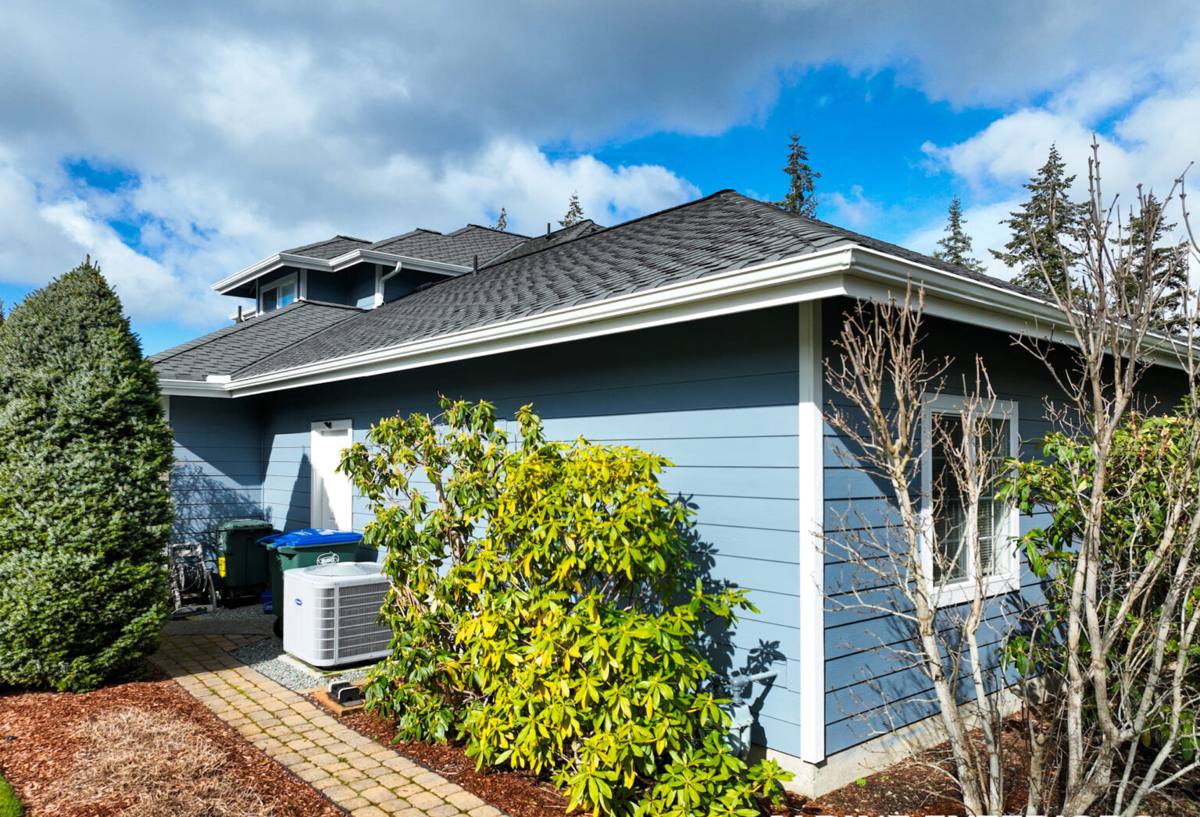
What a Correct Installation Actually Involves
Underlayment and Water Management
In a climate with this much sustained rain, the underlayment matters almost as much as the shingles themselves. We use synthetic underlayment rated for high-moisture exposure across the full deck, with self-adhered ice-and-water membrane at the eaves, valleys, and any roof-to-wall transitions — the spots where wind-driven rain is most likely to find a way in. This isn't an upgrade we push; it's the baseline we consider correct for this county.
Flashing at Every Penetration
Chimneys, skylights, vent pipes, and wall intersections are where the majority of roof leaks actually start — not in the open field of shingles. Every one of those gets new step flashing, counter-flashing, or pipe boots as part of a new roof, not reused flashing from the old roof. Reusing old flashing to save a few hundred dollars is one of the most common shortcuts we see, and it's usually the first thing that fails.
Fasteners and Metal Components
Salt air corrodes standard fasteners and cheap drip edge faster than homeowners expect, especially on roofs with any line of sight to open water or exposed to onshore wind. We spec corrosion-resistant fasteners and drip edge for Birchwood installs rather than the base-grade hardware that's fine for a drier, inland job.
Comparing Roofing Materials for This Climate
There's no single "best" roofing material — the right choice depends on your roof's exposure, your budget, and how much long-term maintenance you're willing to keep up with. Here's how the common options actually perform under Birchwood's conditions:
| Material | Moss Resistance | Salt Air / Coastal Wear | Typical Lifespan Here | Maintenance Burden |
|---|---|---|---|---|
| Architectural asphalt shingle | Moderate (better with algae-resistant granules) | Good with corrosion-resistant flashing/fasteners | 20-30 years | Low to moderate |
| Standing seam metal | Excellent — moss struggles to hold on smooth metal | Depends heavily on coating quality and fastener spec | 40-50+ years | Low |
| Cedar shake | Poor without diligent upkeep — moss loves the texture | Fair, but sensitive to constant moisture | 20-30 years with active maintenance | High |
| Synthetic/composite shingle | Good, similar to asphalt with treated products | Good | 30-50 years | Low to moderate |
We install cedar shake when a homeowner wants that look and understands the upkeep it demands in a wet, mossy climate — we just won't tell you it's low-maintenance here, because it isn't. It's a matter of setting expectations honestly, not a knock on the product.
Our Installation Process
- On-site assessment — we walk the roof, check the deck condition, note tree cover and moss history, and measure pitch and exposure.
- Tear-off and deck inspection — old material comes off down to the deck so we can find and replace any soft or water-damaged sheathing before it's covered up again.
- Underlayment and ice-and-water membrane — installed to the spec described above, not a stripped-down version.
- Flashing at all penetrations and transitions — new, not reused.
- Field installation — shingles, panels, or shakes installed to manufacturer spec and nailing pattern, which matters for keeping your warranty intact.
- Ventilation tie-in — ridge and intake vents balanced so the attic can actually breathe.
- Final walk-through — we go over the finished roof with you and answer questions before we consider the job done.
Ventilation and Moisture Management
A new roof is only as good as the attic underneath it. In a climate this wet, poor ventilation traps moisture, which feeds rot in the decking and encourages the same moss and algae growth you're trying to get away from on the surface. Part of a correct new roof installation is checking that intake (soffit) and exhaust (ridge) ventilation are balanced for your attic's size — not just installing new shingles over an attic that was already struggling to breathe. If your current ventilation is undersized or blocked, we'll flag it before installation, not after you notice mildew smell or condensation the following winter.
Moss: Prevention Built Into the Install, Not Just an Afterthought
Whatcom County's moss season is long enough that "spray it once a year" isn't really a strategy — it's a maintenance treadmill. What actually reduces moss pressure over the life of the roof:
- Zinc or copper strips installed near the ridge, which release trace metal ions that discourage moss growth as rain washes over them
- Algae-resistant shingle granules on asphalt products, where available
- Keeping overhanging branches trimmed back so the roof gets more sun and airflow
- Clean, unobstructed gutters so water isn't sitting against the roof edge
- A yearly visual check rather than waiting until moss is visibly thick before addressing it
None of this makes a roof moss-proof — nothing does in this climate — but it's the difference between light moss you knock off every couple of years and thick growth that's lifting shingles and holding moisture against the deck.
What Drives the Cost of a New Roof
Every roof is priced individually, but the same handful of factors move the number up or down on nearly every job we quote in this area:
| Factor | Why It Matters |
|---|---|
| Roof size and number of facets | More square footage and more valleys/hips mean more material and labor time |
| Pitch and access | Steep or hard-to-access roofs take longer and require more safety setup |
| Tear-off vs. layover | Removing existing layers costs more upfront but lets us inspect and fix the deck |
| Material choice | Asphalt, metal, and shake carry different material and labor costs |
| Deck repairs | Rotted or soft sheathing found during tear-off adds material and labor |
| Ventilation upgrades | Adding or rebalancing intake/exhaust vents if the attic needs it |
We'd rather walk you through these line by line during an on-site estimate than throw out a broad number that doesn't hold up once we're actually on your roof.
Why a Crew That Already Works Birchwood Matters
A roofing crew that works this specific pocket of Whatcom County has already seen how these houses age — which roof lines collect moss fastest, where wind-driven rain tends to find a weak flashing detail, and which ventilation setups hold up and which don't. That's not something you get from a national installer parachuting in for one job. It shows up in small decisions during installation: where we add extra membrane even though code doesn't strictly require it, which fastener spec we default to, how we detail a valley that catches more runoff than most. Local knowledge doesn't replace a correct installation — it's what informs one.
Before You Sign With Any Roofing Contractor
- Get a written scope that specifies underlayment type, flashing replacement, and fastener spec — not just "new roof, [material]"
- Confirm they inspect and repair deck sheathing as part of tear-off, not as a surprise change order
- Ask how they handle ventilation — do they assess it, or just reroof over what's there?
- Check that they carry current licensing and insurance for Washington State
- Get the manufacturer warranty terms in writing, including what installation errors could void it
- Ask directly how they'd address moss risk on your specific roof, not a generic answer
A contractor who answers these clearly and specifically, without hedging, is usually one who does this correctly as a matter of habit rather than as an upsell.
Get a Free, No-Pressure Estimate
If your Birchwood roof is showing granule loss, moss buildup, soft spots, or you're just planning ahead before a leak forces the decision, we're happy to take a look and walk you through exactly what your roof needs — no pressure, no inflated scare tactics. Use the form below to request a free estimate.