 Whatcom County
 Siding Replacement Built for Ferndale's Coastal Conditions
Ferndale sits close enough to the water and the river bottoms that homes here take a different kind of weathering than siding fifty miles inland. Salt-tinged air off the bay, long stretches of driving rain that comes in sideways more often than straight down, and a moss season that can run eight months out of the year all work on exterior walls at the same time. Siding that looks fine from the street can be quietly failing behind the paint, and by the time it shows, the sheathing underneath is often already wet.
We replace siding in Ferndale on a regular basis, not as an occasional job between projects elsewhere in Whatcom County. That matters because the failure patterns here are specific enough that experience in a dry climate, or even a wetter but non-coastal one, doesn't fully translate.
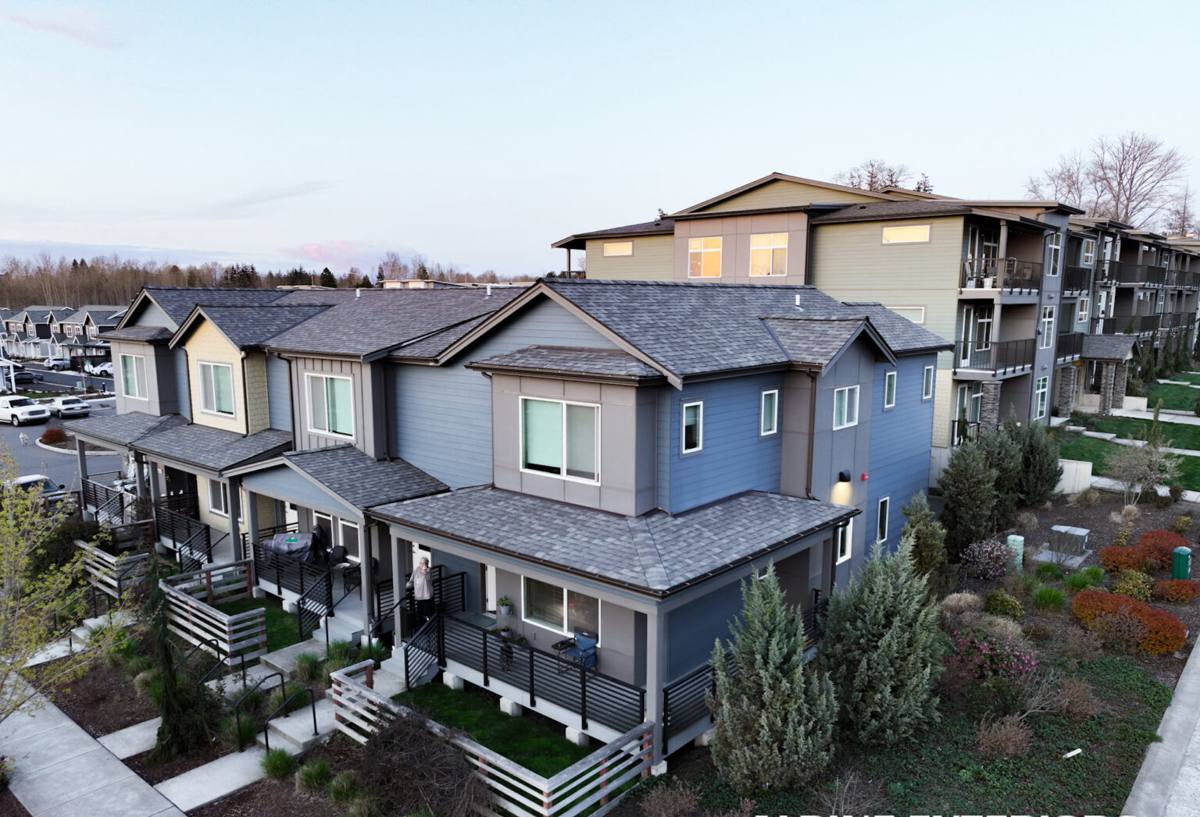
What Ferndale's Climate Actually Does to Siding
Salt Air and Metal Fasteners
Airborne salt doesn't need to sit on a wall to cause damage — it settles into every crevice and accelerates corrosion on anything metal: nail heads, flashing, trim fasteners. Once fasteners start to corrode, they lose holding power and can streak or stain the siding face around them. This is one of the first visible signs of a siding system that's losing its fight with the environment.
Driving Rain and Wind-Driven Moisture
Ferndale gets weather systems that push rain horizontally against exterior walls rather than letting it run straight down and off. That means water finds its way into laps, seams, and butt joints that would stay dry in calmer rain. A siding system with weak water-shedding details — poor lap coverage, caulked joints instead of properly flashed ones, insufficient overlap — will let moisture behind the cladding over time, even if it looks watertight from the ground.
Moss and Sustained Dampness
Moss doesn't just grow on roofs. On north-facing walls, under eaves, and anywhere siding stays shaded and damp for long stretches, moss and algae take hold on the surface. Beyond the cosmetic issue, moss holds moisture against the siding face far longer than open air would, which is a problem for any product that isn't dimensionally stable when wet. Siding that swells, cups, or delaminates under sustained dampness will show it first in these shaded, moss-prone zones.
Why Product Choice Matters More Here Than in Drier Regions
In a dry climate, a lot of siding products perform adequately for years because they're rarely tested by real moisture exposure. In Ferndale, that testing happens constantly. This is why we install James Hardie fiber cement exclusively and don't offer vinyl, LP SmartSide, primed spruce, cedar, or other fiber cement brands. Fiber cement is non-combustible and dimensionally stable — it doesn't swell, rot, or delaminate from water exposure the way wood-based products can, and it doesn't get brittle or distort the way vinyl can under our seasonal temperature swings and coastal wind loads.
James Hardie's ColorPlus factory finish is also relevant to salt-air exposure specifically: the finish is baked on at the factory and warranted separately from the substrate, giving more consistent, long-term fade and moisture resistance than a field-applied paint job would provide on a jobsite in this climate.
Product Comparison for Coastal Whatcom County Conditions
| Factor | James Hardie Fiber Cement | Vinyl | Wood / LP SmartSide |
|---|---|---|---|
| Moisture response | Dimensionally stable, engineered for wet climates | Doesn't absorb water but can warp/distort with heat and wind | Wood-based core can swell or rot if moisture penetrates edges |
| Salt air / corrosion resistance | Non-combustible substrate; factory finish resists coastal fading | Resistant to corrosion itself, but fasteners and trim still exposed | Coatings need more frequent renewal in salt air |
| Moss/algae surfaces | Holds finish well even in shaded, damp zones | Can look chalky or discolored over time in damp shade | Damp shaded areas are highest risk for rot at joints and edges |
| Finish longevity | Factory-applied ColorPlus, separately warranted | Color is through-body but can fade unevenly | Field-applied finish requires more frequent maintenance |
What a Correct Siding Replacement Involves
Replacing siding on a Ferndale home isn't just pulling off old material and nailing up new panels. Given the moisture load this area sees, the details behind the siding matter as much as the siding itself.
- Full removal of old siding and inspection of the sheathing underneath for rot, soft spots, or hidden moisture damage
- Repair or replacement of any compromised sheathing before new siding goes on — covering a wet wall is how problems get worse, not better
- Correct installation of a weather-resistant barrier (house wrap) with properly lapped and taped seams
- Flashing at every window, door, and penetration point — this is where most water intrusion actually starts
- Proper lap spacing and fastening per James Hardie's installation specifications, including fastener type suited to coastal corrosion exposure
- Attention to clearance at grade and hard surfaces, since ground-level moisture wicking is common on homes close to soil or concrete
- Caulking and sealant only where the manufacturer's details call for it — not as a substitute for proper flashing
Skipping any one of these steps can mean the visible siding looks correct for a few years while the wall behind it is already compromised. This is a common issue we find when we tear off older siding in this area — the problem usually isn't the cladding material itself, it's what was or wasn't done underneath it.
Signs a Ferndale Home Needs Siding Replacement
Some warning signs are obvious; others take a closer look. Homeowners in this area should watch for:
- Soft or spongy spots when pressing on siding, especially near the bottom courses or under windows
- Persistent moss or algae growth that returns quickly after cleaning
- Visible rust streaking below nail heads or trim fasteners
- Paint that's bubbling, peeling, or failing faster than expected between coats
- Gaps, warping, or separation at seams and corners
- A musty smell or visible staining on interior walls that share an exterior wall with problem siding
If more than one or two of these are present, it's worth having the wall assembly looked at rather than just the surface material.
Our Process for Ferndale Siding Replacement
1. On-Site Assessment
We walk the exterior with the homeowner, check for soft spots and moisture signs, and look at problem zones specific to the property — shaded walls, areas near grade, spots exposed to prevailing wind and rain.
2. Scope and Product Selection
We go over which James Hardie product line fits the home — lap siding, panel siding, or a combination with trim — and which ColorPlus finish options suit the style of the house and the neighborhood.
3. Tear-Off and Sheathing Inspection
Old siding comes off in sections so we can inspect sheathing as we go, rather than guessing at wall condition from the outside.
4. Weather Barrier and Flashing
This is the step that determines how the wall performs in wind-driven rain for the next several decades. We don't shortcut it.
5. Installation to Manufacturer Spec
Correct fastening, lap spacing, and clearances per James Hardie's published installation requirements for this climate zone.
6. Final Walkthrough
We review the finished work with the homeowner and go over care and warranty documentation.
Why Hiring a Crew That Already Works Ferndale Matters
A crew that mainly works drier or more sheltered parts of Whatcom County can still do competent work, but they may not have built the habits this specific microclimate requires — extra attention to flashing details, awareness of which wall orientations collect moss first, or familiarity with how salt air affects fastener choice. A crew that regularly works Ferndale and the surrounding coastal communities has already seen how different siding systems hold up here over years, not just during installation. That experience shows up in the details you can't see once the job is finished — the flashing behind the corner boards, the fastener spacing on the shaded side of the house, the clearance at grade on the side facing prevailing wind.
Cost Factors for Siding Replacement in This Area
| Factor | Why It Affects Cost |
|---|---|
| Extent of sheathing repair needed | Hidden moisture damage found during tear-off adds material and labor |
| Home size and wall complexity | More corners, gables, and trim details increase installation time |
| Product line and finish selection | Panel vs. lap siding and premium ColorPlus finishes vary in price |
| Accessibility | Multi-story sections or tight lot lines can require added staging |
| Existing exterior condition | Full tear-off vs. partial replacement changes scope significantly |
We don't quote exact numbers without seeing the home, since sheathing condition alone can shift a project's scope substantially. What we can say is that an honest quote should always separate the cost of visible siding from the cost of correcting what's underneath it — a low bid that skips sheathing repair or proper flashing isn't actually a lower cost, it's a deferred one.
If your Ferndale home's siding is showing wear, or you just want a straight answer on whether it needs full replacement or can hold a few more years, we're happy to take a look. Use the form below to request a free, no-pressure estimate.