 Whatcom County
Siding That Has to Work in Birchwood's Climate, Not Just Look Good on Install Day
Birchwood sits in a part of Whatcom County where siding takes a real beating over the course of a year. You've got salt-laden air drifting in off the water, long stretches of driving rain that push moisture sideways into wall assemblies, and a moss season that can run most of the year on the shaded, north-facing sides of a house. None of that is unusual for this corner of Washington — but it means siding material and installation quality matter more here than they do in drier climates where a mediocre job might go unnoticed for a decade.
We install James Hardie fiber cement siding exclusively, and we work Birchwood regularly enough to know which details on a house actually cause callbacks in this specific climate — not generic siding advice, but what shows up on real Whatcom County homes.
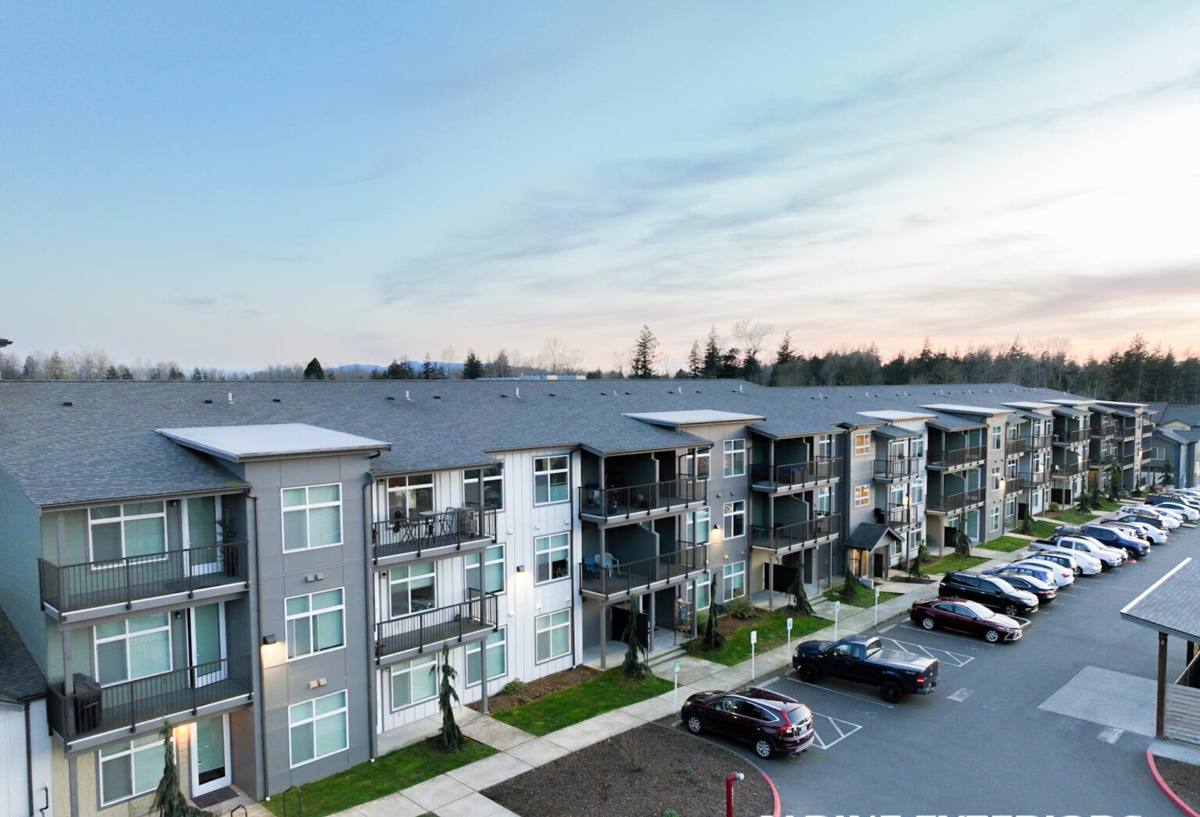
What Birchwood's Climate Actually Does to Siding
Salt Air and Corrosion
Homes closer to the water deal with airborne salt that accelerates corrosion on fasteners, flashing, and any exposed metal trim. Over time, that corrosion can telegraph through paint as rust streaking, and if the wrong fastener was used to begin with, it can loosen the siding's grip on the wall long before the siding material itself fails.
Driving Rain and Wind-Driven Moisture
Whatcom County storms don't just fall straight down — wind pushes rain sideways and up under laps, trim, and butt joints. A siding system that isn't detailed with the right overlaps, flashing, and drainage plane will let water find its way behind the cladding, where it can sit against sheathing and framing for months at a time.
Moss and Sustained Moisture
On shaded elevations and under overhangs, moss and algae growth is close to a year-round condition. It's mostly a cosmetic issue on a properly finished, moisture-resistant material, but on siding that absorbs water or holds a film-forming paint that's starting to fail, sustained moss cover keeps the surface wet longer, which speeds up whatever underlying problems already exist.
Why We Standardized on James Hardie for This Region
James Hardie fiber cement is non-combustible, dimensionally stable, and manufactured in HZ5 and HZ10 formulations specifically engineered for different moisture and freeze-thaw exposure zones. For Whatcom County's wet, marine-influenced climate, that engineering matters — the product is built to resist moisture absorption and hold its shape without the swelling, cupping, or rot risk that plagues wood-based and some engineered wood siding products in sustained damp conditions.
Just as important is the factory-applied ColorPlus finish. Instead of a field-applied paint job that has to cure correctly on-site (weather-dependent in a region where dry, mild days aren't guaranteed), ColorPlus is baked on under controlled conditions before the siding ever reaches the jobsite. That finish is backed by its own warranty against fading and peeling, which is a meaningfully different proposition than a standard exterior paint job that will need recoating on a normal cycle regardless of how well it was applied.
| Finish Option | How It's Applied | Performance in Birchwood's Climate |
|---|---|---|
| ColorPlus factory finish | Baked on at the factory under controlled conditions | Consistent coverage, strong adhesion, dedicated finish warranty — no on-site cure dependency |
| Field-applied paint on fiber cement | Sprayed or brushed on-site after install | Cure quality depends on weather at time of application; recoat cycle is the homeowner's ongoing responsibility |
| Primed material, unpainted | Requires full paint job before or shortly after install | Exposed primer is vulnerable to moisture if painting is delayed during a wet stretch |
What a Correct James Hardie Installation Involves in This Climate
The siding material is only part of the equation. In a climate like Birchwood's, the installation details are what determine whether a house stays dry for the next 30-plus years or develops hidden moisture problems in five.
Weather-Resistive Barrier and Drainage
Behind every plank, there needs to be a continuous weather-resistive barrier with a drainage gap that lets any incidental moisture that gets past the cladding drain back out instead of pooling against the sheathing. This is especially important on walls that take direct wind-driven rain.
Flashing at Every Penetration
Windows, doors, vents, hose bibs, light fixtures — every penetration through the siding plane is a potential entry point for water. Correct flashing, installed in the right shingle-lap order (upper layers over lower layers, always shedding water downward and outward), is non-negotiable in a region that sees this much rain.
Fastener Selection
Given the salt air exposure closer to the water, fastener material and coating matter. Using corrosion-resistant fasteners rated for the exposure the house actually sits in — rather than whatever is cheapest — is a detail that doesn't show up on install day but shows up as rust bleed or loosened siding years later.
Proper Clearances and Gaps
James Hardie's own installation instructions specify minimum clearances from grade, roofing, decks, and other abutting surfaces, along with gap and caulking requirements at butt joints and trim. Skipping these to save time is one of the most common causes of moisture problems on fiber cement siding jobs that weren't installed to spec.
Our Process on a Birchwood Job
- On-site assessment — We look at the existing siding, sheathing condition, moisture history, and which elevations take the worst weather exposure on your specific lot.
- Tear-off and substrate check — Old siding comes off and we inspect sheathing for hidden rot or moisture damage before anything new goes up. This is often where problems from a prior installation surface.
- Weather-resistive barrier and drainage plane — Installed continuously, with proper overlaps and integration at every window and door opening.
- Flashing and trim — Set before siding installation begins, in the correct shingle-lap sequence.
- James Hardie panel or lap installation — Installed to manufacturer spec for fastener pattern, clearances, and joint treatment.
- Final detailing — Caulking at specified joints only (not as a substitute for proper flashing), touch-up where factory finish was cut or fastened, and a walk-through.
HZ5 vs. HZ10: Which Makes Sense for Birchwood
James Hardie's HZ product lines are engineered for different climate zones. Whatcom County's marine climate — cool, wet, with a real moss season — falls into the range where the moisture- and impact-resistant engineering of these formulations pays off compared to standard fiber cement or non-engineered alternatives. We'll walk through which specific product and profile makes sense for your house, your elevation exposure, and your budget during the estimate rather than defaulting to one answer for every home.
What Drives Cost on a Job Like This
| Factor | Why It Matters |
|---|---|
| Existing substrate condition | Rot or moisture damage found during tear-off means repair work before new siding can go on |
| Siding profile and trim complexity | Lap width, shake accents, and trim detailing all affect labor time |
| Number and complexity of penetrations | More windows, vents, and fixtures mean more flashing work |
| Home elevation exposure | Water-facing or wind-exposed walls may warrant additional detailing |
| Access and site conditions | Multi-story sections, tight lot lines, or landscaping can affect scaffolding and staging |
We give real numbers after we've actually looked at the house — broad guesses over the phone don't account for what tear-off reveals.
Keeping Hardie Siding Looking Right in a Moss-Prone Climate
- Rinse siding periodically, especially on shaded or north-facing walls, to keep moss and algae from establishing
- Keep gutters clear so overflow isn't running down siding faces
- Trim back vegetation and tree cover that keeps specific wall sections shaded and damp longer than the rest of the house
- Inspect caulked joints every year or two and have any cracked or failing caulk redone
- Watch for any staining near fasteners or trim, which can signal a flashing or fastener issue worth checking early
Why Hiring a Crew That Already Works Birchwood Matters
A lot of the moisture problems we get called to look at on older homes weren't caused by the siding material — they were caused by installation shortcuts that don't show up until years later. A crew that already works Birchwood and the surrounding Whatcom County area knows which elevations on a typical local house take the worst of the wind-driven rain, how the local permitting process runs, and what substrate condition to expect when they open up a wall that's been sitting behind older or failing siding in this climate. That's not something a crew unfamiliar with the region's weather patterns picks up on day one.
If you're planning a siding project in Birchwood, we're happy to come take a look at your home and put together a straightforward, no-pressure estimate — no invented urgency, just an honest read on what your house needs.