 Whatcom County
Siding Repair Built for Birchwood's Climate
Birchwood homes sit in one of the tougher microclimates in Whatcom County. The combination of salt-laden air moving in off the water, long stretches of driving rain, and a moss season that can run half the year puts more stress on exterior siding here than in drier inland neighborhoods. If you own a home in Birchwood and you're noticing soft spots, peeling paint, or dark streaking on your siding, you're not imagining it — the conditions in this part of Whatcom County genuinely accelerate wear on the wrong materials.
This page covers what Birchwood siding repair actually involves: what typically fails and why, what a correct repair looks like versus a patch job, how we approach the work, and why local experience matters more than most homeowners realize when it comes to getting a repair that actually holds up.
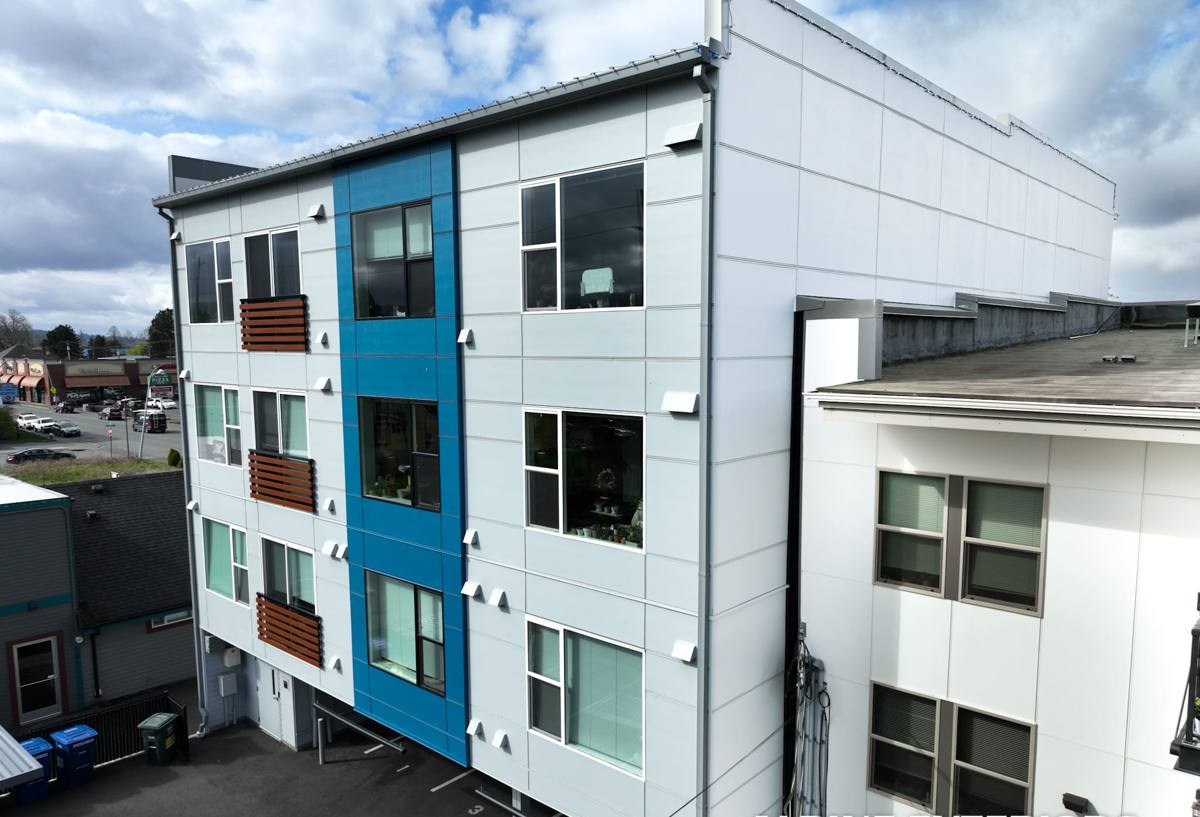
Why Birchwood Siding Takes More Abuse Than Average
Three regional factors combine in Birchwood in a way that's worth understanding before you decide how to fix your siding.
Salt Air
Proximity to the water means airborne salt settles on exterior surfaces year-round. Salt is hygroscopic — it pulls moisture out of the air and holds it against whatever surface it's on. On wood-based or wood-composite siding, that means the surface stays damp longer than it would in a drier inland spot, which speeds up rot, paint failure, and fastener corrosion.
Driving Rain
Whatcom County gets plenty of rain generally, but Birchwood's exposure means a lot of it arrives sideways, driven by wind off the water. Driving rain finds every gap in flashing, every hairline crack in caulking, and every place where siding wasn't lapped correctly. Vertical rain is forgiving of small installation mistakes; driving rain is not.
Moss and Sustained Dampness
A long moss season means siding surfaces — especially north-facing walls and anything shaded by trees or neighboring structures — stay damp for extended periods. Moss and algae growth aren't just cosmetic. They hold moisture against the siding surface, which on the wrong substrate can lead to slow, hidden decay long before anything looks obviously wrong from the ground.
Put together, these three factors mean Birchwood siding needs to shed water fast, resist moisture absorption, and hold its finish without constant repainting. That's the standard we repair to, not just the standard we install to.
What Siding Repair Should Actually Address
A lot of "siding repair" in this region amounts to caulking over a symptom instead of fixing the underlying moisture problem. That approach tends to fail again within a season or two, especially in an exposure like Birchwood's. A repair worth doing addresses the cause, not just the visible damage.
| Visible Symptom | Likely Underlying Cause | What a Correct Repair Does |
|---|---|---|
| Soft or spongy siding panel | Water intrusion behind the panel, often from failed caulking or flashing | Remove and inspect sheathing/framing behind the panel before replacing it |
| Paint peeling or bubbling | Moisture trapped under the finish, often from substrate saturation | Address the moisture source first; replace affected panels rather than just repainting |
| Dark streaking or moss buildup | Poor water shedding, shade, or lack of ventilation gap | Clean surface, correct drainage path, and check for trapped moisture underneath |
| Gaps opening at seams or corners | Material movement (swelling/shrinking) or original installation error | Re-flash and re-fasten to spec, using materials that don't move seasonally |
| Cracking near fastener points | Over-driven fasteners or a substrate that can't handle fastener stress | Replace with correct fastening pattern and spacing per manufacturer spec |
The common thread: siding failure in Birchwood is almost always a water management problem before it's a cosmetic one. A repair that doesn't trace the water path back to its source is a repair that's going to need to be done again.
Our Repair Process
We approach every Birchwood repair the same structured way, whether it's one damaged panel or a full section of a wall.
1. Inspection Beyond the Damaged Area
We don't just look at the panel that's obviously failing. Water travels — a soft spot at the bottom of a wall can originate from a flashing gap several feet higher. We check the full drainage path: flashing above windows and doors, the water-resistive barrier where it's exposed, kick-out flashing at roof-to-wall intersections, and the condition of the siding immediately adjacent to the visible problem.
2. Determining Repair vs. Replace
Not every damaged section needs to come out. If the substrate underneath is sound and the damage is limited to the outer material, a targeted panel replacement is often the right call. If we find soft sheathing, rot, or evidence of long-term moisture intrusion, that gets addressed before any new siding goes back on — covering rot with new siding just delays a bigger repair later.
3. Correcting the Water Management, Not Just the Siding
Any flashing, house wrap, or drainage detail that contributed to the original failure gets corrected as part of the repair. This is the step that separates a repair that lasts from one that doesn't. In Birchwood's exposure, a repair that reinstalls the same flawed detail is a repair that's failing again within a couple of wet seasons.
4. Matching Materials and Finish
Where we're patching into existing siding, we work to match profile, reveal, and color as closely as possible so the repair doesn't stand out. Where a full section or wall is being redone, we'll talk through whether it makes sense to extend a match or treat it as a clean break, depending on the age and condition of the surrounding material.
5. Final Detailing and Sealant
Correct caulking and sealant placement — not over-caulking to mask a bad detail, but sealing the specific joints that need it — finishes the job. Over-reliance on caulk instead of proper flashing is one of the most common shortcuts we see in repairs that failed early, and it's one we don't take.
What We Use for Repairs — and Why
We install and repair with James Hardie fiber cement siding exclusively. It's not the only siding material on the market, and we're upfront about why we standardized on it rather than materials like vinyl, LP SmartSide, or cedar.
Non-Combustible and Dimensionally Stable
Fiber cement doesn't expand and contract with moisture and temperature the way wood-based products do, which matters directly in Birchwood's damp, salt-air environment. It won't swell, warp, or absorb water the way engineered wood or solid wood products can over repeated wet-dry cycles.
ColorPlus Factory Finish
Hardie's ColorPlus finish is baked on at the factory under controlled conditions, which gives it better long-term color retention and adhesion than field-applied paint — a real advantage in an area where repainting siding every few years due to peeling isn't something homeowners want to keep doing.
Climate-Engineered HZ Product Lines
Hardie's HZ5 product line is engineered for exactly the wet, moderate-freeze Pacific Northwest climate Whatcom County sits in. That's a meaningful distinction from a one-size-fits-all siding product — it's formulated for the moisture exposure we actually see here.
Where Repairs Meet Non-Hardie Siding
If your home currently has vinyl, LP SmartSide, cedar, or another fiber cement brand, we'll still repair or replace the damaged section and talk honestly about your options — including whether a full re-side with Hardie makes more sense than continuing to patch a product that's reached the end of its useful life in this climate. We won't tell you a full re-side is necessary if a proper repair will genuinely hold.
Signs a Birchwood Home Needs a Siding Repair Now
- Soft or spongy areas when you press on the siding, especially near the bottom of walls or below windows
- Paint that's peeling, bubbling, or flaking rather than just fading
- Visible gaps opening at seams, corners, or trim joints
- Persistent moss, algae, or dark streaking that comes back quickly after cleaning
- Warping, buckling, or panels that look wavy from an angle
- A musty smell near exterior walls inside the home
- Visible daylight or drafts around siding-adjacent penetrations like vents or hose bibs
- Higher-than-expected heating bills that coincide with new drafts along exterior walls
If you're seeing more than one of these at once, it's worth having the area inspected before the next stretch of driving rain gets behind the siding rather than on top of it.
Why Local Experience Matters for This Job
Siding repair isn't a one-size-fits-all trade. A crew that mostly works drier inland areas of Whatcom County may not instinctively check for the specific failure patterns that show up in a salt-exposed, moss-prone neighborhood like Birchwood. Knowing which walls tend to fail first based on orientation, which flashing details are most commonly shortcut in this area's older housing stock, and how aggressively moss needs to be managed here all come from doing this work locally and repeatedly — not from a general siding background.
A crew already familiar with Birchwood's exposure also moves faster and more accurately during the diagnostic stage of a repair, because they've seen the same water paths fail in similar homes before. That translates into fewer surprises once a wall is opened up, and a repair scope that's accurate from the first estimate rather than growing once work begins.
Cost Factors for Siding Repair
Every repair is different, but the following factors are what typically drive cost up or down on a Birchwood siding repair:
| Factor | Impact on Scope |
|---|---|
| Extent of hidden water damage behind the siding | Sheathing or framing repair adds cost beyond the siding itself |
| Wall height and accessibility | Second-story or hard-to-access walls require more setup time |
| Material match availability | Older or discontinued siding profiles may require a broader replacement area |
| Flashing and drainage corrections needed | Fixing the root cause adds labor but prevents repeat failure |
| Number and location of affected wall sections | Isolated damage costs less than damage spread across multiple elevations |
We won't quote a number without seeing the actual condition of the wall — anyone who does is guessing, and guessing on a water-damage repair almost always means change orders later.
Get an Honest Assessment of Your Birchwood Siding
If you're dealing with damaged, aging, or failing siding on a Birchwood home, we're glad to come take a look and give you a straight answer about what's actually going on and what it will take to fix it properly. There's no pressure and no obligation — just a free estimate based on what we find when we open things up. Use the form below to get started.