 Whatcom County
Sunnyland is one of Bellingham's older, tree-shaded neighborhoods, and that combination — mature canopy, close proximity to the bay, and Whatcom County's long wet season — puts a specific kind of wear on roofs here that you don't see the same way in drier inland areas. If you own a home in Sunnyland, chances are you've already dealt with moss creeping along a north-facing slope, a stain spreading across a bedroom ceiling after a windy rainstorm, or shingles that look fine from the driveway but are cupping and cracking up close. This page covers what roof repair actually means for a Sunnyland home, what we look for, and how we do the work.
Why Sunnyland Roofs Wear the Way They Do
Whatcom County sits in a marine climate zone, and Sunnyland's location near Bellingham Bay means homes here get a steady dose of salt-laden air on top of the region's typical fall-through-spring rain. Salt air accelerates corrosion on exposed metal — flashing, fasteners, gutter hangers — faster than it would inland. Combine that with driving rain that comes in sideways off the water during winter storms, and you get water finding its way into laps and seams that would stay dry in calmer weather.
Then there's moss. Sunnyland's older street trees and generally shaded lots mean a lot of roofs here hold moisture longer after a rain than a roof out in open sun would. Moss and algae take hold on the north and east-facing slopes first, and once established, moss doesn't just sit on top of shingles — it lifts the edges, holds water against the roofing material, and slowly works granules and fibers loose. A roof that's been carrying moss for a few seasons is almost always in worse shape underneath than it looks from the ground.
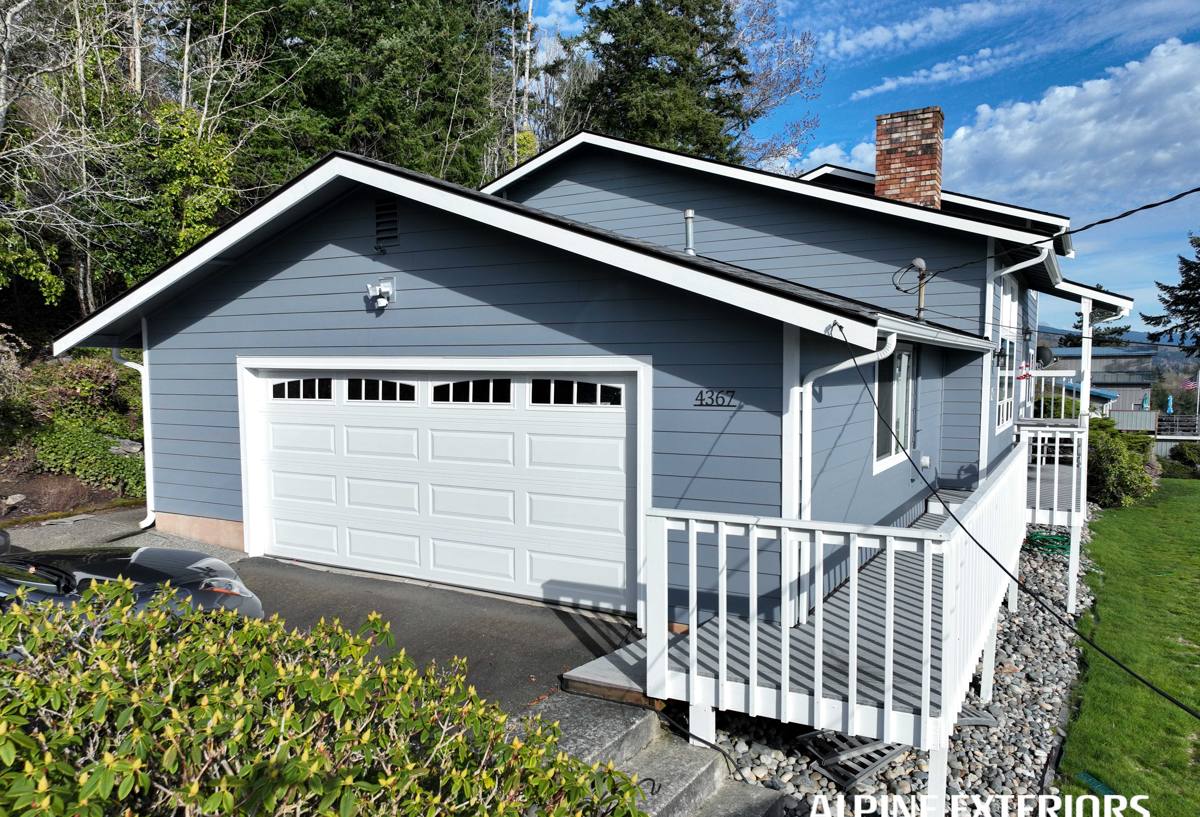
Signs a Sunnyland Roof Needs Repair, Not Just a Cleaning
Homeowners often call us thinking they need a moss treatment when the real issue is deeper, or vice versa. Here's what we actually check for:
- Granules collecting in gutters or at the base of downspouts — a sign shingles are breaking down
- Shingles that are cupped, curled, or cracked, especially on south and west-facing slopes that see the most sun-to-rain cycling
- Moss growth thick enough to hold visible moisture, particularly on shaded north slopes
- Rust streaks or soft spots around flashing at chimneys, skylights, and roof-to-wall transitions
- Ceiling stains, especially ones that show up or worsen after a windy rainstorm rather than a calm one
- Daylight visible through the roof deck from inside an attic
- Nail pops or fasteners backing out, which show as small bumps under shingles
- Sagging along a ridge line or valley, which points to deck or structural moisture damage
Any one of these on its own might be a minor fix. Several together usually means water has already gotten past the surface layer, and the repair needs to address what's underneath, not just what's visible.
What a Correct Repair Actually Involves
A roof repair that only patches the visible problem tends to fail again within a season or two, especially in a climate that gives a roof this little time to fully dry out between storms. We treat repair as a diagnostic process first, patch second.
Moss and Debris Removal Done Without Damage
Moss has to come off before we can see what's actually happening with the roofing material underneath, but pressure washing shingles is one of the fastest ways to strip granules and shorten a roof's remaining life. We remove moss and debris by hand or with low-pressure methods appropriate to the material, then inspect the exposed surface for the damage the moss was hiding.
Flashing and Fastener Inspection
Given the salt air near the bay, flashing and exposed fasteners are usually the first things to corrode. We check chimney flashing, skylight flashing, valleys, and any roof-to-wall transitions closely — these are the most common actual leak points, far more often than the open field of the roof itself.
Decking and Underlayment
If water has been getting in for a while, the plywood decking underneath can go soft, and the underlayment beneath the shingles can fail to shed water the way it should. Patching shingles over a compromised deck just hides the problem. We pull back the affected area far enough to see solid material in every direction before closing it back up.
Shingle or Material Replacement
Once the underlying issue is fixed, we replace the affected shingles or roofing material, matching as closely as possible to the surrounding roof. We use full courses and proper overlap rather than surface patches, so the repaired section sheds water the same way the rest of the roof does.
Roofing Materials Common in Sunnyland Homes
Sunnyland has a mix of housing ages and styles, and the roofing material affects both what fails first and how we approach the repair.
| Material | Common Issue in This Climate | Repair Consideration |
|---|---|---|
| Composition (asphalt) shingle | Granule loss, curling, moss lift on shaded slopes | Match shingle profile and color as closely as possible; check deck below for soft spots |
| Cedar shake | Moss and moisture retention, splitting | Requires careful hand-splitting of replacement shakes; ventilation behind the roof matters more here |
| Metal roofing | Fastener corrosion, sealant failure at seams | Salt air speeds up corrosion on exposed screws; we prioritize fastener and seam checks first |
| Flat or low-slope (additions, porches) | Ponding water, membrane seam failure | Low-slope areas need close attention to drainage, not just patching the membrane surface |
Repair vs. Replacement: How We Help You Decide
Not every roofing problem in Sunnyland calls for a full replacement, and we won't push one when a proper repair will hold. What we weigh with you:
| Factor | Leans Toward Repair | Leans Toward Replacement |
|---|---|---|
| Age of roof | Under roughly two-thirds of expected material lifespan | Nearing or past expected lifespan for the material |
| Extent of damage | Localized — one slope, one flashing point, one leak source | Multiple slopes affected, or granule loss spread across the whole field |
| Deck condition | Solid, dry decking found once the surface is opened up | Widespread soft spots or rot found in more than one area |
| History | First repair call in several years | Repeated leaks or repairs in the same general area |
We give you a straight answer either way, including when a repair is genuinely the right call rather than the more profitable one for us.
Our Process for a Sunnyland Roof Repair
- On-site inspection of the roof surface, flashing points, and attic (where accessible) to find the actual source of the problem, not just where water is showing up
- A written explanation of what we found, including photos, and a repair scope with honest pricing
- Moss and debris removal where needed, using methods that don't strip granules or shorten the roof's life
- Repair of the deck, underlayment, flashing, and roofing material as needed, working from the source of the leak outward
- A final walkthrough so you can see what was done and ask questions before we consider the job finished
Why Hire a Crew That Already Works Sunnyland
Roofing crews that mostly work drier, inland areas sometimes miss how much of a Whatcom County roof's condition comes down to moisture management rather than a single point of failure. Working Sunnyland regularly means we already know which slopes on which house styles tend to hold moss, where salt air does the most damage to flashing and fasteners near the bay, and how the neighborhood's mature tree cover changes what a "normal" repair looks like compared to a roof out in the open. That local pattern recognition is part of what keeps a repair from turning into a second call six months later.
Keeping a Repaired Roof in Good Shape
A few habits go a long way toward stretching the life of a repair in this climate:
- Keep gutters clear so water isn't backing up under the roof edge, especially during fall leaf drop
- Trim back overhanging branches where possible to cut down on shade and debris that feed moss growth
- Schedule a moss check every year or two rather than waiting until it's visibly thick
- Have flashing points checked after any major windstorm, since that's when displaced flashing or blown-off shingles are most likely
- Address small leaks quickly — a stain the size of a coin now is a much smaller fix than the same leak left for another wet season
If you're seeing moss buildup, a stain on a ceiling, or just want an honest read on a roof's condition before the next round of fall storms, we're glad to come take a look. We offer free, no-pressure estimates for Sunnyland homeowners — use the form below to get started.