 Whatcom County
 Why Sunnyland Windows Take a Different Kind of Beating
Sunnyland sits close enough to the water and open weather off Bellingham Bay that its homes deal with a combination most inland Whatcom County neighborhoods don't: salt-laden air, wind-driven rain that hits window seams sideways rather than straight down, and a long, damp moss season that keeps everything shaded and wet for months at a time. None of these are dramatic events. They're slow, constant pressure, and that's exactly what wears out a window that wasn't built or installed for it.
A window that works fine in a dry inland climate can start failing early here — seals give out, frames swell or rot, hardware corrodes, and condensation builds up between panes. This page is about what it actually takes to get custom windows right for a Sunnyland home, not windows in general.
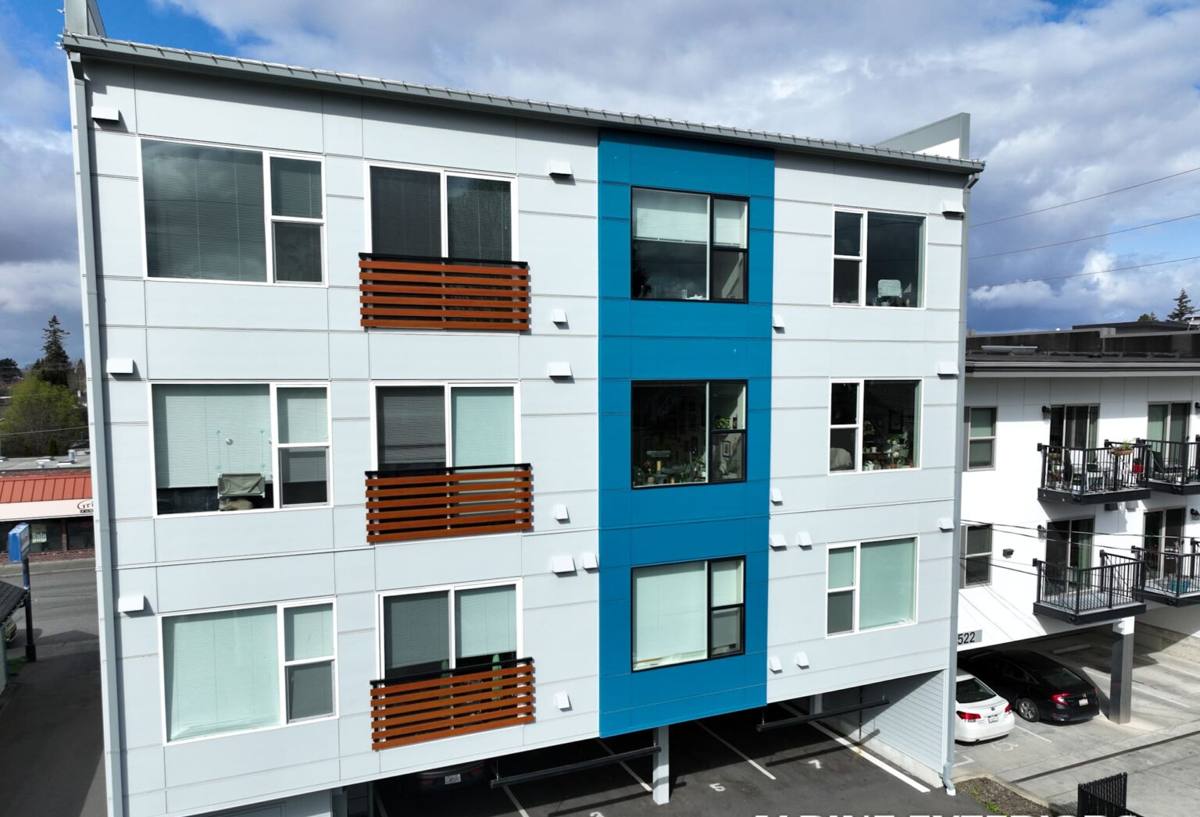
What Salt Air, Rain, and Moss Actually Do to a Window
Salt Air
Airborne salt is corrosive to metal hardware — hinges, locks, balance systems, and screen frames. On older aluminum-frame windows it also accelerates pitting and oxidation of the frame itself. It doesn't take a storm; steady low-level exposure over years is enough.
Driving Rain
Wind off the water pushes rain into gaps and joints that would stay dry in a calmer climate. If flashing, sill pans, or sealant details weren't done correctly at install, water finds its way behind the trim and into the wall cavity — often long before it shows up as a visible stain inside.
Moss Season
Shaded, moisture-retentive conditions for much of the year mean moss and algae take hold on horizontal surfaces, window sills, and trim faster here than in drier parts of the county. Beyond the cosmetic issue, moss holds moisture against wood trim and painted surfaces, which shortens the life of anything that isn't properly sealed or isn't moisture-tolerant to begin with.
Signs Your Current Windows Are Losing That Fight
- Fogging or a hazy film between the panes of a double- or triple-pane window (the seal has failed)
- Soft, discolored, or spongy wood at the sill or bottom corners of the frame
- Hardware that's stiff, corroded, or hard to lock and unlock smoothly
- Visible moss or dark streaking building up on sills and lower trim year after year
- A draft you can feel near the frame even when the window is fully latched
- Paint that keeps failing in the same spot no matter how often it's touched up
- Noticeably higher heating bills in the rooms with older windows
Any one of these on its own might not mean much. Two or three together, especially on the weather-facing side of the house, usually mean the window's moisture defenses are compromised.
What a Correct Custom Window Installation Actually Involves
Accurate Sizing and Fit
"Custom" starts with the opening, not the catalog. Older Whatcom County homes are rarely perfectly square, and a window that's forced to fit an out-of-plumb opening will never seal evenly. Every opening gets measured and evaluated on its own — not assumed to match a standard size.
Moisture Management, Not Just a Caulk Bead
This is the part that matters most in a climate like Sunnyland's. A correct install includes a proper sill pan to direct any intruding water back outside instead of into the wall, flashing tape integrated with the house wrap in the right shingle-lap order, and sealant used as a backup, not as the only line of defense. Skipping the sill pan or flashing sequence is the single most common reason a "new" window still leaks a few years later.
Frame Material Matched to the Site
A window on the rain- and wind-exposed side of a Sunnyland home needs a more forgiving frame material and hardware finish than one tucked under an eave on a sheltered wall. Matching material to exposure, rather than using the same window everywhere, is part of doing the job right.
Insulation and Air Sealing Around the Frame
The gap between the window frame and the rough opening needs to be filled with the right low-expansion foam or backer rod and sealant — not stuffed with fiberglass batt, which does little to stop air movement and can hold moisture against the frame.
Choosing a Frame Material for This Climate
| Material | How It Handles Salt Air & Rain | Maintenance | Typical Fit for Sunnyland |
|---|---|---|---|
| Vinyl | Won't corrode or rot; performs well in coastal moisture | Low — occasional cleaning | Strong all-around choice for most homes |
| Fiberglass | Very stable in temperature swings and moisture; resists warping | Low | Good for exposed, weather-facing walls |
| Wood / Wood-Clad | Attractive but vulnerable where cladding or seals are compromised; needs consistent upkeep near salt air | Higher — regular inspection and finish maintenance | Best reserved for sheltered elevations or homes where matching existing wood trim matters |
| Aluminum | Prone to pitting and corrosion from salt exposure over time unless a marine-grade finish is used | Moderate to high near the water | We use it selectively, with the right finish, not as a default |
We don't push one material for every job. The right call depends on which side of the house the window is on, how much sun and wind that wall gets, and what the rest of the home's trim looks like. Where a homeowner wants a wood look on an exposed wall, we'll say so plainly and talk through the extra upkeep it involves rather than just installing it and moving on.
How We Approach a Sunnyland Window Project
- On-site assessment. We look at each opening individually — condition of the existing frame, sill, and surrounding wall, plus which direction it faces and how exposed it is to wind and rain.
- Honest scoping. Some windows just need replacement glass or hardware; others need the full frame and flashing redone. We tell you which is which rather than defaulting to a full replacement.
- Custom measurement and ordering. Each unit is built to the actual opening, not a nearest-standard-size stock window.
- Removal and prep. Old sealant, damaged trim, and any compromised sheathing are addressed before the new unit ever goes in — installing over a hidden problem just hides it, it doesn't fix it.
- Proper flashing and sill pan installation. This is the step that determines whether the window stays dry for the next twenty years.
- Setting, shimming, and air sealing. The window is leveled, plumbed, and squared, with the gap sealed correctly around the full perimeter.
- Interior and exterior trim finish. Trim is finished and sealed to match the home, with attention to the horizontal surfaces most likely to collect moss.
- Final walkthrough. We check operation, sealing, and finish with you before calling the job done.
What Affects the Cost
| Factor | Why It Matters |
|---|---|
| Frame material | Vinyl and fiberglass generally cost less up front than wood-clad units; material choice also affects long-term upkeep cost |
| Number and size of openings | Larger and more numerous windows mean more material, labor, and disposal |
| Condition of the existing opening | Rot, out-of-square framing, or damaged sheathing found during removal adds repair work before the new window can go in |
| Wall exposure | Weather-facing walls often call for more robust flashing detail and hardware, which affects labor time |
| Glass package | Upgraded glass for noise, energy performance, or UV control costs more than standard double-pane |
| Trim and finish work | Matching existing trim profiles or repainting/staining adds to the scope |
We give a written estimate that breaks these out so you can see what you're paying for, rather than one lump number.
Why It Matters That We Already Work in Sunnyland
A crew that regularly works this neighborhood already knows which walls take the worst of the weather, how the local moisture patterns tend to play out over a full year, and what kind of flashing and material choices actually hold up here versus on paper. That's not something you can fully substitute with a generic install checklist. It means fewer surprises during the job and windows that are set up to handle Whatcom County's rain and salt air from day one, not just look good on install day.
It also means we're reachable afterward. If something needs adjustment once the windows have gone through a full wet season, we're a local call away — not a name from an out-of-area sales visit.
Ready to Talk About Your Windows?
If your current windows are fogging, drafty, or showing wear on the weather-facing side of your Sunnyland home, we're glad to take a look and give you an honest read on what's going on. Request a free, no-pressure estimate using the form below and we'll walk the property with you before recommending anything.