 Whatcom County
New-Construction Windows for Sunnyland Homes
New-construction window installation is a different job than swapping out an old window in an existing wall. On a new build or an addition in Sunnyland, the window goes into a framed rough opening before the siding goes on, and it has to work together with the house wrap, the flashing, and the framing as one connected water-management system. Get that sequence wrong and you won't see the problem for a year or two — by then it's hidden behind siding and trim, and the fix means tearing back finished work instead of catching it at the studs.
We do this work regularly for homes going up and additions being framed out around Sunnyland and the rest of Whatcom County, and the install standard doesn't change from job to job. What changes is how much margin for error the local climate gives you, and around here that margin is small.
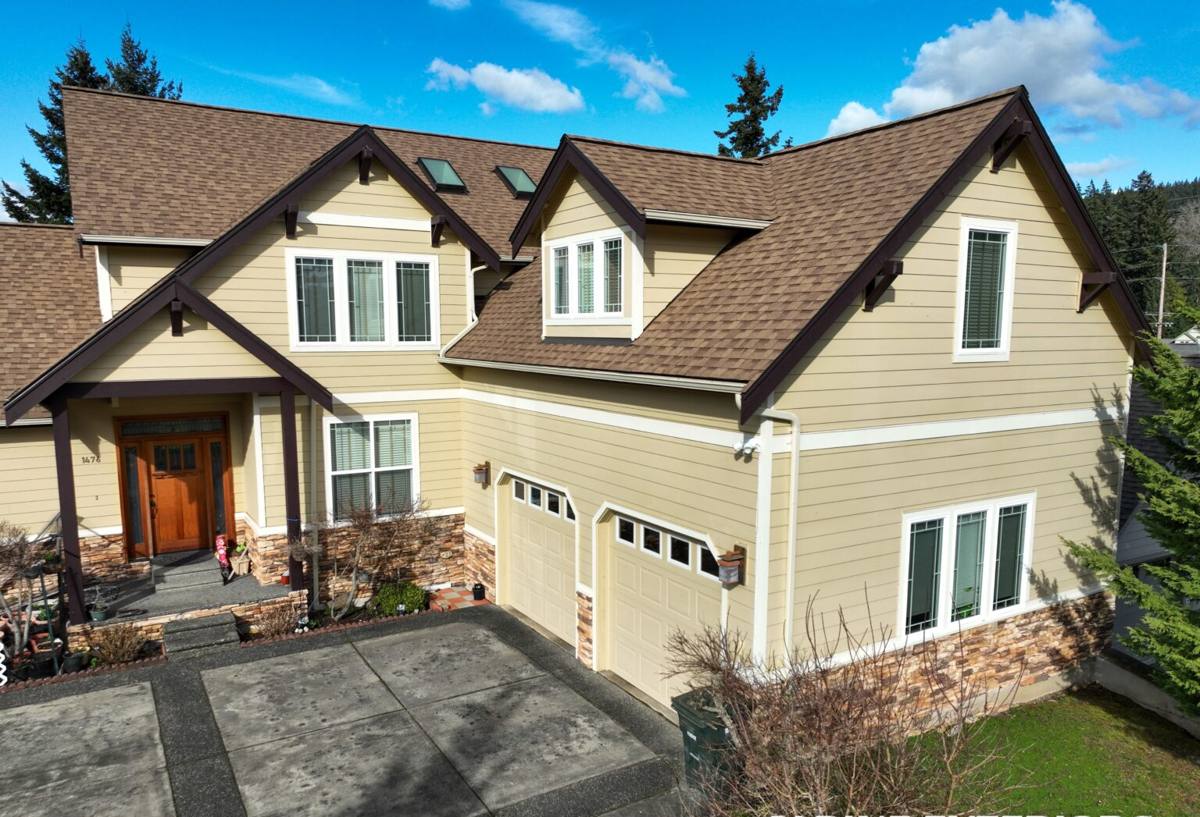
Why Whatcom County's Climate Raises the Stakes
Sunnyland sits close enough to Bellingham Bay that salt-laden air is a real factor on fasteners, flashing metal, and any exposed hardware. Add to that the driving rain that comes through on southwest storms much of the fall and winter, and a long moss season on shaded roof and wall surfaces, and you've got a climate that's actively testing every seam in a window opening almost year-round rather than a few weeks a year.
Wind-Driven Rain
Whatcom County storms don't just drop rain straight down — wind pushes it sideways and up under trim, sills, and any gap in the water-resistive barrier. A window that's only sealed with caulk at the exterior face, without proper flashing underneath, will eventually let that wind-driven rain find its way behind the cladding.
Salt Air Near the Bay
Salt air accelerates corrosion on unprotected metal flashing, screws, and hardware. It's not dramatic — it's slow, and it shows up years later as staining, pitted fasteners, or a flashing strip that's failed quietly. We choose flashing tape, metal, and fasteners rated for coastal exposure specifically because Sunnyland is close enough to the water for this to matter.
Moss and Shade
Whatcom County's long wet season means moss and algae growth on any surface that stays damp and shaded — including window sills, trim, and the tops of window heads that don't shed water cleanly. A sill without the right slope, or a head flashing without a proper drip edge, holds moisture longer than it should and becomes a moss magnet, which then holds even more moisture against the window and wall.
What a Correct New-Construction Window Install Actually Involves
A lot of the work that separates a window that lasts thirty years from one that fails at ten happens before the window is ever set in the opening. This is the sequence we follow and the sequence we check for when we're brought in partway through a build someone else started.
Sill Pan Flashing
Every rough opening gets a sloped sill pan — either a fabricated flashing pan or a properly lapped flexible flashing membrane — so that any water that does get past the window has a dedicated path to drain back outside instead of soaking into the framing. This is the single most common shortcut we find missing on homes that develop rot around windows, and it's the cheapest step to do right the first time.
WRB Integration in the Correct Order
The water-resistive barrier (house wrap) and the window flashing have to be layered shingle-style — each piece overlapping the one below it — so water is always directed downward and outward, never trapped behind a layer. Side flashing goes over the sill pan; head flashing goes over the side flashing and under the upper house wrap. Get this order backward and you've built a shelf for water to collect on instead of a path for it to leave.
Nail Fin vs. Block Frame Windows
Most new-construction windows use a nail fin (flange) that attaches directly to the sheathing before the WRB laps over it, which is the standard approach for wood-framed construction. Block frame windows, more common in masonry or where a different attachment method is called for, get set and sealed differently. We choose the fastening method to match the wall assembly rather than defaulting to whatever's easiest.
Sealant Strategy — Not Just Caulk Everywhere
A correct install uses backer rod and sealant only where the assembly is designed for it, and leaves the bottom of the window unsealed at the exterior on purpose in some assemblies, so any water that gets past the outer seal has somewhere to drain rather than being trapped in a fully sealed box. Sealing every gap on all four sides without understanding the drainage plane is a common mistake that actually makes water problems worse, not better.
Choosing the Right Window Product for Sunnyland New Construction
Product choice matters less than installation quality, but it's still a real decision, especially given the coastal exposure and wet climate Whatcom County homes deal with.
| Frame Material | Performance in Whatcom County Climate | Trade-offs |
|---|---|---|
| Vinyl | Good moisture resistance, no corrosion risk from salt air, low maintenance | Can flex on very large openings; color/finish options are more limited |
| Fiberglass | Excellent dimensional stability, holds up well to temperature and moisture cycling | Higher upfront cost than vinyl |
| Wood (clad exterior) | Strong appearance option; clad exterior protects wood from direct weather exposure | Requires correct cladding and flashing detail to keep moisture off the wood core; more maintenance-sensitive over time |
| Aluminum | Strong and slim sightlines, but conducts heat and cold readily | Prone to condensation and, near the bay, needs corrosion-resistant hardware and finish |
For most new-construction and addition projects in Sunnyland, we lean toward vinyl or fiberglass for their consistent moisture and corrosion performance, and reserve wood-clad options for homes where the architectural look calls for it and the budget supports the added flashing and maintenance attention that comes with it.
Our Process, From Rough Opening to Final Seal
- Rough opening check. We verify the opening is square, plumb, and sized correctly before any flashing goes in — fixing framing issues now is far cheaper than after the window is set.
- Sill pan flashing. Sloped and lapped so water drains outward, never inward toward the framing.
- Window set and shimmed. The window is leveled, plumbed, and shimmed at the correct points so it operates properly and doesn't rack under its own weight.
- Fastening per manufacturer spec. Nail fin or block frame, fastened at the spacing and location the manufacturer requires to preserve the warranty.
- Side and head flashing, shingle-lapped. Integrated with the WRB in the correct order so the whole wall assembly sheds water as one system.
- Sealant applied only where the assembly calls for it. Interior air seal and exterior weather seal are treated as separate jobs with separate materials.
- Final inspection. We check operation, seal continuity, and flashing laps before the siding crew closes the wall up.
Why a Local Crew Familiar with Sunnyland Matters
Building codes, wind exposure requirements, and standard wall assemblies vary by jurisdiction, and Whatcom County's coastal exposure and rainfall totals call for a different level of attention to flashing and drainage than you'd use in a drier inland climate. A crew that works new-construction windows across Whatcom County regularly already knows what inspectors here are checking for, what wall assemblies are typical in Sunnyland's newer builds and additions, and where the recurring failure points are on homes exposed to salt air and driving rain. That's the difference between a crew that installs windows correctly everywhere and one that's had to learn it the hard way on a callback.
It also matters for timing. New-construction schedules move fast, and window installation sits on the critical path between framing and siding. A local crew can coordinate more easily with your builder or general contractor, show up when the opening is actually ready, and avoid the delays that come from scheduling around a crew that has to travel in from outside the area.
Mistakes We See on New Construction Window Installs
- No sill pan flashing, or a flat sill pan instead of a sloped one
- House wrap taped over the nail fin instead of lapped correctly underneath the head flashing
- Fully sealing all four sides of the window, trapping any water that gets past the exterior seal
- Fasteners or flashing metal not rated for coastal/salt-air exposure
- Window not shimmed correctly, leading to binding or air leakage at the sash
- Flashing installed out of sequence, so water is directed behind a layer instead of over it
- Skipping a final flashing inspection before siding closes the wall
Most of these aren't visible once the house is finished. They show up later as staining, soft trim, or a musty smell near a window — long after the crew that made the mistake has moved on to another job.
Cost Factors for New-Construction Window Installation
Pricing on new-construction window work depends on more than the window unit itself. The factors below are the ones that typically move the number for a Sunnyland project:
| Factor | Why It Affects Cost |
|---|---|
| Number and size of openings | More openings and larger units mean more flashing, labor, and material |
| Frame material chosen | Vinyl, fiberglass, and wood-clad units carry different unit costs |
| Wall assembly complexity | Multi-layer WRB systems or rainscreen assemblies take more time to integrate correctly |
| Height and access | Second-story or hard-to-reach openings require more setup time |
| Coordination with framing/siding trades | Tighter scheduling windows on active job sites can affect labor logistics |
Broad ranges vary quite a bit project to project, which is why we walk the specific opening count and wall assembly with you before giving a number rather than quoting off a general price list.
After Move-In: Keeping Windows Performing in This Climate
A correctly installed window in Whatcom County still benefits from basic upkeep given the amount of rain and the moss-friendly shade many Sunnyland lots have. Keep sills and tracks clear of debris and moss buildup, check exterior sealant lines yearly for cracking, and make sure gutters and downspouts near window openings are directing water away from the wall rather than sheeting down across it. None of this replaces a correct install, but it extends the life of one.
If you're planning a new build or an addition in Sunnyland and want a crew that treats window flashing as seriously as Whatcom County's climate demands, we're happy to take a look at your plans and walk the site. Reach out for a free, no-pressure estimate using the form below.