 Whatcom County
Roof Replacement Built for Samish Conditions
Samish sits in a stretch of Whatcom County where weather doesn't take a season off. Homes here deal with salt-laden air moving in off the water, long stretches of driving rain through fall and winter, and a moss season that can run for months if a roof isn't shedding water and light the way it should. A roof replacement out here isn't just about swapping old shingles for new ones — it's about choosing materials and details that actually hold up to what this specific area throws at a house year after year.
We work roofs throughout Whatcom County, and Samish comes with its own set of considerations. Properties closer to the water see more airborne salt, which accelerates corrosion on exposed metal fasteners, flashing, and vents. Properties tucked under tree cover deal with moss, needle litter, and shade that keeps roof surfaces damp longer after a storm passes. Most Samish homes deal with some combination of both. A roof that ignores either factor tends to show problems well before it should.
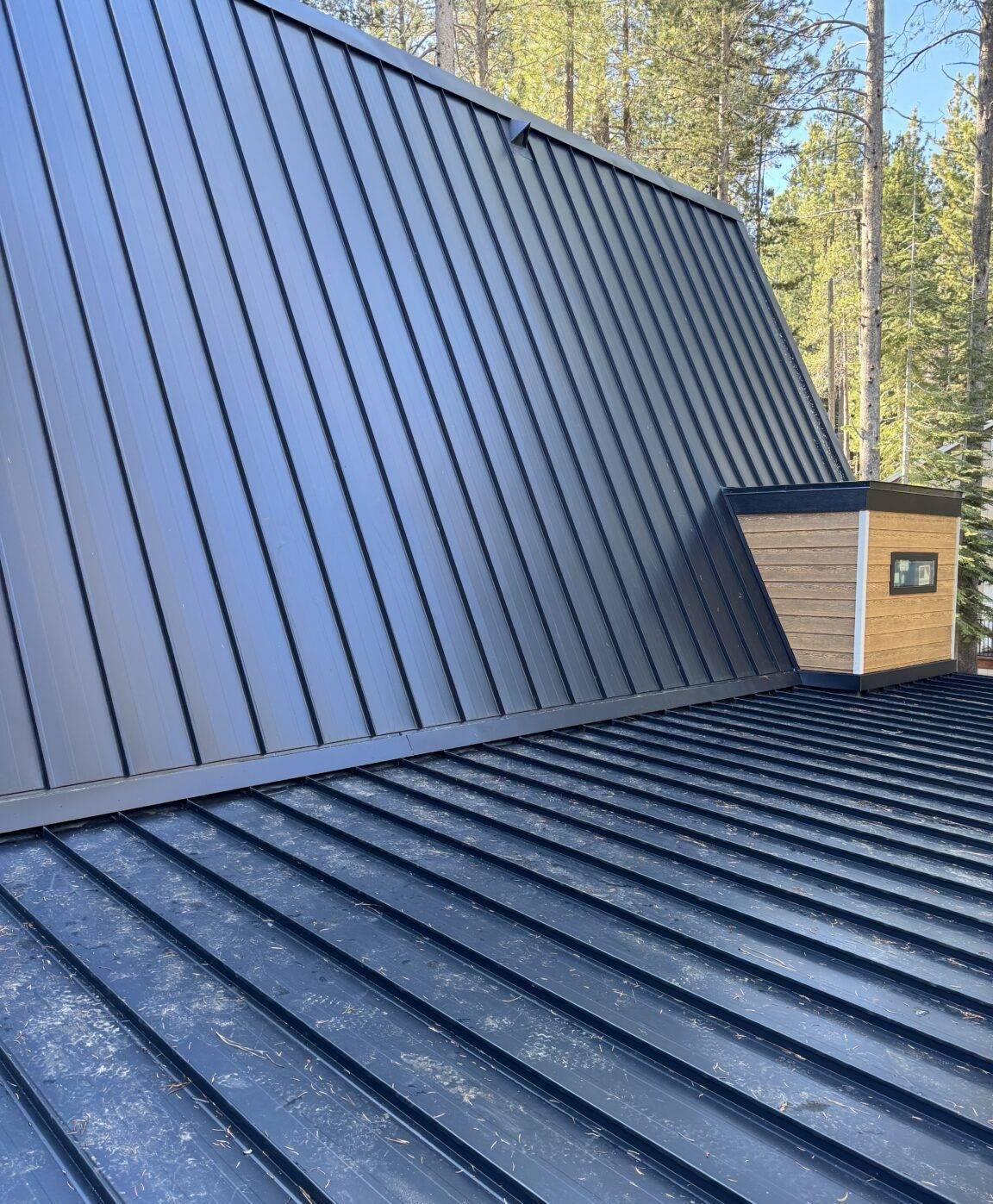
Why Roofs Wear Out Faster Here Than the National Average Suggests
Asphalt shingle warranties and manufacturer lifespan estimates are usually written for a national average climate — moderate humidity, moderate rainfall, moderate temperature swings. Samish doesn't fit that average. Between the salt air and the extended wet season, a few things happen faster here than they would in a drier or more inland part of the country:
- Moss and algae growth take hold quickly on north-facing slopes and shaded sections, and left unchecked they lift shingle edges and hold moisture against the roof deck.
- Metal components corrode faster — nails, flashing, vent boots, and gutter hardware are all exposed to salt air, and lower-grade fasteners can start rusting within a few years near the water.
- Underlayment and decking stay damp longer after each rain event, which matters a lot if ventilation isn't doing its job or if the underlayment isn't a real moisture barrier.
- Wind-driven rain finds gaps at valleys, penetrations, and eave edges that a drier climate roof detail might get away with ignoring.
None of this means Samish is an impossible place to roof a house. It means the install has to account for these realities instead of using generic, one-size-fits-all specs.
What a Correct Roof Replacement Actually Involves
Tear-Off and Deck Inspection
A proper replacement starts with a full tear-off down to the deck — not a layover. This is the only point in the project where the crew can actually see the plywood or OSB underneath and check it for soft spots, delamination, or rot, which is common on older Samish roofs that have been dealing with trapped moisture for years. Any damaged decking gets replaced before anything new goes down. Skipping this step is one of the most common ways a "new roof" fails early.
Underlayment Selection
Given how much of the year Samish spends wet, we lean toward synthetic underlayment or a self-adhered ice-and-water membrane in vulnerable zones — valleys, eaves, around chimneys and skylights — rather than relying on minimum-code felt paper. This is a relatively small cost difference at install time that pays off directly in how well the roof resists wind-driven rain intrusion.
Flashing and Fasteners
Because of the salt air exposure, we favor corrosion-resistant flashing and fastener materials over standard galvanized where budget allows, especially on properties closer to the water. Flashing details at valleys, sidewalls, and chimneys are where the vast majority of roof leaks actually originate — not in the open field of shingles — so this is not a place to cut corners.
Ventilation
A roof deck that can't breathe stays damp longer, and a damp deck invites rot and shortens the life of everything installed on top of it. Balanced intake and exhaust ventilation matters more in a climate like this than in a drier one, and it's something we check and correct as part of the replacement, not as an afterthought.
Moss Prevention Details
Zinc or copper strips near the ridge, proper shingle selection, and keeping overhanging branches trimmed back all reduce how aggressively moss establishes itself. We build these into the plan on shaded properties rather than leaving moss control entirely up to the homeowner after the fact.
Material Options for Samish Homes
There's no single "right" roofing material for every house — it depends on budget, roof pitch, architectural style, and how close the property sits to the water or under tree cover. Here's how the common options stack up for this specific area:
| Material | How It Handles Salt Air | How It Handles Moss/Rain | Typical Lifespan Here |
|---|---|---|---|
| Architectural asphalt shingle | Good with corrosion-resistant fasteners | Needs moss-resistant granules or treatment on shaded slopes | 20-30 years |
| Standing seam metal | Needs marine-grade coating or aluminum near water | Sheds moisture and moss well due to smooth surface | 40-60 years |
| Composite/synthetic shake | Handles salt exposure well | Good moisture resistance, moderate moss resistance | 30-50 years |
| Cedar shake (natural) | Requires more maintenance near salt air | Higher moss/moisture maintenance burden | 20-30 years with upkeep |
We're upfront that natural cedar, while attractive, asks more of the homeowner in this climate — it needs more frequent treatment and moss management than composite alternatives, and that maintenance burden is worth weighing honestly before committing to it, especially on a shaded lot.
Signs a Samish Roof Is Due for Replacement
Some of these signs are visible from the ground; others take a closer inspection to catch:
- Shingles that are curling, cupping, or losing significant granules
- Moss buildup that keeps returning within a season or two of cleaning
- Dark streaking or algae staining across large sections of the roof
- Soft or spongy spots when walked on, especially near valleys or penetrations
- Rusted or deteriorating flashing around chimneys, vents, or skylights
- Daylight visible through the attic decking, or damp insulation
- A roof that's already 18-20+ years old, regardless of how it looks from the street
If more than one of these applies, it's worth getting an actual inspection rather than guessing at how much life is left.
Our Process for a Samish Roof Replacement
- On-site inspection and assessment — we look at the current roof, the deck condition where visible, ventilation setup, and site-specific factors like tree cover and water proximity.
- Honest scope and material recommendation — we explain what your roof actually needs and why, including trade-offs between material options, without pushing an upgrade you don't need.
- Written estimate — clear line items so you know what you're paying for and why, with no vague allowances.
- Scheduling around Whatcom County weather windows — we plan the tear-off and dry-in around forecasted dry stretches as much as the season allows, since an open deck sitting exposed to Samish rain is a risk we plan to avoid.
- Full tear-off, deck repair, and correct installation — underlayment, flashing, ventilation, and shingle or metal installation done to spec, not to the minimum code requirement.
- Final walkthrough — we go over the finished work with you and answer questions about maintenance going forward.
Why a Crew That Already Works Samish Matters
A roofing crew that's worked properties throughout this part of Whatcom County already knows which details matter here and which don't. They've seen what happens when a roof is built to a generic spec instead of one that accounts for salt air and a long wet season, and they've seen the difference proper flashing and underlayment choices make five and ten years down the road. That local pattern recognition is hard to replace with a crew coming in from outside the area who's never dealt with these specific conditions before.
It also matters for something more practical: knowing local permitting requirements, working efficiently around Whatcom County's weather patterns, and being reachable afterward if a question comes up. A roof replacement is a long-term investment in the house, and it's worth having it done by people who plan to still be working in this area when it's time for a routine inspection or a warranty question years from now.
What Affects the Cost of a Roof Replacement
Every roof is different, but a few factors consistently drive the price up or down:
- Roof size and the number of squares (100 sq ft units) being replaced
- Roof pitch and complexity — steep or multi-plane roofs take longer and cost more per square
- Number of valleys, penetrations (chimneys, skylights, vents), and flashing points
- Condition of the existing deck and whether repair or replacement is needed
- Material choice — asphalt, metal, and composite all sit at different price points
- Tear-off complexity, including how many existing layers need to come off
- Access and staging — tree cover, driveway access, and roof height all factor in
Rather than quoting broad numbers that don't mean much without seeing the actual roof, we walk each property and put together a written estimate based on what's really there.
If your roof in Samish is showing its age, dealing with persistent moss, or you just want an honest read on how much life is left in it, we're happy to take a look. Fill out the form below for a free, no-pressure estimate — no obligation, just a straight assessment of where things stand.